REVIEW · ROME
Golf Cart Around Imperial Rome
Book on Viator →Operated by FREEWAY-CAR · Bookable on Viator
Rome feels different at golf-cart speed. This small-group open-air tour makes it easy to reach major Imperial landmarks fast, with short stops for photos and a lighter walking load across the center.
I love the golf cart convenience here: the ride helps you get up close to places where cars and big buses struggle. I also like the small-group pace, and the fact that guides such as Alessandro and Leonardo bring clear, friendly storytelling and practical tips.
One drawback to consider: Rome’s cobblestones can make the ride a bit rough, and seating can vary (some carts have limited forward-facing options and sound may be harder). If that matters to you, it is smart to plan for it.
In This Review
- Key things to know before you book
- Why a golf cart works so well for Imperial Rome
- Price and logistics: what $150.18 buys you
- Piazza Navona: ancient stadium vibes and fountain photos
- Trevi Fountain: a quick wish without getting stuck in the crush
- Circus Maximus then the Colosseum: two big Roman scenes in one glide
- Pantheon: what you see when the walking gets easier
- Spanish Steps and the Barcaccia fountain: classic Rome in 15 minutes
- Villa Borghese: a Roman breather before you head back
- Your guide matters: why Alessandro, Leonardo, Giovanni, and Louisa stand out
- Comfort, seating, and the real-world feel of cobblestones
- Value check: a fast intro to Rome’s core highlights
- Who should book this golf cart loop (and who should skip)
- Should you book Golf Cart Around Imperial Rome?
- FAQ
- How long is the golf cart tour?
- What stops are included in the itinerary?
- Are entrance fees included?
- Is pickup offered?
- How big is the group?
- What is the cancellation policy?
Key things to know before you book
- Max 10 travelers means it stays personal, not packed like a bus
- Three hours, multiple stops covers Piazza Navona, Trevi Fountain, Circus Maximus, Colosseum, Pantheon, Spanish Steps, and Villa Borghese
- Open-air carts are great for views, but expect some bumpiness on rough streets
- English-speaking driver-guides often add local context, not just facts on a screen
- Pickup is offered and the tour ends back near the start point
- No museum tickets included (even though many stops are free to view)
Why a golf cart works so well for Imperial Rome
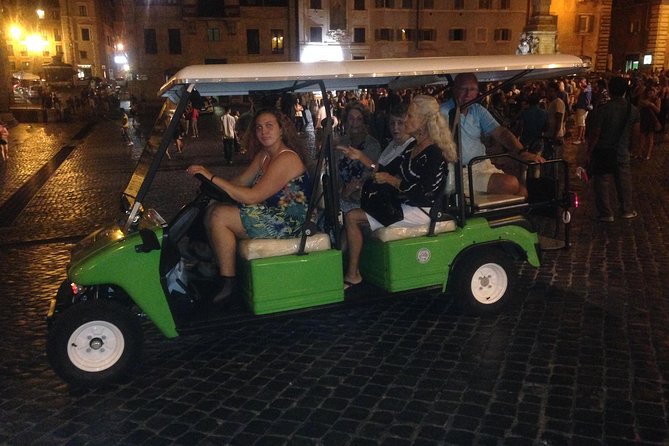
Rome’s center is a workout. Old streets, crowded sidewalks, and constant turning cars can make a first visit feel frantic. This golf cart tour gives you a fast, comfortable way to cover the big sights without doing all the walking.
The value comes from focus. In about three hours, you hop between signature places that are otherwise spread out across the city. You also get short breaks at each stop, which is perfect if you are traveling with kids, anyone with mobility limits, or just want to see a lot without tiring out.
You can also read our reviews of more tours and experiences in Rome.



Price and logistics: what $150.18 buys you
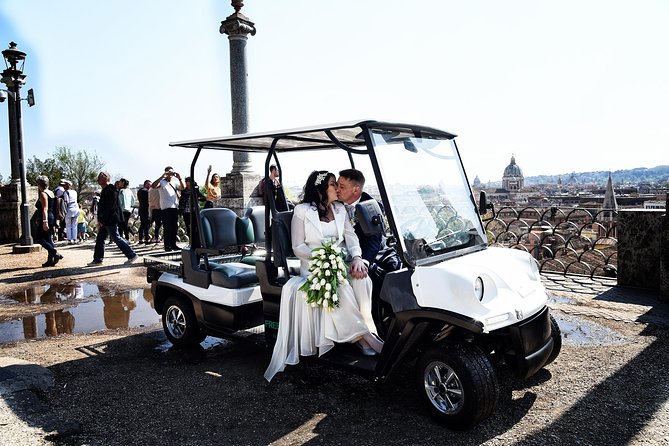
At $150.18 per person for roughly 3 hours, you are paying mainly for transportation plus a driver-guide. Museum-style entry fees are not included, but the listed stops are free to view, so you are not automatically hit with extra ticket costs just to see the highlights.
You should also know what comes with the format. Pickup is offered, and the tour uses a mobile ticket. It is small-group with a maximum of 10 travelers, and it runs in English, which makes it easier if your group includes non-Italian speakers.
Where the schedule matters: the stops are short, often 10 to 20 minutes. That is great for getting good photos and quick orientation, but it is not a slow, linger-all-afternoon kind of outing. If you want a long museum session, you will need a separate plan.
Piazza Navona: ancient stadium vibes and fountain photos
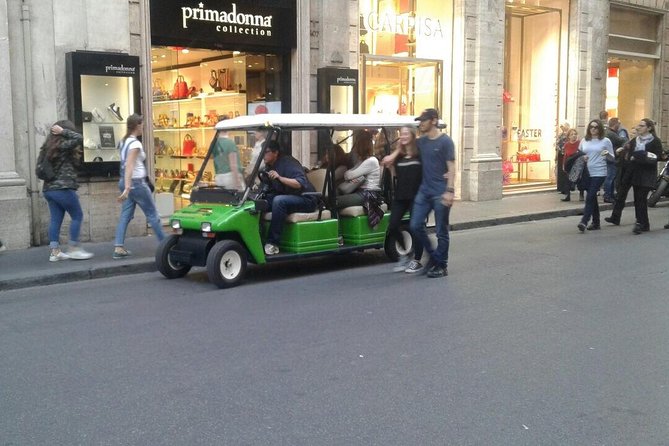
Your first stop is Piazza Navona, for about 20 minutes. You do not just look at the square from the edge. You walk in the area of the ancient Domitian stadium, with the Four Rivers Fountain and the Church of Sant’Agnese in Agone as your backdrop.
This is one of the best “first Rome” scenes because it feels theatrical and historic at the same time. The square is busy, but with a short walk and a guide’s timing, you can usually get clear moments for photos and a better sense of layout than you would standing still.
Tip: if you want the best pictures, plan your shots early in the stop. The square can build crowds quickly, especially mid-day.
Trevi Fountain: a quick wish without getting stuck in the crush
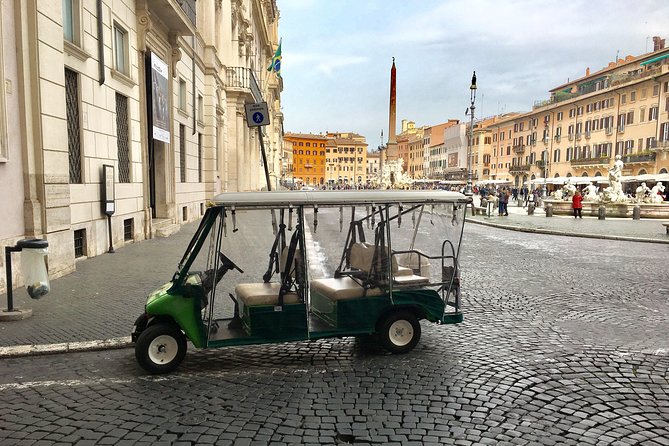
Next up is Trevi Fountain for around 15 minutes. You will see it up close and have time to do the classic wish-coin moment by the fountain.
Trevi is always crowded, but the golf cart setup helps you arrive with less wandering. The stop length is short on purpose, so you can enjoy the view without spending the entire outing queued or stuck in slow foot traffic.
Practical note: wear shoes you can stand in. Even with a cart, you will still be doing a little walking around the fountain area to line up photos.
Circus Maximus then the Colosseum: two big Roman scenes in one glide
After Trevi, the tour shifts to the Roman big-ticket backdrop at Circus Maximus (about 10 minutes). You get a look at the Circus Maximus area with the Palatine in the background, which helps you understand why Rome’s rulers built and staged life here.
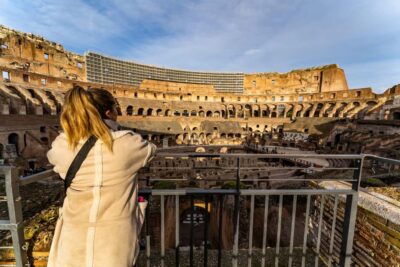
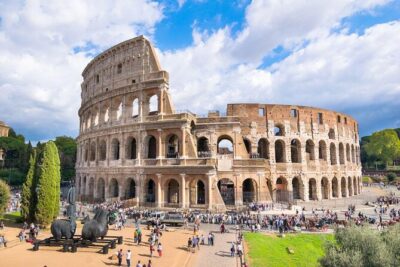
Then comes the star attraction: the Colosseum for about 20 minutes. This is your real “wow” moment, and the short stop helps you see it at scale without turning it into a half-day ordeal.
A heads-up from real-world experience with this kind of ride: the carts are open-air and Rome streets are uneven. A few minutes of slow bumps while moving between stops is normal, and it is part of the trade-off for the convenience.
If you care about photos: try to position yourself early once you arrive at the Colosseum stop. You will be facing crowds and barriers, and waiting until the last minute can mean worse angles.





Pantheon: what you see when the walking gets easier
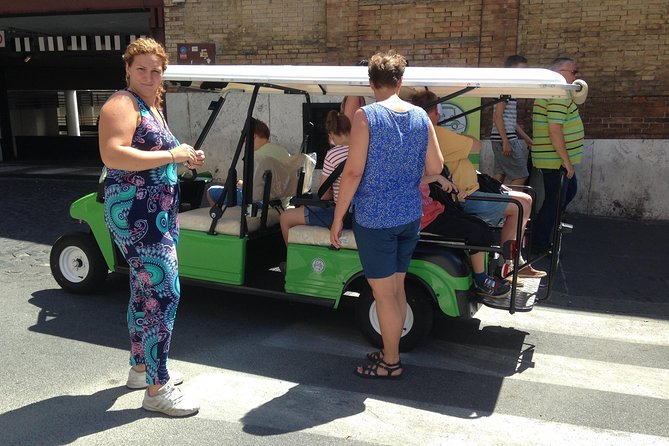
The Pantheon stop runs about 20 minutes. You will see the temple-style structure often called the temple of all the gods, and you get a simple, guided orientation so you know what you are looking at.
This stop is ideal in a cart tour because the area can feel confusing if you are only scanning from a distance. A quick guided moment helps you connect what you see outside with how the building fits into Rome’s broader story.
One practical consideration: some carts face you backward during driving. One guest noted that this can make the narrative harder to hear. If clear audio matters, try to sit in the spot that gives you the best view and hearing for your guide.
Spanish Steps and the Barcaccia fountain: classic Rome in 15 minutes
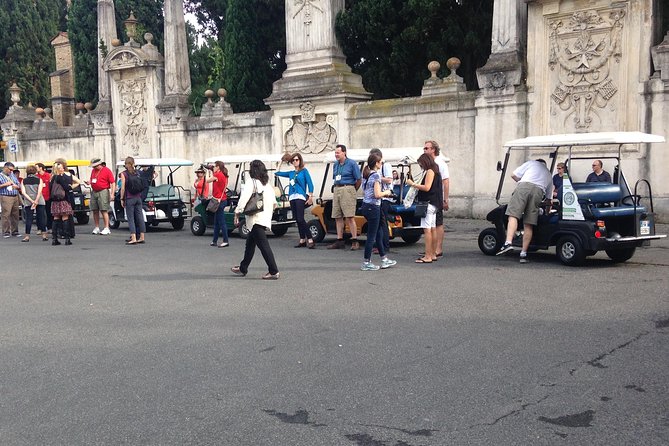
Then you roll to the Spanish Steps, for about 15 minutes. You also see the Barcaccia fountain included with the setup around the steps, which adds a second photo anchor beyond the famous staircase itself.
Spanish Steps can feel like a postcard you can walk into. The trick is not overthinking it. Use the time for a few photos, look from different angles if you can, and then keep moving. In a cart tour, you get more Rome by not spending too long stuck in one spot.
Tip: if you are sensitive to noise or crowds, pick a spot near the edges during the steps stop. The center area fills first.
Villa Borghese: a Roman breather before you head back
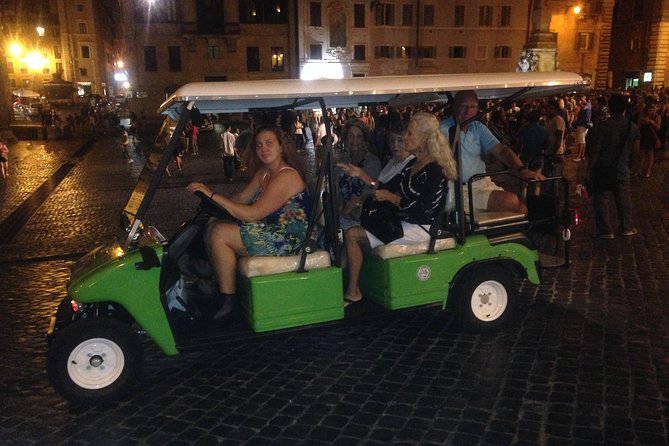
The final stop is Villa Borghese, described as il cuore di Roma, for about 20 minutes. This is a helpful way to end, because it feels like a calmer transition from the most dense, central landmarks.
Even if you do not do extra sightseeing inside the park, you leave with a different kind of Rome image. It is a good place to reset, get fresh air, and decide what you want to do next with the rest of your day.
If you love gardens or want an extra walk after the tour, you can use this stop as your starting point. The cart tour itself stays timed, but your next move does not have to.
Your guide matters: why Alessandro, Leonardo, Giovanni, and Louisa stand out
This tour is built around the driver-guide. When the guide is great, you feel like you are traveling with a smart friend who knows exactly how to explain what you are seeing in plain language.
From the experiences I read, guides like Alessandro (often called Sa) bring warmth and humor, and they handle questions well. Leonardo is praised for making accommodations for people with different needs, including a blind individual and guests with mobility issues, while still keeping the experience fun. Giovanni and Louisa also show up in comments for strong navigation through city streets and for making the storytelling clear.
What you can take from this, even before you meet your guide: ask smart questions when you are moving between stops. If you have already seen part of the route, let them know. Some guides seem comfortable adjusting pacing or offering recommendations for what to do next after the tour.
Comfort, seating, and the real-world feel of cobblestones
An open-air cart is part of the charm. You get breezes and better sightlines. You also feel the city’s road texture more than you would in a van.
One guest described the ride as a bit rough on Rome streets because carts do not have suspension like modern cars. Another noted an issue with seating and seatbelts: only one front-facing seat with a seatbelt, while a rear passenger sat without one and had to twist for views on busier roads. That is not guaranteed for every cart, but it is a fair reminder to take comfort seriously.
My advice: if you have back issues, mobility concerns, or you are traveling with someone who needs more stable seating, ask the provider ahead (or at check-in) how the seating and restraints work on your exact cart. Even one extra question can turn a stressful ride into a smooth one.
Also, this is a small-group format, not private-by-default. If you get a driver who takes time at each stop, it feels more relaxed. If the day is crowded, stop times can feel tighter. Either way, the cart reduces walking, which is often the main win.
Value check: a fast intro to Rome’s core highlights
At a bit over $150 per person, you might ask: is this worth it versus a bus or walking route? In my view, it is strongest when you want maximum highlights with minimal exhaustion.
Here is why the math can work:
- The listed landmarks are time-boxed but cover major names that are usually spread across the center.
- You are paying for a driver-guide who helps connect what you see.
- You are likely getting better access to corners where cars and larger vehicles cannot go easily.
- You avoid long stretches of walking, which matters in Rome.
What is not included is also part of the value picture. Museum entries are not included, and you should not count on the cart tour replacing a museum day. But if your goal is an efficient sightseeing loop—especially with kids—the cart approach can feel like a smart shortcut.
Who should book this golf cart loop (and who should skip)
Book it if:
- You want a first-time Rome intro without turning your day into a leg workout
- You are traveling with kids or someone who cannot handle lots of walking
- You care about seeing the big landmarks like Trevi, Colosseum, Pantheon, and Piazza Navona in one go
- You like learning in a conversational way from a guide while you move
Skip it if:
- You are sensitive to bumps and road noise
- You strongly need forward-facing seating and clear audio throughout the ride
- You want deep museum time, because this is built for landmark viewing, not long interior visits
If you fit the first group, this tour can make your Rome day feel lighter and more manageable—without feeling like you skipped the important stuff.
Should you book Golf Cart Around Imperial Rome?
If you want an efficient, family-friendly way to see Imperial Rome’s headline monuments with short, timed stops, this is a solid choice. The biggest plus is the low-effort way to cover a lot of ground, and the best guides (like Alessandro, Leonardo, Giovanni, and Louisa) can turn quick stops into something more memorable.
Just go in with the right expectations: it is a fast route, and Rome’s streets can feel rough on any open vehicle. If that sounds fine to you, book it and use the time to get your bearings fast.
FAQ
How long is the golf cart tour?
It runs for about 3 hours.
What stops are included in the itinerary?
You will stop at Piazza Navona, Trevi Fountain, Circus Maximus, the Colosseum, the Pantheon, the Spanish Steps, and Villa Borghese.
Are entrance fees included?
Entrance fees for museums are not included. The tour’s listed stops are free to view based on the schedule provided.
Is pickup offered?
Yes, pickup is offered, and the meeting point is Via Ludovisi, 00187 Roma RM, Italy. The tour ends back at the meeting point.
How big is the group?
The tour has a maximum of 10 travelers.
What is the cancellation policy?
You can cancel for a full refund up to 24 hours before the experience starts. If you cancel less than 24 hours in advance, the amount paid is not refunded.