REVIEW · ROME
Rome 4 hours Golf Cart Private Sight Seeing Group Tour
Book on Viator →Operated by DGS Driver Guide Service · Bookable on Viator
Rome, minus the marathon. On this private golf cart loop, you cover major sights in about four hours without the map-and-blister fatigue. I love that the tour pairs a local English-speaking Driver Guide with built-in stops so you learn while you move. I also like the pace: each stop is short enough to keep energy up for kids and anyone who wants fewer stairs. One catch: some attractions on the route (like the Pantheon) may require tickets you purchase separately.
The route makes sense for a first-time overview: you start near the Antico Quartiere Ebraico, you get a viewpoint moment at Piazza del Campidoglio, then you finish with the big-picture icons like Trevi Fountain and Piazza Navona. I’ve seen guides such as Ivano, Valerio, and Claudio praised for being friendly and funny, plus for steering the group smoothly so you spend time seeing, not circling.
Pickup is the main logistics piece. If your hotel is in central/downtown Rome, the driver will pick you up; if it’s farther out, you’ll get a meeting point near the center. Also keep an eye on any messages: with the Jubilee, some monuments may be under restoration and the stops can change.
In This Review
- Key Things To Know Before You Ride
- Why a Golf Cart Tour Is the Smart Way to See Rome in 4 Hours
- Price and Logistics: What $305.69 Gets You (and What It Doesn’t)
- Getting Oriented Fast: Pickup, Meeting Points, and the Jubilee Note
- Stop 1: Antico Quartiere Ebraico (Jewish Ghetto) Without Extra Hassle
- Stop 2: Torre dei Margani for a Palace Look
- Stop 3: Teatro di Marcello, an Antique Opera House Feeling
- Stop 4: Piazza del Campidoglio for the Panorama Break
- Stop 5: The Pantheon, a Former Roman Temple Now a Church
- Stop 6: Trevi Fountain and the Classic Coin Moment
- Stop 7: Spanish Steps for a Pause in the Center of It All
- Stop 8: Piazza Navona, a Stadium Footprint You Can Still Feel
- The Driver Guide: Why the Commentary Changes Everything
- How to Use the 15–30 Minute Stops Like a Pro
- Family, Mobility Needs, and Who This Tour Fits Best
- Should You Book This Rome Golf Cart Tour?
- FAQ
- How long is the Rome golf cart private sightseeing tour?
- Is this tour private or shared with other groups?
- Do I get pickup from my hotel?
- Is the tour offered in English?
- Are tickets included for all stops?
- What attractions will we see during the 4 hours?
- Is a mobile ticket included?
- What if monuments are affected by the Jubilee restoration work?
- What’s the cancellation policy?
Key Things To Know Before You Ride
- Short stops, smart pacing: you get time to look, take photos, and enjoy the area without committing to long entry lines everywhere.
- English commentary while you roll: the guide’s narration turns obvious landmarks into clearer context.
- Some entrances cost extra: Antico Quartiere Ebraico, Campidoglio, Trevi, Spanish Steps, and Piazza Navona are listed as free, while other stops may not be.
- Family-friendly by design: the cart cuts down walking, making the tour feel doable for kids and mixed-mobility groups.
- Guides often add practical tips: people highlight guides like Ivano, Valerio, and Claudio for helpful recommendations beyond just the ride.
Why a Golf Cart Tour Is the Smart Way to See Rome in 4 Hours

Rome is great, but it can be physically punishing if you’re trying to hit the highlights on foot. This tour is built for a simple goal: see the famous parts of Rome without turning your vacation into a blister drill.
The big win is effort-to-reward. In roughly four hours, you can cover a tight cluster of iconic sites that would take a lot longer walking, especially with the stop-start reality of city streets. If you’re traveling with kids, grandparents, or just a crew that wants to conserve energy for dinner plans, the cart changes the mood immediately. You’re not always thinking about where the next step is; you’re thinking about the views.
And because it’s private, you’re not stuck waiting on the slowest person or pulled along by the fastest one. Your group stays together and the guide can match the flow to your pace.
You can also read our reviews of more private tours in Rome



Price and Logistics: What $305.69 Gets You (and What It Doesn’t)
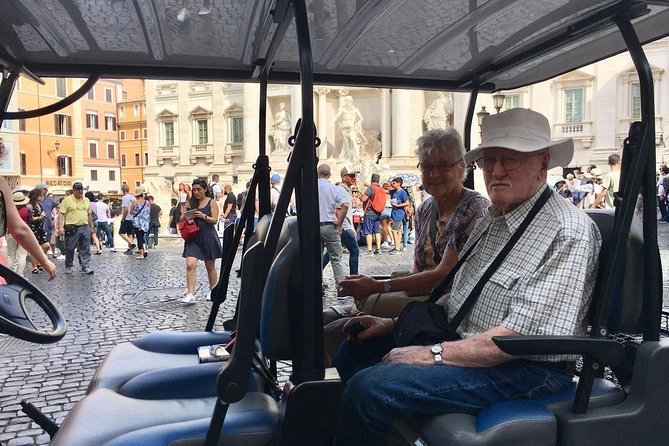
At $305.69 per person for about four hours, this isn’t the cheapest way to sightsee—but it is one of the more efficient ways to do it without exhausting your group. You’re paying for a private cart experience, the presence of an English-speaking Driver Guide, and a route that’s timed so you still have real moments at each stop.
A few practical notes to factor in:
- Pickup and drop-off at your hotel isn’t listed as included, but there is pickup flexibility for hotels in downtown Rome. If you’re outside that area, you’ll use a meeting point near the center of the city.
- Admission tickets aren’t all included. Some stops are marked free, while others may require tickets you handle yourself.
- Lunch and extras aren’t included, so you’ll want to plan food separately.
If your goal is a relaxed, high-value overview where you still get to decide what to do during the short free time, this price starts to make sense. If you’re hoping to buy one ticket and have every monument entrance covered, you’ll need to check which stops on your day involve paid entry.
Getting Oriented Fast: Pickup, Meeting Points, and the Jubilee Note
The start of any Rome tour can be chaotic if the meeting place is unclear, so I like that this one is straightforward. If you’re in central/downtown Rome, you should get a pickup. If you’re farther out, expect to meet near the center of Rome instead.
You’ll also want to stay alert to any pre-tour messages. With the Jubilee, some monuments may be under restoration, and the operator may send updates about changes. This matters because Rome can change mid-season, and you don’t want to show up expecting one exact photo spot.
Finally, the tour is described as being near public transportation, which is useful if you need a backup plan to reach your meeting point.
Stop 1: Antico Quartiere Ebraico (Jewish Ghetto) Without Extra Hassle
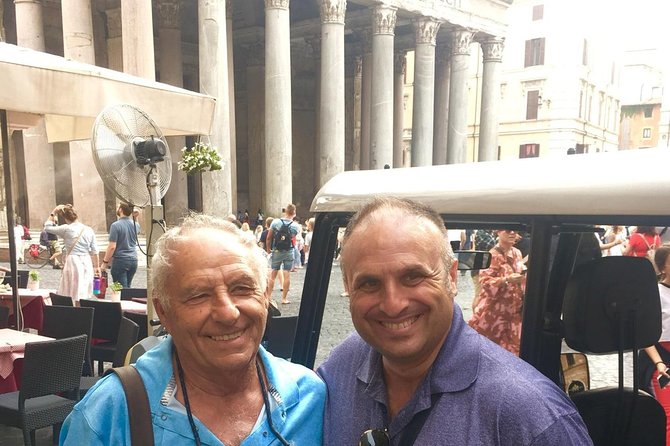
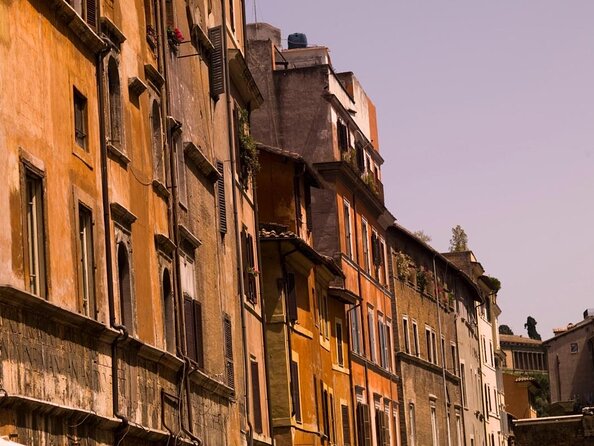
The tour begins at Antico Quartiere Ebraico, where you’ll see the characteristic Jewish ghetto area. This is one of those Rome moments that makes the city feel instantly lived-in, not just postcard-perfect.
What makes this stop especially valuable on a golf cart tour is simplicity. You’re given about 30 minutes, and it’s listed as free admission, so you can focus on observing and taking in the atmosphere rather than juggling tickets. There’s a special note here: access is described as available only with the Rome Golf Cart Tour, which adds to the value if you’re specifically curious about this part of the city.
The main consideration? Because the time is short, don’t expect to go deep into anything that requires long stays. This is an eye-opening orientation stop more than an all-day neighborhood exploration.
Stop 2: Torre dei Margani for a Palace Look
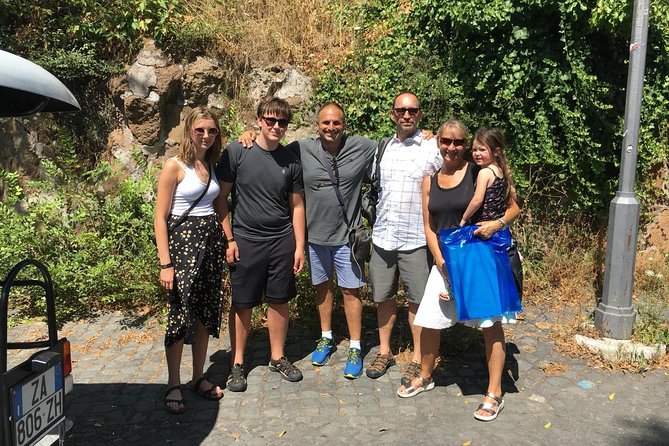
Next up is Torre dei Margani, described as the Palace of the Margani Family. You’ll get about 15 minutes here.
This stop is ideal if you enjoy architecture and want quick hits of what makes different Roman structures distinct. The time window is short, though, so it works best as a photo-and-overview stop. Also note that admission is listed as not included, so if you’re trying to go inside (or attend anything ticketed), you’ll need to budget for that.
If you prefer to spend your vacation hours actually walking through sites, this 15-minute structure-focused stop may feel brief. But if you like seeing a lot while keeping energy for the rest of the day, it’s a good fit.






Stop 3: Teatro di Marcello, an Antique Opera House Feeling
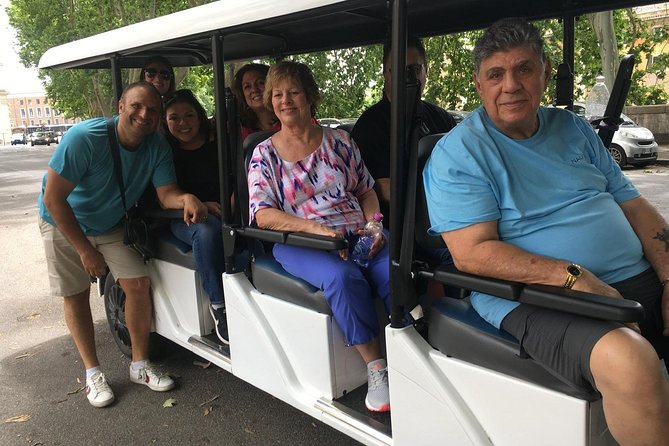
Teatro di Marcello is one of those Rome landmarks that looks like it belongs in a history book. It’s described as a theatre of Marcellus, an antique opera house, and you’ll get about 15 minutes.
This is the kind of stop that works well from a cart tour because you can take in scale quickly. You’re not spending your day stuck in transit between distant points—you’re sampling the city’s layers in sequence.
As with Torre dei Margani, admission is listed as not included. If you’re someone who prefers only free, no-ticket stops, you may need to decide how much you want to factor paid entry into your day. The trade-off is that the tour keeps the pace tight so the paid elements don’t steal the entire afternoon.
Stop 4: Piazza del Campidoglio for the Panorama Break
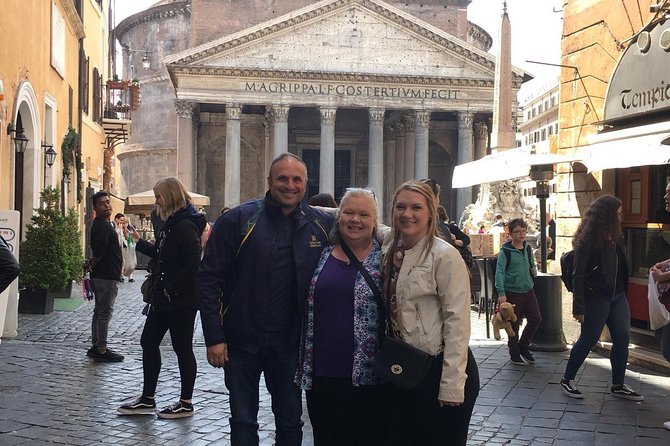
Piazza del Campidoglio is where the tour gives you breathing room in the form of a viewpoint. You’ll get 15 minutes and there’s no admission fee listed for this stop.
I love how these quick perspective stops change the whole feel of a city tour. You’re not just “visiting” buildings; you’re stepping into a spot where Rome reads as Rome—hills, streets, and landmarks all in one sweep.
The drawback is time. Fifteen minutes goes fast if you stop to take photos from multiple angles, so keep your camera ready and don’t plan a long sit-down moment here.
Stop 5: The Pantheon, a Former Roman Temple Now a Church
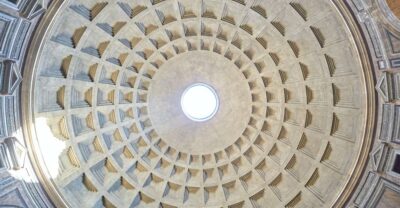
Then comes the Pantheon. The tour describes it as a former Roman temple, now a church, on the site of an earlier temple commissioned by Marcus Agrippa during the reign of Augustus.
This is a major stop, and that usually means it can be the most emotionally satisfying one of the day—especially if you’re the type who wants one iconic indoor/outdoor building as the anchor of the trip.
Admission is listed as not included, and your time here is about 15 minutes. That combination is important: if you want more than a quick look, you’ll likely need to plan for extra time depending on what’s happening when you arrive (and whether you’re able to enter without constraints). If you’re okay with a shorter, focused visit, this time allocation still lets you hit the highlight without turning the whole tour into a waiting game.
Stop 6: Trevi Fountain and the Classic Coin Moment
Trevi Fountain is next, with about 20 minutes on the schedule. The tour description includes the essentials: it’s in the Trevi district, designed by Nicola Salvi and completed by Giuseppe Pannini and several others.
Trevi is listed as free admission, and the tour’s note about dropping a coin is exactly the kind of practical reminder that helps when you’re moving fast. It’s easy to forget small traditions when you’re navigating crowds and timing.
The only real risk here is crowd pressure and the fact that Trevi is famous for a reason. The cart tour helps because you’re arriving as part of a managed route, but you’ll still want to keep expectations realistic: 20 minutes is enough for photos and enjoying the sound and motion, but it’s not an all-day devotion at one of the world’s most photographed fountains.
Stop 7: Spanish Steps for a Pause in the Center of It All
The Spanish Steps are one of the easiest places to feel the energy of central Rome. Here you’ll have 20 minutes, and the stop is listed as free.
This is a great “reset” moment. You can watch people drift through Piazza di Spagna, take in the famous steps, and then be ready for the next stop without needing to pack in another long walking segment. If your group includes kids, this is often a fun spot because you can let them roam a little within the general area while still staying together.
The main consideration is that the Spanish Steps area is busy. Since your time is fixed, decide ahead of time whether your priority is a few quick photos or a slightly longer linger.
Stop 8: Piazza Navona, a Stadium Footprint You Can Still Feel
The final stop is Piazza Navona, with about 20 minutes. The description ties it to history: it’s built on the site of the Stadium of Domitian from the 1st century AD, and it follows the stadium’s open-space shape.
This is a smart finish because it gives you a plaza experience rather than only architecture. After a day of landmarks, Piazza Navona lets your eyes rest on a space that’s easy to understand and fun to move through.
It’s listed as free admission, so you’re ending the tour without any ticket stress. If you’re still hungry for more, this kind of central plaza is exactly where you can continue the day on your own—grab something to eat, walk a bit, and just let Rome do what it does.
The Driver Guide: Why the Commentary Changes Everything
A golf cart can get you from place to place. The guide is what makes those places stick in your head.
The tour includes guidance at each location from a local English-speaking Driver Guide, and the standout detail from the experiences shared is that the guides often mix history with a sense of humor and real crowd-smart navigation. I’ve seen names like Ivano and Valerio mentioned for being friendly, funny, and attentive, including one guide described as helping groups feel safe and comfortable while navigating through the city. Another guide, Claudio, is specifically noted for a comprehensive overview and even a break for gelato.
Even without assuming you’ll get the exact same guide, the pattern is clear: the best value isn’t just the route—it’s the way the guide helps you understand what you’re looking at and then gives practical directions for what to do after the cart ride. That’s when a short 15–30 minute stop becomes more than a photo opportunity.
How to Use the 15–30 Minute Stops Like a Pro
These stops are timed, which is great—if you plan your behavior during the time you have.
I’d treat each stop like this:
- Take 2–3 photos early, before you lose track of time.
- Then switch to slower looking: façades, street details, and the general setting around you.
- If an entrance ticket might be involved (like the Pantheon), decide fast whether you’re doing a quick exterior-only look or trying to go inside during your window.
For free stops, you can relax more. For stops marked as not included, I suggest checking what’s realistic so you don’t end up spending your entire time hunting for ticket rules or entry procedures.
The cart format is forgiving—you’re still moving toward the next highlight—but your attention still needs a game plan.
Family, Mobility Needs, and Who This Tour Fits Best
This is especially suited to:
- families with kids who need shorter segments and a calmer pace
- travelers who want to see a lot without long stretches of walking
- groups that value guidance and commentary more than independent wandering
If you love walking for hours and you’re happiest getting lost slowly, you might find the cart pace less satisfying. But if your top priority is a fast, guided overview that doesn’t tire everyone out, it’s a strong match.
It’s also a good option if you’re visiting Rome with a mixed group: one person wants to hit the big classics, another needs less walking, and the cart gives you a compromise that still feels like sightseeing, not babysitting.
Should You Book This Rome Golf Cart Tour?
Book it if you want a 4-hour private Rome overview that trades long walking for quick, guided access to major sights. The biggest “yes” signals for me are simple: you like the idea of learning while you travel, you want family-friendly pacing, and you’re okay handling a few entrances separately (like the Pantheon and other non-free stops).
Think twice if your ideal day is slow, deep, and centered on one or two monuments with long entry times. This tour is designed for coverage and comfort, not for lingering for hours at a single site.
If you’re the kind of traveler who wants Rome’s highlights without burning your energy before dinner, this is the sort of tour that makes that happen.
FAQ
How long is the Rome golf cart private sightseeing tour?
It runs for about 4 hours.
Is this tour private or shared with other groups?
It’s private. Only your group participates.
Do I get pickup from my hotel?
Pickup is offered if your hotel is located in downtown Rome. If your hotel is away from downtown, you’ll be given a meeting point somewhere near the center of Rome.
Is the tour offered in English?
Yes, it’s offered in English.
Are tickets included for all stops?
No. Some stops are listed as admission free (for example Antico Quartiere Ebraico, Piazza del Campidoglio, Trevi Fountain, Spanish Steps, and Piazza Navona). Other stops are listed as admission not included (including Torre dei Margani, Teatro di Marcello, and the Pantheon).
What attractions will we see during the 4 hours?
You’ll visit Antico Quartiere Ebraico, Torre dei Margani, Teatro di Marcello, Piazza del Campidoglio, the Pantheon, Trevi Fountain, the Spanish Steps, and Piazza Navona.
Is a mobile ticket included?
Yes, you receive a mobile ticket.
What if monuments are affected by the Jubilee restoration work?
Some monuments may be under restoration. Pay attention to any messages sent to you about possible changes.
What’s the cancellation policy?
There is free cancellation. You can cancel up to 24 hours in advance for a full refund, and cancellations within 24 hours are not refundable.