REVIEW · ROME
Professional Pizza Workshop in Rome With a Brilliant Italian Chef
Book on Viator →Operated by eatwith · Bookable on Viator
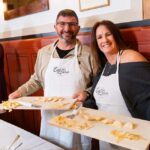
Pizza gets talked about a lot. This class is different because it’s built around doing—mixing, shaping, and cooking with a chef who’s lived and worked across Italy. You’ll join Chef Sandra in a local Roman home and learn rustic pizzas inspired by popular pizza-making provinces, with English guidance and a tight group size (max 6).
I especially like the focus on real ingredients and methods you can repeat at home. The setup matters too: one review point hit hard—this can be done without a wood-fired oven. If you’ve ever wondered whether thin-crust, airy, crunchy Roman-style pizza is possible with basic tools, this is the kind of class that answers that question.
The main thing to consider: this is a 7:00 pm start in Rome, so you’ll want to plan dinner and transportation around a night workshop—not a quick daytime bite-and-learn.
In This Review
- Key Things to Know Before You Go
- Enter Chef Sandra’s Rome Home (Not a Big Workshop Room)
- Your Evening Plan: Panzerotti Starter, Roman Pizza Main, Dessert Finale
- Starter: Fried Panzerotti
- Main: The Real Pizza With Classic Toppings
- Dessert: Tiramisu, Panna Cotta, or Homemade Gelato
- Roman-Style Dough: The Thin, Airy Crunch Goal
- Cooking Tips You Can Use Immediately at Home
- Ingredients That Make the Pizza Taste Like Italy
- Timing, Meeting Point, and How to Plan Your Night in Rome
- Price and Value: What $130.04 Gets You Here
- Who This Workshop Is Best For (And Who Might Want Another Option)
- FAQ
- FAQ
- What time does the pizza workshop start?
- How long is the workshop?
- Where do I meet for the class?
- How many people are in the group?
- Is the class offered in English?
- What dishes are included in the sample menu?
- Do I need to tell them about food restrictions?
- How does cancellation work?
- Is it near public transportation and are service animals allowed?
- Should You Book This Rome Pizza Workshop?
Key Things to Know Before You Go
- Max 6 travelers means you’re not lost in a crowd and you’ll get real attention from Chef Sandra
- Chef Sandra’s cross-Italy background (Tuscany, Milan, Matera, now Rome) shapes the way she teaches flavors and technique
- No fancy oven required: you can aim for the thin, airy, crunchy result with pan + stove + broiler
- A full mini-menu: fried panzerotti starter, “the real pizza” main, then either tiramisu, panna cotta, or homemade gelato
- You’ll leave with repeatable tips for traditional dough and topping combos, not just a one-off lesson
Enter Chef Sandra’s Rome Home (Not a Big Workshop Room)
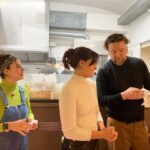
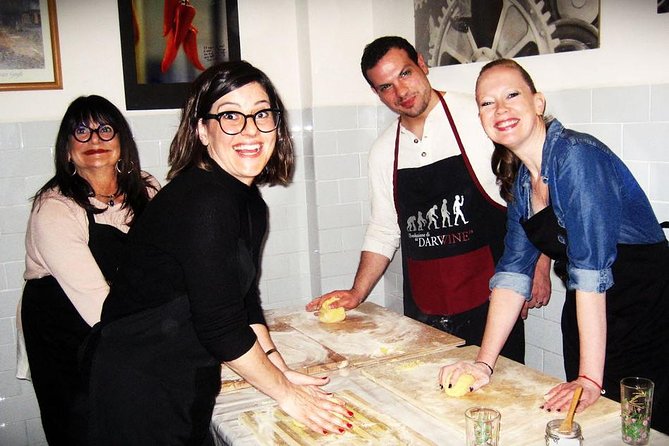
The best part of this experience starts before you cook. You’re not shepherded through a warehouse-style class. You’re hosted in a local Roman home, which changes the pace. The room feels lived-in, the teaching feels personal, and the whole evening stays focused on food instead of logistics.
Chef Sandra runs the session with the confidence of someone who’s been surrounded by cooking for years. She shared that she comes from a long line of passionate food lovers, grew up in Tuscany, spent time in Milan and Matera, and now lives in Rome. That matters, because you can feel the teaching style: she isn’t just repeating a script. She’s explaining choices—why dough behaves one way, why certain toppings make sense together, and how Roman-style pizza fits into the broader Italian picture.
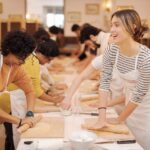
Also, the group size is capped at 6 people. That’s not a small “nice to have.” It’s the difference between listening from the sidelines and actually understanding what you’re doing when the dough hits the counter.
If you like hands-on cooking and want a real human host, this format is a sweet spot. You’ll likely spend more time talking than you expect, which is exactly what makes this class feel more like an evening with good food friends than a quick activity.
You can also read our reviews of more tours and experiences in Rome

Your Evening Plan: Panzerotti Starter, Roman Pizza Main, Dessert Finale
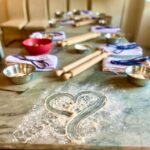
This is a 3-hour session that builds like a meal, not like a demo. The flow goes starter to main to dessert, so you’re always working toward the next bite—and you’re not stuck waiting for the food to arrive after you’re done cooking.
Starter: Fried Panzerotti
You’ll start with fried panzerotti stuffed with tomatoes, salame piccante, and cheese. This is a smart warm-up dish because it gets you thinking about filling balance right away: not too much, not too little, and how the flavors “lock in” through frying.
It’s also a nice contrast to pizza later. Panzerotti are handheld, fried, and stuffed—pizza is open-faced (or at least sliced into open sections) and baked/broiled. Learning both in one evening helps you understand dough as a flexible foundation in Italian cooking.
Main: The Real Pizza With Classic Toppings
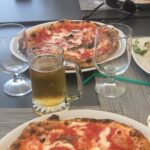
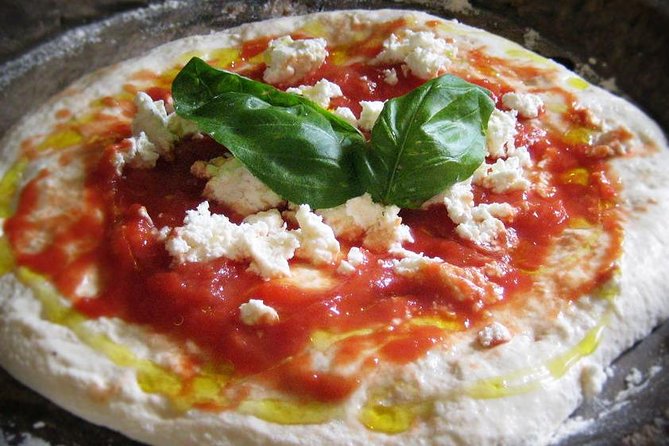
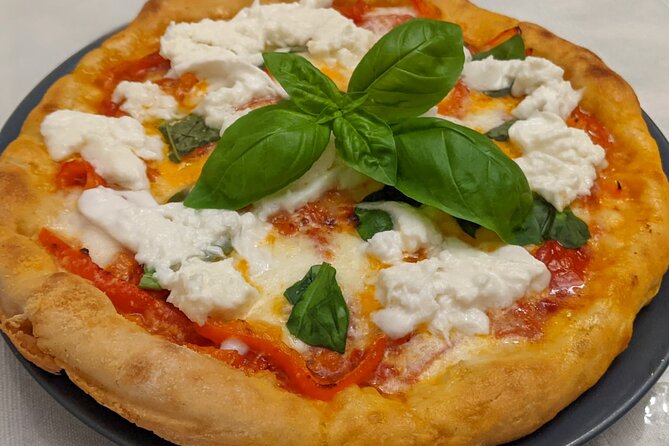
The main event is your Roman-style pizza. The sample menu describes a dough made from tender wheat organic flour—soft and sweet—paired with organic peeled tomatoes, basil, and mozzarella di bufala D.O.P. Then you’ll also work with toppings like prosciutto, plus vegetables.
I like that the menu doesn’t feel random. It gives you a clear “core” (dough + tomatoes + basil + mozzarella di bufala) and then layers it with additions that make sense in Roman flavor logic. And you’re not just topping once. Sandra teaches you to make several rustic pizzas from popular pizza-making provinces in Italy, so you’ll get variety in technique and flavor.
Dessert: Tiramisu, Panna Cotta, or Homemade Gelato
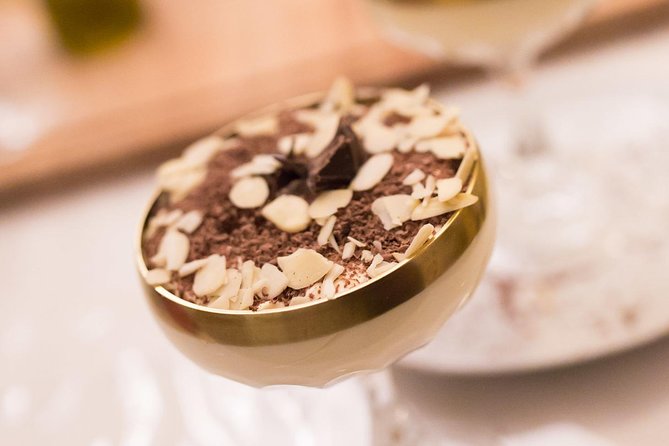
You’ll finish with an Italian delight: tiramisu, panna cotta with chocolate or different flavors of homemade gelato. Desserts like these are a good closing act because they’re not just sweet—they’re structured. Tiramisu’s layered build, panna cotta’s set texture, and gelato’s flavor-forward simplicity all reinforce the broader theme of the night: technique matters.
If you want a cooking class where the final meal actually feels like a meal, this is the right format. You’re eating what you made (and what the kitchen produced alongside your work).






Roman-Style Dough: The Thin, Airy Crunch Goal
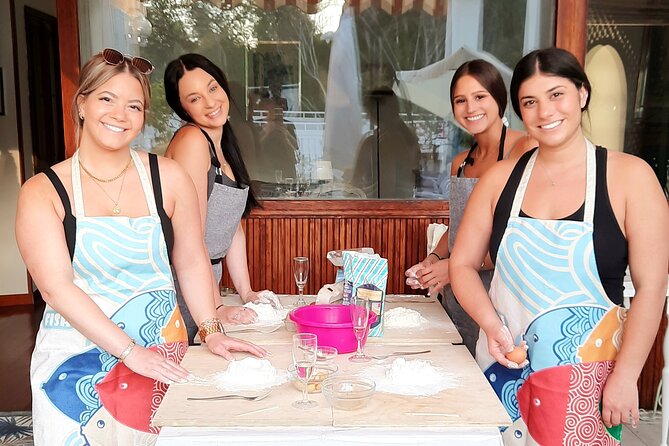
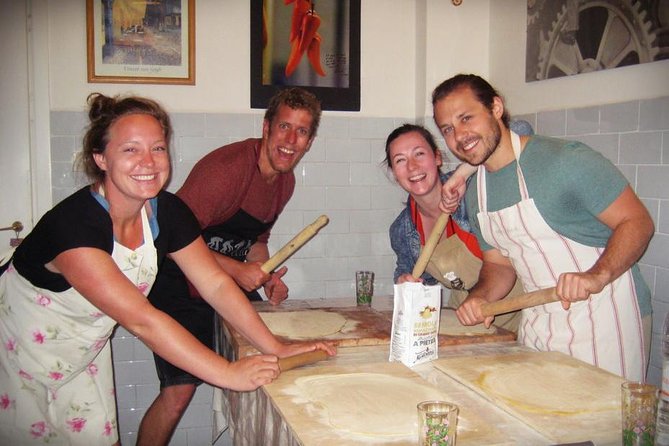
Let’s talk about the part people care about most: the pizza texture. One standout detail from the experience description and feedback is that you don’t need a wood-fired pizza oven to get a great result. You can aim for a thin-crust, airy, crunchy pizza using basic tools: a pan, a stove, and a broiler.
That’s a big deal if you cook at home. Most people can’t install a kitchen setup built for brick ovens. This class focuses on a workflow you can copy with common equipment. The goal is practical: understand dough handling and cooking steps so the crust develops the right character.
What to look for in your own cooking after the class:
- Dough behavior: how it stretches, how it holds shape, and when it’s ready to cook
- Thin crust control: getting it thin without tearing and without ending up too dense
- Heat strategy: getting browning and crisping in the right phase of cooking
The class also leans into the idea that good pizza is more about method and ingredients than fancy gear. That’s why this experience can feel almost liberating: once you learn the process, you realize you weren’t missing a secret oven—you were missing instruction.
Cooking Tips You Can Use Immediately at Home
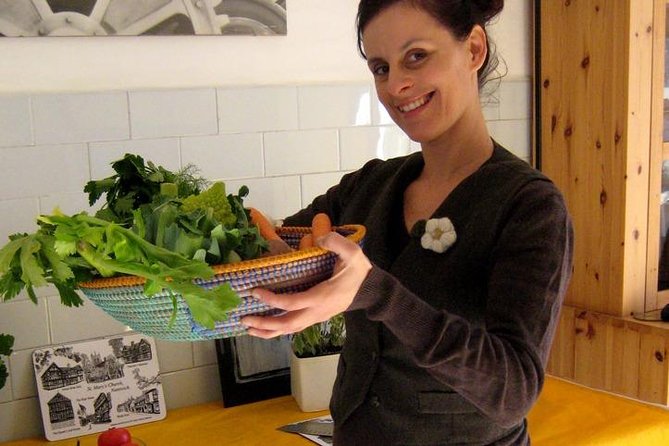
The value here isn’t only the meal. It’s the transfer of skills. Sandra’s teaching is built around helping you recreate traditional recipes once you’re back in your own kitchen.
You’ll learn expert tips tied to the dough and toppings, and you’ll get direct guidance while you’re working. With a maximum group size of 6, you’re more likely to get specific feedback instead of generic “watch what I do” coaching.
Here are the kinds of takeaways that matter when you’re trying to cook Roman-style pizza later:
- How to work with wheat flour dough (tender wheat, soft and sweet) so it behaves predictably
- How to balance sauce using organic peeled tomatoes so it doesn’t flood the crust
- How to assemble toppings so the pizza stays structured and cooks evenly
- How to use basil and mozzarella di bufala D.O.P for classic flavor without overcomplicating it
One review detail also emphasized good conversation and that the session can run longer because it’s easy to chat with Sandra. That matters because the best cooking instruction often includes little “why” answers—what to watch for, what to adjust next time, and how Italian home cooks think.
Ingredients That Make the Pizza Taste Like Italy
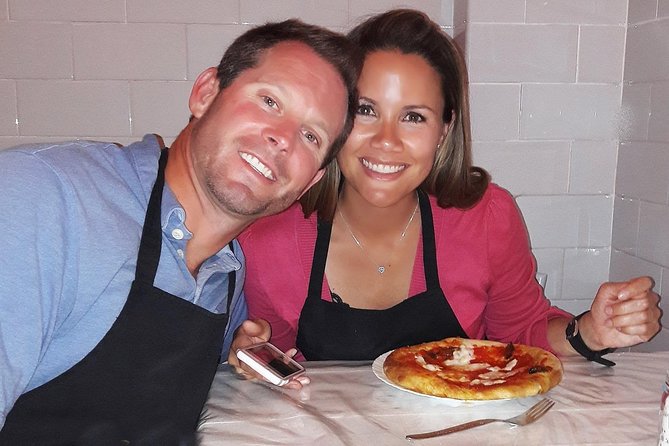
The ingredient list in the class sample menu is where you start understanding why the pizza doesn’t taste like a generic version. Organic peeled tomatoes bring sweetness and body, basil brings freshness, and the use of mozzarella di bufala D.O.P gives that distinct, creamy, milky character that’s hard to replicate if you use the wrong cheese.
Then there’s prosciutto and vegetables. This gives you a chance to see how savory toppings interact with the core base. Some pizzas become heavy when toppings are piled on. Roman-style logic leans more toward balance—enough flavor to hit, without turning the pizza into a soggy blanket.
You also get a starter stuffed with tomatoes, salame piccante, and cheese. That provides a flavor baseline for what “Italian comfort food” can mean in an everyday home context—spicy salame, tomato-forward filling, and cheese holding it together.
If you care about ingredients, this class gives you both technique and taste standards to match. That combination tends to stick in your memory longer than just the process.
Timing, Meeting Point, and How to Plan Your Night in Rome
This starts at 7:00 pm and runs about 3 hours, ending back at the meeting point. The meeting point is Via S. Fabiano, 00165 Roma RM, Italy. Since it’s a night session, you’ll want to think about what happens before you arrive.
Practical planning tips:
- Eat something light beforehand, or be ready to treat dinner as part of the experience
- Plan transportation so you’re not rushing at the start time
- Wear something comfortable for hands-on cooking (you’ll be working)
It’s near public transportation, which helps. And because it ends back where it starts, you don’t need extra navigation for the end of the night.
Also note that you’ll get a mobile ticket and confirmation at booking. That simplifies day-of logistics, especially if you’re juggling multiple activities in Rome.
Price and Value: What $130.04 Gets You Here
At $130.04 per person for about 3 hours, this class isn’t cheap—but it also isn’t priced like a big show. The value is tied to three things: a real chef, small group size, and a full meal experience (starter, pizza, and dessert).
Let’s break that down in a way that helps you decide:
- Chef-led instruction: You’re not watching from a distance. Sandra teaches, and the lesson is designed around technique you can reproduce
- Max 6 travelers: Small group means more direct coaching, which is where classes usually justify their cost
- Food included: You’re not just learning dough theory; you eat what you make and add dessert
If you’ve done cooking classes before and they felt like “stand around, take notes, leave hungry,” this format is aiming at the opposite. It’s structured as a meal and a skill-building evening.
And the best value signal from the experience itself: people highlighted that they didn’t need a wood-fired oven to get a great crust result. That kind of “you can do this at home” instruction is exactly what you want from a paid class.
Who This Workshop Is Best For (And Who Might Want Another Option)
This experience is ideal if:
- You want authentic Italian cooking in a local home setting
- You love hands-on classes more than lecture-style cooking
- You cook at home and want repeatable results, especially with limited equipment
- You’re traveling in a way that fits small groups (max 6)
It may be less ideal if:
- You want a quick, high-energy city sightseeing stop. This is a focused cooking night.
- You’re very sensitive to crowded kitchens. The group is small, but it’s still a working food environment.
If you’re a foodie who likes real technique—how dough gets its texture, how toppings affect bake performance—this is a strong match.
FAQ
FAQ
What time does the pizza workshop start?
It starts at 7:00 pm.
How long is the workshop?
The duration is approximately 3 hours.
Where do I meet for the class?
The meeting point is Via S. Fabiano, 00165 Roma RM, Italy.
How many people are in the group?
The workshop has a maximum of 6 travelers.
Is the class offered in English?
Yes, it’s offered in English.
What dishes are included in the sample menu?
The starter is fried panzerotti with tomatoes, salame piccante, and cheese. The main is The Real Pizza with options like basil, mozzarella di bufala D.O.P, prosciutto, and vegetables. Dessert includes tiramisu, panna cotta with chocolate, or homemade gelato.
Do I need to tell them about food restrictions?
Yes. You need to communicate any food restrictions (allergies, special diets, etc.) when booking.
How does cancellation work?
You can cancel for a full refund if you cancel up to 24 hours in advance of the experience’s start time.
Is it near public transportation and are service animals allowed?
Yes, it’s near public transportation, and service animals are allowed.
Should You Book This Rome Pizza Workshop?
I’d book it if you want a small-group class that treats pizza like a craft you can repeat, not a spectacle you watch. The combination of Chef Sandra, a real home setting, and a menu that includes starter, pizza, and dessert makes this feel like a night built around real Italian eating—not just a cooking activity.
One more deciding factor: if you care about cooking at home with basic equipment, the “no wood-fired oven needed” angle is a big plus. If that’s your style, you’ll likely find this workshop hits the sweet spot between fun and practical.