REVIEW · ROME
Private Villa Farnesina Experience: The Best of Renaissance Tour
Book on Viator →Operated by Through Eternity Tours · Bookable on Viator
Renaissance myth paintings in a private bubble. This 2-hour private visit to Villa Farnesina turns a famous Renaissance house into a calm, follow-the-art experience, led by an English-speaking guide who can match the pace to your questions. One thing to plan for: it’s a museum with steps and staircases, so comfortable shoes matter.
I really like the audio setup here. If you’re in a group large enough for it, included headsets help you hear the guide clearly, and the private format means you can spend more time looking instead of squeezing. One guide name that shows up in the positive stories is Brandon Green, praised for making the myths feel easy to follow.
Logistics are simple. You start at Via della Lungara, 230, and the activity ends back at the same spot, with a mobile ticket for the visit. Due to the Jubilee, some monuments may be under restoration, so read any messages you get and don’t be shocked if a detail changes.
In This Review
- Key highlights worth your time
- Why Villa Farnesina feels calmer than the big-name stops
- Private guide attention (and why it matters in fresco rooms)
- The 2-hour route: what you actually get time to enjoy
- Stop 1: Loggia di Galatea and the Triumph of Galatea
- Stop 1 continued: Loggia of Cupid and Psyche
- Stop 2: Hall of the Perspectives (where the room plays tricks)
- Stop 2 continued: The Wedding Hall and the Wedding of Alexander and Roxane
- Price and value: is $178.98 per person worth it?
- Logistics that matter on the ground
- Who this tour is best for (and who should adjust expectations)
- Should you book Private Villa Farnesina?
- FAQ
- How long is the Private Villa Farnesina experience?
- Is admission to Villa Farnesina included?
- What’s included in the tour besides the guide?
- Does the price include transportation to and from the villa?
- Where does the tour start and end?
- Can I cancel and get a refund?
Key highlights worth your time
- Skip-the-line tickets let you spend your limited time inside the villa
- Private guide attention keeps the story clear, not rushed
- Headsets for larger groups mean you can hear well without drifting closer
- Customizable pace so you can linger with the frescoes that catch your eye
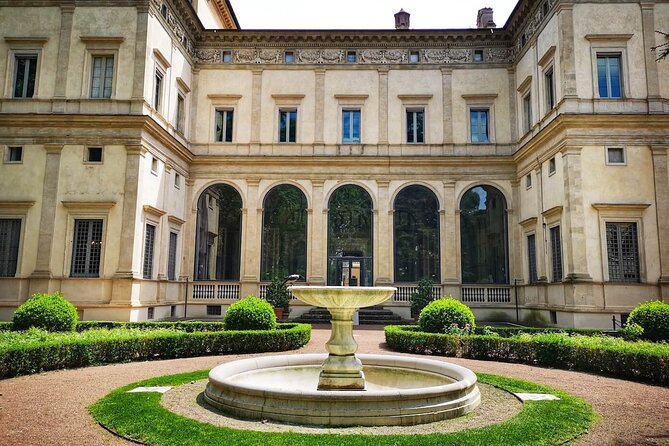
- Four signature areas covered: Loggia di Galatea, Loggia of Cupid and Psyche, Hall of the Perspectives, and the Wedding Hall
- A short, focused 2-hour route that works even on less-perfect weather days
Why Villa Farnesina feels calmer than the big-name stops
Rome has a way of turning even great art into a timed obstacle course. Villa Farnesina is different because you’re not here to fight a crowd. A private tour keeps the experience intimate, so you can actually see the paintings instead of watching other people’s heads block the view.
This is also the kind of attraction that rewards a guide. The villa’s main draw is how it blends architecture and storytelling. You’re looking at a Renaissance home built for Agostino Chigi, dated to about 1506–1510, and decorated with frescoes tied to Greek mythology and romance themes. A dedicated guide helps you connect what you’re seeing—like the myth scenes in the loggias—to the bigger idea of what the house was trying to communicate.
If you’re the type who likes an art visit where you can slow down, this fits. It’s not a full-day endurance event. It’s closer to a high-quality museum lesson where you keep control of your pace.
You can also read our reviews of more private tours in Rome



Private guide attention (and why it matters in fresco rooms)
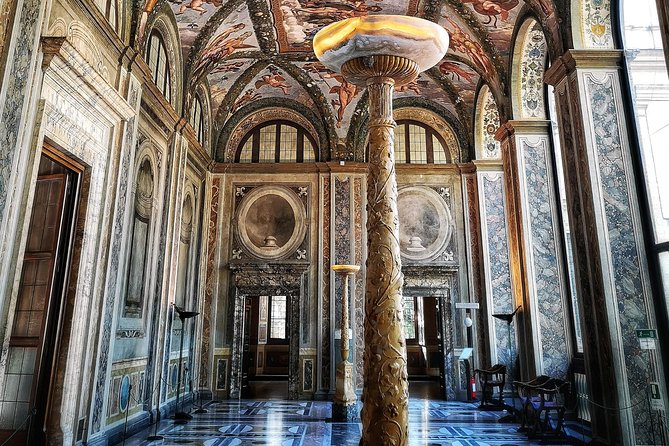
On a group tour, you often get forced into a single rhythm: look fast, move fast, hope you learned something. Here, the guide is working for your party only. That changes everything in spaces like fresco corridors and loggias, where the details are the point.
You’ll also get a clearer listening experience. For groups of 6 or more, headsets are included, so the guide doesn’t have to compete with the room’s natural noise. That might sound like a small perk, but in practice it means you’re less likely to feel lost or left behind.
One more practical win: the tour is customizable. You’re not stuck with a rigid checklist. If your eyes snag on a specific scene in a loggia, you can spend extra time there and trim time elsewhere. For fresco art, that flexibility is huge.
And yes, the personal attention is part of why people call this visit a standout. You get the kind of explanation that helps you look with intention: what the scene represents, how the design works, and why these myths show up in a Renaissance setting.
The 2-hour route: what you actually get time to enjoy
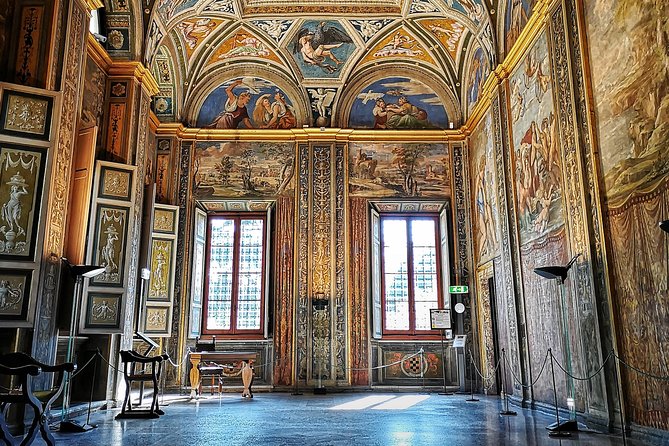
This tour lasts about 2 hours, and that timing is one of its best value drivers. You get a tight circuit through the most famous decorated zones of the villa without turning your day into a long museum slog.
Here’s the rhythm: you start at Villa Farnesina and then move through the key rooms and loggias in a way that keeps the theme coherent. In the end, you return to the meeting point.
That structure is important because the frescoes can feel overwhelming if you just walk in cold. With a guide, the visit becomes a guided reading of images. You’ll spend time in the loggias that anchor the mythology theme, then shift to the rooms that add visual drama and romance symbolism.
Also, because the tour is short, it’s easier to pair with the rest of your Rome plan. If your schedule is tight, this gives you a meaningful cultural stop without stealing half a day.
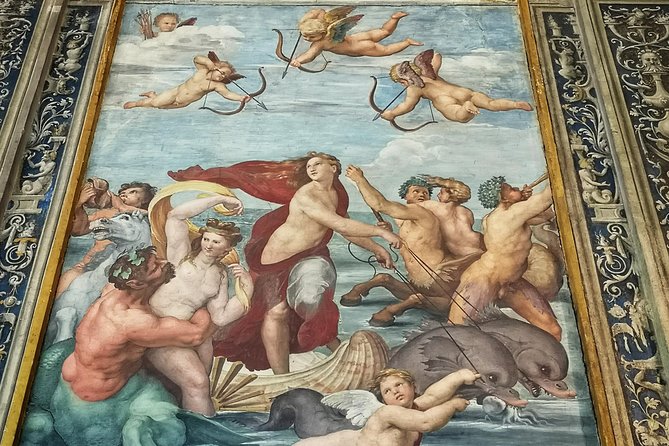
Stop 1: Loggia di Galatea and the Triumph of Galatea

The first major area on the route is the Loggia di Galatea. This is where you’ll want to anchor your attention early, because the villa’s storytelling engine really kicks in here.
This loggia includes one of the scenes people come to see: Raphael’s Triumph of Galatea. Once you know to look for it, the whole space makes more sense. The guide’s job is to help you connect the myth to the design choices around it—so you’re not just staring at paint, you’re understanding the scene.
A drawback to be aware of is simple: loggias are visual, not restful. You’ll likely spend more time standing and looking than sitting. With only about 2 hours total, it helps to wear shoes you can stand in comfortably and keep water in your bag. (Some people underestimate how long it takes to really study fresco art, even without a crowd.)
The upside is that loggias also help you get clear lines of sight. In a private format, you’re more likely to see the composition without constant interruptions.
Stop 1 continued: Loggia of Cupid and Psyche
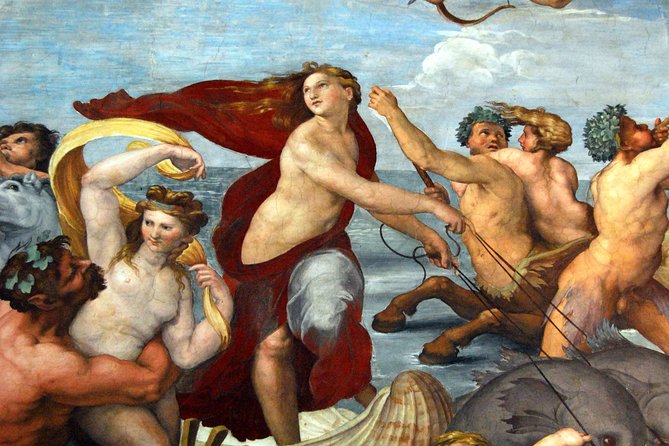
Next up is the Loggia of Cupid and Psyche. This is one of the villa’s most famous myth cycles, and it fits the villa’s overall theme of love very well.
In practical terms, this is where your guide’s explanations pay off. Greek mythology can be confusing if you’re only half-recognizing names and symbols. With a good guide, you start to connect the characters to the visual cues you’re seeing in the fresco scenes.
This loggia is also a good place to slow down. Frescoes reward careful viewing: you can track how figures are arranged and how the painting guides your eye. If you have a strong interest in Renaissance art storytelling—or you just like learning while you look—this is the moment to lean in.
And since this is private, you can stay on whatever detail caught you. If a specific panel is your favorite, you can ask questions and get the explanation that matches your curiosity, not the tour script.





Stop 2: Hall of the Perspectives (where the room plays tricks)
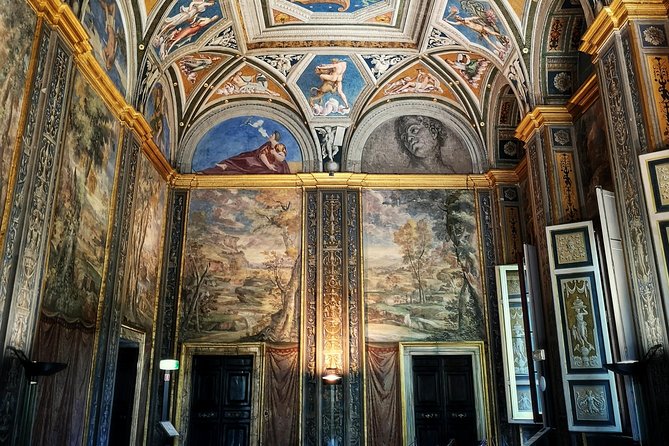
After the loggias, you move into the Hall of the Perspectives. Even without getting overly technical, the name tells you what to watch for: how the decoration affects the way space feels.
This is a space where a guide helps you make sense of what you’re seeing. Perspective-themed rooms often rely on visual effects that can be hard to notice if you’re just scanning. With the right commentary, you’ll be able to tell the difference between what’s decorative and what’s doing something optical.
A practical consideration: rooms like this can feel busy even when they aren’t crowded, because your eyes are constantly deciding where to look first. So if you’re the type who gets mentally tired in museums, ask your guide to point out the key visual features before you start trying to take it all in at once. That one small shift can make the room much more satisfying.
If you’ve ever felt that museum art labels don’t tell the full story, this is the kind of stop where an explanation can turn confusion into clarity.
Stop 2 continued: The Wedding Hall and the Wedding of Alexander and Roxane

Finally, you reach the Wedding Hall, which centers on a famous Renaissance wedding scene: the Wedding of Alexander and Roxane. This is where the villa’s love theme becomes emotionally concrete instead of myth-only.
This stop also tends to land well for people who care less about myth and more about meaning. Weddings in art are always about status, symbolism, and storytelling. In the context of this villa, it adds a different flavor to the myth cycle you’ve been absorbing in the loggias.
You’ll likely feel yourself slowing down here. It’s a strong ending point because it’s both visually striking and easy to understand once you have the background. If you’re the type who wants one or two big takeaways from a museum visit, this is a great place to get them.
And yes—people also leave feeling a bit exhausted in a good way. Two hours in this kind of decorated environment is long enough to feel your brain working, but short enough that you don’t need a nap right away.
Price and value: is $178.98 per person worth it?
At $178.98 per person for about 2 hours, this isn’t the cheapest way to see Villa Farnesina. But the pricing makes sense if you care about three things: attention, time, and clarity.
First, you’re paying for a private guide. That’s the difference between looking at famous paintings and actually understanding the scenes while you look. Frescoes can be hard to decode on your own, especially when mythology characters and symbols don’t come with instant context.
Second, skip-the-line tickets are included. In Rome, “waiting time” is one of the hidden costs of sightseeing. If you only have a small window for a villa, skipping lines helps you preserve that time for the art itself.
Third, the tour is short and targeted. You’re not paying for a long tour where you spend half the time walking between stops with little time for each. You get a focused route through the villa’s most important decorated areas.
When it’s worth it most:
- You want a guided explanation without crowd pressure
- You’re visiting during a busy season or on a day when lines could be long
- You enjoy learning from a guide while you look, not just reading captions
When it might not be worth it:
- If you already feel comfortable reading these myth scenes on your own and you prefer to wander without a structured route
- If you’re strictly budget-only and willing to accept more self-guided effort
Logistics that matter on the ground
You meet at Villa Farnesina, Via della Lungara, 230, 00165 Roma RM and the tour ends back at that same spot. That reduces stress. You don’t need to figure out a second rendezvous point.
Tickets are mobile, and confirmation is provided at booking. The tour is offered in English, and service animals are allowed.
It’s also a walking museum experience inside the villa. The info is clear about steps and staircases, so bring shoes with grip. If you’re carrying a small bag, bring a bottle of water too. Even on cooler days, standing and walking around art spaces can add up fast.
One last thing: due to the Jubilee, some monuments may be under restoration. You’ll get messages if plans change, so don’t treat that as bad news. It’s a heads-up to stay flexible.
Who this tour is best for (and who should adjust expectations)
This is a great fit if you want:
- Unobstructed, calm viewing of Raphael-linked frescoes and myth scenes
- A guide who can answer questions as you go
- A structured route that still allows your pace
- An art stop that can work even on a rainy day since it’s museum-based
It’s also smart for couples and small groups who want a quieter experience. Private tours can feel like a luxury, but here the luxury is really about attention and time with the art.
You should plan more carefully if anyone in your group has mobility concerns. The tour is described as a walking museum route with steps and staircases, but you can tell the operator about mobility needs so they can accommodate you as best they can. If you’re unsure, it’s worth asking before you go.
Should you book Private Villa Farnesina?
If you’re choosing between quick photos and a guided understanding of Renaissance storytelling, I’d lean toward booking this. The best reason is the combination of private attention, skip-the-line access, and a short, well-chosen route through the villa’s most important decorated spaces.
You’ll likely get the most out of it if you enjoy myths and art that reward close looking—especially if you want the frescos explained clearly while you stand in front of them. And if you’re coming to Rome with limited time for museums, the 2-hour format is a strong match.
One final check: wear comfortable shoes and go in expecting a walking-and-standing museum visit. Do that, and this private villa tour can turn a well-known name—Raphael, Agostino Chigi, and the myth cycles—into something you actually understand.
FAQ
How long is the Private Villa Farnesina experience?
It’s approximately 2 hours.
Is admission to Villa Farnesina included?
Yes. The admission ticket is included in the tour price.
What’s included in the tour besides the guide?
You get all fees and taxes, an expert English-speaking private guide, skip-the-line tickets, and headsets for groups of 6 or more.
Does the price include transportation to and from the villa?
No. Transportation to and from the meeting and end point is not included.
Where does the tour start and end?
It starts at Villa Farnesina, Via della Lungara, 230, 00165 Roma RM, Italy and ends back at the same meeting point.
Can I cancel and get a refund?
Yes. You can cancel up to 24 hours in advance for a full refund.