REVIEW · BORGHESE GALLERY
Rome: Private Borghese Gallery Tour
Book on GetYourGuide →Operated by TOURS OF ROME · Bookable on GetYourGuide
The Borghese Gallery is small, but it hits hard. This private, fast-track tour gets you into Rome’s treasure-house of paintings and sculptures without the usual waiting, with an art historian guide leading the way through the collection. Two big wins: you’ll spend your limited time on the right works, and you’ll see how the Borghese collection was shaped by major Renaissance and Baroque artists.
I also love the personal pacing here. With a private group format, your guide can slow down when a work deserves it (and speed up if you’re itching to move on). If you want the highlights plus the context that makes them click, this is a strong fit.
One possible consideration: there are some hard rules once you arrive—no bags (they must go in the museum cloak room) and no photography inside—and the dress code is formal. It’s easy to work around, but you’ll want to plan for it before you show up with a daypack.
In This Review
- Key points to know before you go
- Fast-Track Entrance Into the Galleria Borghese
- How a Private Art-Historian Tour Changes Everything
- Caravaggio in Front of You: The Works That Make People Stop
- Raphael and the Painting World Beyond Caravaggio
- Bernini’s Impact: Sculptures You Can Read With Your Eyes
- Ancient Mosaics and Antiquities: The Bonus That Adds Depth
- The Villa Borghese Story: Why the Setting Feels Like Part of the Art
- Practicalities: Where to Meet, What to Wear, What to Leave Behind
- Price and Value for a Private Tour Up to Two
- Who This Tour Fits Best (and Who Might Want Another Option)
- Should You Book This Private Borghese Gallery Tour?
- FAQ
- Where is the meeting point for the tour?
- How long is the private Borghese Gallery tour?
- Is this a private group tour?
- What languages is the live guide available in?
- What’s included in the price?
- What’s not included?
- Can I bring a bag into the museum?
- Is photography allowed inside the Borghese Gallery?
- What should I wear or bring?
- Is there free cancellation, and is pay later available?
Key points to know before you go
- Fast-track entrance means less time in lines and more time with the art
- Art historian guide brings context for Caravaggio, Raphael, Bernini, and more
- Paintings + sculptures + antiquities all in one 17th-century palace setting
- Borghese family story helps you understand why this collection looks the way it does
- Clear museum rules (no bags, no photos) affect how you pack and move
Fast-Track Entrance Into the Galleria Borghese
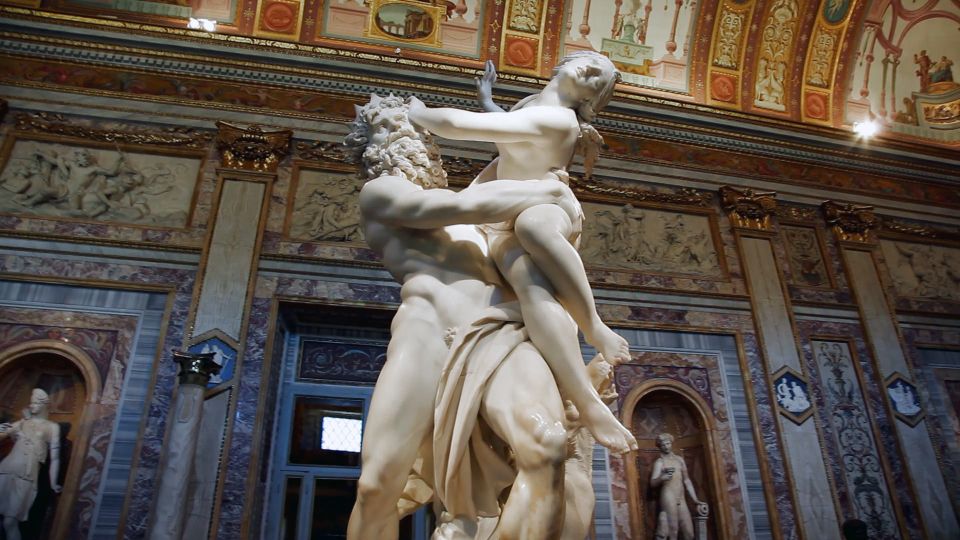
The big practical win is the skip-the-ticket-line part. The Galleria Borghese is famous, and that fame creates lines. Instead of spending your tour time shuffling with everyone else, you’re set up to get moving inside quickly.
Timing matters because this is a 2.5-hour private experience. You don’t want to burn the first half hour just entering the building. With fast-track access, you can spend your energy where it counts: looking closely, listening, and making sense of what you’re seeing.
Also, the tour starts right at the Galleria Borghese entrance area: Piazzale del Museo Borghese, 5, 00197 Roma. That matters because this is one of those sights where showing up “nearby” can still cost you time. You’ll have fewer stress points if you’re already in the right pocket of the museum grounds.
You can also read our reviews of more tours and experiences in Borghese Gallery.
How a Private Art-Historian Tour Changes Everything
This is not a “walk by, glance, move on” situation. You’re on a private tour with an art historian guide, which means the route and pace are built around explanation, not just logistics.
In a gallery like this, the most frustrating problem is usually the same: you stand in front of a masterpiece and realize you don’t know what you’re looking at. A good guide fixes that. Here, you’ll get help connecting the dots between artists, the Borghese collection, and the kinds of works you’re moving through—paintings, sculptures, and even ancient mosaics.
Language options are English and Italian, so if you’re comfortable in either one, you can actually follow the discussion without doing mental translation in your head. And because it’s private, you’re not stuck in a group conversation pace that fits someone else’s attention span.
One more detail that matters: the gallery is in a 17th-century palace setting. That changes the feel from a modern museum. The collection is part of the building’s personality, not just displayed inside it.
Caravaggio in Front of You: The Works That Make People Stop
If your travel list includes Caravaggio, this is one of the best ways to see him in Rome without turning your visit into a scavenger hunt.
This tour is designed around major Caravaggio works in the Borghese collection, including Boy with a Basket of Fruit, St Jerome Writing, and Sick Bacchus. Even if you’ve seen reproductions online, seeing these paintings in person changes the experience fast. The brushwork, the lighting effects, and the intensity of the figures are the point.
Caravaggio also helps explain why the Borghese collection feels so dramatic. The Borghese family were collectors with taste—and with nerve. When your guide points out what makes these works so specific, you start noticing details you’d otherwise miss: how the light shapes emotion, how the body language sells the story, and how the artist’s style makes the scene feel immediate.
If you tend to like art when it has a clear emotional punch, you’ll probably enjoy this section the most. It’s not abstract. It’s direct. And with a guide talking you through the why, the paintings click faster.
Raphael and the Painting World Beyond Caravaggio
Caravaggio is the headline, but the gallery doesn’t stop there. You’ll also see major works by other giants, including Raphael’s Entombment of Christ and Titian’s Sacred and Profane Love.
Why this matters: it prevents your visit from becoming a one-note experience. If you only focus on Caravaggio, you might miss how the Borghese collection bridges different schools and moods—religious intensity on one side, human drama and allegory on the other.
Raphael’s work is especially useful for understanding how the Borghese collectors balanced devotion and drama. And Titian’s piece gives you something different to chew on: it’s not just a religious scene; it’s a story with layers, and it’s exactly the kind of work a guide can help you “read” rather than just look at.
You’ll also encounter works by Peter Paul Rubens and Federico Barocci. That broader mix is where the collection becomes more than a list of names. It turns into a picture of what the Borghese family wanted art to do: impress, provoke thought, and show power through culture.
Bernini’s Impact: Sculptures You Can Read With Your Eyes
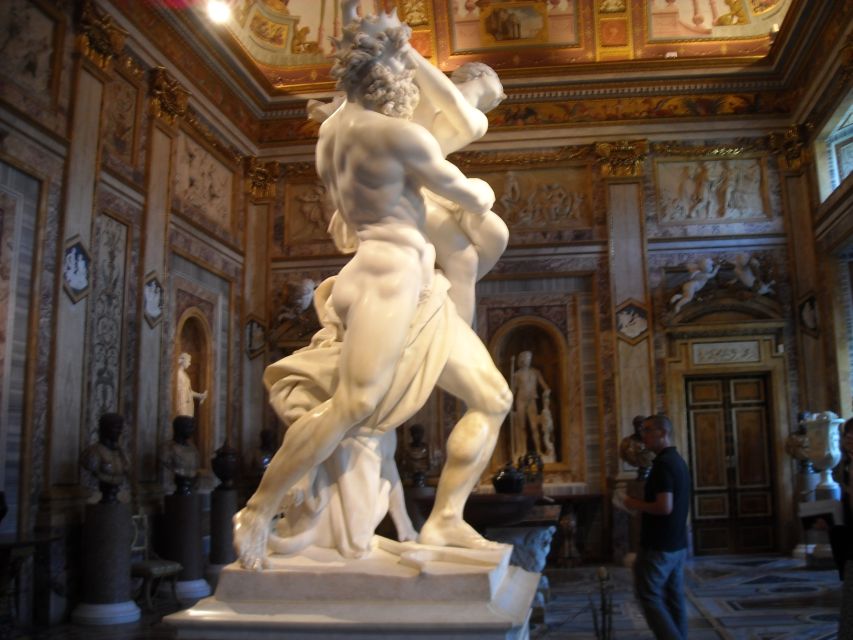
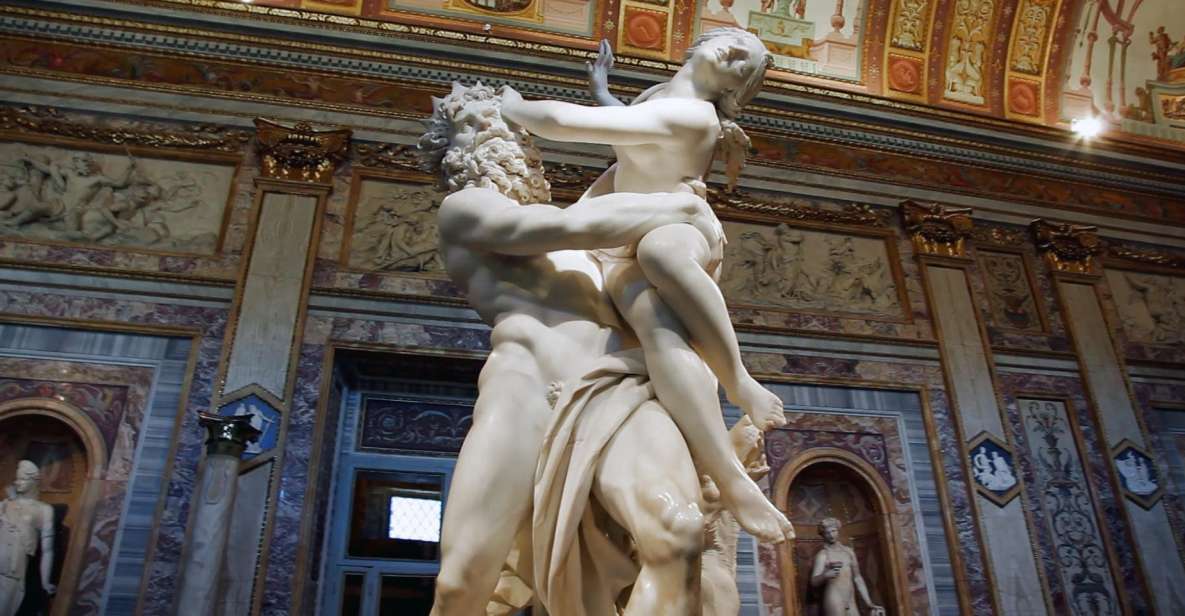
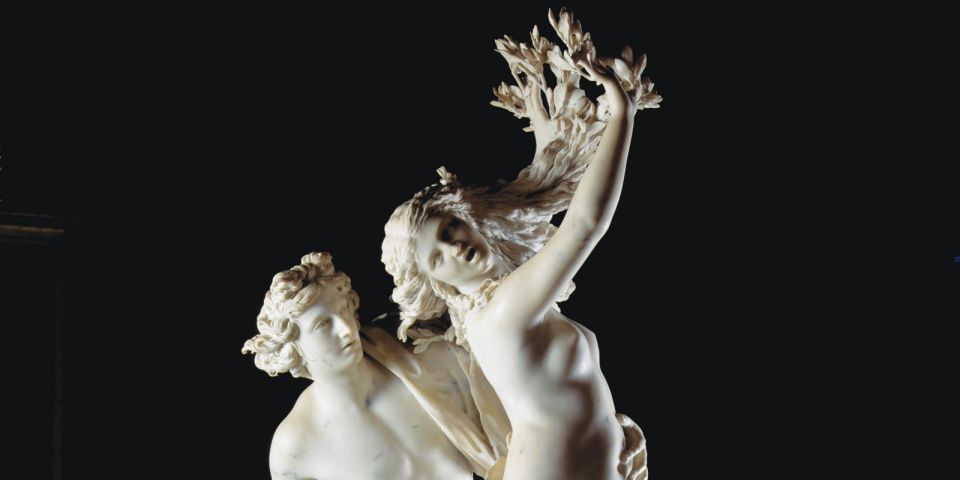
The Borghese Gallery is where Gian Lorenzo Bernini becomes unavoidable—in the best way. Even without focusing on a single named sculpture, the tour is built to include Bernini’s world as part of the overall experience.
Here’s what you’ll likely enjoy about this section: sculpture in a space like this isn’t static. It lives in the room. From different angles, it feels like the figures shift, and details become clearer once you know what to look for.
A private guide helps you approach sculpture differently than you would on your own. Instead of walking around, you’ll learn where to stand, what expressions and gestures mean, and how Bernini’s style fits the collector’s tastes. That context makes the sculptures feel intentional, not just impressive.
And because the Borghese collection also includes ancient elements (like mosaics), Bernini’s pieces gain an extra layer. The gallery becomes a conversation across time: ancient fragments, Renaissance painting, Baroque sculpture, and the collector who wanted them all under one roof.
Ancient Mosaics and Antiquities: The Bonus That Adds Depth
One of the nice surprises is that the tour doesn’t only focus on famous paintings and sculpture. You’ll also see ancient mosaics and other antiquities in the Borghese collection of paintings, sculpture and antiquities.
This matters because it changes the way you understand the museum. The Borghese Gallery isn’t just a stage for individual masterworks—it’s a designed collection built to communicate taste and status.
When mosaics and antiquities are part of the conversation, you can start noticing how collectors thought. They weren’t only buying art; they were building a world. And the guide’s explanations help you see how the collection’s parts connect rather than feeling like separate rooms of unrelated masterpieces.
The Villa Borghese Story: Why the Setting Feels Like Part of the Art
A big reason this tour works well is that it doesn’t treat the palace like a neutral container. The Borghese Gallery is housed in the former Villa Borghese Pinciana, and the setting is part of the story.
This villa was built by the architect Flaminio Ponzio, using sketches associated with Scipione Borghese himself. The tour context also explains that Scipione used the villa as a suburban villa—basically a country villa on the edge of Rome. That “edge” position matters: it shaped the villa as a retreat, not just an urban museum.
Scipione Borghese was the nephew of Pope Paul V (who reigned 1605–1621) and was an early patron of Bernini. He was also an avid collector of Caravaggio, which is why those works are so strongly represented, including the three famous titles mentioned earlier.
For you as a visitor, the setting adds a practical bonus: you start to feel the collection as a product of a person with a plan. Once that idea lands, it becomes easier to understand why certain artists show up again and again.
Practicalities: Where to Meet, What to Wear, What to Leave Behind
You meet at Galleria Borghese, Piazzale del Museo Borghese, 5. Your guide will be waiting holding a sign with the company name at the meeting point—useful because museum signage can be confusing in the real world.
Comfort matters. Bring comfortable shoes. You’ll be moving through rooms and viewing points, and galleries are not where you want to suffer in stiff footwear.
Now, the rules:
- No bags are allowed inside. You’ll need to check your handbags or backpacks in the museum cloak room before the tour starts.
- No photography is allowed inside.
- Dress code is formal.
That’s the one area that can catch people off guard. If you’re traveling light, you’ll be fine. If you’re used to carrying a camera bag or a tote everywhere, you’ll need to adjust your packing habits. Also, if photography is important to you, you’ll want to rely on memories and notes instead.
Price and Value for a Private Tour Up to Two
At $458.47 per group (up to 2), this isn’t a budget tour. But it’s also not just you paying for a ticket. You’re paying for three things that have real value in the Borghese Gallery: private access, fast-track entrance, and an art historian guide with entrance fees included.
Here’s how to judge value the smart way. For two people, you’re effectively buying time and attention. You’re not sharing a guide with a large group, so explanations can match your pace and interests. And you’re not losing tour minutes standing in line.
If you were going to visit anyway, compare what you’d pay for entry tickets plus the time and stress of figuring out what to see. This tour’s price makes more sense when you care about understanding the art, not just checking it off.
Also, the tour ends back at the meeting point, which keeps things tidy.
Who This Tour Fits Best (and Who Might Want Another Option)
This private Borghese Gallery tour makes a lot of sense if you:
- want Caravaggio, Raphael, and Bernini together in one visit
- prefer a guide who explains rather than just points
- have limited time and want to make it count in a famous gallery
It’s also ideal if you don’t want to roll the dice on what you’ll enjoy most. A good guide steers you toward the works that fit the collection’s overall story.
If you’re the type who loves wandering freely with no structure, you might find a guided private route too focused. And if you hate the idea of no photography or the hassle of cloak-room bag check-in, you may feel boxed in. In that case, you might prefer a self-guided visit.
Should You Book This Private Borghese Gallery Tour?
Book it if you want the Borghese Gallery to feel clear, not chaotic. The combination of fast-track entrance, a private art historian guide, and a focus on the big hitters—Caravaggio, Raphael, Bernini, and more—makes this a strong value for couples or two friends.
Skip it if your priority is spontaneity with zero rules. The tour’s restrictions (no bags, no photos, formal dress) are manageable, but they’re real. If you can handle those, you’ll likely come away with a much better understanding of why this collection matters.
If you’re trying to choose between seeing a lot fast and seeing fewer things well, this one leans toward the second option—and in a gallery like the Galleria Borghese, that’s usually the right choice.
FAQ
Where is the meeting point for the tour?
The tour starts at Galleria Borghese, Piazzale del Museo Borghese, 5, 00197 Roma.
How long is the private Borghese Gallery tour?
The duration is 2.5 hours.
Is this a private group tour?
Yes. It is a private group tour, priced per group up to 2, with a minimum requirement of 2 adults for the tour to run.
What languages is the live guide available in?
The live tour guide is available in English and Italian.
What’s included in the price?
The tour includes an art historian guide, private tour, and entrance fees.
What’s not included?
The tour does not include food and drinks, and it does not include transportation to and from the attractions.
Can I bring a bag into the museum?
No. Bags are not allowed, and you will need to check your handbags or backpacks at the museum cloak room before starting.
Is photography allowed inside the Borghese Gallery?
No. Photography is not allowed inside.
What should I wear or bring?
Bring comfortable shoes. The dress code is formal.
Is there free cancellation, and is pay later available?
Yes. You can cancel for a full refund up to 24 hours in advance, and you can reserve now & pay later.