REVIEW · ROME
Pasta and Tiramisu Making Class with Fine Italian Wine in Rome
Book on Viator →Operated by EC Tours · Bookable on Viator
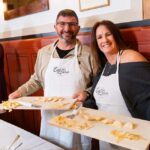
Handmade pasta starts with your own hands. In this 3-hour class near the Colosseum, you work with pasta dough from scratch and learn techniques you can actually repeat later, with Italian wine paired to what you’re cooking. The best part is the human touch: chefs such as Alessandro, and the team members Marco and Max, bring clear instruction and serious kitchen joy.
I also love the pace for a busy Rome itinerary. The group stays small (max 10), so you get coaching while you shape, fold, and plate instead of watching from the back row. And you leave with recipes that match what you made, so you’re not stuck with a photo and a memory.
One consideration: this experience is not recommended for celiac people. If you have dietary restrictions, you can request accommodations, but for celiac, they advise you not to book—so double-check before you commit.
In This Review
- Key highlights you’ll feel right away
- Why the Colosseum area is smart for a cooking class
- Piazza Mattei meet-up: close to the action, easy to start
- Two types of fresh handmade pasta: dough, rolling, and technique
- Ravioli crafting: where patience becomes pasta magic
- Wine pairing: Italian wine chosen to match your food
- Tiramisu master class: the real lesson is layering
- The small-group vibe: why max 10 matters
- Recipes to take home: practical value, not just souvenirs
- Price and value: what $119.47 is really covering
- Who should book this pasta and tiramisu class
- Should you book this Rome class?
- FAQ
- Where is the meeting point for the class?
- How long does the pasta and tiramisu making class take?
- How many people are in the class?
- What will I make during the class?
- Are recipes included?
- Is wine included?
- Is this class suitable for celiac people?
- What is the cancellation window?
Key highlights you’ll feel right away
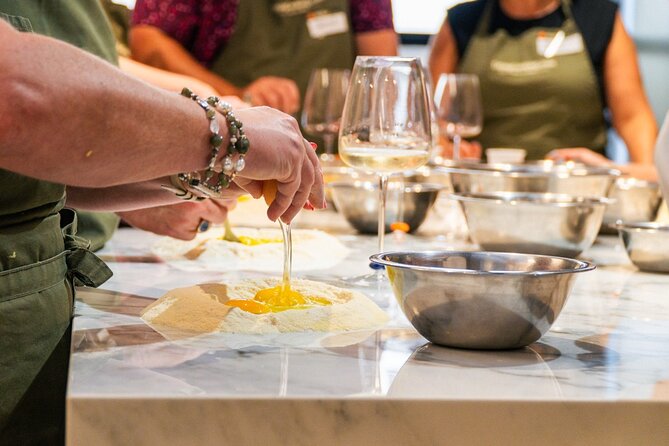
- Max 10 people keeps the class social, not chaotic
- Homemade dough and rolling help you understand how pasta behaves
- Ravioli crafting teaches filling, shaping, and folding in real time
- Tiramisu layering focuses on the exact assembly for a clean set
- Italian wine pairing is chosen to complement your food
- Recipes included so your next attempt at home isn’t guesswork
Why the Colosseum area is smart for a cooking class
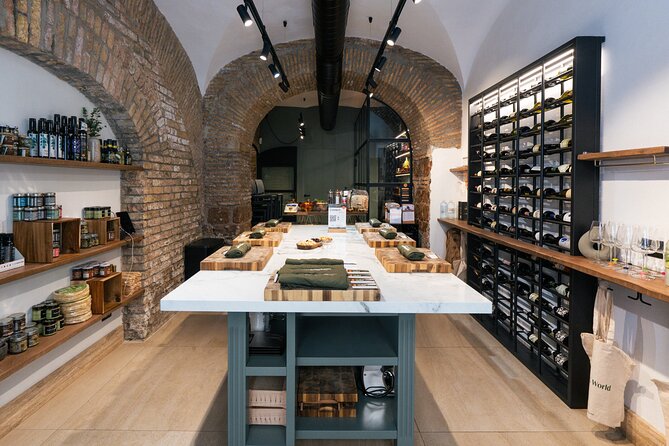
Rome is great for big sights, but cooking classes can fit your day better than you think. This one runs in the Colosseum area, which means you can tack it onto a sightseeing rhythm without needing a long commute across town.
The class lasts about 3 hours. That’s long enough to learn real skills—dough, shaping, and dessert layering—without eating up an entire afternoon. You also get the satisfaction of eating what you make, rather than leaving hungry and hoping dinner is nearby.
And because the group is capped at 10, the energy stays warm and conversational. You’re not just a pair of hands at a station. You’ll ask questions, get corrected on technique, and then do it again. That matters with pasta and tiramisu, where small changes in pressure, thickness, or layering show up fast.
You can also read our reviews of more cooking classes in Rome

Piazza Mattei meet-up: close to the action, easy to start
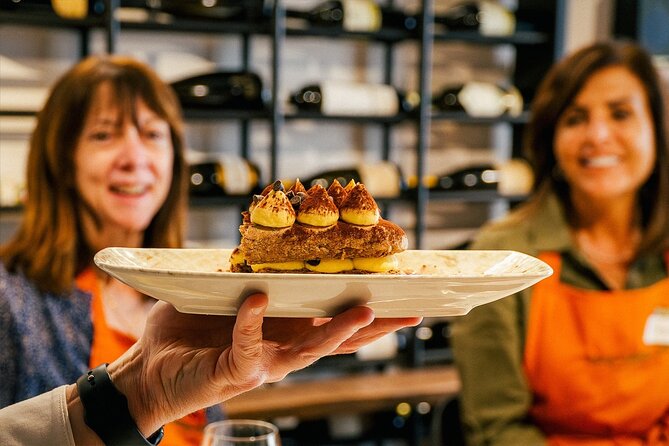
The meeting point is Piazza Mattei, 5, 00186 Roma RM, Italy. You’ll start and end back at the same location, so there’s no awkward “walk here on your own” part at the end.
They use a mobile ticket. In practice, that’s one less thing to manage when you’re juggling tickets for ruins and museum lines. You also receive confirmation at booking time, which helps you feel set before you reach the city.
One more practical note: since this is an English-offered experience, you can focus on the cooking instead of playing translation roulette. That’s especially useful for tiramisu, where the instructions are about consistency and timing, not just ingredients.
Two types of fresh handmade pasta: dough, rolling, and technique
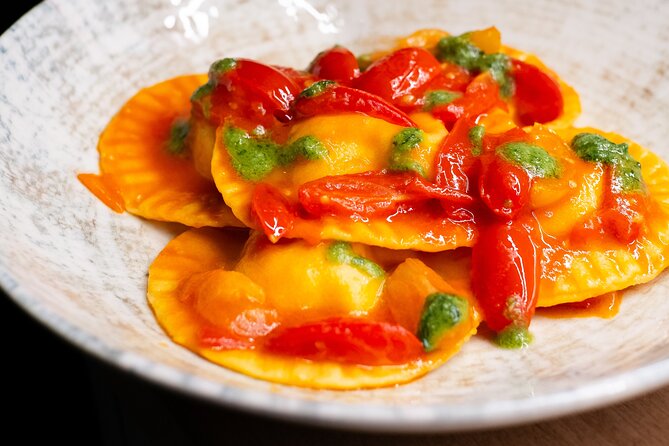
This is the part of the class that most people come for: making pasta dough from scratch. You’ll watch an initial demonstration first, then you’ll build your own pasta work from there. The instruction includes the dough process and rolling techniques—how to get the thickness you want and how to handle the dough without tearing or sticking.
You’ll make two types of handmade pasta. One of them is ravioli, where the class guides you through filling, shaping, and folding. The value here isn’t only learning a recipe. It’s learning the logic behind the method.
Here’s what you’re really training:
- Dough behavior: Fresh dough changes as you work with it. You learn what it should feel like before it’s time to roll.
- Thickness control: Too thick, and the bite is heavy. Too thin, and it’s easy to compromise the shape.
- Sealing and shaping: Ravioli is all about getting the edges right so you don’t lose filling during cooking.
I like that the class doesn’t treat ravioli like a shortcut. It’s taught as a craft. You’ll get hands-on time to apply what you learned with the chef’s guidance, then you taste what you produced.
Also, because you’re in a small group, you’ll see variations in how different people handle the dough. That helps you adjust quickly if your first try isn’t perfect.
Ravioli crafting: where patience becomes pasta magic
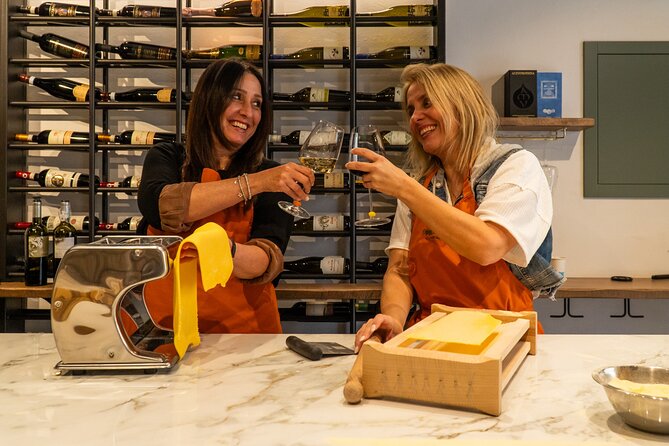
Ravioli can look intimidating in photos. In real life, it’s more doable because the class breaks it into steps: filling, shaping, folding, and finishing.
The big win is that you’re not just making dumplings—you’re learning how to build a consistent pocket. That consistency affects every bite. If your filling is too much, it can stretch the dough. If the fold is too loose, it can open. You’ll get coaching on these exact points.
This is also a place where the chef’s personality really matters. The reviews highlight how chefs such as Alessandro (and the team including Marco and Max) were charismatic and gave clear instructions that kept the process fun instead of stressful. In a hands-on class, that kind of calm guidance can make the difference between learning and giving up halfway.
And yes, you’ll get to eat what you make. That tasting at the end is the payoff: you’ll understand the results of your own technique, not just the theory.
Wine pairing: Italian wine chosen to match your food
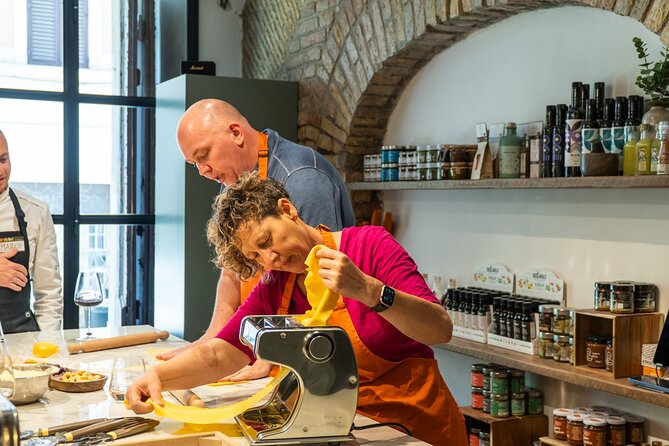
This experience includes sipping Italian wine selected to complement the dishes. It’s not just a random glass. The idea is pairing—matching flavors so the pasta and dessert taste even better.
I like wine pairing in classes because it helps your brain connect what you taste with what you cooked. When the chef explains a choice and you try it alongside pasta and then tiramisu, you start recognizing how Italian cooking balances richness, acidity, and comfort.
If you’re the type who enjoys food and drinks, this is a strong part of the value. You’re getting more than cooking instructions—you’re getting a guided approach to taste.
You can also read our reviews of more wine tours in Rome


Tiramisu master class: the real lesson is layering
Tiramisu is simple on paper and tricky in execution. This class teaches the classic dessert through hands-on assembly, focusing on the exact layering that creates a satisfying texture.
You’ll make your tiramisu yourself. That means you learn how to build layers so the dessert sets properly and doesn’t end up soupy or uneven.
What you’re paying attention to:
- Layer order: It affects how the cream and coffee soak interact.
- Texture and thickness: Too thick or too thin changes how the final dessert cuts.
- Even coverage: Patchy layering shows up in the bite.
This is also where a small group helps again. You can ask questions, get feedback on how your layers look, and adjust before it’s too late.
And because the class ends with tasting your prepared dishes, you get immediate feedback. It’s one thing to be told the tiramisu should be balanced. It’s another to taste your own and notice where it’s hitting the mark.
The small-group vibe: why max 10 matters
Food classes can turn awkward if the group is too large. Here, the cap is max 10 people, which keeps it sociable but still personal.
In the reviews, people loved the cozy, clean setting and the intimate feel—particularly for groups around eight. That’s the sweet spot: close enough to chat, but small enough for the chefs to correct your technique.
Also, because you’re making multiple components (two pasta types plus ravioli and tiramisu), the class needs momentum. A small group keeps the flow smooth. You’re not waiting endlessly for someone else to catch up.
If you want an experience that feels like learning with friends—rather than performing on a stage—this format is a big plus.
Recipes to take home: practical value, not just souvenirs
This class includes recipes for the pasta dishes and tiramisu. For me, this is what makes the experience last longer than the meal.
A lot of cooking tours give you a general story and a memory. Here, you get the exact kind of guidance you need to recreate your results. That matters because pasta and tiramisu aren’t only about ingredients. Technique is half the battle.
Here’s how to use the recipes effectively:
- Read through once before cooking again, so you know where the steps are sensitive.
- Treat your first attempt as a practice run. Fresh pasta is a learning curve.
- Keep your notes from what the chef corrected. That’s where the real improvement happens.
If you’ve ever tried to repeat a recipe at home and thought, I did everything and it still didn’t work—this is the kind of class that can help you close that gap.
Price and value: what $119.47 is really covering
At $119.47 per person, this isn’t a cheap activity. But it’s also not just a small snack with a cooking demo. You’re getting:
- An expert-led class
- A small group capped at 10
- Two types of fresh handmade pasta from scratch, with recipes
- A tiramisu master class, with recipes
- Italian wine chosen to complement the food
- A tasting of what you made
- About 3 hours of guided, hands-on time
When you compare it to doing pasta and dessert separately on your own—plus the cost of ingredients and the learning curve—this starts to look like a fair deal for what you receive. You’re paying for instruction, structure, and the fact that someone corrects your technique while you’re still in the learning phase.
For couples or friends, the value can feel even better because you’ll cook together, eat together, and leave with a skill you can repeat.
Who should book this pasta and tiramisu class
You’ll likely love this if you:
- Want a hands-on food experience, not a sit-and-watch show
- Enjoy Italian food enough to learn the process behind it
- Like small-group activities where you can ask questions
- Want recipes so you can repeat the results at home
You might want to skip (or ask more questions first) if:
- You are celiac. The experience is not recommended for celiac people.
- You’re looking for a deep-dive about Roman history. This tour is focused on cooking and tasting.
For dietary needs beyond celiac, they say they can accommodate dietary restrictions, but you should contact them to specify what you need. That’s the smart move here.
Should you book this Rome class?
If you want one “food memory” from Rome that comes with real skills, I think this is an easy yes. The combination of hands-on pasta dough, ravioli shaping, and a practical tiramisu layering lesson is exactly what makes cooking classes worth the money.
The small-group cap of max 10 helps you feel involved, and the chef energy—highlighted by the charisma and clear coaching from people like Alessandro, Marco, and Max—turns technique into something you can actually learn.
Just be honest about the celiac note. If that applies, don’t gamble. If it doesn’t, this is a fun, social, and very doable way to spend 3 hours in Rome and leave with recipes you’ll use.
FAQ
Where is the meeting point for the class?
You meet at Piazza Mattei, 5, 00186 Roma RM, Italy. The class ends back at the same meeting point.
How long does the pasta and tiramisu making class take?
The experience lasts about 3 hours.
How many people are in the class?
The group is capped at a maximum of 10 people.
What will I make during the class?
You’ll make two types of fresh handmade pasta from scratch (one portion includes ravioli), and you’ll also create classic tiramisu.
Are recipes included?
Yes. You receive recipes for the pasta dishes and tiramisu so you can recreate them at home.
Is wine included?
Yes. You’ll sip Italian wine that’s chosen to complement the food.
Is this class suitable for celiac people?
No. It is not recommended for celiac people. The company says they can accommodate dietary restrictions, but celiac needs are specifically not recommended—so contact them if you’re unsure.
What is the cancellation window?
Free cancellation is available up to 24 hours in advance for a full refund. If you cancel less than 24 hours before the start time, it won’t be refunded.