REVIEW · ROME
Pasta and Tiramisù Cooking Workshop in the Heart of Rome
Book on Viator →Operated by iQook Experience · Bookable on Viator
Fresh pasta beats any souvenir.
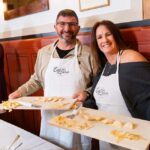
This Rome workshop turns an Italian meal into a hands-on evening, with you shaping fettuccine and ravioli and finishing with tiramisu. What makes it appealing is the way the class stays focused: small group energy, clear steps, and an end-of-class lunch you actually sit down to enjoy in the same space.
What I especially like is the tight class size (it’s capped at six), which means you get real guidance while you’re working the dough, rolling, and filling. You also get practical take-home help: many people mention they receive the recipes after the class, so the skills don’t vanish when you go home. One thing to consider: the exact way your pasta is cooked and served can vary, so if you’re expecting ultra-personal portions made only for you, manage that expectation.
In This Review
- Key highlights worth your time
- Why this Rome cooking workshop feels different than a quick demo
- The staff and teaching style: where names like Danilo and Agnese come in
- Making fettuccine and ravioli: the core skills you’ll actually use
- Fettuccine: rolling, thickness, and getting the strands right
- Ravioli: filling, shaping, and sealing with confidence
- One practical consideration about cooking and serving
- Your lunch comes with wine and aperitivo-style drinks
- Tiramù time: why the dessert lesson sticks with you
- Location near Via Firenze and how to plan your 6:00 pm start
- Price and value: what $66.52 buys you in Rome
- Who should book this class (and who might want to skip it)
- Booking tips: how to get the smoothest evening
- Should you book Pasta and Tiramisù in the Heart of Rome?
- FAQ
- What is included in the Pasta and Tiramisù Cooking Workshop in Rome?
- How long is the cooking class?
- What time does the class start?
- Where do I meet for the workshop?
- Is the class offered in English?
- What is the group size limit?
- What beverages are served during the class?
- Will I receive recipes after the workshop?
- Is the location easy to reach using public transportation?
- What is the cancellation policy?
Key highlights worth your time
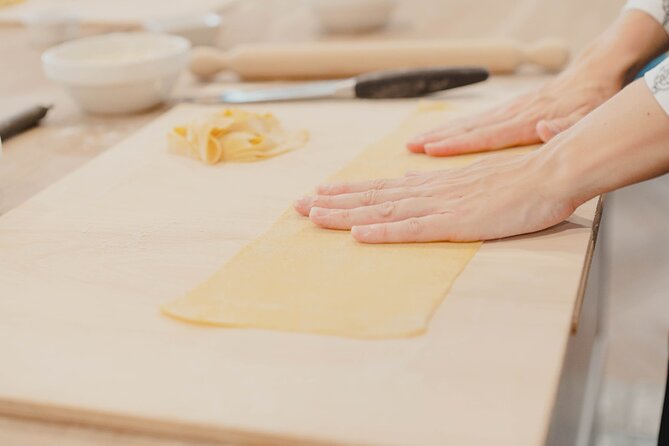
- Six-person cap for real attention: fewer interruptions, more help while you’re kneading, rolling, and assembling.
- Two pasta styles from scratch: you’ll learn fettuccine and ravioli techniques start to finish.
- Tiramisù as the dessert win: you finish with a classic you can repeat at home.
- Lunch plus drinks included: expect wine and aperitivo-style drinks like Prosecco and limoncello, with non-drink options too.
- Recipes sent after class: feedback points to an email follow-up with what you made.
Why this Rome cooking workshop feels different than a quick demo
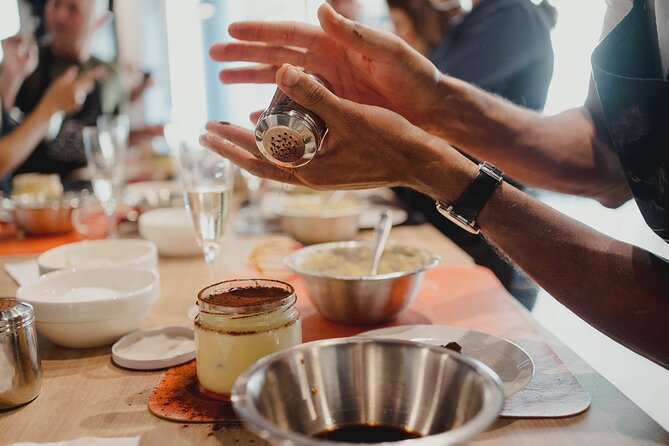
If you like your travel memories edible, this is the kind of evening that makes sense. Instead of watching someone else do everything, you work the dough, make the shapes, and then enjoy what you helped create. That matters in Rome, where so much of the food scene is about sampling and ordering. Here, you get the skill behind the taste.
The setting adds to the vibe. The class happens in a modern, clean space near Rome’s Opera House area, and it’s also close enough that people have described it as handy from Roma Termini. That combination is practical: it’s easy to fit into your itinerary without hunting across the city after a day of sightseeing.
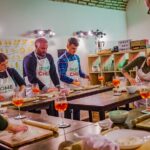
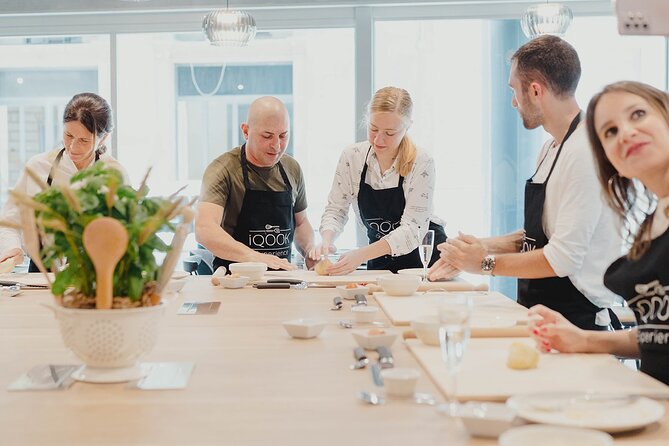
The group size is the real engine of the experience. With a cap of six, it doesn’t turn into a crowded cooking show. You can ask questions while you’re working, and you’re not stuck waiting for a long line of people to be helped. That’s the difference between feeling like you participated and feeling like you learned.
You can also read our reviews of more cooking classes in Rome

The staff and teaching style: where names like Danilo and Agnese come in
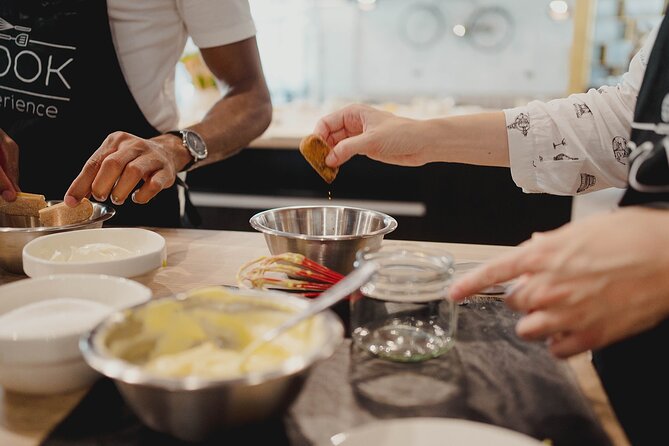
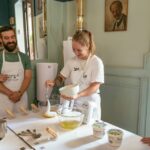
You may see different instructor names depending on the day, and multiple people mention Danilo and Agnese (often spelled Agnes/Agnese). The pattern is consistent: patient teaching, clear instructions, and a relaxed pace that helps you understand the why behind the steps.
Here’s what good coaching looks like in a pasta workshop:
- someone talks you through technique before you start rushing,
- the guidance is specific while your hands are busy,
- you get feedback when the dough feels off, or when rolling thickness isn’t quite right.
One reason people rate this class so highly is that the staff seems to focus on comfort. Even if your dough behaves like dough (a little stubborn, a little sticky, a little human), the teaching tone is supportive. That kind of atmosphere matters most for families and first-timers.
Also worth noting: your time includes not just cooking, but chatting and learning about Roman food and traditions. Some instructors bring in regional context and even music, which turns the class from purely technical into cultural. You get an evening that feels like Rome, not just pasta.
Making fettuccine and ravioli: the core skills you’ll actually use
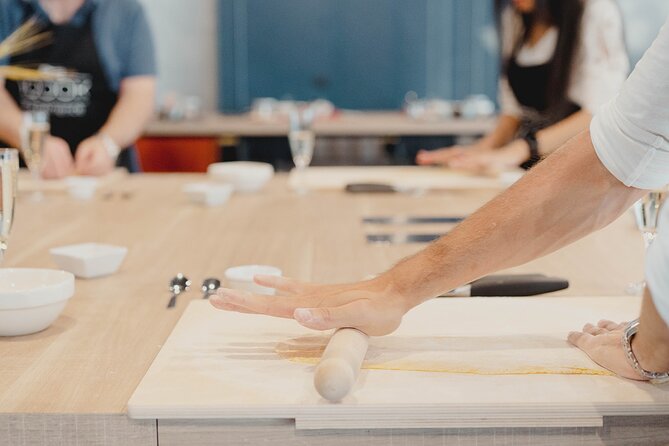
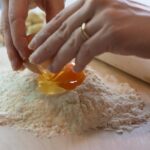
The menu is straightforward and concentrated: you’ll make fettuccine and ravioli, and you’ll learn how to do both from start to finish. That’s a big deal because many workshops focus on one pasta shape. Two shapes means you learn more than one workflow: rolling and cutting for fettuccine, plus filling and sealing for ravioli.
Fettuccine: rolling, thickness, and getting the strands right
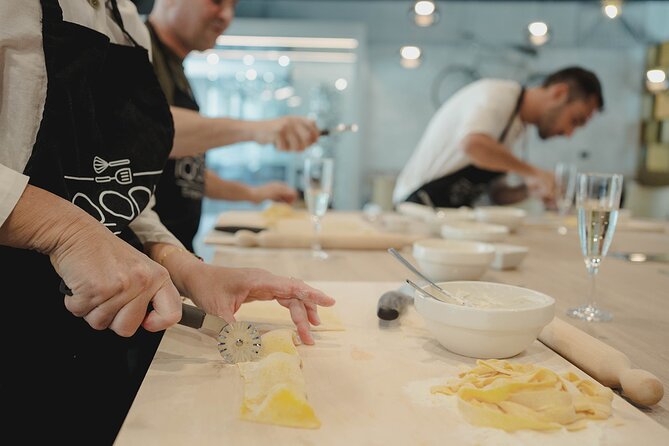
For fettuccine, the main skill is managing dough texture and thickness. The class approach is designed for real success rather than frustration. You’re guided through handling the dough, then rolling it to a workable thickness before cutting into long ribbons.
What you’re learning (even if you don’t call it this):
- how to feel dough consistency,
- how to avoid rolling too thin (where pasta gets fragile),
- how to keep it smooth enough to cut cleanly.
If you’ve ever bought fresh pasta in Rome and wondered why it tastes better, this is part of the answer. Fresh pasta isn’t magic. It’s texture, thickness, and how the dough hydrates and cooks.
Ravioli: filling, shaping, and sealing with confidence
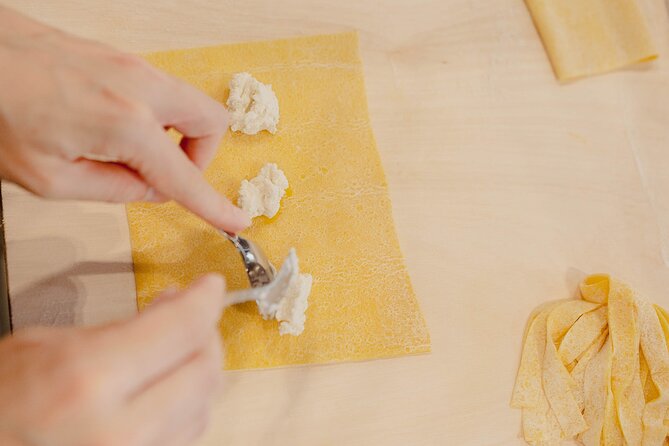
Ravioli take more coordination. You’re filling portions and learning how to seal so they don’t burst. That step can be nerve-wracking the first time, but the benefit of a small group is that you can get direct help.
More than once, people highlight the hands-on moment of assembly: how you place filling, how you manage edges, and how you check that the ravioli are sealed properly. It’s also a great skill for home cooks, because ravioli is the type of pasta where technique really changes the outcome.
You can also read our reviews of more tours and experiences in Rome


One practical consideration about cooking and serving
Most classes like this involve you making the shapes and then having the chef finish cooking and serving. That’s normal. However, one recurring caution from feedback is that the pasta may be cooked together rather than cooked and portioned entirely as one-to-one batches for each person.
So if your personal goal is to prove that every single bite came from only your exact fettuccine and ravioli dough, expect the process to be more collaborative than laboratory-precise. For the average home cook, though, the hands-on skill transfer is the point—and it’s strong here.
Your lunch comes with wine and aperitivo-style drinks
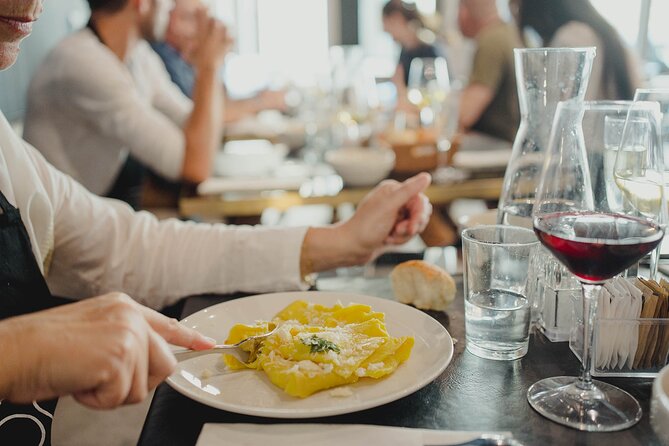
One reason people love this class is that it ends as an actual meal, not a light snack. After you finish your pasta work, you sit down to enjoy what you made, paired with beverages.
The sample setup people mention includes Prosecco, wine, and limoncello. You may also have non-alcoholic choices for those who don’t drink. That’s a nice touch, because families can join without the class turning into an adults-only scene.
As for what you eat, the menu is built for comfort and contrast:
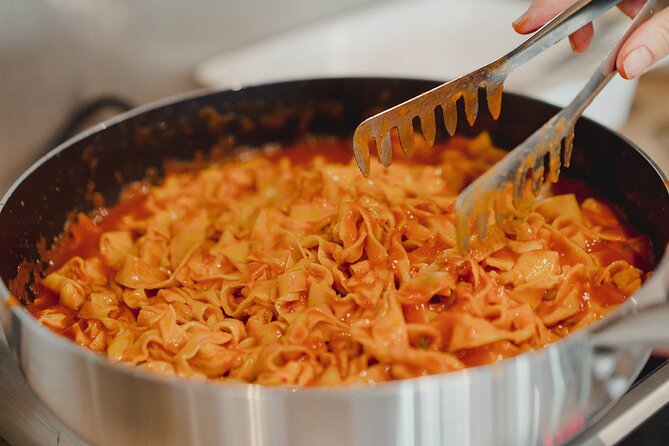
- Fettuccine with a red sauce (as described by guests)
- Ravioli with a simpler butter sauce (also described)
- Tiramisu for dessert
This matters because it helps you understand how pasta changes with sauce style. Fettuccine tends to handle richer, bolder sauces well. Ravioli usually shine when the filling and sauce cooperate without overpowering the pasta.
If you’re thinking about value, this is a big part of it. You’re not paying just for lessons. You’re paying for a guided food experience that includes a real sit-down lunch.
Tiramù time: why the dessert lesson sticks with you
You finish with tiramisù, the dessert almost everyone recognizes but few people can confidently make well at home. That’s exactly why it’s such a good choice for a cooking class: it’s familiar, so you know what you’re aiming for, and it’s technical enough to teach real technique.
Even if the course format is focused on the main steps, tiramisù teaches patience and timing. You’re working with a dessert that can go from perfect to too soft if handled carelessly. The class setup helps you get the rhythm right.
From feedback, people consistently call out that everyone gets their own tiramisù portion. That adds a sense of closure: you don’t just leave with recipes; you leave with a sweet you can share right away.
Location near Via Firenze and how to plan your 6:00 pm start
The meeting point is Via Firenze, 10, 00184 Roma RM. The class starts at 6:00 pm and ends back at the meeting point. People note it’s near public transportation, which is the kind of detail you’ll appreciate when your legs are tired.
Why 6:00 pm works well in Rome:
- It’s early enough to still have energy afterward.
- It’s a smart buffer after a day of museums.
- It avoids the late-night scramble where you’re hunting for dinner around crowds.
If you’re staying near Termini, this timing can be perfect: you can do a morning/afternoon of sightseeing, come in for your class, then still have time for an easy evening walk. If you’re farther out, the near transit access helps reduce stress.
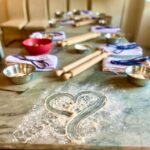
What to bring is simple: comfy clothes, a willingness to get a little flour on your sleeves, and an appetite. The space is described as clean and modern, with some people specifically appreciating features like air conditioning for comfort.
Price and value: what $66.52 buys you in Rome
At $66.52 per person for about 2 hours 30 minutes, this class is priced like a mid-range food experience. The value comes from what’s included and how the class is run.
You’re getting:
- hands-on instruction for two pasta types
- tiramisu dessert included
- a sit-down meal
- a range of beverages (Prosecco/wine/limoncello are commonly mentioned)
- recipes sent after the class (based on feedback)
- a small group cap that prevents the usual coach-to-customer bottleneck
In Rome, $66.52 can disappear fast if you only buy ingredients or one dinner out. Here, you’re paying for a skill-based evening with food, drink, and teaching. That’s the difference between a one-off meal and something that keeps paying you back when you cook again.
One more value note: booked in advance tends to sell spots, with an average booking window around 36 days. So if your dates are fixed, don’t wait until the last minute.
Who should book this class (and who might want to skip it)
This workshop fits best if you:
- want a hands-on activity that doubles as dinner,
- enjoy learning techniques you can repeat at home,
- prefer small groups over large tours,
- travel with kids who can handle a structured, friendly kitchen setting.
It’s also a great option for solo travelers who want social time without dealing with a big crowd. People mention chatting with the group and feeling comfortable in the class atmosphere.
You might consider a different option if you:
- want a strictly sightseeing-focused evening and have zero interest in cooking,
- hate the idea of getting flour on your hands (it’s part of the experience),
- are very picky about exact individual-batch cooking and serving every single portion.
For most people, though, the payoff is real: you leave with both the meal and the method.
Booking tips: how to get the smoothest evening
A few practical moves will help you enjoy the class with minimal stress:
- Aim to arrive a bit early for Via Firenze, 10 so you’re not rushing at 6:00 pm.
- If you don’t drink alcohol, still join for the food value—non-drink options are mentioned.
- If you’re coming as a family, this class format is highlighted as fun for kids around ages eight and up (though you’ll still want to use your judgment based on your child).
Also, because the class is limited to a maximum of six travelers, consider it a small-ticket-to-value trade. When it’s available, grab it.
Should you book Pasta and Tiramisù in the Heart of Rome?
Yes, if you want an evening that feels like Rome through food, not just food around Rome. The best reasons to book are simple: the class stays small, you learn two pasta types, and you end with a proper meal plus dessert and drinks. The take-home recipes are an extra bonus because it turns the experience into something you can use later.
If you’re the type who loves learning a few core techniques rather than collecting attractions, this is the kind of activity that keeps showing up in people’s best-trip memories. Book it for a day when you want a break from crowds and a dinner that you helped make.
FAQ
What is included in the Pasta and Tiramisù Cooking Workshop in Rome?
You’ll learn to prepare two pasta varieties (fettuccine and ravioli) and make tiramisù for dessert. The experience also includes a home-cooked Italian lunch and a range of beverages.
How long is the cooking class?
It lasts about 2 hours 30 minutes.
What time does the class start?
The start time listed is 6:00 pm.
Where do I meet for the workshop?
The meeting point is Via Firenze, 10, 00184 Roma RM, Italy.
Is the class offered in English?
Yes, the workshop is offered in English.
What is the group size limit?
The experience has a maximum of 6 travelers.
What beverages are served during the class?
A range of beverages is included, and people mention Prosecco, wine, and limoncello. Non-drink options are also available.
Will I receive recipes after the workshop?
Yes. People report that the recipes are sent by email after the class.
Is the location easy to reach using public transportation?
Yes, it’s described as near public transportation.
What is the cancellation policy?
Free cancellation is available. You can cancel up to 24 hours in advance for a full refund. Changes within 24 hours of the start time aren’t accepted.