REVIEW · ROME
The Original Roman Crypts and Catacombs Tour with Transfers
Book on Viator →Operated by City Wonders Ltd · Bookable on Viator
Rome’s underground side is oddly moving.
This 3.5-hour small-group tour lets you skip the line at three eerie-but-fascinating stops and guides you through places most visitors never get beyond the surface. I especially love how the itinerary swaps the headline crowds for the Capuchin Crypt’s bone “chapel” atmosphere, then follows with the Domitilla Catacombs and their early Christian symbols.
You’ll also get a real sense of Rome stacked in layers: above-ground basilica history, then worship and burial below it. One consideration: this tour is not a good match if you feel claustrophobic, since you’ll be walking in narrow tunnels and underground spaces.
In This Review
- Key points to know before you go
- The appeal: Why Roman crypts beat the usual sightseeing
- Getting to Piazza Barberini and riding with transfers
- Stop 1: Capuchin Crypt (Bone Chapel) and the bone symbolism
- Stop 2: Domitilla Catacombs with an expert historian guide
- Stop 3: Basilica dei Santi Silvestro e Martino ai Monti above and below
- Timing, pacing, and what 3.5 hours feels like in real life
- Price and value: Is about $66 a fair deal?
- Who should book, and who should skip
- After-hours option: quieter catacombs and a shorter route
- Final verdict: Should you book Roman Crypts and Catacombs?
- FAQ
- What’s included in the Roman Crypts and Catacombs tour?
- Where does the tour start and end?
- How long is the day tour versus the after-hours tour?
- Is there a dress code?
- Can I take photos inside the crypts and churches?
- Is the tour suitable for claustrophobia?
- Is the church stop guaranteed on Sundays?
- How big is the group?
Key points to know before you go
- Skip-the-line access at three major underground stops
- Capuchin Crypt Bone Chapel visit with audio support
- Domitilla Catacombs with an expert historian guide
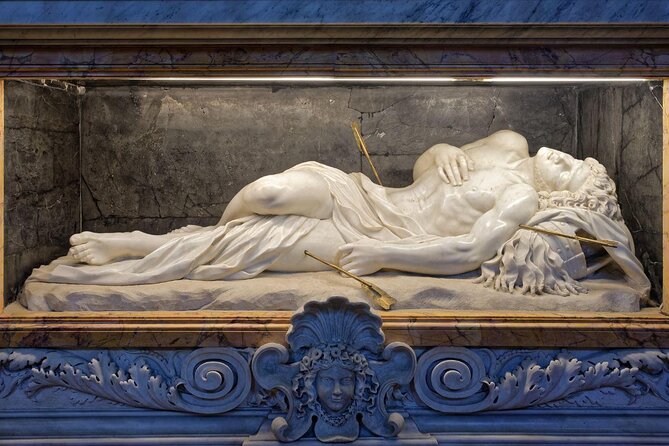
- Basilica dei Santi Silvestro e Martino ai Monti plus the underground remnants
- Private air-conditioned transfers to keep logistics simple
- Dress code required: knees and shoulders covered
The appeal: Why Roman crypts beat the usual sightseeing
Rome is famous for stone, mosaics, and view points. This tour is different. You trade sunlight for dim rooms, soft volcanic rock corridors, and spaces built for death rituals and early faith. It can feel strange at first. Then it starts to make emotional sense.
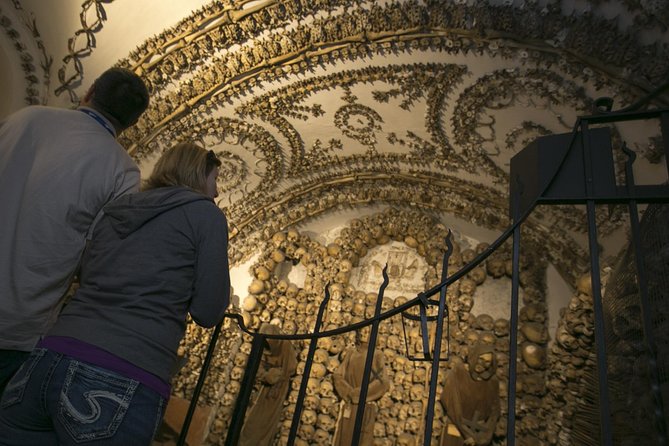
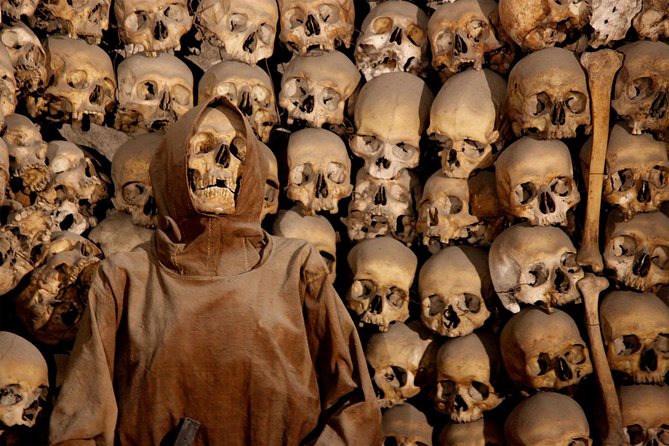
The value here is not only that you see three sites. It’s how the guide structure helps you connect them. You begin with the Capuchins’ 18th-century bone display—part devotion, part macabre tradition. You move to the Domitilla Catacombs, where the iconography explains how early Christians kept practicing under pressure. Then you finish at a church where history is literally layered: founded centuries ago, built over ancient Roman remains, and topped off with later Baroque-style artwork.
If you’re the kind of traveler who likes “why did they do that?” this format works well. And if you want something off the standard daytime loop, the tour’s design is aimed exactly there.
You can also read our reviews of more tours and experiences in Rome.



Getting to Piazza Barberini and riding with transfers
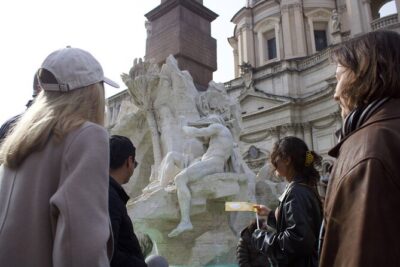
Your meeting point is Fontana del Tritone in Piazza Barberini. From there, you’ll connect by private air-conditioned coach between stops. You should plan on making your own way to the start (there’s no hotel pickup or drop-off), but the location is close to public transportation, so it’s not a hassle.
Transfers matter more than you think in Rome. Between the historic core traffic and the occasional uphill walks between monuments, a coach keeps your energy for the parts that are actually tight: the crypt rooms and catacomb passageways. Many guides in this setting also use the ride time to set context, which helps you understand what you’re about to see before you’re surrounded by bones or stone corridors.
A quick practical note from what people say: wear comfortable shoes. Even when the “walking” is not long, the surfaces can be uneven and you’ll be moving through narrow routes.
Stop 1: Capuchin Crypt (Bone Chapel) and the bone symbolism
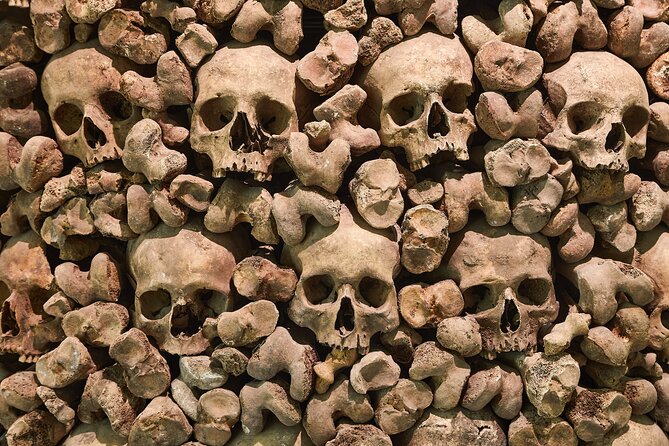
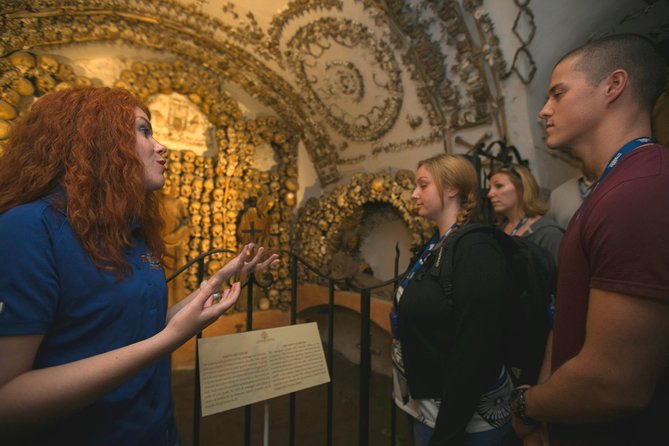
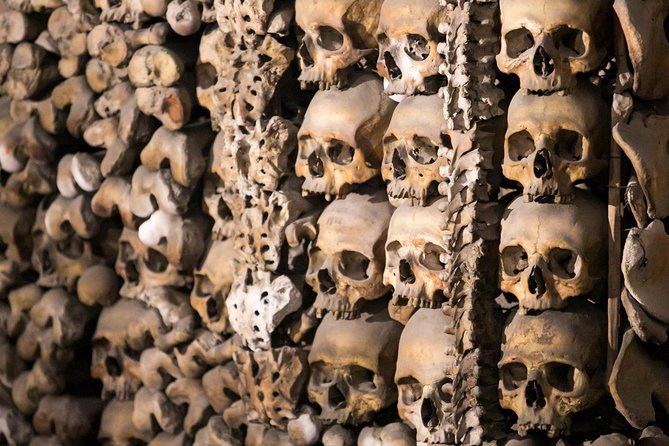
Your first stop is the Museum and Crypt of Capuchins Friars. This is the part most people recognize as the Bone Chapel—because it really is. Capuchin monks used the bones of nearly 4,000 friars to create floor-to-ceiling designs throughout the crypt. The result feels theatrical and oddly precise, like the space is organized around memory.
What makes this stop work on a guided tour is pacing and guidance. You get about 45 minutes, and you can explore with an audio guide so you’re not stuck waiting for someone to tell you every detail. That audio layer is important here because the crypt is sensory-heavy: dim light, close walls, and displays that are both religious and unusual.
What to watch for:
- This is one of the sites with a no photos rule during the tour.
- Dress matters. You need knees and shoulders covered for entry to some of the venues.
- The room can feel cooler than you expect, so pack a light layer if you run warm-to-cold easily.
In the best versions of this tour, the guide sets you up well before you go in. Names that came up in real experiences include Allisandra (pre-crypt explanations), as well as guides like Alan and Paula, who were praised for clear delivery and lots of questions.
Stop 2: Domitilla Catacombs with an expert historian guide
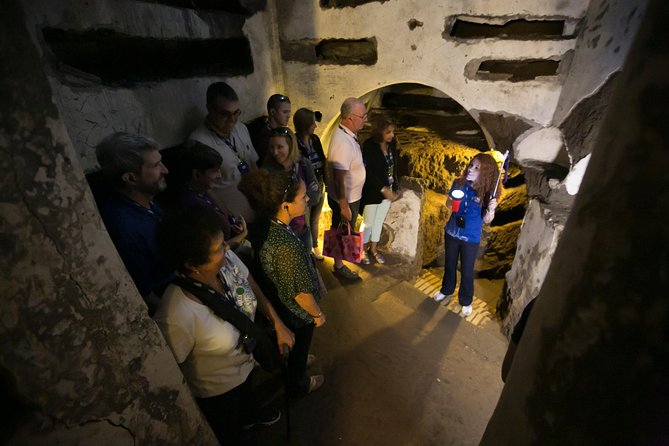
Next comes the Domitilla Catacombs. This is not just a tunnel walk. Your guide explains how the network connects to the first Christians in ancient Rome—then you follow that story underground, moving through corridors carved into soft volcanic rock.
You’ll spend about 1 hour here, with the guide pointing out things you’d likely miss on a self-guided visit: frescoes, early Christian symbols, and burial areas that also doubled as places of worship when Christians were persecuted. Even if you don’t think you’re a “catacomb person,” the structure of the tour helps you make sense of why these sites were used.
How it feels:
- You’ll be in enclosed spaces for extended stretches.
- Movement can be slow because you’re following the group through narrow lanes.
- It’s not technically hard in the “stairs-and-ladders” way, but it is physically real. Plan for steady walking and time spent standing.
A standout point in people’s feedback is how much surprise the catacombs generate. Guides such as Andrea, Alain/Allain, and Cat were praised for making the underground scale feel believable—especially the sense of how large it is.
One more practical thing: sometimes high demand can slightly shorten visit time at certain venues. If that happens, prioritize staying present. Don’t rush your own eyes. Early Christian art can reward slow looking.
Stop 3: Basilica dei Santi Silvestro e Martino ai Monti above and below
The final stop is Basilica dei Santi Silvestro e Martino ai Monti. This is a quieter, less-frequented church in the historic core, and it’s famous for a key idea: it sits on top of ancient Roman ruins. You’re not just touring a single era—you’re seeing Rome stacking religions on top of each other.
The tour includes about 30 minutes at this location (for the daytime version). You’ll look at Baroque-era frescoes and also see early Christian mosaics. Then there’s an under-church element: you’ll go beneath the basilica to explore underground remnants and an early Christian worship area connected to an older title form of site use.
What I like about ending here is the contrast. Capuchin Crypt and Domitilla are “underground first.” This stop gives you a view of Rome’s religious evolution in layers—above-ground art, then traces below.
Two important visit notes:
- The church stop is not guaranteed on Sundays because of liturgical activities. If you’re scheduling for a Sunday, don’t assume the same access time.
- Like the other sites, there are rules. Photo restrictions apply during the tour, and the dress code still matters.
Guides like Frederica (Lola) and Maria got good marks for keeping this stop lively and helping people connect the art to what was happening underneath.






Timing, pacing, and what 3.5 hours feels like in real life
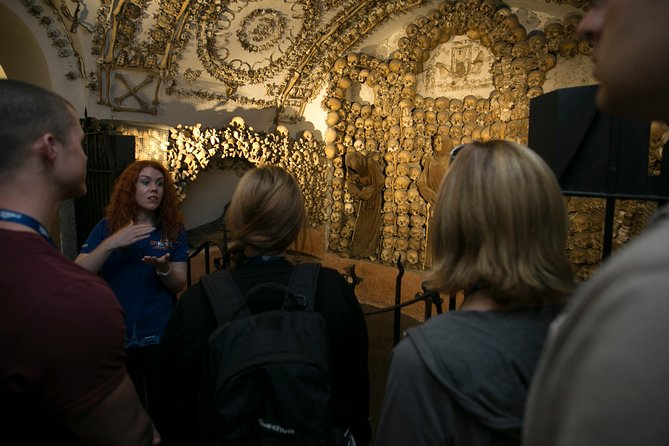
The tour is about 3 hours 30 minutes total for the day version, with a max group size of 25 travelers. In an ideal run, it feels efficient: you move by coach, then get guided time inside each site without standing around too long.
In the experiences shared, the positives were big:
- Guides often kept the group engaged and on time.
- People liked having ride breaks between stops.
- Several said the tour didn’t feel rushed and that explanations were patiently handled.
Still, there are two considerations you should take seriously:
1) Underground venues demand focus.
When you’re in narrow corridors, there’s less room for slow meandering. If you hate group pacing, you may feel the structure more than you’d like.
2) Start delays can happen.
Rome logistics are Rome logistics. One account mentioned waiting due to delays and traffic effects, and another mentioned that weather can interrupt plans. If severe weather shuts down the catacombs, the tour may continue with remaining sections instead of the exact full plan.
So my advice: treat timing as a guide, not a promise. If you have another reservation immediately after, give yourself buffer time.
Price and value: Is about $66 a fair deal?
At $66.51 per person, you’re paying for a bundle:
- Three ticketed sites
- A guide (English or Spanish depending on option)
- Transfers in a private air-conditioned coach
- Skip-the-line entry at the main attractions
That pricing can look low compared with what three separate sites plus guided interpretation usually cost when booked one-by-one. The key value is not only access—it’s context. Places like the Capuchins and Domitilla can be overwhelming if you’re just reading plaques. A good guide gives you a story thread you can hold onto while you walk.
Where the price can feel less worth it:
- If you’re expecting heavy “live guided narration” inside every room, the Capuchin Crypt uses audio support, so not every minute is a talking guide moment.
- If your particular day runs late or timing gets compressed inside a venue, the “value per minute” can drop fast. Some accounts described short time at the museum areas or tight meeting windows.
Bottom line: for most people, the combo of three sites + tickets + transfers is a decent value, especially if you’re not renting a car and you want the underground route set up for you.
Who should book, and who should skip
This tour is a strong fit if you:
- Want Rome in a darker, stranger mood than the classic forums-and-colosseum loop
- Like historical storytelling paired with physical exploration
- Prefer small-group pacing (max 25) and hate wasting time in lines
- Want guided explanations for sites that can otherwise feel like “just a weird room” or “just tunnels”
You should skip or rethink if you:
- Have claustrophobia (this one is explicit). Narrow underground spaces are the whole point.
- Don’t meet the moderate physical fitness expectation. It’s not extreme, but it is walking in confined areas.
One comment stood out for families: someone advised that it’s not for young kids. If you’re traveling with children, be realistic about their tolerance for enclosed spaces and long periods of quiet walking.
After-hours option: quieter catacombs and a shorter route
There’s an after-hours option starting at 5pm. It lasts about 2.5 hours and ends at Piazza della Repubblica.
If your main goal is to avoid daytime pressure, this can be the smart move. It’s designed specifically for the “less crowded underground” experience. The night timing also shortens the overall day, so it can work better with your evening plans.
One note: the daytime tour includes the basilica stop at San Martino ai Monti, while the after-hours format ends earlier and your included sites differ (the basilica entrance is listed as not included in the after-hour option).
Final verdict: Should you book Roman Crypts and Catacombs?
I’d book this tour if you want a focused, guided pass through Rome’s underground world without juggling tickets and transit. The strongest part is the route itself: Capuchin Bone Chapel for the unforgettable shock, Domitilla Catacombs for early Christian meaning, and then the basilica finale that ties it into the city above.
Just go in with the right expectations. This isn’t a casual stroll in open-air ruins. It’s structured time in dim spaces with rules (dress code, no photos) and group pacing. If you’re claustrophobic, don’t gamble. If you can handle tunnels and want an offbeat Rome story you can actually follow, this tour is worth putting on your list.
FAQ
What’s included in the Roman Crypts and Catacombs tour?
It includes an English or Spanish-speaking guide (based on the option you select), entrance tickets for the Capuchin Crypt and Museum, the Domitilla Catacombs, and entrance to Basilica dei Santi Silvestro e Martino ai Monti for the daytime option, plus transfers in a private air-conditioned coach.
Where does the tour start and end?
The start is Fontana del Tritone in Piazza Barberini. The end is Basilica dei Santi Silvestro e Martino ai Monti for the day tour, or Piazza Barberini for the after-hours version.
How long is the day tour versus the after-hours tour?
The day tour is about 3 hours 30 minutes. The after-hours tour starts at 5pm and lasts about 2.5 hours.
Is there a dress code?
Yes. Knees and shoulders must be covered for entry into some of the sites.
Can I take photos inside the crypts and churches?
No. The tour does not allow photos inside the venues during the tour.
Is the tour suitable for claustrophobia?
No. The experience is not suitable for people who suffer from claustrophobia.
Is the church stop guaranteed on Sundays?
The church visits are not guaranteed on Sundays due to liturgical activities.
How big is the group?
The tour has a maximum of 25 travelers.