REVIEW · ROME
Ostia Antica Tour with Transfer: Private or Group of Max. 8
Book on GetYourGuide →Operated by Touriks · Bookable on GetYourGuide
Seeing Roman daily life without the crowds
Ostia Antica feels like Rome’s best-kept secret, and I like the private-port-city feel as you walk the streets and see it in context. I also like that you get headsets so the guide’s explanations land clearly while you’re moving through the ruins. One drawback to plan for: there’s moderate walking, and it’s not a great fit if you use a wheelchair or have limited mobility.
This tour is set up for comfort and timing. You meet at the Touriks office in central Rome, then ride in a private van to the archaeological park, with luggage handling available if you choose the return-transfer option. Back in Rome, your return is either included by transfer (if you book it) or you take public transport with a ticket.
Once you’re inside Ostia Antica, the sights are easy to follow and not just random ruins. You’ll cover major highlights like the baths, theatre, and main street layout, plus the darker, more mysterious side of Roman worship, including talk of underground cult spaces like the Mithraeum. It’s also subject to weather and park calendar changes, so it’s smart to keep a backup date in mind when possible.
In This Review
- Key highlights worth waking up for
- Getting to Ostia Antica without the Rome scramble
- Entering the park: what the 2-hour guided walk is really for
- Baths, theatre, and the streets that show how the port city worked
- Forum, temples, and the unsettling side of Roman religion
- Group size, private options, and why headsets matter
- Timing and the return plan: transfer or public transport
- Price and value: what $123.48 buys you
- Practical tips that keep your visit smooth
- Should you book this Ostia Antica Tour with Transfer?
- FAQ
- Where is the meeting point?
- How long is the tour?
- Is the transfer from Rome included?
- Are entrance fees included?
- Do I need tickets for the return to Rome?
- Will I have time to explore after the guided portion?
- Are headsets provided?
- What languages are available?
- What should I bring and what is not allowed?
- Is the tour suitable for wheelchair users?
Key highlights worth waking up for
- Small-group size (max. 8) or private option, so you’re not shouting over everyone else
- Transfer from central Rome plus an organized rhythm to keep your day efficient
- Skip-the-ticket-line entry and entrance fees included so you lose less time at the gate
- Guided time in the park is 2 hours, with headsets included for clear commentary
- Underground cult focus (Mithraeum) that adds a different angle beyond streets and monuments
Getting to Ostia Antica without the Rome scramble
The best part here is how little stress this tour adds to a half-day plan. You meet at the TouriksPoint at Via di San Giovanni in Laterano 132, 00184 Rome, and you’re asked to arrive 15 minutes early. Then you get in a van and head to Ostia Antica—no wrestling with buses, no guessing which stop you need, and no dragging your day around on a tight schedule.
The ride itself is fairly short by Roman standards: about 30 minutes each way. That matters because it keeps the tour feeling like a real outing rather than a “transport day” where you spend half your energy moving to and from the site.
You also have one nice logistics perk: there’s luggage deposit available at the office in the city center if you pick the option that includes return transfer. That can be a big quality-of-life win if you’re arriving in Rome on public transport earlier the same day, or if you’re holding bags for later plans.
You can also read our reviews of more private tours in Rome



Entering the park: what the 2-hour guided walk is really for
Ostia Antica isn’t just impressive because it’s old. It’s impressive because it’s readable. The guide’s job is to make the layout make sense fast, and that’s exactly what you want when you’ve got only about 2 hours on the ground with guidance.
Your guided time inside the archaeological park is about 2 hours. That’s long enough to cover the headline buildings and still leave you with mental pictures you can revisit when you explore on your own afterward.
A recurring strength in the guides’ style is storytelling that helps you connect the dots. I love how guides here are praised for making the ruins feel like a place where people lived, not just stones to photograph. Names like Mario and Francesca come up specifically for bringing the site alive with strong knowledge and friendly delivery—helpful if you want facts, but also want it to feel human.
And because you’ll be walking, headsets are included. That’s practical. It lets you keep your attention on the ground beneath your feet (paths, mosaics, building textures) instead of constantly turning your head for directions.
Baths, theatre, and the streets that show how the port city worked
Once you’re in, you’ll get a classic Ostia Antica circuit, but organized around understanding. The stops highlight spaces that reflect daily life—public entertainment, bathing, and the movement of people through a port city.
The guide will point out the Roman baths—including mosaics associated with the Baths of Neptune—so you don’t just see pretty floors. You’ll understand why a place like that mattered in a working city where visitors and residents mixed.
You’ll also spend time near the Roman Theatre. The theatre isn’t only about architecture; it’s about social rhythm—who gathered, what kind of events likely brought people in, and how entertainment fit into a city that depended on movement through the harbor.
Then comes the street-and-block logic of the city. You’ll stroll the Decumanus Maximus, which is the kind of main street that helps you visualize where major activity flowed. From there, the guide helps you make sense of the insulae (apartment blocks) and lavish domus (bigger homes). The value isn’t that you memorize names. It’s that you start recognizing patterns: where commerce would cluster, where people would likely live close together, and how wealth showed up in built form.
A small warning that’s not a dealbreaker: because you’re moving between areas, it helps to wear shoes that won’t complain. The park has uneven ground and lots of stone steps and surfaces.
Forum, temples, and the unsettling side of Roman religion
Ostia Antica gets more interesting when the tour shifts from city life to belief and ritual. The guide brings you to the Forum and Temples, where you see how spiritual and civic space overlap in Roman culture.
This is where you’ll start noticing that the city wasn’t only about daily routines like bathing and shopping. It was also about where people processed fear, hope, and identity—especially in a place tied to travel, trade, and the movement of different communities.
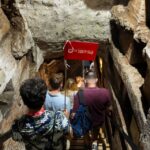
Then there’s the underground angle. You’ll learn about mystical Roman cults and secret underground temples, including discussion of the Mithraeum. If you’re used to thinking of Rome as all marble outdoor monuments, this part is a good change of pace. It adds a more mysterious mood and gives you something to talk about after you leave—like how Romans organized worship in hidden or enclosed spaces.
This “religion and ritual” segment is also one of the tour’s big differentiators. Many Pompeii-style visits go hard on the spectacle of ruins. Here, the story includes spiritual life and the cult culture that sat under the surface.
Group size, private options, and why headsets matter
You can choose either a small group option capped at 8 people or a fully private guide. Both are strong setups, but they serve different travel styles.
If you like meeting people without getting trapped in a loud crowd, the max-8 structure is ideal. It’s small enough for you to hear the guide, ask questions, and keep pace through the park without constant bottlenecks.
If you want control—your pace, your photo stops, your priority buildings—go private. It’s also the better choice if you’re traveling with children who move fast and get bored fast, or if you want more flexibility around where you pause.
Either way, the included headsets are a big practical plus. In open-air ruins, sound can bounce, and wind can steal words. With headsets, the guide’s explanations stay consistent while you walk. You’ll get less of that annoying moment where you nod politely but miss half the point.
Languages available are also a real convenience: English, German, French, Portuguese, Spanish, and Italian.
You can also read our reviews of more tours and experiences in Rome





Timing and the return plan: transfer or public transport
Your day is organized in a way that keeps the schedule calm. You head out from the city office, you get about 2 hours guided inside Ostia Antica, and you return afterward.
When the tour finishes, you have choices:
- You can continue exploring the archaeological park on your own, without rushing immediately.
- Or you can have your guide accompany you to the train station.
From there, you have options. You can return to the city center by train, or you can go to the nearby beach using public transport. Tickets for these options are provided.
One important note: the return ride to Rome depends on how you book. The default return is public transport, and you’re given a train ticket for that. If you choose the return transfer option during purchase, you’ll get pickup back to the city office area, and luggage deposit can also be used at the office.
Possible drawback: if you’re the type who hates train stations mid-day, you’ll want to pick the return transfer option.
Price and value: what $123.48 buys you
The price shown is $123.48 per person, and it’s worth evaluating based on what’s included rather than just the number.
What you get for that cost:
- A licensed expert guide
- Entrance fees to Ostia Antica
- Headsets
- Private transport from the city-center office to the archaeological park
- A return plan to Rome via train if you don’t choose return transfer (train ticket included)
- Optional: return transfer and luggage deposit if selected when booking
That’s solid value for Rome-area sightseeing, because Ostia Antica can easily become “time-expensive.” A lot of independent planning costs you in transportation time and entry friction. Here, skip-the-ticket-line is included, so you lose less time at the gate.
You’re also paying for interpretation. Without a guide, it’s easy to walk through ruins and miss the logic—what you’re seeing, why it mattered, and how it connects to Roman daily life. The included storytelling focus is a core part of what people praise, including guides like Mario and Francesca for bringing scenes to life.
Bottom line: if you want your Ostia Antica visit to feel structured and meaningful, this pricing makes sense. If you’re traveling super-budget and already comfortable handling logistics on your own, you could DIY it, but you’d likely trade away time and clarity.
Practical tips that keep your visit smooth
A few details matter with this specific tour format:
Wear comfortable shoes. There’s moderate walking and stone surfaces, so think comfort over style. If your shoes aren’t supportive, you’ll feel it by hour one.
Bring a passport or ID card. That’s a clear requirement.
Leave the bulky stuff behind. Luggage or large bags aren’t allowed, and drones are off-limits. If you’re carrying a lot, plan for the luggage deposit option at the office—only if you choose that return-transfer option.
Plan around rules like no weapons/sharp objects and no alcohol/drugs. It’s standard for tours and sites, but it’s good to know up front.
Weather matters. The tour is subject to conditions and calendar events. If it’s canceled, you’ll be offered an alternative date or a full refund.
Mobility note: it’s not recommended for people with reduced mobility or wheelchair users. If that applies to you, you’ll probably have a better day with another format.
Should you book this Ostia Antica Tour with Transfer?
Book it if you want:
- A time-efficient Ostia Antica visit from central Rome
- A guided experience that makes the city layout click fast
- Less crowd pressure and a smoother day than doing everything on your own
- The option for max-8 small-group pacing or a private guide
Skip or adjust if:
- You strongly prefer total DIY control (especially for return travel)
- Your mobility is limited and the walking level won’t work for you
- You’re traveling with lots of luggage and don’t want to depend on the deposit/return-transfer option
If you want to see Ostia Antica as a real port city with streets, social spaces, bathing culture, and cult worship beneath the surface, this is a smart way to do it without turning your day into logistics.
FAQ
Where is the meeting point?
You meet at the TouriksPoint at Via di San Giovanni in Laterano 132, 00184 Rome. Arrive 15 minutes before your scheduled start time.
How long is the tour?
The total duration is about 2.5 hours, with a 2-hour guided visit in Ostia Antica plus travel time by van.
Is the transfer from Rome included?
Yes. Private transport from the tour’s office in central Rome to Ostia Antica is included.
Are entrance fees included?
Yes. Entrance fees to Ostia Antica are included.
Do I need tickets for the return to Rome?
If you do not choose return transfer, you receive a train ticket for the return to Rome. If you choose the return transfer option, you’ll get transport back to the office area.
Will I have time to explore after the guided portion?
Yes. After the tour finishes, you can continue exploring the park on your own or let your guide accompany you to the train station.
Are headsets provided?
Yes. Headsets are included so you can hear the guide clearly.
What languages are available?
The guide is available in English, German, French, Portuguese, Spanish, and Italian.
What should I bring and what is not allowed?
Bring a passport or ID card. Luggage or large bags, drones, weapons or sharp objects, and alcohol and drugs are not allowed.
Is the tour suitable for wheelchair users?
No. The tour is not recommended for people with reduced mobility or wheelchair users.