REVIEW · ROME
Ostia Antica Semi-Private Tour
Book on Viator →Operated by Rome Group Tours · Bookable on Viator
Roman streets without the Rome crowds. This Ostia Antica semi-private tour gives you a guided walk through a working port city, with real ruins like gates, roads, shops, baths, and a theatre. You also get admission tickets included, so you spend less time sorting tickets and more time looking closely at what’s still here.
My two favorite parts are the way the guide ties each landmark to daily life—food, work, worship, and leisure—and the fact that this runs with a small group (max 6), so you can ask questions and pause when something catches your eye. The main thing to think about is physical pace: it’s about 3 hours of walking on uneven ground, and the tour check-in closes 15 minutes before departure, so being late can cut you out.
In This Review
- Key Highlights You’ll Actually Feel
- Ostia Antica Outside Rome: Why It Feels Different
- Start at Ostia Antica Train Station and Porta Romana
- Decumanus Maximus: Shops, Movement, and How Commerce Worked
- Baths of Neptune and the Theatre: Leisure With a Purpose
- Residential Areas: Houses and the Texture of Everyday Life
- Forum and the Thermopolium: Food, Faith, and Public Life
- Small Group (Max 6): Why It Matters at Ruins
- Price and Value: What $195 Covers (and Why Admission Included Helps)
- Getting the Timing Right: Check-In and Comfort Tips
- Who Should Book This Ostia Antica Tour?
- Should You Book This Tour?
- FAQ
- Where does the tour start?
- How long is the tour?
- Is admission to Ostia Antica included?
- Are train tickets included?
- Is the ticket mobile?
- What group size is this tour?
- How much walking is involved?
- When does check-in close?
- Is there a dress code?
- Can children join?
- Is water available during the tour?
Key Highlights You’ll Actually Feel
- Small-group format (max 6): more time with your guide, fewer bottlenecks at the ruins
- Admission included: less admin stress when you get to the archaeology site
- Port-city context at Porta Romana: you understand what this gate meant for supplies coming into Rome
- Neptune Baths mosaics: you get a clear reason to care about the sea god imagery
- Thermopolium stop: you see a Roman fast-food counter and how people ate on the move
- Original main street, Decumanus Maximus: you walk the backbone of the city instead of just bouncing between spots
Ostia Antica Outside Rome: Why It Feels Different
Ostia Antica is one of those places that instantly changes your perspective. Rome gets all the headlines, but Ostia was Rome’s port city, handling goods arriving from the Mediterranean and feeding the whole urban machine. On this tour, that big idea shows up early and keeps showing up as you walk.
What makes it special is that you’re not just scanning ruins from a distance. You’re moving along the city’s original layout, including paved roads and major axes. That matters because Ostia was built for movement: people walked between commerce, homes, bath culture, and public buildings as part of their everyday routine.
And because the group stays small, you’re less likely to feel like you’re being dragged from one photo stop to the next. You can linger at mosaics, ask why a space was laid out a certain way, and get answers in plain language.
You can also read our reviews of more private tours in Rome



Start at Ostia Antica Train Station and Porta Romana
The tour begins at the Ostia Antica train station, where your guide sets the stage. This short intro is more useful than it sounds. You get the core background: Ostia’s strategic importance as Rome’s port, and what you’re looking at as you enter the ancient city.
Then you move straight into the drama of the site at Porta Romana, the main gate. Walking through a surviving gateway like this helps you see how the city worked as a boundary between outside traffic and inside life. The guide also explains the city’s layout and how supplies came through—so the ruins stop being random stones and start behaving like a system.
One small advantage here: getting your bearings early means the next stops feel connected rather than disconnected. You’ll likely find it easier to picture daily routes—who came in, where they went, and what each area was for.
Decumanus Maximus: Shops, Movement, and How Commerce Worked
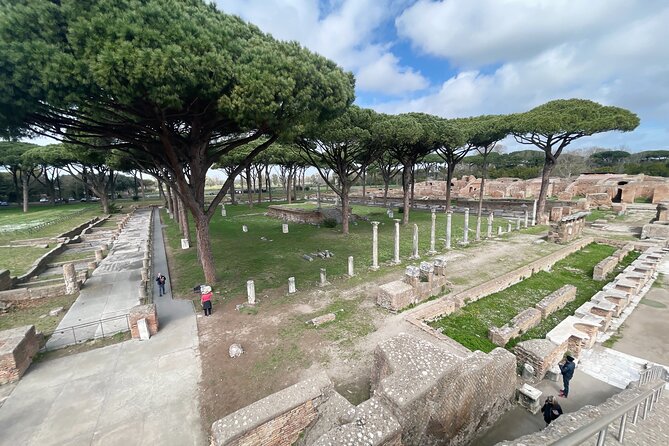
After Porta Romana, you walk along Decumanus Maximus, the main street of Ostia Antica. This is a smart choice for a tour route, because the street isn’t just scenery. It’s the spine of the city.
As you go, you’ll see the remains of shops, workshops, and businesses. The key is how your guide frames them: this wasn’t a city of empty temples. It was a place where goods changed hands, where everyday services happened, and where work shaped where people spent their time.
If you enjoy understanding the “how did they live?” side of history, this section is where it clicks. Look at what’s close together along the road and think about foot traffic: buyers, workers, delivery flow, and people stopping briefly rather than settling for a long sit-down.
Baths of Neptune and the Theatre: Leisure With a Purpose
Two of the most memorable stops come in the same stretch: the Baths of Neptune and the ancient theatre.
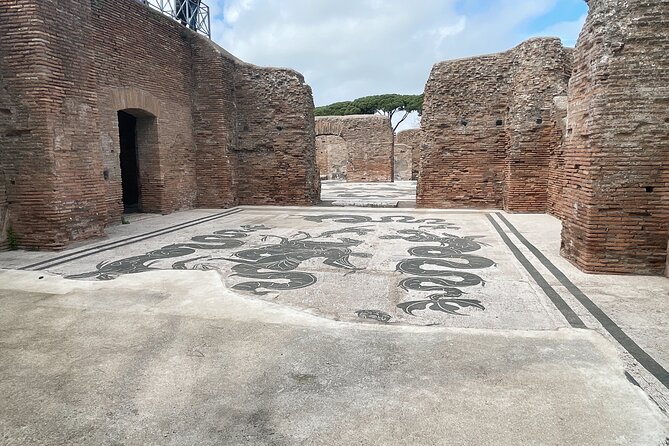
At the baths, you’ll focus on the well-preserved mosaics—especially the mosaic with Neptune and his entourage. Roman bathing wasn’t only about cleanliness. It was social time, conversation time, and sometimes news and business talk. Seeing mosaics in a bath context helps you understand why decoration mattered: it told visitors they were in a serious public space, not a backroom ritual.
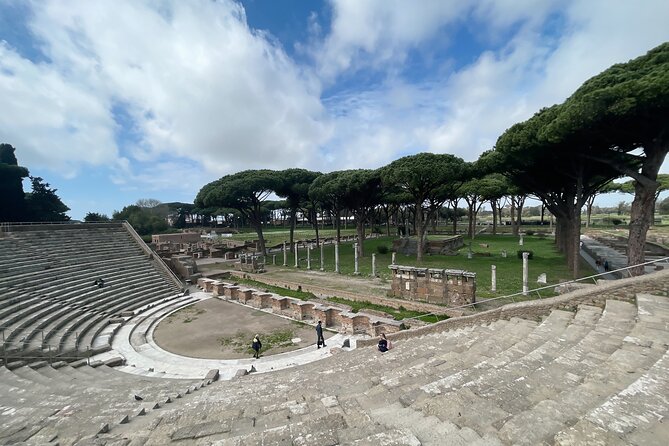
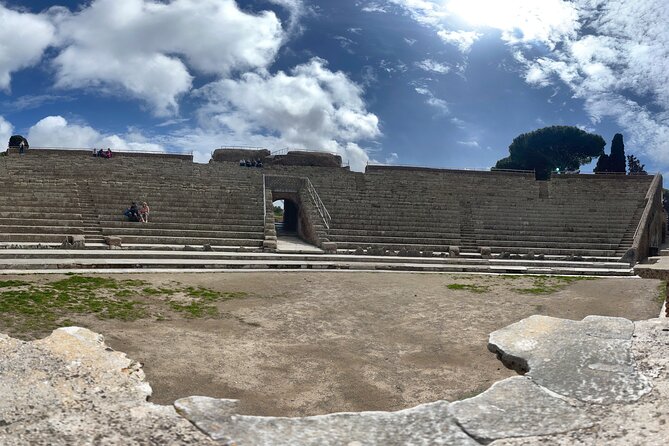
Next comes the theatre. The ruins here help you imagine mass entertainment. The guide discusses the kinds of performances held in this venue and what it would have felt like when thousands filled the seating.
A practical tip for this stop: take a minute to look at sightlines and how the structure shapes attention. Even if you can’t recreate the sound, you can still get a sense of what the Romans wanted from the audience experience—public events that made civic life feel shared.
Residential Areas: Houses and the Texture of Everyday Life
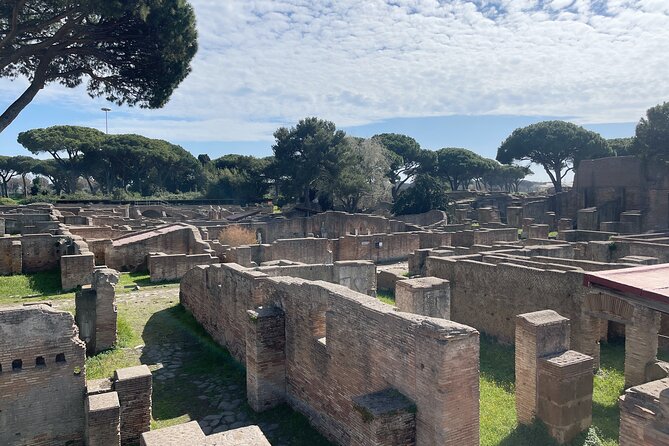
You also get time in the residential areas, where the tour moves into the “caseggiati” (apartment-style housing) type of spaces. These ruins are fascinating because they feel human-scale compared with grand public structures.
This part works best if you let your imagination do a little work. Pay attention to how homes relate to the street and nearby amenities. In many Roman cities, your day wasn’t organized around long private breaks. Life happened around routines: coming home, heading out again, grabbing something to eat, and meeting people in public spaces.
The guide’s commentary helps connect housing with the bigger picture of Ostia’s role. Since Ostia served Rome through its port function, lots of people moving through the economy would have depended on services and housing that kept the city running.






Forum and the Thermopolium: Food, Faith, and Public Life
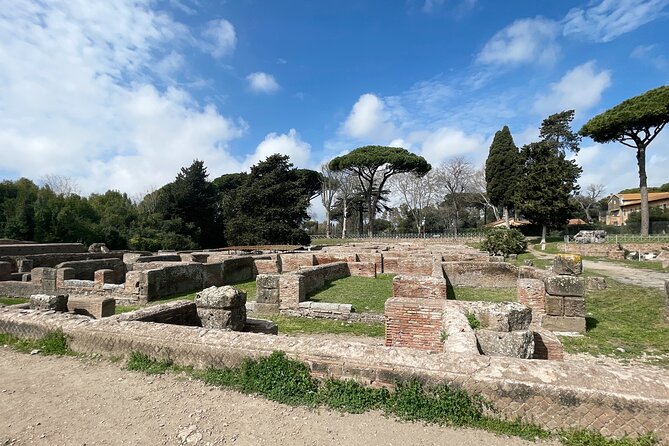
The tour rounds out with the Centro Storico di Ostia Antica, and this is where the public side of daily life becomes clear.
First, you visit the Forum, the central public square. Here you’ll see the remains of civic and religious buildings, including temples and basilica-type spaces. The guide explains why these buildings mattered: they weren’t just for ceremonies. They were the stage for decisions, announcements, and the visible structure of community life.
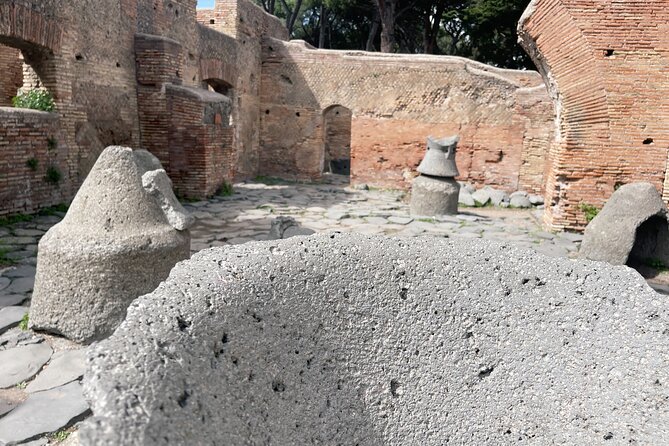
Then comes a stop that many people love because it’s so practical: the thermopolium. This was basically Roman fast food, a place with a counter and painted decorations where people could grab hot food and drinks without settling in for a long meal.
It’s one of those moments where history becomes oddly familiar. You can almost imagine a quick stop during a busy day. And because the thermopolium is so well preserved compared with many ruins, it gives you a stronger feeling for how food was presented and sold.
Depending on time and group interest, the guide may add other highlights, such as the House of Diana (an example of an insula). If that addition happens, it shifts the balance toward household life—still connected to the broader story, just from a different angle.
Small Group (Max 6): Why It Matters at Ruins
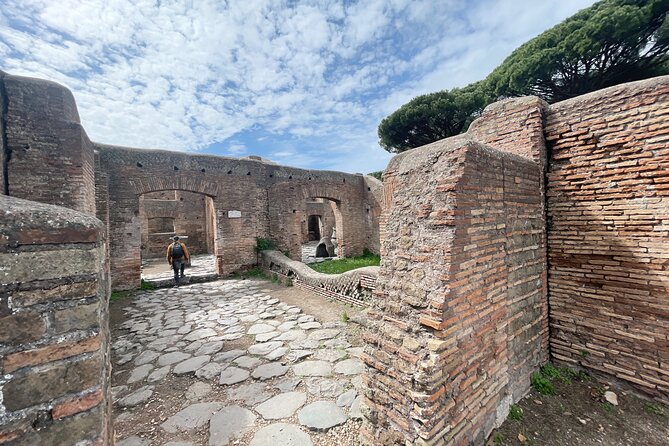
At ancient sites, the biggest quality factor isn’t only the landmarks. It’s your ability to move, pause, and ask questions without being rushed.
This tour keeps the group small—maximum 6 travelers—which changes the energy. You’re less stuck behind other people when you want a closer look at mosaics or architectural details. You also get more chances for your guide to tailor explanations if your questions point you somewhere specific.
If you’ve ever done a tour where you spend the whole time following a moving target, you’ll appreciate how this one feels. You can actually look.
Price and Value: What $195 Covers (and Why Admission Included Helps)
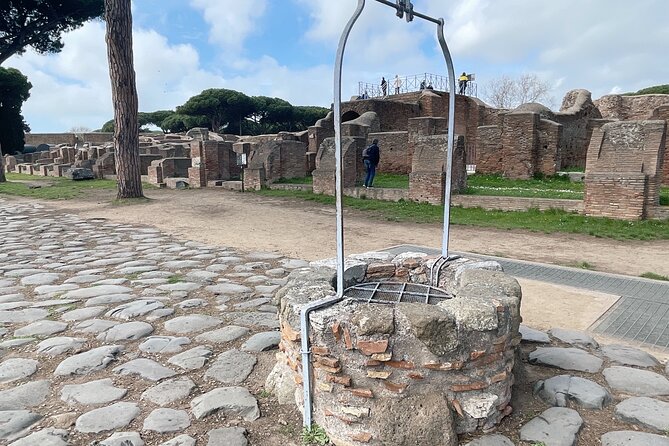
At $195 for about 3 hours, the price is really paying for three things: a guided experience, a small group, and admission to the Ostia Antica Archaeological Site.
That admission matters because it removes one more friction point at the start of the day. You don’t have to manage entry as a separate chore. You arrive, you check in, and you start walking.
The small-group component is also part of the value equation. With fewer people, your guide can spend time explaining, and you’re more likely to get the “why this place mattered” answers rather than just a list of what you’re seeing.
One cost to plan for: train tickets aren’t included. If you don’t already know your best route to Ostia Antica by public transport, it’s worth figuring that out ahead of time so the day stays smooth.
Getting the Timing Right: Check-In and Comfort Tips
This tour runs on-time and the check-in closes 15 minutes prior to departure. That’s not just fine print. It affects your success. If you’re coming by train, build in extra buffer time so you’re not jogging with sore feet before you even begin exploring ruins.
Comfort is the other big factor. There’s no dress code, but you’ll want comfortable shoes for walking on uneven ground. Also, bring a water bottle. The site has free water fountains and kiosks nearby where you can refill.
If you’re visiting in warm months, plan to pace yourself. Baths, theatres, and forums are great, but they’re also areas where you might sit or stand in the sun while looking around. The guide can help you hit the most important points without feeling like you’re wasting time, but you still want your body ready.
Who Should Book This Ostia Antica Tour?
This is a great fit if you want:
- A guided visit that connects ruins to everyday life (not just dates and names)
- A calmer experience outside the biggest tourist circuits
- Enough structure to know what to look at—especially mosaics, baths, and the thermopolium
- A small group where you don’t feel rushed
It may not be your best match if you’re looking for a full-day自由 explore plan or if you prefer very slow, no-time-constraints wandering. This tour gives you a smart arc in about 3 hours, so you’ll leave with a solid understanding but not every corner of the park.
Should You Book This Tour?
I think this one is worth booking if your priority is learning while you walk, and you care about seeing the city’s layout rather than only cherry-picking highlights. The combination of a small group, included admission, and a route that moves from Porta Romana into the heart of Ostia’s commerce, leisure, and public life makes it a strong value.
If you’re comfortable with moderate walking and you can arrive on time, you’ll get a lot out of those 3 hours. And if you want your Roman ruins experience to feel more like a lived-in city than a museum, Ostia Antica is a very smart place to do it.
FAQ
Where does the tour start?
The tour starts at the Ostia Antica Train Station on Viale della, Via della Stazione di Ostia Antica, 00119 Ostia Antica RM, Italy.
How long is the tour?
It’s listed as about 3 hours.
Is admission to Ostia Antica included?
Yes. Admission to the Ostia Antica Archaeological Site is included.
Are train tickets included?
No. Train tickets are not included.
Is the ticket mobile?
Yes. The tour uses a mobile ticket.
What group size is this tour?
It has a maximum size of 6 travelers.
How much walking is involved?
It involves a fair amount of walking across the archaeological site, and you should have a moderate physical fitness level.
When does check-in close?
Check-in closes 15 minutes prior to departure time, and departures are on-time.
Is there a dress code?
There is no dress code, but comfortable shoes are recommended and you should wear clothing appropriate for the weather.
Can children join?
Yes, but children must be accompanied by an adult.
Is water available during the tour?
You can bring a water bottle, and there are free water fountains and kiosks nearby to refill it.