REVIEW · ROME
Night Tour of Rome with Top E-bike & optional Italian Dinner
Book on GetYourGuide →Operated by TopTours · Bookable on GetYourGuide
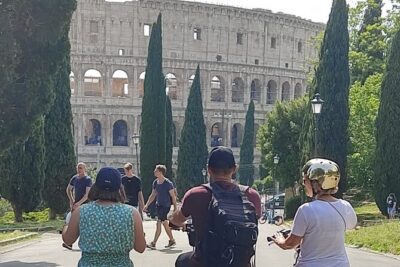
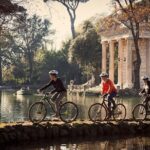
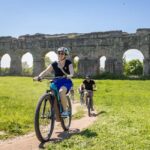
Rome glows best on two wheels. I love the Cannondale E-bikes with anti-puncture tires and a comfy seat, and I love how the route is built for the golden sunset-to-night mood. One consideration: you’ll still cover about 12 km, even if the pedal assist keeps it feeling light.
The vibe is practical and safe. Helmets are mandatory, the guides stay safety-conscious, and the bikes are checked after each use, which matters when you’re cruising near traffic-free corners and tight lanes. If you choose the 4-hour option, you’ll add an Italian trattoria dinner about 1h15 after the tour starts.
This is a smart pick if you want major landmarks plus quieter neighborhoods, without turning your whole night into a marathon of stops. You’ll see the Jewish Ghetto and glide through charming alleys, not just the most photographed facades. One thing to keep in mind: the trattoria menu won’t be perfect for every palate, and big city events can sometimes shift one or more stops.
In This Review
- Key highlights worth your attention
- Entering Rome by E-bike: what makes this night tour work
- First stop: Via Labicana, 49 and starting smart near the Colosseum
- Colosseum at the sunset-to-night edge: the photo moment with meaning
- Roman Forum and Theatre of Marcellus: history you can read while riding
- Jewish Ghetto streets and Farnese Palace: Rome’s night side streets
- Pantheon after dusk and Church of Sant’Ignazio: when Rome glows
- Piazza di Pietra, Spanish Steps, and Trevi Fountain: iconic, but not painful
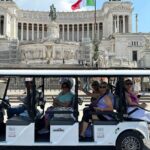
- Piazza Venezia and Imperial Fora: finishing strong in the evening light
- The 4-hour option: trattoria dinner included, with a clear value math
- How hard is it really? Effort, distance, and who should ride
- Bikes, safety, and details that actually matter at night
- Kids and bikes: child seats, extensions, and minimum ages
- When Rome changes the plan: possible stop substitutions
- Value check: why this price can make sense for Rome nights
- Should you book this Rome night e-bike tour?
- FAQ
- Where does the tour start?
- How long is the night tour, and what’s the difference between versions?
- How far do we ride?
- Is dinner included, and what does it include?
- How big is the group?
- Is it suitable for children?
Key highlights worth your attention
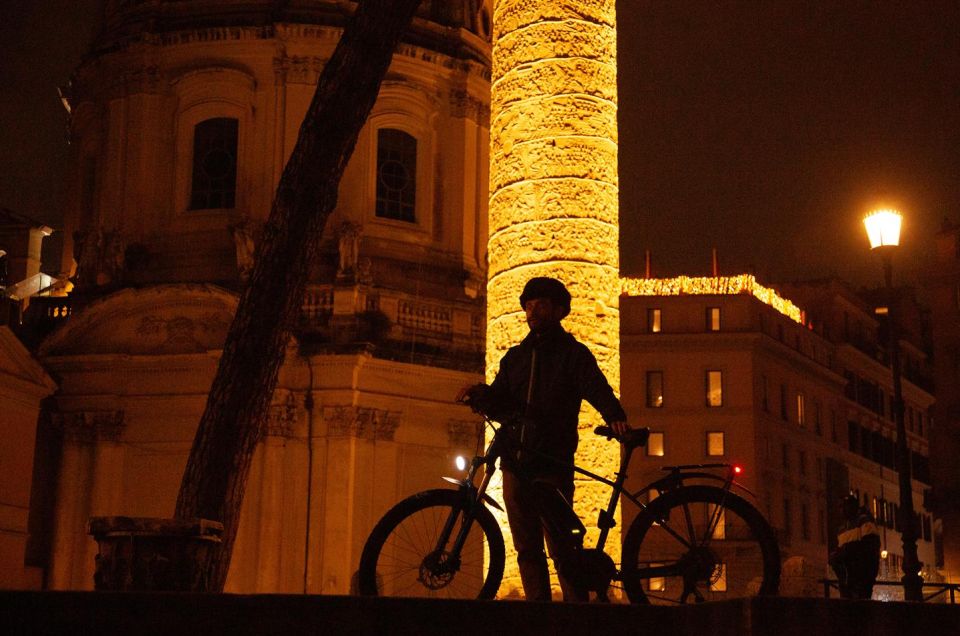
- Cannondale e-bikes with anti-puncture tires and a comfortable seat, checked after every use
- Golden-hour route built to catch the city as it shifts from sunset to night lights
- Back streets and real neighborhoods, including the Jewish Ghetto and Theatre of Marcellus area
- Small groups (max 10) with focused, safety-first guidance
- Optional 4-hour trattoria dinner with apps, pizza or pasta, drink or beer or wine, water, and coffee
- Helmet + handlebar bag + water so you ride ready, not scrambling mid-tour
Entering Rome by E-bike: what makes this night tour work
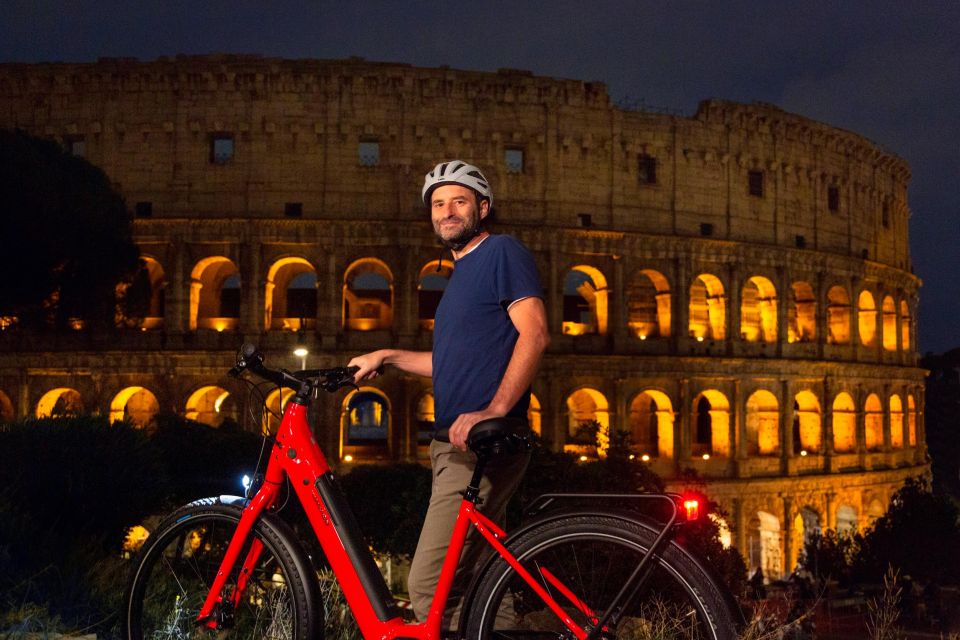
Rome at night is the same city, but the mood changes fast. The light softens, crowds spread out, and the streets feel made for wandering. This tour leans into that by timing the ride for that in-between window and keeping the route designed for evening visibility.
The biggest advantage is how much you fit in without “tour-bus exhaustion.” You’re cycling roughly 12 km on maintained e-bikes with anti-puncture tires, so the experience stays smooth even on uneven pavement. And because it’s a small group, you’re not constantly waiting for a long line of people to catch up.
If you like your Rome with stories and not just photos, the guide-led commentary is a big part of the appeal. In the small-group setting, guides such as Arina, Bita, Stefano, and Francesca have been known for being patient and fun, which keeps the evening from feeling rushed.
You can also read our reviews of more cycling tours in Rome
First stop: Via Labicana, 49 and starting smart near the Colosseum
You meet at Via Labicana, 49, about a 5-minute walk from the Colosseum. That location is practical: you’re close enough to central sights that you don’t spend your best energy commuting, and you’re in position to hit the iconic areas while the light is still cooperating.
Plan to arrive a bit early so you can get fitted without panic. Helmets are mandatory, so you’ll want your hair tucked away and your glasses sorted. You’ll also get a handlebar bag and a bottle of water, which makes it easier to keep your phone, cash, and small essentials where you can grab them quickly.
Colosseum at the sunset-to-night edge: the photo moment with meaning
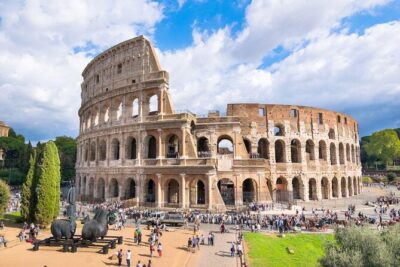
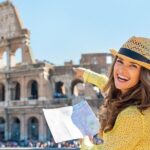
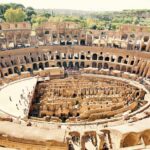
The ride begins at the Colosseum, with a short stop that’s long enough to take it in and listen. This is the part of Rome that most first-timers have on their mental map, but the timing makes it different. Watching it shift from warm light to evening shadow gives it a stronger “you are here” feeling.
One smart thing about this kind of stop: you don’t overdo it. You get the impact of the Colosseum and then you move, so you’re not stuck in one place while the crowd energy changes.
If you care about the big Roman backdrops, this is where the night tour earns its place over a purely walking route.
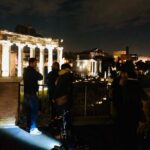
Roman Forum and Theatre of Marcellus: history you can read while riding
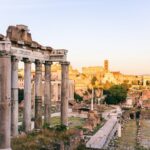
Next comes the Roman Forum area and then the Theatre of Marcellus. These stops work best when you treat them like a puzzle you’re solving on the move. From the bike, you get a sense of how the spaces connect, and the guide can point out what to look for instead of you guessing what each ruin is supposed to be.
Theatre of Marcellus has that quieter, almost cinematic atmosphere at night. It’s not as loud as the Colosseum, but it feels more local and less like a theme-park set. If you enjoy the quieter layers of Rome, this is one of the stops that can pleasantly surprise you.
Jewish Ghetto streets and Farnese Palace: Rome’s night side streets
The route includes the Jewish Ghetto area and the Farnese Palace. This is where the tour becomes more than “greatest hits.” You’re moving through neighborhoods and side streets, not just gliding between monuments.
The key value here is pacing. By night, you can actually look around at street details rather than just staring at famous stones. The guidance helps you notice things you’d likely miss on your own, especially in labyrinth-like areas where it’s easy to get turned around.
If you’re traveling with kids, you’ll also appreciate the tone here: the ride feels more manageable when you’re not constantly stopping in the busiest tourist pockets.
You can also read our reviews of more tours and experiences in Rome



Pantheon after dusk and Church of Sant’Ignazio: when Rome glows
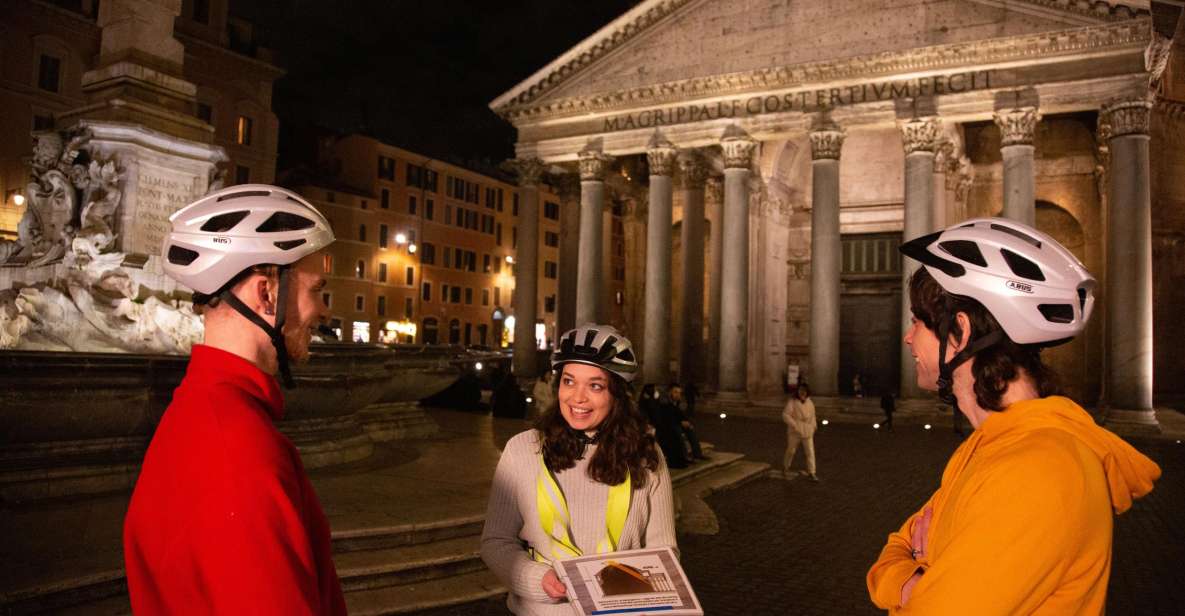
Then the tour swings toward the Pantheon set in dusk. This is a stop that can feel almost timeless at night. Even if you’ve seen it in pictures, it hits differently after dark, when the crowd flow changes and the light hits the building in a softer way.
The Church of Sant’Ignazio di Loyola is another worthwhile pause. Churches in Rome can feel like a checklist item during the day, but at night you tend to notice atmosphere more than just architecture details. It’s a small change with a big payoff.
The practical tip: keep your camera ready but don’t rush the stop. The best photos come when you give yourself two minutes to find your angle, then listen for what the guide is pointing out.
Piazza di Pietra, Spanish Steps, and Trevi Fountain: iconic, but not painful
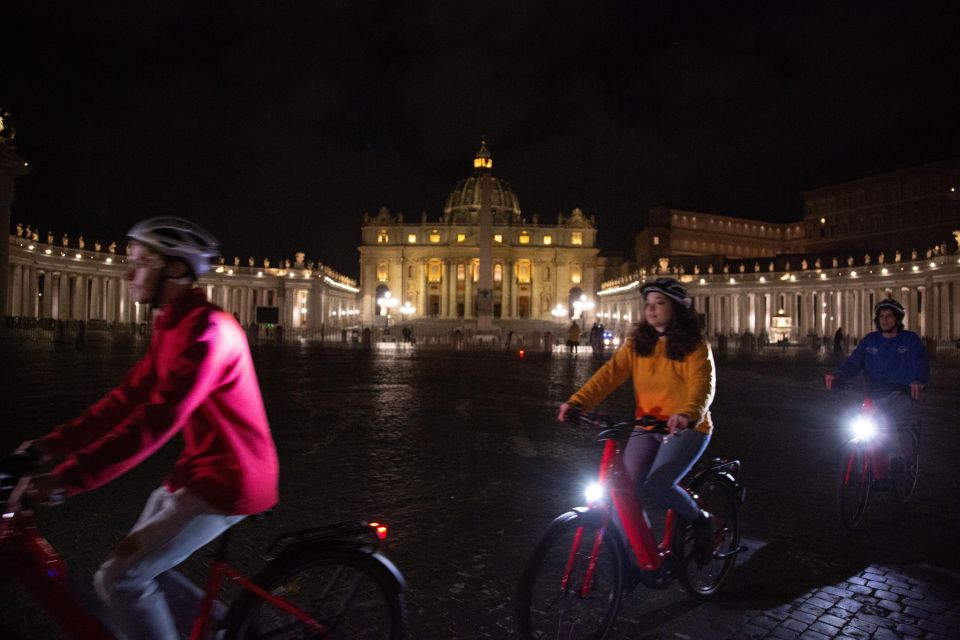
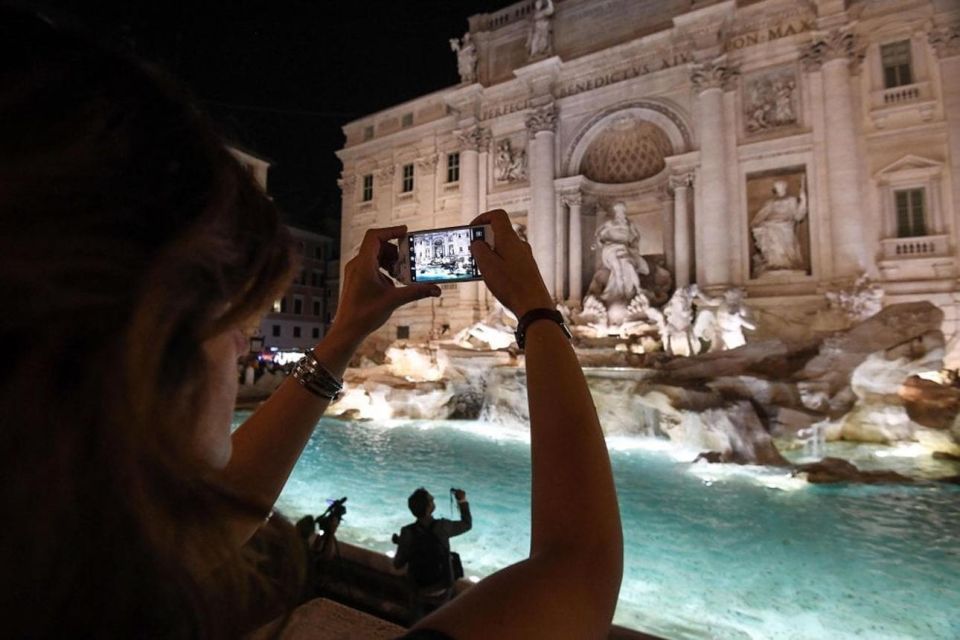
You’ll pass Piazza di Pietra, then reach the Spanish Steps and the Trevi Fountain. These are the three “you must see this” names, and Rome does not hide them. The night tour’s advantage is that you’re not doing these in a chaotic, midday stampede.
At Trevi, the sparkle is real. Still, I like that this tour keeps the moment moving. You get the key experience without losing your whole night to one crowded corner.
A small note from real-world experience with this kind of evening route: if you enjoy slow snacks and people-watching, you might wish there were an extra short break for a drink. One rider wished for a 15-minute spritz stop somewhere in a back alley. It’s a reasonable idea to keep in mind for your own planning.
Piazza Venezia and Imperial Fora: finishing strong in the evening light
After Trevi, you come to Piazza Venezia, then the Imperial Fora. By the time you reach the Fora, your brain is already in Roman “reading mode.” You’ve seen the big landmarks, and now you’re learning to interpret what you’re looking at instead of just recognizing it.
Imperial Fora at night can feel mysterious in the best way—less postcard, more atmosphere. It’s a nice finish because it reminds you that Rome isn’t only one skyline. It’s layers, transitions, and the spaces between the headline monuments.
Then you ride back to the start point at Via Labicana, 49.
The 4-hour option: trattoria dinner included, with a clear value math
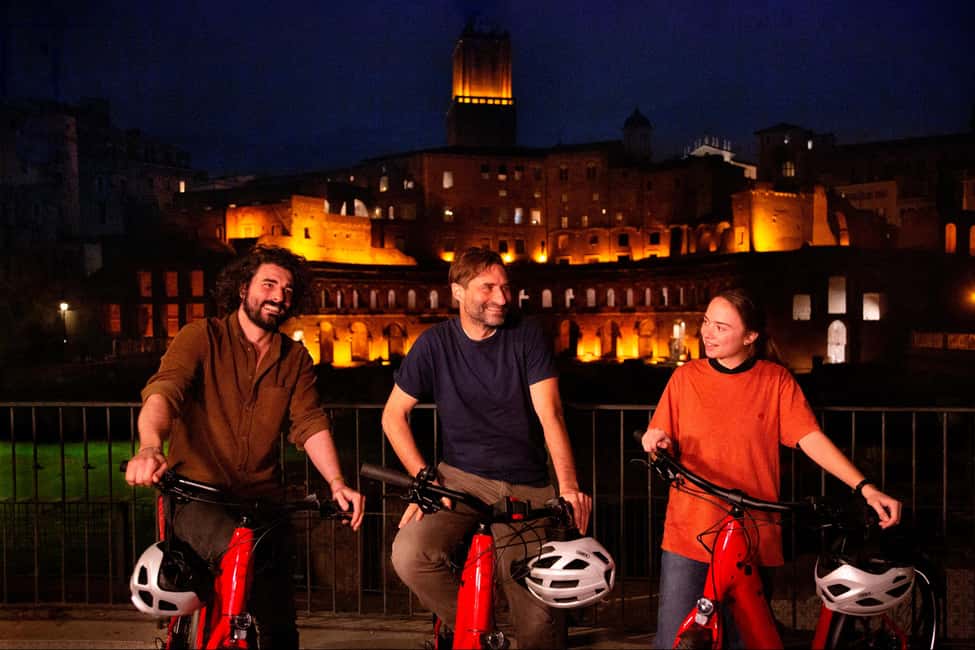
If you want more than a ride and a few quick stops, pick the 4-hour version. The route is the same, and the big difference is dinner. About 1h15 after the tour starts, you’ll eat at an Italian trattoria.
What’s included is spelled out clearly: a mix of appetizers, a pizza or pasta dish, soft drink or a glass of wine or beer, water, and coffee. That’s a solid package because it removes the usual Rome evening problem—trying to find a reliable sit-down spot while you’re tired and hungry.
Is it perfect? Not always. One rider said the restaurant menu wasn’t exactly to their liking. That’s normal with set menus. If you’re picky, it might help to mentally accept that you’re trading total choice for a smooth plan.
Still, for many people this becomes the best part of the night. You finish the ride and actually settle into a meal without having to figure out logistics.
How hard is it really? Effort, distance, and who should ride
The route covers 12 km (7.5 mi). The stated difficulty is leisure, or intermediate for an adult carrying a child seat or child extension mounted on their bicycle. That’s useful because e-bike tours can be marketed as easy, but real life depends on the rider and the gear.
In practice, the pedal-assist makes a huge difference. You’re not doing a long-distance training ride; you’re moving between sights with effort controlled by the bike’s help. One review even praised the bike’s Turbo mode, which tells me people are comfortable leaning on the assist when they want.
Who it suits best:
- First-timers who want the core sights fast, plus a few quieter areas
- People who prefer riding to standing in line
- Families with kids who can handle short stops and a guided group pace
Who should think twice:
- Anyone who hates cycling or isn’t comfortable holding balance on uneven sidewalks
- Anyone traveling with extremely young babies (it’s not suitable for babies under 1 year)
Bikes, safety, and details that actually matter at night
This tour is built around comfort and reliability. You ride Top Quality E-bikes (Cannondale), with anti-puncture tires, a comfortable seat, and mandatory helmets. The bikes are described as being checked after each use, and that kind of maintenance mindset matters when you’re riding after dark.
You’ll also get a handlebar bag and bottle of water. That sounds small until you’re halfway through a night tour realizing you’re glad you didn’t have to stop and buy water.
Group size is limited to 10 participants, which helps with safety and makes the ride easier to manage. The smaller group also means you’re more likely to be heard and to get individual help if something feels off.
Kids and bikes: child seats, extensions, and minimum ages
If you’re traveling with children, this tour is set up with actual options:
- Infants aged 1 to 4 (up to 22 kg / 49 lb) can join on a child seat for free
- Children aged 5 to 8 get a child extension (child streamliner)
- Children aged 9+ (at least 140 cm / 55 in) can ride independently on an appropriately sized e-bike
- Babies under 1 year are not suitable
If you’re carrying a child seat or extension, the tour difficulty is rated intermediate for the adult. That’s not a deal-breaker, but it’s worth taking seriously. It’s a clear way of saying the ride stays guided and manageable, but you’re still physically responsible for the setup.
When Rome changes the plan: possible stop substitutions
Rome loves surprises, and so does this tour. If there are official or public celebrations, the provider may substitute one or more of the listed highlights. You still get a strong experience, but you might not end up at exactly the same “named” photo spot that you planned for.
That’s not unusual in a city like Rome. The practical move is to keep your mind flexible, and enjoy the fact that your guide will adjust in real time.
Value check: why this price can make sense for Rome nights
The price is $85 per person, for 2.5 to 4 hours. On the surface, that can feel like a lot if you’re used to free museum streets and DIY wandering. But you’re paying for three things at once: a maintained e-bike, a guide to steer you through timing and navigation, and (for the 4-hour option) an included dinner package.
For me, the best value angle is reducing friction. Rome is gorgeous, but it’s also hard to move through at the right pace while trying to hit the main sights plus quieter corners. This tour does that for you, with limited group size and safety gear.
If you choose the 4-hour dinner version, the value math gets even easier because you’re bundling meal costs into the ticket and not hunting for a trattoria after you’ve already spent your energy cycling.
Should you book this Rome night e-bike tour?
Book it if you want a night Rome experience that stays organized, safe, and fun, with enough landmark power to satisfy first-timers and enough side streets to feel like more than a postcard run. The combo of Cannondale e-bikes, small group size, and a route timed for evening light is exactly the kind of practical planning that makes Rome trips smoother.
Skip it if cycling sounds stressful or if you need maximum freedom to roam on your own schedule. Also consider the dinner choice if you’re very picky; the meal is set, not customized.
If you’re unsure, my advice is simple: pick the 2.5-hour option if you want a lighter night plan, and go 4-hour only if you’re hungry for the extra meal and a fuller evening flow.
FAQ
Where does the tour start?
The meeting point is Via Labicana, 49, about a 5-minute walk from the Colosseum.
How long is the night tour, and what’s the difference between versions?
You can choose a 2.5-hour or 4-hour tour. The two itineraries are identical, and the 4-hour version adds an Italian trattoria dinner.
How far do we ride?
The tour covers about 12 km / 7.5 mi.
Is dinner included, and what does it include?
Dinner is included only with the 4-hour tour. It includes a mix of appetizers, pizza or pasta, a soft drink or a glass of wine or beer, water, and coffee. Dinner happens about 1h15 after the tour starts.
How big is the group?
The tour is a small group, limited to 10 participants.
Is it suitable for children?
It’s not suitable for babies under 1 year. Infants 1–4 ride on a child seat for free, children 5–8 use a child extension, and children 9+ (at least 140 cm) can ride independently on an appropriately sized e-bike. Helmet use is mandatory.