REVIEW · ROME
Kids-Tailored Tour of the Colosseum Roman Forum & Palatine Hill
Book on Viator →Operated by Private Tours of Rome · Bookable on Viator
Kids stay curious in Rome ruins. This private tour turns the big, intimidating sites into a kid-friendly adventure using games, quizzes, and visual reconstructions—so your family learns without feeling like it’s just lectures in ancient stone. You also get full attention from a guide, which matters when you’re keeping children engaged.
I love two things in particular: the skip-the-line tickets (plus a mobile ticket) to cut down waiting stress, and the way the guide pitches the day to your family’s pace and interests. A possible drawback: it’s still about 3 hours on foot, and Rome can be brutally hot—one guide was praised for handling extreme heat well, but you’ll want to plan for it.
You’ll start at Piazza del Colosseo 23 and end back there, with admission included at each stop so you’re not juggling extra ticket lines or decisions mid-tour.
In This Review
- Key highlights you’ll feel right away
- The Colosseum, tailored for children (and the adults who are tired of waiting)
- A quick note on pacing
- Forum Romano: where the stories of power live in the ruins
- Where families benefit most
- Palatine Hill: temples, Michelangelo, and the Marcus Aurelius statue
- A reality check for families
- A guided journey through Ancient Rome (the part that keeps it from feeling like three separate sights)
- What $345.89 per person really buys you
- Skip-the-line and mobile tickets: why this matters with kids
- The guides: Francesco and Tomaso are part of the reason this works
- Practicalities you should plan for before you go
- Mask and distancing rules
- Weather and energy management
- Duration and expectations
- Who should book this kids-focused Colosseum Forum Palatine tour?
- Should you book it? My honest take
- FAQ
- How long is the tour?
- What does the tour cost?
- Is the Colosseum included with admission tickets?
- Are tickets included for the Roman Forum and Palatine Hill too?
- Is this a private tour?
- What’s the meeting point?
- Is there a skip-the-line option?
- Do I need a mask?
- Is it refundable if I cancel?
Key highlights you’ll feel right away
- Kids-tailored guide time with quizzes, scavenger-hunt style play, and family-focused explanations
- Skip-the-line access plus mobile tickets so you spend more time inside and less time waiting
- Colosseum + Forum + Palatine Hill in one flow, with admission ticket included at every major stop
- Visual aids and reconstructions that help children understand what you’re seeing
- Proven kid-friendly guides, including Francesco and Tomaso, both praised for keeping groups engaged
The Colosseum, tailored for children (and the adults who are tired of waiting)
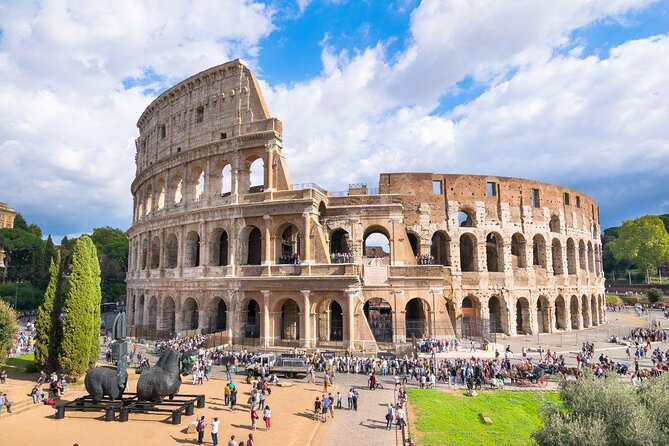
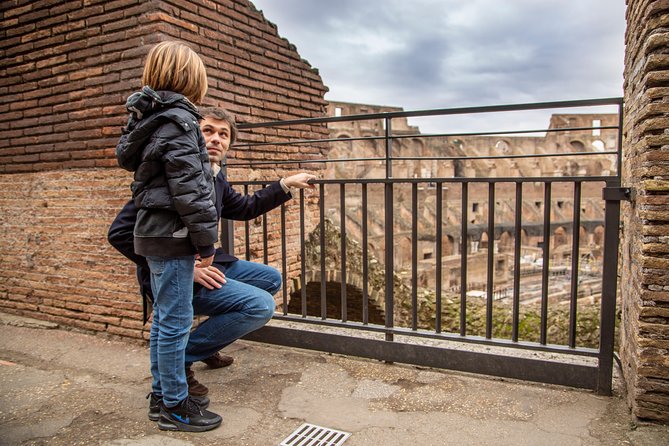
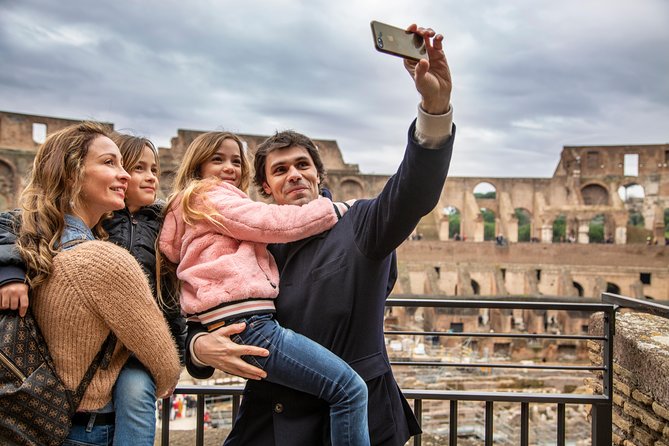
The tour starts at the Colosseum, and it’s hard not to get goosebumps looking at something built to host more than 50,000 spectators. The scale is the point: it’s the largest amphitheatre of the ancient world, with 80 entrances—so even before the storytelling begins, your kids can start noticing details and patterns.
What I like about this setup is the way the guide uses the site’s size as a teaching tool instead of a stressor. Your family doesn’t just walk past things. You work through it like a game—quizzes, scavenger-hunt style prompts, and other activities that keep kids moving and looking. It’s an approach that gives parents a break, too, because you’re not trying to translate history while also managing attention spans.
Practical takeaway: the Colosseum stop runs about one hour, and admission is included. That’s long enough for a “wow” moment and some real understanding, but not so long that you’re trapped in one spot while everyone melts.
You can also read our reviews of more tours and experiences in Rome.



A quick note on pacing
The Colosseum gets busy, and this kind of place turns into a timing test—so the best part is that you aren’t paying time taxes at the front of the line. Still, you’ll want a calm plan for hot weather and energy swings. Even with an excellent guide, kids need breaks.
Forum Romano: where the stories of power live in the ruins
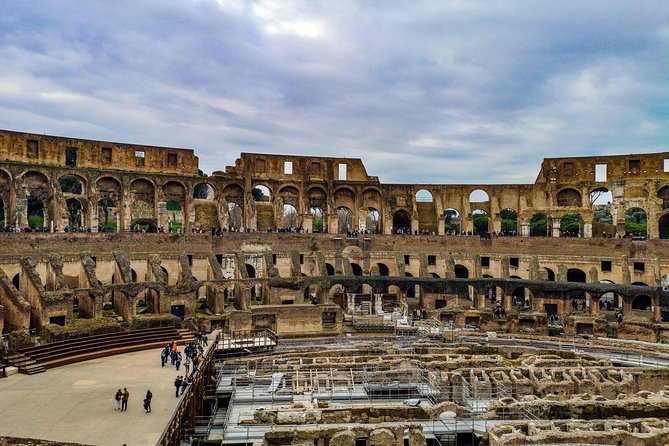
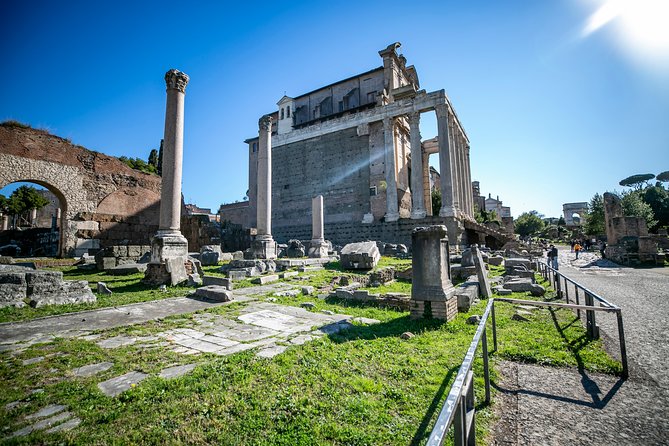
After the arena, you move to the Foro Romano, the epicentre of daily life in Ancient Rome. This part can feel confusing on your own because it’s not one neat building. It’s a mix of ruins and spaces that once had jobs, rules, and big political meaning.
Here, the guide’s job gets more important, and this tour leans into that. You’ll see major landmarks around the square, including the ruins of the Senate House, the Temple of Vesta, the Temple of Saturn, and the Altar of the Divine Julius Caesar. For families, this is often where the lightbulb turns on—because once kids connect names to visible remains, the whole place starts to make sense.
What makes it work for children is that the guide can connect the dots without drowning you in facts. The tour description also highlights visual aids and reconstructions, which help fill in what’s missing. Kids don’t just look at broken columns—they can picture what those spaces used to be.
Practical takeaway: the Forum stop is also about one hour with admission included. It’s a good middle segment of the day—enough time to feel like you’ve entered “real Rome,” without exhausting everyone before the final climb.
Where families benefit most
If your kids are the type who ask constant questions—or the type who shut down when things feel too abstract—this stop is a strong match. The setting naturally invites “what happened here?” conversations, and a kid-tailored guide can turn those questions into short, clear answers.
Palatine Hill: temples, Michelangelo, and the Marcus Aurelius statue
Next comes Palatine Hill, often described as the place tied to the most important Roman gods through the temples that once stood there. Even if your family isn’t “temple people,” the Palatine adds variety to the day. You’re shifting from civic power in the Forum to religious significance and imperial-era connections.
This stop also includes some big visual anchors that can land with kids and adults alike:
- the stunning square designed by Michelangelo
- the Statue of Marcus Aurelius
Seeing recognizable art and landmark features is a smart way to keep energy up. It helps children feel like they’ve reached a destination, not just kept walking between ruins.
Practical takeaway: this is another one-hour segment with admission included, and it’s the end of the main three stops. If you’re planning the day around kid stamina, this structure is convenient—colosseum first, forum second, palatine hill last.



A reality check for families
Palatine Hill is part of an ancient complex, so it’s not built for modern strolling comfort. What you can control is your rhythm—go slower than you think you need to, especially in heat. The guide’s “kids engaged” reputation matters here, because it’s easier to handle uneven energy levels when the group has activities to refocus everyone.
A guided journey through Ancient Rome (the part that keeps it from feeling like three separate sights)
The tour wraps with an Ancient Rome storytelling element that connects what you saw, rather than treating each stop like a separate checklist item. You’ll explore areas including the Emperors’ House, and the guide focuses on stories about characters tied to the Colosseum’s ancient life.
This is a big deal for families. When kids only learn “cool facts” that bounce off one another, the day can feel like memorizing. When a guide ties sites together—showing how power and public life linked across the Forum and the imperial world—you get retention. The goal here is for your family to leave with a sense of what kind of society produced these places.
I also like that the tour is described as private, so the guide can adjust the pace if your child is curious about one type of detail (engineering, statues, political names, or simple “how big?” questions). In a group situation, that flexibility usually gets lost.
What $345.89 per person really buys you
At $345.89 per person, this isn’t a budget impulse purchase. The value comes from combining four things that families feel immediately:
1) Skip-the-line tickets
Waiting in busy Rome lines is a slow kind of stress. Here, that friction is reduced, which helps kids stay in “adventure mode.”
2) Admission tickets included at the Colosseum, Forum, and Palatine Hill
That matters because those are not small add-ons. You’re paying for one guided plan that includes the entry fees.
3) A kids-friendly private guide
Your time isn’t shared with strangers. For families, that reduces the constant “keep up” pressure. It also makes it easier to ask questions or pause.
4) A mobile ticket
This is the quiet convenience factor that makes the day smoother.
Is it worth it? If you’re bringing children and you want less waiting and more active learning, I think it can be a strong value. If you’re traveling with grown-ups who prefer to wander slowly on their own, you may prefer a cheaper self-guided approach. But for families who want history with energy management built in, the pricing looks more reasonable.
Skip-the-line and mobile tickets: why this matters with kids
Skip-the-line access isn’t just a convenience; it changes the entire feel of the day. When a child is hot, tired, or overstimulated, a long wait can turn the trip sour. With the ticket process handled up front, you’re more likely to keep momentum.
The tour also uses a mobile ticket, which is helpful when you’re juggling phones, snacks, and kids who don’t want to stop moving. You’re not digging through paperwork during your most fragile moment—right at the start.
In the practical feedback around this experience, guides like Francesco and Tomaso get praised for engaging kids at different ages, including very young children. That kind of engagement works best when you’re not losing time to ticket logistics.
The guides: Francesco and Tomaso are part of the reason this works
Two guide names show up strongly: Francesco and Tomaso. Both are described as friendly and professional, and both stand out for patience and kid engagement.
Francesco, in particular, is noted for working with families where children were around 2 to almost 4 on different visits. That tells me something important: the approach isn’t built only for school-age kids. The guide can simplify explanations and still keep the storyline moving.
Tomaso is described as extremely knowledgeable and patient, including for families that mixed kids and senior citizens. That matters even if your group is only kids and parents, because patience is what keeps the tour from turning into a “hurry up” marathon.
Even better: the tour includes visual aids and reconstructions of ancient monuments. That combination—storytelling plus visuals—tends to work for kids because it reduces guessing. You can see what the guide is talking about instead of hoping your child imagines it.
Practicalities you should plan for before you go

This experience includes some items you should take seriously, because they affect comfort.
Mask and distancing rules
The tour info says you’ll need to bring your own mask, and social distancing has to be maintained. That means you’ll want to pack your mask where it’s easy to reach and be ready to follow on-the-spot guidance from the tour staff.
Weather and energy management
One family note highlights the guide keeping kids engaged even during extreme heat. That suggests pacing matters a lot. If you can choose a cooler time of day, you’ll likely have an easier time keeping everyone cheerful.
Duration and expectations
Plan for about 3 hours total. That’s enough time to see the major sites and hear the story, but it’s not a short stop. If your kids are small, expect some redirecting. If your kids are older, expect more questions—especially around the Colosseum and the Emperor-linked parts of the tour.
Who should book this kids-focused Colosseum Forum Palatine tour?
I’d put this in the “yes, do it” category if any of these sound like you:
- You’re visiting with children and you want them actively involved, not passively dragged from landmark to landmark.
- You care about skip-the-line tickets and want the ticket moment handled smoothly.
- You’d like a private guide who can tailor the day to your interests and your family’s pace.
- You want a guided plan that covers the big three: Colosseum, Roman Forum, Palatine Hill—plus connecting context about Ancient Rome.
It may be less ideal if you’re traveling with older teens who don’t care about guided activities, or if you want a totally free-form itinerary with lots of extra stopping. This tour is designed to move with purpose.
Should you book it? My honest take
Book it if you want the Colosseum experience to feel like a family day, not a history chore. The strongest selling points are the kids-tailored engagement, the skip-the-line process, and the fact that admission tickets are included for the major stops. You’ll also benefit from seeing the Forum landmarks and Palatine Hill highlights without trying to stitch the story together yourself.
Skip it if your top priority is lowest cost and you’re comfortable doing the sites on your own while managing everything that comes with waiting and ticketing. At $345.89 per person, you’re paying for time, focus, and a guide who can keep children involved.
If your goal is maximum meaning in minimum stress, this tour hits the mark.
FAQ
How long is the tour?
The tour is about 3 hours (approx.) total.
What does the tour cost?
It costs $345.89 per person.
Is the Colosseum included with admission tickets?
Yes. Admission tickets are included at the Colosseum stop.
Are tickets included for the Roman Forum and Palatine Hill too?
Yes. Admission tickets are included for the Forum and Palatine Hill as well.
Is this a private tour?
Yes. It’s a private tour/activity, and only your group will participate.
What’s the meeting point?
The start point is Piazza del Colosseo, 23, 00184 Roma RM, Italy.
Is there a skip-the-line option?
Yes. Skip-the-line tickets are included.
Do I need a mask?
You have to bring your own mask, and social distancing has to be maintained.
Is it refundable if I cancel?
No. This experience is non-refundable and cannot be changed for any reason.