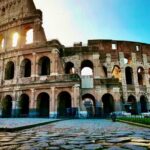
Rome underground meets big-city shortcuts, all in one morning. This route pairs the eerie Catacombs of Saint Callixtus with quick, well-timed stops like the Aventine keyhole, using transport that saves you from the slog of moving around on your own.
I like two things right away: the small group feel (maximum 7) and the way a local driver-guide frames what you’re seeing, not just where to stand for photos. If you get a guide like Mauro, Andrea, Mido, or Assem, you’ll likely hear sharp details about Rome’s layout and daily life in different eras.
One possible catch: the catacombs visit has an extra €10 entrance ticket, and your driver-guide won’t run the underground portion—catacomb staff guide you and you join a larger group. Also, don’t plan on seeing bones down there; some remains have been removed after thefts.
In This Review
- Key Highlights Worth Booking For
- How the Golf Cart Format Makes This Tour Feel Short (Not Rushed)
- Start at Piazza della Suburra, Finish at Piramide (So You Can Keep Exploring)
- Catacombs of Saint Callixtus: What You’ll See and What You Won’t
- Via Appia Antica: The Ancient Road That Still Feels Roman
- Aventine Hill Keyhole: A Small Doorway to a Big Feeling
- Aurelian Walls by Car: Seeing Rome’s Defense Without the Long Trek
- Piramide Cestia: Rome’s Pyramid That Most People Miss
- What You Pay For ($108.84) and Why It Can Still Be Good Value
- The Pace: Great for First-Timers, Risky for People Who Want Lots of Walking
- Practical Tips to Make the Most of This Route
- Should You Book This Rome Catacomb Tour?
- FAQ
- What’s included in the $108.84 per person price?
- How long is the tour?
- Is the tour offered in English?
- How large is the group?
- What extra fee might I need to pay?
- Does my driver-guide take me inside the catacombs?
- Will I see bones in the catacombs?
- Where do I meet the tour, and where does it end?
- Is there free cancellation?
Key Highlights Worth Booking For
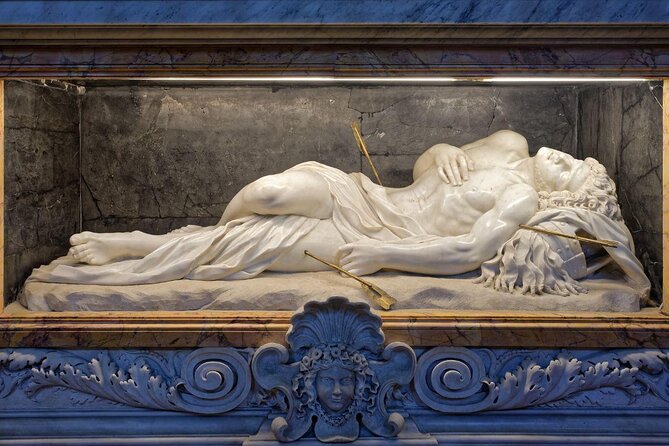
- Golf cart transport across Rome’s spread-out sights so you’re not stuck in long commutes between stops
- Catacombs of Saint Callixtus with about 45 minutes underground led by catacomb guides
- Aventine Hill keyhole photo moment, plus viewpoints that help you understand Rome’s shape
- Via Appia Antica history tied to Spartacus and an early Christian legend
- Aurelian Walls and Porta-style gates by car, for context without major walking
- Small group size (max 7) that usually keeps the pace friendly
How the Golf Cart Format Makes This Tour Feel Short (Not Rushed)

Rome is big, and the classic sights don’t cluster neatly. This tour uses transport to connect a set of meaningful stops without forcing you into a marathon day of transit and long walks. The result: you get more “Rome moments” in a half-day window, with less stress.
That’s also why the small-group format matters. With up to 7 people, you tend to get quicker answers to questions and a smoother flow between photo spots and viewpoints. If you like tours where the guide can actually talk to you, this setup usually hits the mark.
The downside is time management. Most stops are brief by design, so you’re there for the key point, not for lingering.
You can also read our reviews of more private tours in Rome



Start at Piazza della Suburra, Finish at Piramide (So You Can Keep Exploring)
You begin at Piazza della Suburra (near public transportation), and the tour ends at Piazzale Ostiense, right by the Piramide subway station (Line B). That’s a practical finish point because it gives you easy onward connections—great if you’re pairing this with lunch plans or a museum visit later.
I also like that the meeting location isn’t hidden. Starting in a central neighborhood helps you arrive calm instead of playing guess-the-meeting-point. And ending near Line B is a nice way to avoid backtracking across town.
Catacombs of Saint Callixtus: What You’ll See and What You Won’t
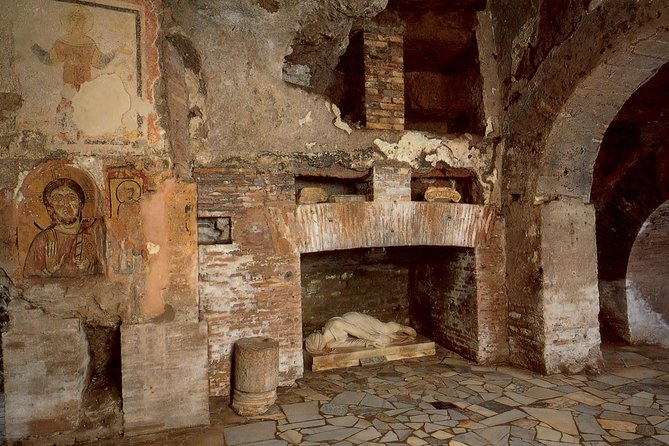
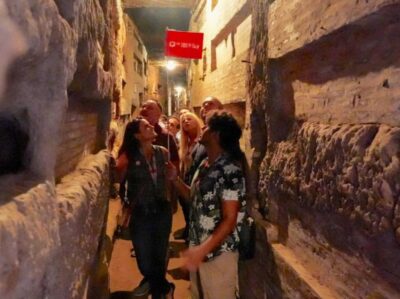
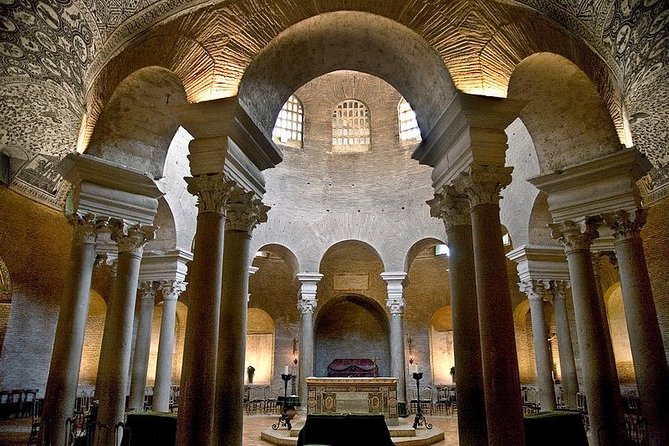
This is the heart of the morning. Catacombs of Saint Callixtus date back to the early centuries of Christianity and are laid out like a maze of underground Christian cemeteries. Expect walking through eerie tunnels with empty tomb niches and frescoed areas—more atmosphere than gore.
Plan for two important details:
1) The catacomb portion is run by the catacomb guides. Your driver-guide will get you there, but you join a larger group once underground.
2) Admission isn’t included. You’ll pay an extra €10 per person for the entrance ticket.
If you’re coming in hoping for bones as part of the experience, adjust your expectations. Some remains have been removed due to thefts, so the underground visit is more about the historic setting and the visual layout than a shock-and-awe anatomy lesson.
Time-wise, you’ll typically spend about 45 minutes inside. That’s long enough to feel the scale of the place, but short enough that you still have a full set of above-ground stops afterward.
Via Appia Antica: The Ancient Road That Still Feels Roman
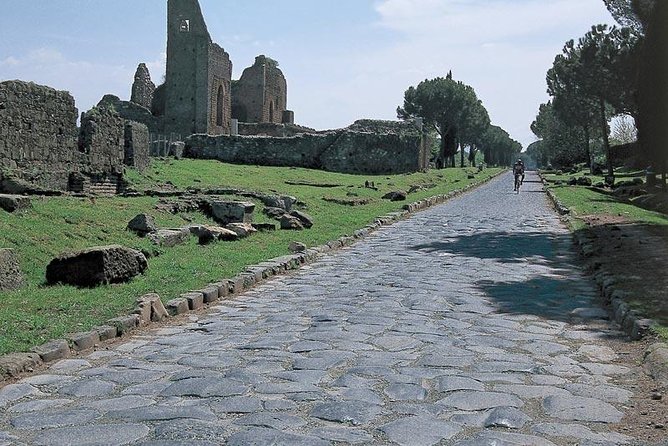
After the underground portion, the tour shifts to open air. The stop at Appian Way (Via Appia Antica) focuses on the road’s endurance—its ancient paving still survives in places. That alone makes it worth your attention: this isn’t a rebuilt set piece; it’s a surviving trace of how Romans moved.
The guide context usually ties the road to big stories: Spartacus and thousands of followers were crucified along this route, and there’s also a Christian legend connected to St. Peter’s vision as he left Rome in 64 A.D. Even if you don’t remember every detail, it helps you understand why this road became a symbol, not just a road.
One more practical note: the stop time is short—about 20 minutes—so you’ll likely get history and orientation rather than a long walk. If you want a lengthy Appian Way trek, treat this as a “taster” and consider pairing it with a separate walking excursion.
Aventine Hill Keyhole: A Small Doorway to a Big Feeling
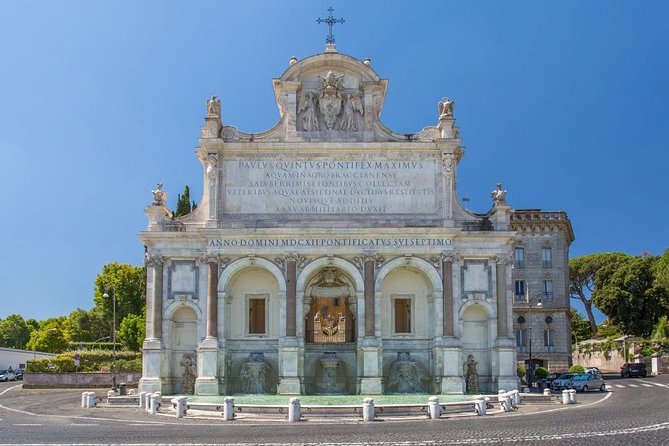
Next comes the stop on Aventine Hill for the famous keyhole view. This is the kind of Rome moment that’s almost hard to explain until you’re there: it feels like a private look into another version of the city, framed by architecture.
This stop is short—about 20 minutes—but it’s paced to get you in, line up your photos, and then move on before you lose the magic to crowds. You also get a sense of elevation here, which makes it easier to grasp how Rome’s hills shape where you see what.
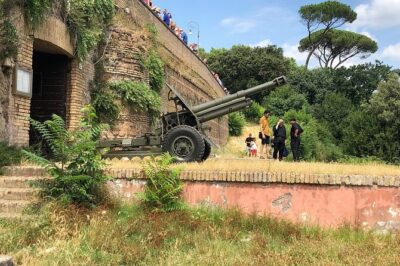
Timing can also add a bonus. One account in the provided information mentions catching a cannon shot in connection with the hill and the daily schedule. I can’t promise it lines up every time, but it’s the sort of surprise that can happen when a schedule and a daily ritual overlap.
If you want scenic city understanding more than museum facts, this is the stop that often delivers the wow factor fast.






Aurelian Walls by Car: Seeing Rome’s Defense Without the Long Trek
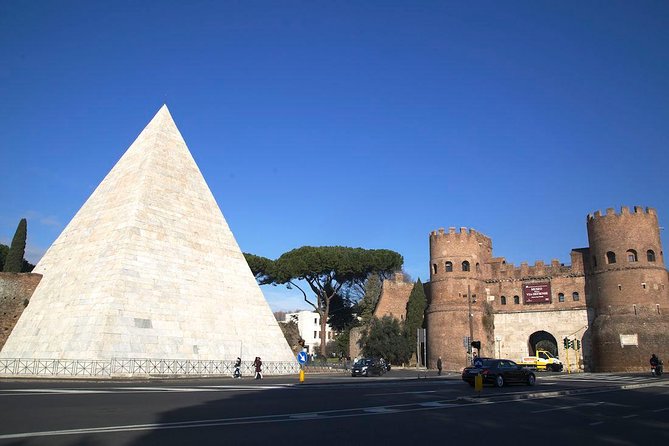
Not every Roman structure is best experienced by climbing and walking for hours. The Aurelian Walls stop is designed for a “you get the idea” view: you’ll drive around the ancient defensive walls from the third century A.D. and see major gate areas.
This is valuable because it turns a vague term you’ve heard—Aurelian Walls—into something tangible. You start to understand how Rome protected itself and why the city’s growth followed specific corridors.
Stop time here is about 15 minutes. So think of it as context-building rather than a deep dive. If you crave a slower, more detailed wall walk, you’ll want a separate focus visit later. For this tour, it does its job: it gives you the mental map.
Piramide Cestia: Rome’s Pyramid That Most People Miss
Most first-timers speed past it because it’s weird and not on the usual checklist. Piramide Cestia is the pyramid of Caius Cestius, and it’s one of those Rome structures that feels out of place—in a good way.
The stop is brief (about 15 minutes), usually enough for photos and a quick explanation of why this shape appeared in the city. It also works well as a “visual reset” after the catacombs and the heavy history stops, giving you a different kind of Roman curiosity.
What You Pay For ($108.84) and Why It Can Still Be Good Value
At $108.84 per person, you’re paying for a real driver-guide and private transportation that links multiple areas of Rome efficiently. The catacombs ticket is extra (about €10 per person), so the all-in cost will depend on that add-on.
Here’s how I’d judge value:
- You’re getting a guided route through several meaningful sites in one half-day, without spending your energy figuring out logistics between them.
- The group size (max 7) usually gives you more attention than a big bus tour.
- The underground component is capped and timed, but it’s led by the catacomb specialists, which matters for the quality of interpretation.
Where value can drop for some people: if you’re expecting long stays, long walks, or a fully private cathedral-style experience inside the catacombs. The catacombs portion is run by catacomb guides and involves joining a larger group, and the outdoor stops are short.
If you like efficient sightseeing with guided context, this price can make sense.
The Pace: Great for First-Timers, Risky for People Who Want Lots of Walking
This tour fits best when your goal is pattern + orientation. You want to understand Rome’s layout, hit several standout locations, and still have energy left for lunch and later exploring.
It’s less ideal if you:
- expect a lengthy walk along the Appian Way itself (this stop is brief)
- want a slow, unhurried museum-style experience everywhere
- need fully independent time inside the catacombs (you’ll be with catacomb guides and a larger group)
For many people, the trade-off is worth it. You get variety: underground cemeteries, a surviving ancient road, a viewpoint trick, major defensive architecture, and a surprise pyramid—without a full day commitment.
Practical Tips to Make the Most of This Route
A few details will help you avoid the most common issues:
- Bring extra funds for the €10 catacomb entrance ticket.
- Keep your phone charged and ready for the mobile ticket.
- Wear shoes that work for underground walking; the catacombs are a walking experience even with a set time.
- If you care a lot about a particular stop (like the keyhole), arrive focused and ready with your camera set before the group moves on.
And one “culture” tip: in Rome, the best photos often come right after the explanation. Listen, then shoot. It’s easier to frame what you’ve just learned.
Should You Book This Rome Catacomb Tour?
Book it if you want a smart half-day in Rome that combines underground history with above-ground highlights, without spending your day in transport hell. The small group size, the catacombs’ special setting, and the quick hits like the Aventine keyhole make it a strong fit for first-timers and anyone who likes guided context.
Skip it (or plan a different add-on) if you want long walking time on the Appian Way or a fully private, slow-paced catacomb visit. Also, if your goal is to see bones, adjust expectations—some remains have been removed.
Overall, this is the kind of tour that works well when you treat it like a curated route, not a free-form wandering day.
FAQ
What’s included in the $108.84 per person price?
The price includes a professional expert driver-guide and private transportation. Lunch is not included.
How long is the tour?
The tour lasts about 2 hours 30 minutes.
Is the tour offered in English?
Yes. The tour is offered in English.
How large is the group?
This tour has a maximum of 7 travelers.
What extra fee might I need to pay?
You’ll need to pay the Catacombs of Saint Callixtus admission fee, listed as €10.00 per person. Entrance is not included.
Does my driver-guide take me inside the catacombs?
No. The catacomb portion is guided by the catacomb’s own guides, and you join a larger group for that part.
Will I see bones in the catacombs?
You shouldn’t count on bones. Some remains have been removed due to past thefts.
Where do I meet the tour, and where does it end?
The tour starts at Piazza della Suburra, 00184 Roma RM, Italy and ends at Piazzale Ostiense (Piramide subway station, Line B).
Is there free cancellation?
Yes. You can cancel up to 24 hours in advance for a full refund.