REVIEW · ROME
Haunted Rome Ghost Night Walking Tour
Book on Viator →Operated by Carpe Diem Tours · Bookable on Viator
Rome gets creepier after dark. This 2-hour walk threads sinister stories through central sights, timed for cooler evenings and lighter streets. You’ll start at Campo de’ Fiori and end at Castel Sant’Angelo, with stops built around executions, legends, and macabre church details.
I really like the pacing: short stops mean you keep moving and the story stays tight. I also like that the tone is mostly historical spooky—the guides focus on what happened, plus the darker myths that grew around the places.
One thing to consider: it’s a group walk at night on busy streets, and if you’re far from the guide, street noise can make the narration harder to catch. If that’s you, try to stay nearer the front.
In This Review
- Key Points That Make This Night Tour Work
- Why This Haunted Rome Walk Feels Better After Dark
- The Big Route: From Campo de’ Fiori to Castel Sant’Angelo
- Campo de’ Fiori: Where the Spooky Starts
- Piazza Farnese: Scandal, Secrets, and Two Popes
- Via del Mascherone & Vicolo dei Venti: Madonelles as Crime-Stoppers
- Ponte Sisto: Rome’s Oldest Bridge and Its Dark Reputation
- Fontana del Mascherone: A Warning in the Middle of the Street
- Chiesa di Santa Maria dell’Orazione e morte: The Church With Human Remains
- Via di Monserrato: When an Apartment Block Feels Like a Prison
- Chiesa di Santa Maria in Monserrato degli Spagnoli: A Saucy Story in Sacred Space
- Via Giulia: When Cosmetics Can Kill
- Via dell’Arco dei Banchi: Home of Mastro Titta
- Castel Sant’Angelo: Warnings in Stone and the Cenci Family
- Guides and Story Style: Why People Rave About the Delivery
- Price and Value: Is $35.07 Worth Two Hours?
- Timing Tips: Heat, Crowds, and What to Wear
- What to Do After You Finish at Castel Sant’Angelo
- Should You Book This Haunted Rome Ghost Night Walking Tour?
- FAQ
- How long is the Haunted Rome Ghost Night Walking Tour?
- What language is the tour offered in?
- Where does the tour start and end?
- How many people are on the tour?
- Do you pay admission at each stop?
- What is the cancellation policy?
Key Points That Make This Night Tour Work
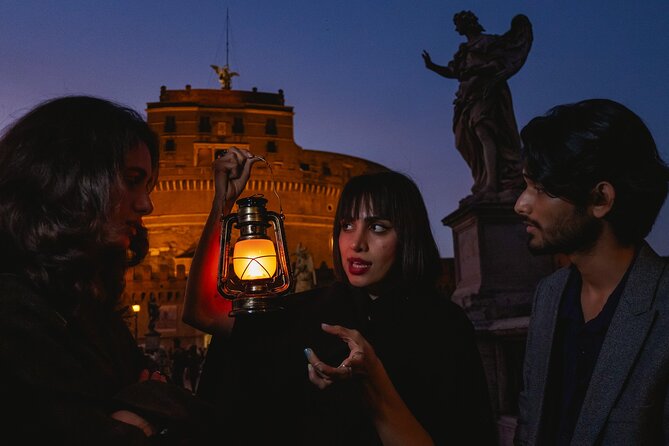
- Small group size (max 20): easier to hear, less jostling than big bus crowds.
- English-guided stories: the tour is offered in English with a mobile ticket.
- Major landmarks on foot: Campo de’ Fiori, Ponte Sisto, Via Giulia, and Castel Sant’Angelo.
- Mostly dark history, not camp: stories feel entertaining without leaning into cheesy theatrics.
- Human-horror details, respectfully framed: including a 17th-century church decorated with human remains.
- Good value for central Rome: 2 hours for about $35.07, plus admission to stops is listed as free.
Why This Haunted Rome Walk Feels Better After Dark
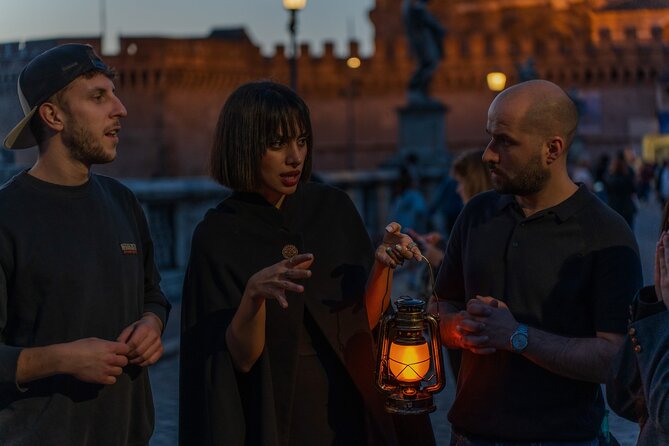
Rome at midday can be a squeeze: heat, crowds, and that constant “move along” energy. This is built as a night walk, so you get the same landmarks with a calmer rhythm and more night-scene atmosphere.
What makes the concept click is the way the stories are tied to the geography. You’re not just hearing ghost tales in a vacuum. You’re walking from place to place where people once feared punishment, disease, scandal, and death—and where legends still stick to the stones.
The group stays fairly intimate (up to 20), which matters. In a small crowd, a guide can keep control of pace, and you’re more likely to actually catch the details. The tour also ends at Castel Sant’Angelo, so it lines up nicely with a full evening out along the river.
You can also read our reviews of more walking tours in Rome

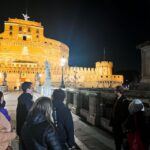
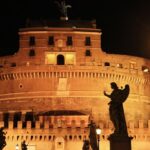
The Big Route: From Campo de’ Fiori to Castel Sant’Angelo

This walk runs roughly 2 hours, starting at Piazza Campo de’ Fiori and finishing at Castel Sant’Angelo (Lungotevere Castello, 50). Along the way, you hit a string of sites that connect to Rome’s darker side: execution locations, grim bridges, churches with remains, and a famous executioner’s neighborhood.
The route is also practical. You’ll be in central Rome where you can reasonably carry on after the tour. That’s a real-life advantage when you only have limited time and don’t want your “big plan” to end too early.
And yes, you’ll see plenty that’s recognizable. But the stories give those familiar names a new angle, from scandal and secret passage legends to how certain religious symbols were used to discourage crime.
Campo de’ Fiori: Where the Spooky Starts
You begin in Campo de’ Fiori, one of Rome’s most famous piazzas. During the day it’s lively with bars and restaurants. At night, the same space feels like it’s holding onto old secrets.
This stop works because it sets the rules for the whole experience. You’re reminded that this city has always been about life right next to danger. Campo de’ Fiori was also an execution site, so your guide can frame the rest of the walk as a series of “watch your step” places—some literal, some symbolic.
Even if you’re not a hardcore ghost-tour person, this is a strong opener. It’s a famous square, but the darker context makes it feel new.
Piazza Farnese: Scandal, Secrets, and Two Popes
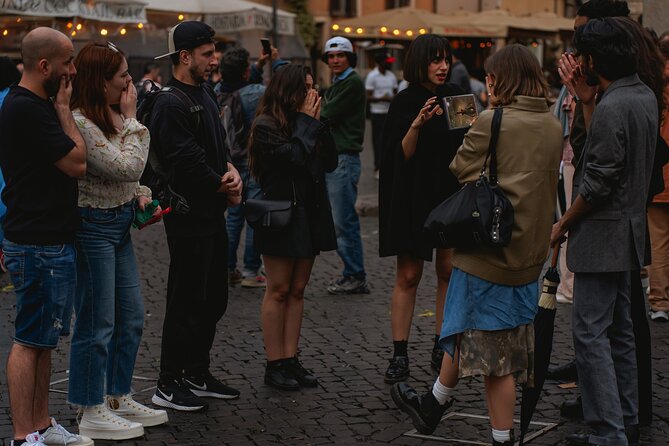
Next you reach Piazza Farnese, a beautiful square with major energy. Here, the stories lean into legend: a scandalous tale involving a secret passageway and two popes.
This is one of those stops where you’ll likely start noticing Rome differently. The streets around you stop feeling random. They become part of a web—connections, hiding places, and rumors that traveled faster than facts.
It’s also a good example of why this tour isn’t just jump-scare spooky. It’s about how power and secrecy shaped the city, then turned into stories people retold until they became part of the local mythology.
Via del Mascherone & Vicolo dei Venti: Madonelles as Crime-Stoppers
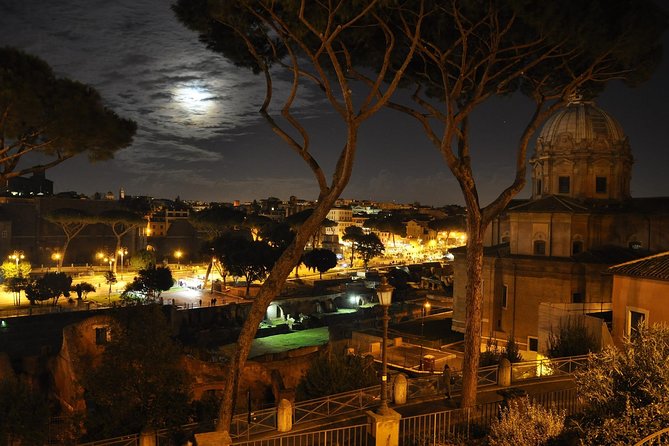
Along the route you’ll spot madonelles, often described as little madonnas. These small religious images had a job beyond decoration. The focus here is on how they were used to deter crime and protect passersby.
This stop is quietly fascinating. Instead of only looking at famous buildings, you’re training your eye for street-level symbols—things you’d normally walk right past.
It also gives you something to “do” while walking. You’ll start watching the facades, corners, and niches, which makes the whole walk feel more like exploring than being carried from stop to stop.
You can also read our reviews of more evening experiences in Rome

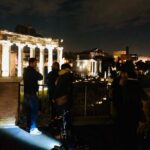
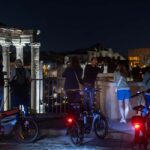
Ponte Sisto: Rome’s Oldest Bridge and Its Dark Reputation
Ponte Sisto is the oldest bridge in Rome. That alone makes it worth attention. But on this tour, it comes with a darker storyline: tragic accidents, power struggles, theft, and suspicious deaths.
Bridges are perfect for this kind of storytelling. People cross them fast in real life, but historically they were choke points—places where events could happen in public and rumors spread quickly.
If you like crime-story vibes (without the horror-movie acting), this stop delivers. It also helps that the bridge area is a natural pause point as you regroup with the group.
Fontana del Mascherone: A Warning in the Middle of the Street
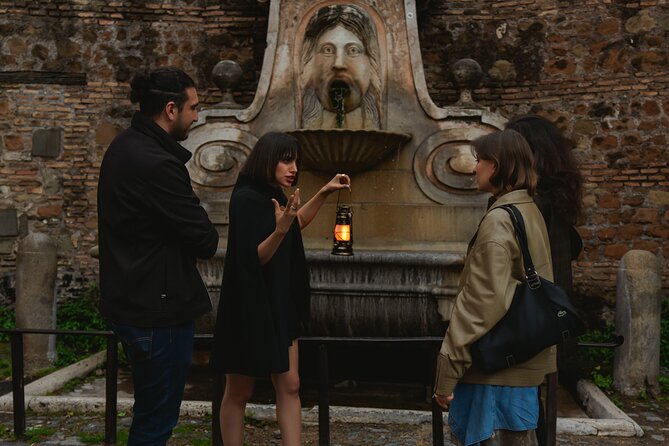
You’ll then reach Fontana del Mascherone. Not all Rome fountains are about beauty and water alone. This one comes with a warning—one that’s aimed right at anyone tempted to drink.
This is the kind of detail that makes a night walk memorable. In a normal sightseeing day, you might glance at a fountain and keep going. Here, the guide gives you a reason to look twice.
And honestly, it’s a great reminder that Rome’s “small things” often carry the strangest stories.
Chiesa di Santa Maria dell’Orazione e morte: The Church With Human Remains
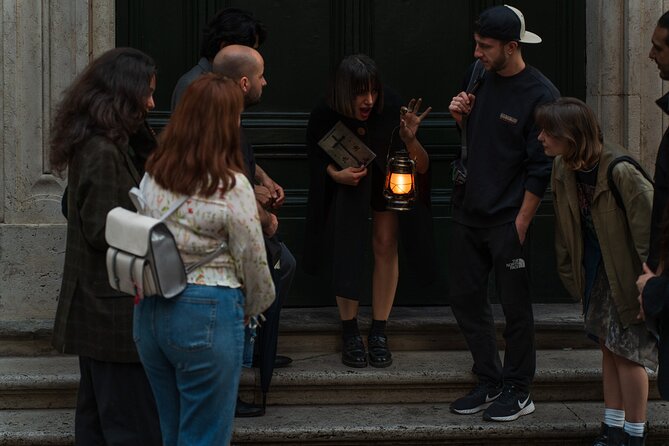
This is one of the most intense stops: the Chiesa di Santa Maria dell’Orazione e morte, a 17th-century church decorated with human remains from long ago.
This isn’t presented as shock for shock’s sake. It’s a place where death is not hidden—it’s part of the visual message. For many people, that’s the point where the tour stops feeling like entertainment and starts feeling like history that can still hit hard.
If you’re sensitive to anything macabre, it’s worth mentally preparing. On the other hand, if you like museums and religious art that tell the full story of mortality, this stop lands.
Via di Monserrato: When an Apartment Block Feels Like a Prison
Next comes Via di Monserrato, now a haunted apartment block. Historically, this site was linked to one of the worst prisons in Rome.
This is where the tour’s theme really clicks: time passes, buildings change purpose, and daily life moves in—while the darker past still shadows the walls.
It also helps that the stop is part of a lived-in area. The story feels more real because you’re not standing only in ruins or staged history. You’re walking through a normal street while hearing what it once held.
Chiesa di Santa Maria in Monserrato degli Spagnoli: A Saucy Story in Sacred Space
You’ll visit the Spanish church, Chiesa di Santa Maria in Monserrato degli Spagnoli. Here the vibe shifts a bit, with a story described as saucy, almost like a telenovela.
That contrast matters. A great night tour doesn’t keep you in pure gloom the whole time. It gives you a mental breather while still staying within the “darker Rome” theme.
So if you want variety—serious, then surprising—this stop is a nice reset.
Via Giulia: When Cosmetics Can Kill
Then comes Via Giulia. You’ll hear about a place that began life differently over time—once a beauty shop, later a bar. The story centers on when cosmetics can kill.
This is a standout for me because it’s not only about violence and executions. It connects to something everyday: beauty, products, and the risks people took without modern safeguards.
It also shows the tour’s range. You don’t just get “monster stories.” You get social history—how people lived, what they feared, and how rumors and reality tangled.
Via dell’Arco dei Banchi: Home of Mastro Titta
On Via dell’Arco dei Banchi, you’ll learn about a house tied to Rome’s most famous executioner, Mastro Titta.
This is one of those “names you might not know” stops. It makes the history feel specific. The city stops being a vague backdrop and becomes a set of places where known figures worked, lived, and left a mark.
If you like connecting the dots between a person and a place, this stop delivers.
Castel Sant’Angelo: Warnings in Stone and the Cenci Family
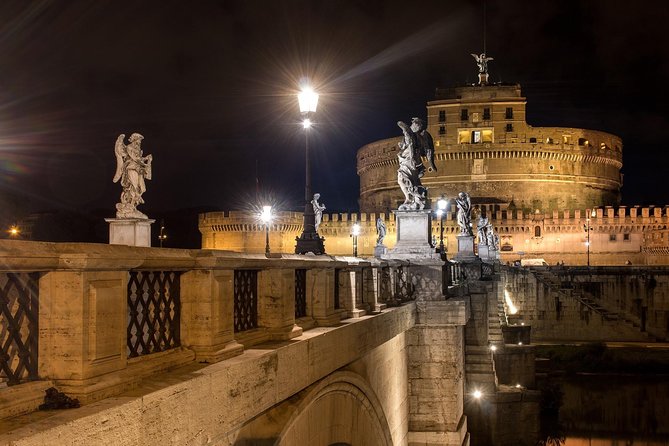
You finish at Castel Sant’Angelo, and the guide ties it back to what it once meant: a bridge used to expose executed bodies as a warning to sinners. Today, it’s surrounded by angel statues—and the story shifts to the Cenci family and how they met their fatal end.
This finale works because it blends visual transformation with narrative payoff. You arrive expecting “the big monument,” but the tour reframes it as part of a system of public fear and moral punishment.
The finish also makes logistics easy. You end at a major landmark, right where you can keep walking or grab dinner nearby and stretch the evening.
Guides and Story Style: Why People Rave About the Delivery
One reason this tour earns such strong ratings is storytelling that stays fun without turning into silly cosplay. In the group, you might have guides including Youssef, Antonio, Ana, Dominica, Dinara, Simon, Domenica, Anna, Maham, and Dina—names that show up again and again in the guide credits.
What you should expect from the best guides here:
- strong pacing and clear storytelling
- humor that keeps the mood from turning grim
- enough local detail that you start spotting “the point” in ordinary street corners
It’s also worth knowing the format can feel more like a walk-and-talk than a heavily theatrical performance. That can be a plus if you want your spooky to come from history, not props.
And if you want to be extra strategic about hearing: in a noisy Roman night, position yourself where the guide can speak clearly and don’t get stuck at the back.
Price and Value: Is $35.07 Worth Two Hours?
At $35.07 per person for about 2 hours, this is priced like a budget-friendly, high-touch walking tour. The big value isn’t only the cost—it’s the fact you’re covering multiple central sights in one go, and you’re doing it at night when the experience is more pleasant.
You’ll also see that admission tickets at the stops are listed as free. That matters because it reduces surprise costs and keeps the tour feeling like a real bargain for the area you cover.
Add in that the group is capped at 20, and you have English support plus a mobile ticket. For most people, that’s the sweet spot: you get guide-led context and you don’t spend your evening fighting logistics.
If you want even more personal attention, there’s an option to upgrade to a private tour. That’s the route to consider if you’re traveling as a small group and want time for questions at each stop.
Timing Tips: Heat, Crowds, and What to Wear
This tour is designed to avoid the heat and crowd pressure of daytime sightseeing. Still, you’re walking at night, often on uneven pavement.
I’d dress for cool air and bring something light for the evening. If you’re in Rome during colder months, plan to bundle up a bit. The night can feel crisp, especially near the river.
And if rain shows up, be ready. People have mentioned practical help during wet weather, so don’t rely on perfect conditions.
Finally, set yourself up for a smooth start. Arrive a few minutes early at Piazza Campo de’ Fiori so you’re not sprinting when the group is forming.
What to Do After You Finish at Castel Sant’Angelo
Finishing at Castel Sant’Angelo is a smart close. It’s a built-in next step because you’re ending at a place that naturally supports an easy continuation of your evening.
If you want a full night plan, you can:
- take a slow walk around the area before heading to dinner
- keep exploring the river side while the city is less crowded
- use the landmark as your orientation point
This matters if it’s your first days in Rome. A tour that ends at a major hub helps you feel less lost on day two.
Should You Book This Haunted Rome Ghost Night Walking Tour?
I think this is a great pick if you want Rome at night with a story-driven route that stays entertaining. It’s especially worth booking if you like historical dark tales more than cartoon-style ghost scenes, and if you’re happy walking for about two hours through central neighborhoods.
Book it when:
- you’d rather dodge daytime crowds and heat
- you want multiple “big names” plus street-level details in one walk
- you travel with kids or teens who enjoy spooky stories that are still grounded in facts and place
Skip it or choose another style if:
- you need a louder, more theatrical production with constant scares
- you have trouble hearing guides in busy street environments (then stay toward the front)
If you like your spooky with context—and you want value that doesn’t feel cheap—this one earns a spot on your first-night Rome list.
FAQ
How long is the Haunted Rome Ghost Night Walking Tour?
It runs for about 2 hours.
What language is the tour offered in?
The tour is offered in English.
Where does the tour start and end?
It starts at Piazza Campo de’ Fiori and ends at Castel Sant’Angelo on Lungotevere Castello, 50.
How many people are on the tour?
The maximum group size is 20.
Do you pay admission at each stop?
Admission tickets for the listed stops are marked as free.
What is the cancellation policy?
You can cancel for a full refund up to 24 hours in advance of the experience start time. If you cancel less than 24 hours before, the amount paid is not refunded.