REVIEW · ROME
Gourmet Street Food and Guided Sightseeing Tour In Rome
Book on Viator →Operated by Tours of the Vatican with Francesco & his team · Bookable on Viator
Rome is best when you eat while you walk.
This tour hits both street food and major landmarks in a tight 2.5 hours, and I really like the way the pacing keeps you moving without feeling rushed. I also like the small-group size (max 14)—it makes the stops feel more personal, and you get room for questions. One consideration: it is not set up for vegan, gluten-free, or dairy-free diets, and cross contamination is possible if you’re sensitive to nuts or dry fruits.
I like that the route starts in a working market area and ends in a calmer square, so you get a real slice of Rome instead of just check-the-box monuments. The tour is offered in English, runs rain or shine, and uses a mobile ticket. For scheduling, you can usually choose a lunch or dinner time slot, which helps if you’re juggling other plans.
If you want a friendly, food-forward way to see classic sights—Campo de’ Fiori, the Roman Ghetto area, Largo Argentina, the Pantheon, and the Basilica di Sant’Eustachio—this is a strong fit. Just go in knowing drinks are not included, and you’ll want to ask about food ingredients or alternatives early.
In This Review
- Key Things I’d Mark Before You Go
- A Rome Food-and-Sight Route That Fits in 2.5 Hours
- Campo de’ Fiori Market Stop: Salami, Pesto, and Balsamic Vinegar
- The Roman Ghetto Walk: Kosher Bakeries, Fried Artichoke, and Synagogue Area
- Area Sacra di Largo Argentina: Pompey, Caesar, and a Concrete Clue
- Pantheon: The 43-Meter Dome Stop You’ll Remember
- Basilica di Sant’Eustachio: Ending With a Stag and a Legend
- What You’ll Eat: Roman Street Food Samplings, Not Just Photos
- Price and Value: Is $54.42 Worth It?
- Who Should Book This Rome Street Food and Guided Sightseeing Tour
- Should You Book This Tour of Rome’s Gourmet Street Food and Sights?
- FAQ
- What is the duration of the Rome gourmet street food and sightseeing tour?
- How many people are in the group?
- Is the tour offered in English?
- Where do you meet and where does the tour end?
- Are drinks included in the price?
- Can I join if I’m vegan, gluten-free, or dairy-free?
- Does the tour run in bad weather?
Key Things I’d Mark Before You Go
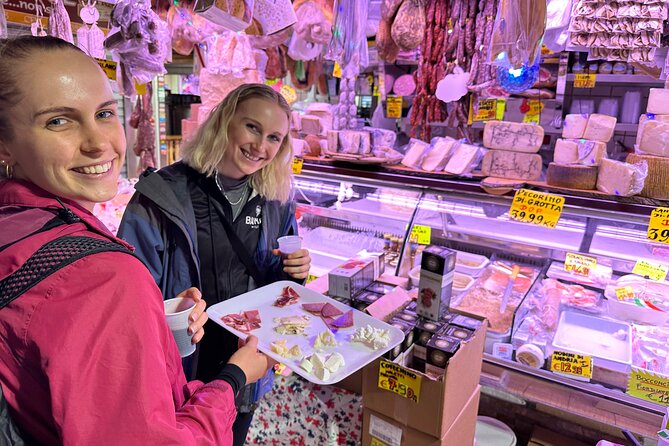
- Market-first tastings at Campo de’ Fiori, including salami variety plus pesto and balsamic vinegar
- Jewish Ghetto time for atmosphere and culture, with fried artichoke as a standout tasting
- Largo Argentina’s dramatic story, tied to Pompey and the assassination of Julius Caesar
- Pantheon as the centerpiece, including the famous oculus-and-dome proportions (43 meters)
- A quiet finish at Sant’Eustachio, where the stag symbol is part of the square’s identity
A Rome Food-and-Sight Route That Fits in 2.5 Hours
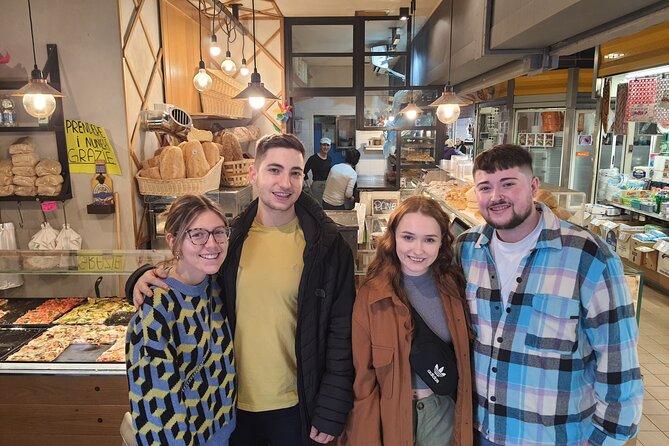
This is a focused 2 hours 30 minutes tour that mixes guided sightseeing with traditional Roman street food samplings. You meet at Piazza Campo de’ Fiori and end at Piazza di S. Eustachio, which is a nice flow: you start in one of Rome’s most “alive” areas and finish near a small square that feels calmer. The tour runs rain or shine, so wear shoes that work on uneven streets.
The group size matters here. With a maximum of 14 participants, the pace stays manageable and the guide can keep an eye on the whole group at busy corners and narrow pedestrian stretches. The tour is offered in English, and you’ll get a mobile ticket, which is one less thing to manage on the day.
Also, admission for the listed stops is noted as free. That’s a big deal for value because it means you’re paying for the guidance and the food—not extra ticket lines at each stop.
You can also read our reviews of more food & drink experiences in Rome

Campo de’ Fiori Market Stop: Salami, Pesto, and Balsamic Vinegar
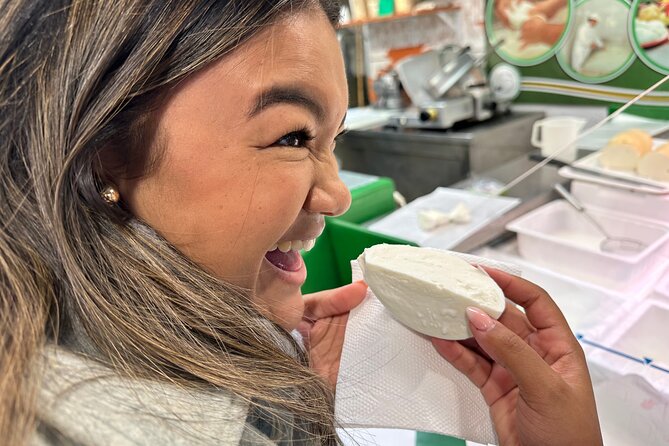
Your tour begins at Piazza Campo de’ Fiori, a square with a market tradition that goes back to the Middle Ages, when the area was a meadow. It’s also known for being one of Rome’s few squares without a church. That’s not trivia for trivia’s sake—this is one of the reasons the area feels like commerce and trade rather than just monument photos.
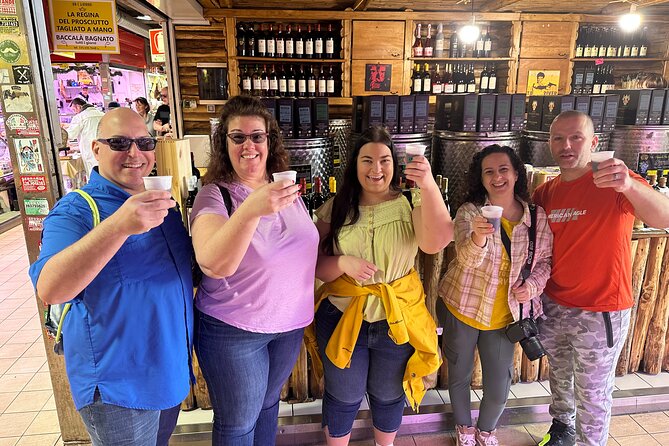
You’ll spend about 30 minutes here. For many people, it’s the most satisfying first taste because it sets the tone for what “Roman street food” means. From the food lineup you’re likely to encounter, one review called out tasting things like pesto and balsamic vinegar right at the market stop. Another mentioned trying multiple kinds of salami (five types) along with wine.
This is a smart start if you’re new to Rome. You get fed early, you learn how the market area works, and you build an appetite for what comes next—both food-wise and sight-wise.
Practical tip: start with the smallest tastings if you’re sensitive to strong flavors. Market food can be salty and rich, and the route still has several stops.
The Roman Ghetto Walk: Kosher Bakeries, Fried Artichoke, and Synagogue Area
Next comes the Roman Ghetto, one of the loveliest and most atmospheric neighborhoods on this kind of walking route. It’s also historically significant: it’s described as the oldest Jewish settlement in Europe dating back to the 2nd century B.C. You also get a quick look at the synagogue area, plus the general vibe of kosher bakeries and Jewish-Roman trattorias.
You’ll have around 30 minutes here, and that’s enough time to slow down without feeling like you’re stuck in the same block. The best part is that this is not treated like a museum stop. The tour’s time in the area helps you connect the food you’re eating with the places that serve it.
On the tasting front, one highlight from the experience is fried artichoke in the Jewish Ghetto stop. If you’re someone who likes to try one “signature” local snack, this is an excellent choice. It’s also a good reminder that Roman street food isn’t only about fried classics—it’s about regional food habits tied to specific neighborhoods.
One consideration: this tour does not accommodate vegan, gluten-free, or dairy-free diets, and cross contamination is possible if you have allergies involving nuts or dry fruits. If you have any dietary restrictions, you’ll want to share them while booking and be ready for limited substitutions.
Area Sacra di Largo Argentina: Pompey, Caesar, and a Concrete Clue
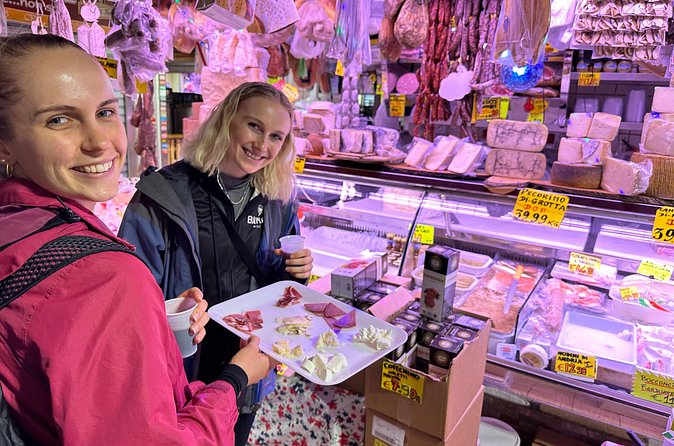
Largo Argentina is where your sightseeing shifts from streets and markets to archaeology with a punch. You visit Area Sacra di Largo Argentina, tied to the Theater of Pompey, built between 61 and 55 BC by Pompey the Great. This is also the place where Julius Caesar was killed at the foot of Pompey’s statue.
What makes this stop feel current is that archaeologists have unearthed a structure described as nearly 10 feet wide and 6.5 feet tall, with the possibility it was erected by Caesar’s successor to condemn the assassination. Even if you don’t study Roman politics, the story gives you a reason to pay attention to what you’re looking at.
You get about 30 minutes here. That time works well because Largo Argentina isn’t only about one monument. It’s about context—learning how layers of Roman events connect to today’s ruins.
If you’re traveling with someone who loves story-heavy history, this is the kind of stop that keeps their interest. If history bores them, focus on the visuals and the specific “what happened here” angle, since that’s what the tour emphasizes.
Pantheon: The 43-Meter Dome Stop You’ll Remember
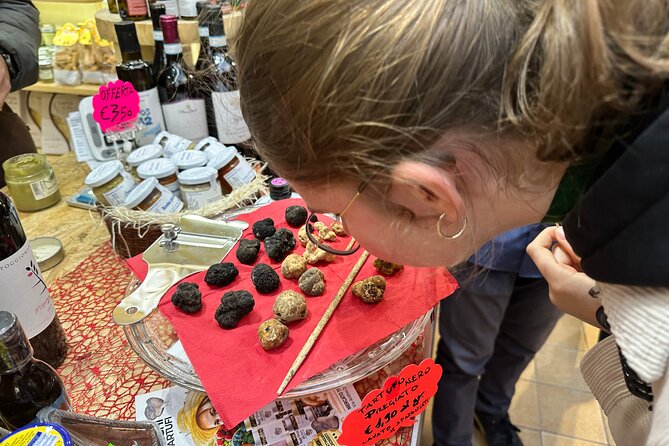
The Pantheon is the centerpiece moment on many Rome itineraries, and this one keeps your time there focused. You’ll spend about 30 minutes at the Pantheon, and the guide provides the key facts you’ll want in your brain while you’re standing there.
Here’s the core picture the tour sets up: it began as an earlier temple commissioned by Marcus Agrippa during Augustus’s reign, and the current building was completed by Emperor Hadrian, likely dedicated around 126 AD. The structure is cylindrical with a portico of large granite Corinthian columns and a rotunda topped by a coffered concrete dome.
The tour also highlights the famous symmetry: the height to the oculus and the diameter of the interior circle are the same—43 meters. That number matters. When you’re inside, it helps you understand what you’re seeing without needing to guess.
Another reason this stop is worth prioritizing: the Pantheon is noted as one of the best-preserved ancient Roman buildings because it has been in continuous use throughout its history. That’s a big difference from many ruins where you’re mostly looking at fragments.
Practical note: you’ll be outdoors approaching and then inside for part of the experience, so dress for changing light and keep your pace steady. The guided timing is tight, so try not to wander off for long photos between explanations.
You can also read our reviews of more tours and experiences in Rome




Basilica di Sant’Eustachio: Ending With a Stag and a Legend
Your tour ends in a quieter square at the Basilica di Sant’Eustachio. This is the kind of finish that feels like Rome slowing down instead of ramping up. You’ll have about 30 minutes, and the focus is the basilica of Saint Eustace, revered as a Christian martyr and soldier saint.
The legend the tour shares ties him to a Roman general who served Emperor Trajan before converting to Christianity. The story goes that during a hunt for a stag in Tivoli, he had a vision of a crucifix between the stag’s antlers, which led to his conversion and the baptism of himself and his family. Today, the stag symbol is still linked to both Saint Eustace and the square.
If you’re the type who likes a satisfying final beat—something meaningful but not chaotic—this ending works. It also gives you a natural “walk-away” point at Piazza di S. Eustachio, instead of ending in the middle of a loud transportation hub.
What You’ll Eat: Roman Street Food Samplings, Not Just Photos
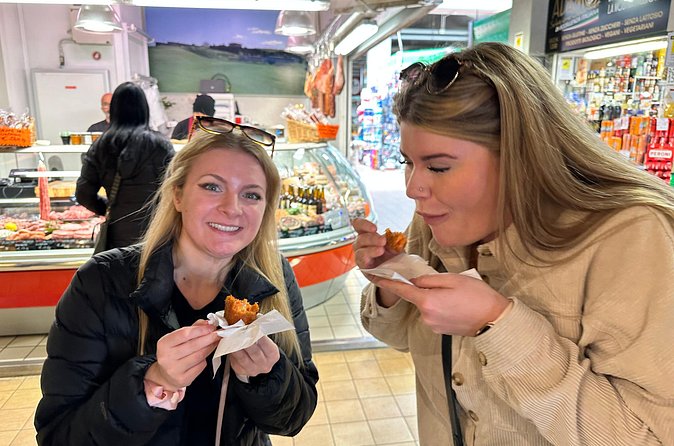
This is a food tasting tour first and sightseeing second. That ordering is important because it affects how you’ll enjoy it. You’re not just looking at Rome—you’re eating its street-level version of Rome.
Based on the tastings described in the experience, expect a rotation of classic Roman items across multiple stops. One review specifically called out:
- Salami variety at the first market stop, including five different types, plus wine
- Suppli, the deep-fried rice balls
- Pizza and beer at a later food stop
- Fried artichoke in the Jewish Ghetto area
- Gelato at the end
Another review mentioned pesto and balsamic vinegar early on, reinforcing that you may get both cold and warm bites, not only fried snacks.
Two practical realities to know:
- Drinks are not included, so if the tastings come with wine or beer, you should treat that as part of what’s served at stops unless your booking details say otherwise. If you want soda or water, plan to buy it separately.
- This tour does not accommodate vegan, gluten-free, or dairy-free diets. Vegetarian options can be arranged if you advise in advance. And because cross contamination is possible, you’ll want to be extra clear if you have nut/dry fruit allergies.
The upside is that the tour format keeps tastings spread across multiple stops, so you get variety instead of one heavy meal at the start.
Price and Value: Is $54.42 Worth It?
At $54.42 per person for about 2.5 hours, you’re paying for three things: a local expert guide, a small-group experience (max 14), and traditional Roman street food samplings paired with sightseeing at key landmarks.
What boosts the value is that the itinerary’s listed sights show admission as free, so you aren’t paying extra at each stop for entry. You’re also not just eating in one location—your tastings are linked to the route, including Campo de’ Fiori and the Jewish Ghetto.
What could reduce the value for some people: drinks and beverages are not included, and dietary restrictions are limiting. If you can’t safely eat many of the items, the tour may cost more than the experience feels worth.
A booking pattern to keep in mind: on average, this type of tour gets booked about 18 days in advance. If you know your dates, don’t wait until the last week, especially if you want a specific lunch or dinner time.
Who Should Book This Rome Street Food and Guided Sightseeing Tour
This tour is a good fit if you want:
- A first-time-friendly route through Rome’s major areas, without needing to plan each stop yourself
- Food tasting as the center of the experience, with walking time built around it
- A small-group guide presence, not a giant herd
It may not be the right fit if:
- You need a vegan, gluten-free, or dairy-free diet. The tour explicitly can’t accommodate those needs.
- You have allergies involving nuts or dry fruits and need strict cross contamination controls. The tour warns about possible cross contact.
If you’re traveling in a group, it’s also a nice choice because the max group size keeps the experience from turning into a chaotic “follow the leader” production. That structure tends to make the stories easier to hear and the food stops easier to manage.
Should You Book This Tour of Rome’s Gourmet Street Food and Sights?
I’d book it if you’re craving a practical Rome experience where you eat your way through iconic neighborhoods. The combination of market tastings, Jewish Ghetto atmosphere, and a dedicated Pantheon stop makes it feel like more than just a snack crawl.
Before you click confirm, check two things: your ability to eat the included items (since vegan/gluten/dairy-free options aren’t available), and whether you’re okay paying separately for drinks. If those match your needs, this is a strong value way to see Rome in one guided walk with real food along the way.
FAQ
What is the duration of the Rome gourmet street food and sightseeing tour?
It runs for about 2 hours 30 minutes.
How many people are in the group?
The tour has a maximum of 14 travelers.
Is the tour offered in English?
Yes, it is offered in English.
Where do you meet and where does the tour end?
You start at Piazza Campo de’ Fiori and end at Piazza di S. Eustachio.
Are drinks included in the price?
No, drinks and beverages are not included.
Can I join if I’m vegan, gluten-free, or dairy-free?
No. This tour does not accommodate vegan, gluten, or dairy-free diets.
Does the tour run in bad weather?
Yes, it takes place rain or shine.