REVIEW · ROME
Rome: Cycling through Eternity
Book on GetYourGuide →Operated by Romes Ultimate · Bookable on GetYourGuide
One ride, and Rome stops feeling like a blur. This small-group cycling tour strings together big-name monuments with quieter parks just outside the city—so you get the wow of the Aurelian Walls and Via Appia Antica, plus the calm countryside contrast. I especially love how the route favors “in-between” places: the Museo delle Mura and the aqueduct parks give you breathing room and clear views without the nonstop tourist crush. The other thing I like is the way Dimitri, the English-speaking guide, uses short stories to connect each stop instead of rattling facts. A possible drawback: you’ll be on roads long enough to notice uneven pavement in places, and electric bikes need a quick controls check before you start.
If you want Rome as more than monuments lined up for photos, this is a strong fit. You’ll move steadily for about 4.5 hours, with frequent short stops so you don’t feel rushed—and you still cover a lot of ground across different eras of the city. It’s also rain-or-shine (unless conditions are extreme), so plan for weather, not just sunshine.
In This Review
- Key things I’d circle before you book
- Entering a different Rome: why this ride works
- Starting at Via dei Serpenti: getting set up fast
- Arch of Constantine and a Colosseum-area viewpoint
- Circus Maximus: seeing scale at speed
- Baths of Caracalla: grand public scale in 10 minutes
- Museo delle Mura and the Aurelian Walls
- Catacombs of Saint Callixtus and the Via Appia ride
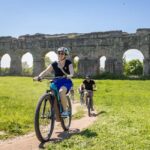
- Parco degli Acquedotti: aqueducts, big views, real space
- Parco della Caffarella and the urban-meets-nature feeling
- Parco di Torre Fiscale and the story behind the Fiscal Tour
- Egeria at L’Acqua Santa di Roma
- Via Cristoforo Colombo: the ride toward the sea
- Pace, comfort, and what to bring for a 4.5-hour ride
- Bikes and safety: what to expect on real roads
- Price and value: is $100 per person worth it?
- Who this tour suits (and who should skip it)
- Should you book Cycling Through Eternity?
- FAQ
- How long is the cycling tour?
- Where does the tour start and end?
- How much does it cost?
- Is the tour guided and in English?
- What’s included in the price?
- Is the group small?
- What should I bring?
- What happens if it rains?
- Is this tour suitable for children or mobility needs?
- Is there free cancellation?
Key things I’d circle before you book
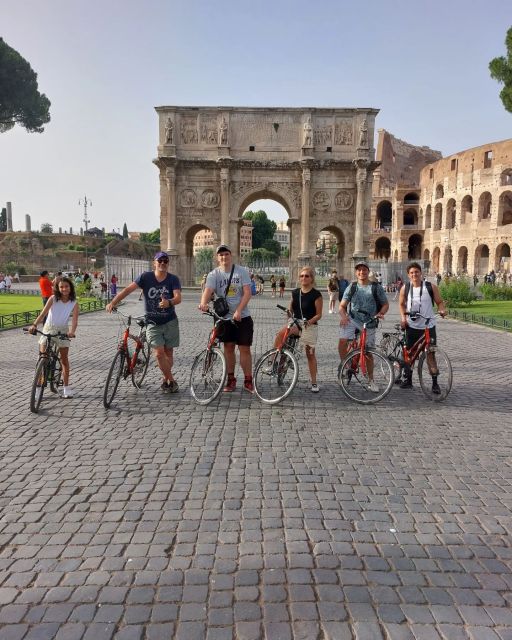
- Small group of 10 max, so you can actually hear your guide and keep the group together
- Helmets and bike hire included, which matters when you’re trying to travel light
- Arch of Constantine to Colosseum-area viewpoints, with a short story set up right where you’re standing
- Via Appia Antica on an ancient road, famous as one of the first paved roads in the world
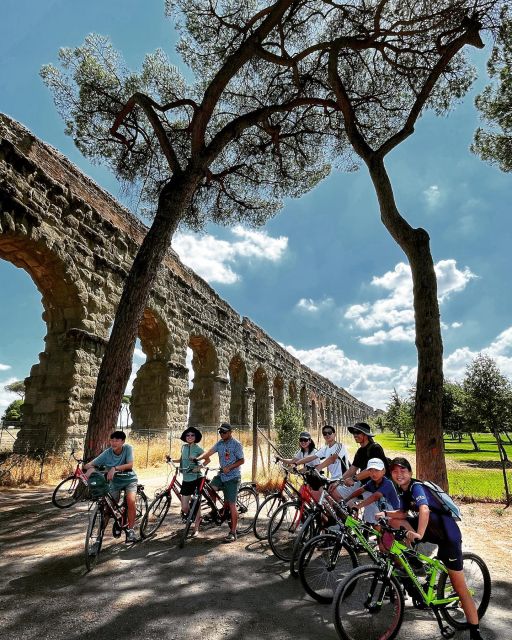
- Parco degli Acquedotti and aqueduct viewpoints, where engineering looks almost effortless
- Catacombs ride + scenic parks, a nice break from the city streets and crowds
Entering a different Rome: why this ride works
Rome can feel like a nonstop checklist. This tour works because it mixes the major landmarks with lesser-known spaces in a logical flow. You start near the Colosseum area, then you gradually slide outward until the city noise fades and the route feels more like a journey than a sightseeing line.
What makes it memorable is that you’re not just walking from point A to point B. Cycling lets you cover the distance between monuments, but it also gives you time to notice details—how parks sit next to ancient walls, where viewpoints open up, and how the terrain changes as you leave the center.
And yes, you’ll still see the headlines: the Colosseum zone from the Arch of Constantine, the vast sweep of Circus Maximus, and the grand scale of the Baths of Caracalla. But the payoff is what happens after that—when you trade crowd energy for quiet trails and long views.
You can also read our reviews of more cycling tours in Rome
Starting at Via dei Serpenti: getting set up fast
The tour begins at Via dei Serpenti, 89. From the start, the setup matters, because the ride is only about 4.5 hours and there isn’t time for chaos.
You’ll get helmets and your bike as part of the tour. In past rides, electric bikes (e-bikes) have been mentioned as part of the experience, and there’s a practical takeaway: if you’re handed an e-bike, spend a minute getting used to the controls before you roll into traffic or uneven ground. One rider noted that controls could be less standardized, so don’t assume it’s the same as every e-bike you’ve tried before.
Also, the group size is limited to 10 participants, which usually makes pacing smoother. You’re not stretched out into a string of bikes, and the guide can keep an eye on everyone’s speed.
Arch of Constantine and a Colosseum-area viewpoint
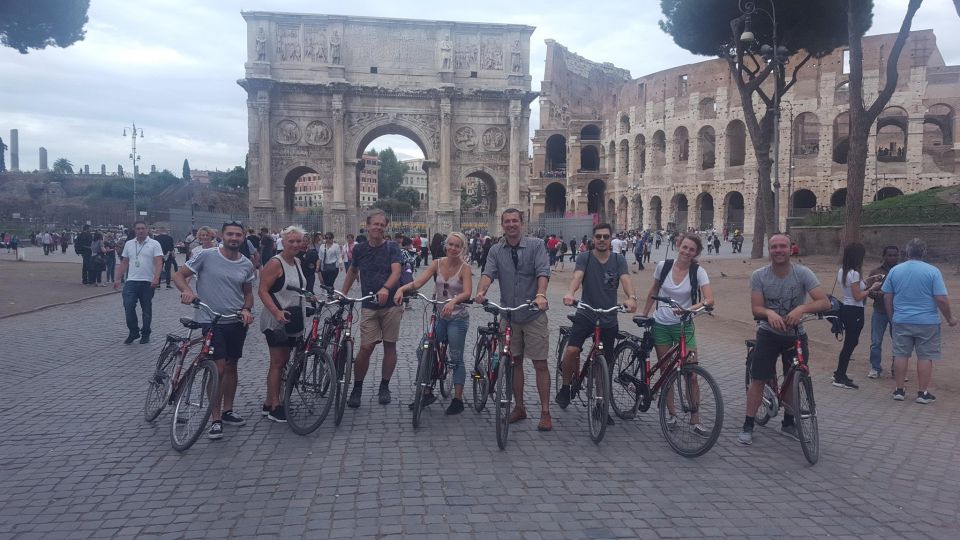
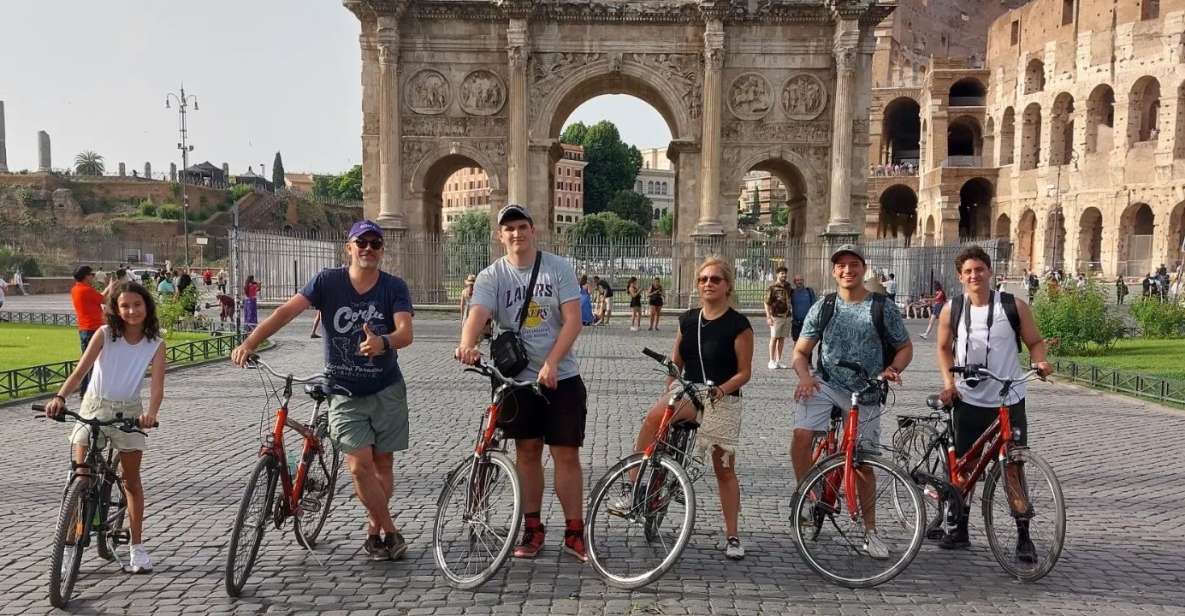
The first meaningful stop is at the Arch of Constantine, with a viewpoint over the Colosseum area. You get a brief story about the surrounding sites right there, which is a smart way to set context before you move on.
This kind of short setup matters. If you’ve been to Rome before, you’ve probably noticed how easy it is to see monuments without understanding how they relate. Starting with a viewpoint gives you scale—how the city’s major structures sit relative to each other—so later stops make more sense.
Time on the bike here is short (about 20 minutes), so you’re not exhausted early. Instead, you’re warmed up and ready to focus.
Circus Maximus: seeing scale at speed
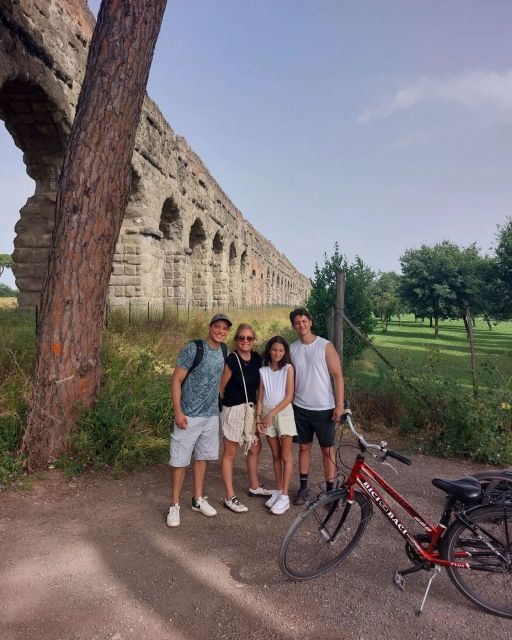
Next up is Circus Maximus, described as the biggest stadium ever built. The stop is brief—about 10 minutes by bike tour—but that’s exactly why a cycling format works. You get a fast hit of Roman grandeur without losing the day to one single location.
Circus Maximus can look odd at street level if you’ve only seen photos. From a bike, you see more of the layout, and the guide can point out what to notice, even during a short stop.
If you’re the type who likes learning the “why” behind a place, this stop is useful. It’s not just about a big structure; it’s about understanding how Rome staged crowds and spectacle.
Baths of Caracalla: grand public scale in 10 minutes
Then comes Terme di Caracalla (Baths of Caracalla), again with about 10 minutes of bike time in the segment. These baths were a major public complex, and seeing them by bike helps you appreciate their size and setting.
Here’s the practical value: Caracalla sits in a quieter zone compared to the busiest central streets. Even during a short visit, the experience can feel calmer than the classic “walk and stare at marble” day.
If you like Roman engineering and everyday life, this stop gives you that angle. Baths weren’t just fancy bathing; they were social space, workout space, and city culture rolled into one.






Museo delle Mura and the Aurelian Walls
After the baths, you’ll visit Museo delle Mura (Museum of the Aurelian Walls), with about 20 minutes for the segment.
This stop is about the Aurelian Walls—the defensive ring that shaped Rome’s geography for centuries. The museum marks the contemporary historical center of Rome, which is an interesting way to connect the ancient idea of boundary with the way the city still reads today.
In a tour packed with big monuments, a walls-focused stop might sound niche. But it’s not. Walls help you understand why Rome developed the way it did, why certain areas feel enclosed, and why some parts of the city keep a different rhythm than others. If you want a Roman “systems view” instead of only “greatest hits,” this museum is a good anchor.
Catacombs of Saint Callixtus and the Via Appia ride
Now you hit one of the most memorable parts of the experience: the Catacombs of Saint Callixtus and a spectacular ride through Via Appia Antica, sometimes called the Queen of all the Roman roads.
You’ll get a 30-minute bike segment here, and the route focuses on the catacombs area with a panoramic ride through what’s described as the largest catacomb complex in Rome. In other words, this isn’t just a quick glance. You get time to see the setting and understand how people moved through and around sacred underground spaces.
The big reason to care is the road itself. Via Appia Antica is famous as one of the first paved roads in the world, and when you cycle it, you feel that age under your wheels. It also explains why Appia became such a powerful corridor—roads are how Rome connected power, people, and ideas.
Practical note: some sections can be bumpy for a short stretch (especially on older surfaces). This isn’t a deal-breaker, but it’s worth wearing comfortable shoes and being ready for a bit of vibration.
Parco degli Acquedotti: aqueducts, big views, real space
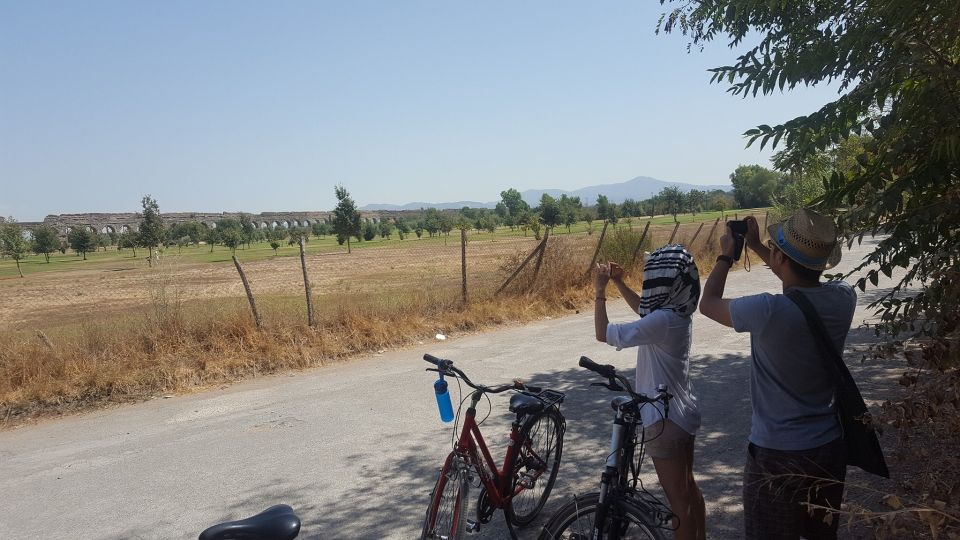
Once you’re out of the densest city blocks, Parco degli Acquedotti takes over. This is the aqueduct park in the outskirts of Rome, with about 30 minutes of biking.
This part matters because it changes the tone of the day. You go from monuments you can photograph quickly to a park setting where the aqueducts feel integrated into the landscape. Even if you’re not a “photo person,” you’ll appreciate the scale—these are huge feats of engineering, and the park vantage points help you see how they were designed to carry water across distance.
If you care about Roman infrastructure, this is one of the best stops. Aqueducts become more than background once you’re close enough to appreciate the construction and long lines stretching across the view.
Parco della Caffarella and the urban-meets-nature feeling
Next comes Parco della Caffarella, with about 45 minutes on the bike segment. This park is described as where urban and nature meet, and that’s exactly what you feel when you ride through it.
It’s a nice reset. You’re still in Rome, still surrounded by layers of the city, but the pace slows visually. Paths and greenery create an in-between world—half Roman outskirts, half modern city life.
For many people, this is where the tour earns its name. Cycling through Eternity doesn’t mean only ancient stones; it means you can sense time passing through space.
Parco di Torre Fiscale and the story behind the Fiscal Tour
Then you’ll cycle to Parco di Torre Fiscale (about 15 minutes). This stop includes a history lesson about the Fiscal Tour and its purposes.
Even without extra details, the value here is the way it rounds out the day. A tour that covers monuments and catacombs but ignores how Rome organized territory would feel lopsided. This one adds a piece about administration and function. It’s a reminder that Rome wasn’t only temples and emperors—it was also systems, duties, and planning.
Egeria at L’Acqua Santa di Roma
You’ll also stop at Egeria – L’Acqua Santa di Roma for about 10 minutes by bike. This spot links to water in a more myth-and-spring way than the big aqueducts you saw earlier.
Short stops can feel like filler, but here it works because it connects themes. You’ve already been thinking about water and roads—now you see another angle of why water locations mattered in Roman culture.
If you like when a tour uses small pauses to connect bigger dots, you’ll probably enjoy this one.
Via Cristoforo Colombo: the ride toward the sea
Before returning to the start, the route includes Via Cristoforo Colombo, with about 20 minutes of biking. It’s described as the street linking the historic center to Ostia, the gateway of the Eternal City to the Tyrrhenian Sea.
This isn’t a “stand and stare” moment. It’s more of a transition—a way to end the ride with a sense of direction. You leave with the feeling that Rome isn’t trapped inside its center. It points outward, toward trade routes and the sea, and the city’s geography keeps telling that story.
Pace, comfort, and what to bring for a 4.5-hour ride
This tour lasts 4.5 hours, and you’re cycling for most of that time with stops built in. That means you should show up ready to ride, not just ready to look.
Bring:
- Comfortable shoes
- Comfortable clothes
- Water
- Sunscreen (seriously—use it before you leave)
Weather matters too. The tour runs rain or shine unless there’s extreme rain. So if you’re traveling in shoulder season, pack a light layer or rain shell. Hot weather can mean a slightly earlier start.
One more comfort note: you’re on bike time, so don’t plan a big meal immediately before. Give yourself an easy buffer so you’re not dealing with energy dips mid-ride.
Bikes and safety: what to expect on real roads
Riding in and near Rome’s traffic can be intimidating if you’ve only toured on bike paths. The good news is that this route is guided and kept together as a small group.
From the rider feedback, the guide (often noted as Dimitri) has a habit of checking back and keeping the group calm and connected. That’s a big deal when you’re dealing with different rider speeds.
And again for e-bikes: one person praised newer e-bikes, while another mentioned that e-bike controls might need standardization. So here’s my practical advice: when you get your bike, take 30 seconds to test:
- how power assist engages,
- how braking feels,
- and how easy it is to maintain a steady speed.
It’s the difference between enjoying the day and white-knuckling your way through the first segment.
Price and value: is $100 per person worth it?
At $100 per person for about 4.5 hours, you’re paying for more than sightseeing. You’re getting:
- a live English guide
- a small group limited to 10
- helmets
- bike hire
Rome bike tours can vary wildly in quality, but the structure here is designed to maximize time on the move while still giving you meaningful stops. You’re not paying extra for bike logistics; you’re also not spending the whole day in one cramped lane of crowds.
To judge value, I think about what replaces it. If you tried to replicate this on your own, you’d spend time figuring out route connections, bike rental details, and how to safely string together monuments, aqueduct parks, and Appia-related areas. Paying for a guide isn’t just about history—it’s about making the day workable.
Is it expensive? It’s not bargain-basement. But for a guided ride that strings together major Roman sites with countryside parks and includes the bike equipment, it reads as solid value—especially if you’re the kind of person who wants more than a single-spot “photo and leave” routine.
Who this tour suits (and who should skip it)
This experience is best for you if you:
- enjoy active sightseeing and can ride comfortably for hours,
- want Rome beyond the central headline monuments,
- like history told through short stories tied to where you stand,
- appreciate quieter parks and viewpoints.
It’s not suitable if you have mobility impairments, if you’re pregnant, or if your child is under 10.
If you have a fear of cycling in mixed streets, you might still feel okay because it’s guided in a small group—but you’ll want to be honest with yourself about confidence on a real bike.
Should you book Cycling Through Eternity?
I’d book this if your Rome trip has room for one day that feels like a journey outward—not just a walk through monuments. The mix of Arch of Constantine and Colosseum-area views, Circus Maximus, Baths of Caracalla, the Museo delle Mura, then the shift into Catacombs of Saint Callixtus and Via Appia Antica, and finally the aqueduct and park sections is a smart way to see Rome across layers of time and geography.
I would also recommend it if you like guides who tell the story in a way you can remember. Dimitri is repeatedly described as friendly and as someone who makes the sites feel connected rather than like separate stops.
Skip it only if you know uneven pavement will bother you, you don’t feel comfortable riding for 4.5 hours, or you fall into one of the stated groups who shouldn’t take it.
FAQ
How long is the cycling tour?
The duration is 4.5 hours.
Where does the tour start and end?
It starts and ends at Via dei Serpenti, 89.
How much does it cost?
The price is $100 per person.
Is the tour guided and in English?
Yes. It includes a live tour guide in English.
What’s included in the price?
You get helmets and bike hire.
Is the group small?
Yes. The tour is limited to 10 participants.
What should I bring?
Bring comfortable shoes, comfortable clothes, water, and sunscreen.
What happens if it rains?
The tour happens rain or shine unless there is extreme rain.
Is this tour suitable for children or mobility needs?
It is not suitable for people with mobility impairments, pregnant women, or children under 10.
Is there free cancellation?
Yes. You can cancel up to 24 hours in advance for a full refund.