REVIEW · ROME
Exploring Rome’s Rich Heritage: Pantheon and Jewish Ghetto
Book on GetYourGuide →Operated by CheckandGo Tours · Bookable on GetYourGuide
Rome tells its secrets in stone and streets. This guided route connects the Pantheon with the Jewish Ghetto, where art, faith, and politics show up in everyday views. You get the big visual hits, but also the backstory that makes the places click.
I especially like two things: the skip-the-line Pantheon entry with headsets, and the way the walk ties together major historical moments—from Julius Caesar’s assassination area to the Ghetto’s lasting footprint. If you land with a guide like Maria, you’ll feel how clearly she explains what you’re seeing, and how fun it is to follow the streets with her.
One thing to plan around: the Pantheon can have closures or schedule changes, and there’s a strict dress code for entry (so pack accordingly). Also, the tour is not suitable for people with mobility impairments, and that matters for Rome’s uneven sidewalks.
In This Review
- Key highlights to look forward to
- Why the Pantheon and Jewish Ghetto pairing works
- Starting at Piazza della Rotonda: your orientation matters
- Entering the Pantheon with skip-the-line tickets
- The in-between stops: Bernini, Caesar’s name, and why it’s worth slowing down
- Piazza Mattei and Via del Portico d’Ottavia: walking the Jewish Ghetto heart
- Ending at Portico of Ottavia: the past still has a face
- Price and value: what $42.59 gets you in real terms
- Who this tour suits best (and who should rethink it)
- Dress code and rules: the small things that can stop you at the door
- A quick timing and pacing reality check
- Should you book this Pantheon and Jewish Ghetto tour?
- FAQ
- How long is the tour?
- Where does the tour start?
- Is the Pantheon admission skip-the-line?
- What languages is the guide available in?
- What’s included in the price?
- What should I wear to enter the Pantheon?
Key highlights to look forward to
- Skip-the-line Pantheon entry using a separate entrance, plus headsets for clear commentary
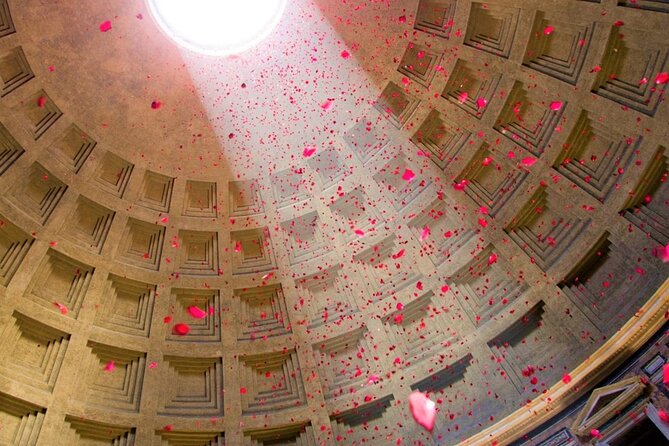
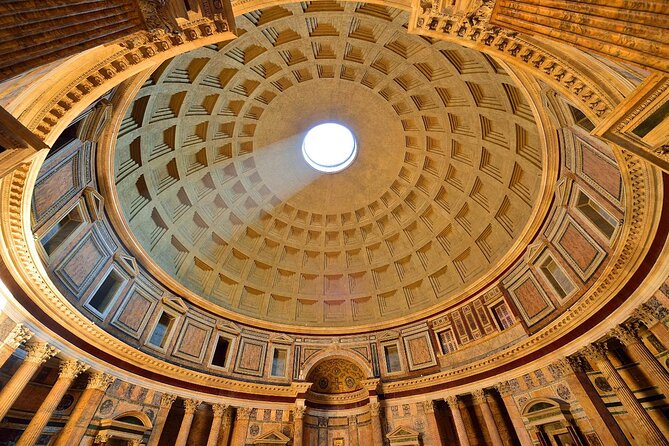
- Oculus light effect inside the Pantheon, changing the feel from moment to moment
- Bernini’s Elephant and Obelisk at Piazza della Minerva, a quick stop with big payoff
- Largo di Torre Argentina, tied to the archaeological area where Julius Caesar was assassinated
- Piazza Mattei to Via del Portico d’Ottavia, walking the heart of the Jewish Ghetto
- Portico of Ottavia at the end, a strong visual link to the community’s past in Rome
Why the Pantheon and Jewish Ghetto pairing works
This tour works because it refuses to treat Rome like a list of monuments. The Pantheon is a worldwide icon, sure. But once you’ve seen how power, religion, and public life shaped it, the walk toward the Jewish Ghetto feels like a natural next chapter instead of a random change of topic.
You’re moving from Roman imperial scale to neighborhood scale. That shift is the point. At the Pantheon you’ll notice engineering and symbolism—this was built as a temple for all gods, later repurposed, and now tied to Italy’s notable figures. Then, a few blocks later, you’re looking at how a specific community’s history left marks in streets, squares, and architecture.
And because this is guided, you’re not just looking at photos. You’re learning the “why,” from politics and religion to how art shows up in public space. Even the short in-between stops help you connect the dots.
You can also read our reviews of more historical tours in Rome



Starting at Piazza della Rotonda: your orientation matters
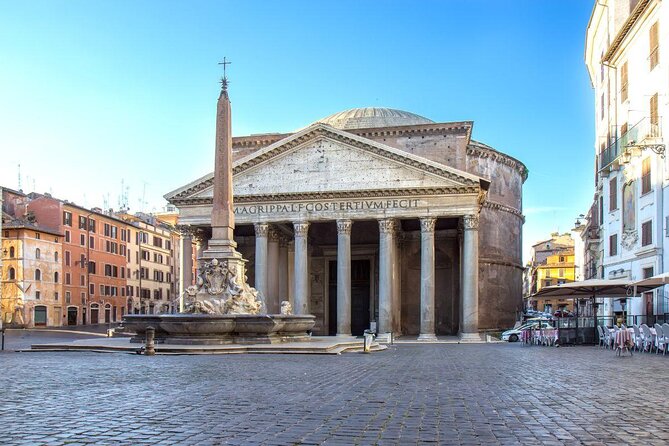
The tour begins at Piazza della Rotonda, 2, right by the Pantheon area. If you’ve ever tried to do the Pantheon on your own, you know the area can feel like a busy swirl of tourists and traffic noise. Starting with a guide helps you get oriented fast.
You’ll also get the practical tool that makes a difference in Rome: headsets. That means you can keep walking and listening without craning your neck or playing phone-line guesswork with the person next to you. It’s a small thing, but for a 2-hour experience it’s the difference between seeing everything and missing half the story.
The meeting setup is also straightforward. You meet up at the start point, and the tour ends back there. One day before your tour, the guide’s name and contact details are shared with you, so you’re not left hunting for the right person at the curb.
Entering the Pantheon with skip-the-line tickets
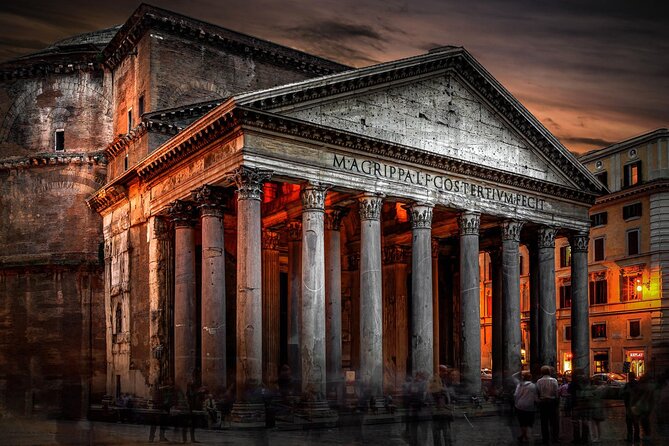
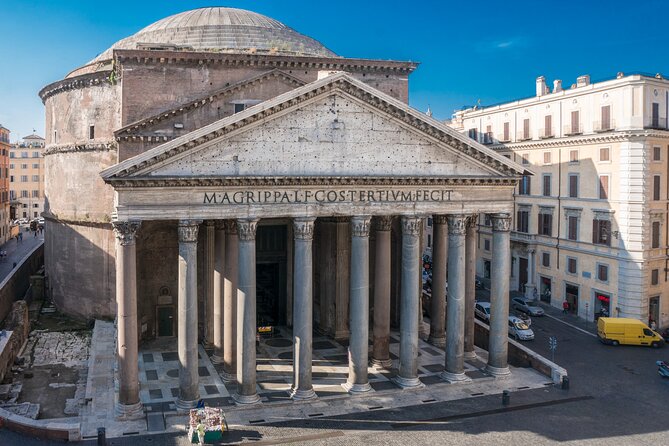
The Pantheon is one of the best-preserved Roman monuments. That sounds like a museum-style brag, but inside it’s real: the structure still holds up as a masterpiece of Roman design. Instead of standing around waiting, the tour gives you skip-the-line tickets and uses a separate entrance. That saves you the worst part of Pantheon logistics.
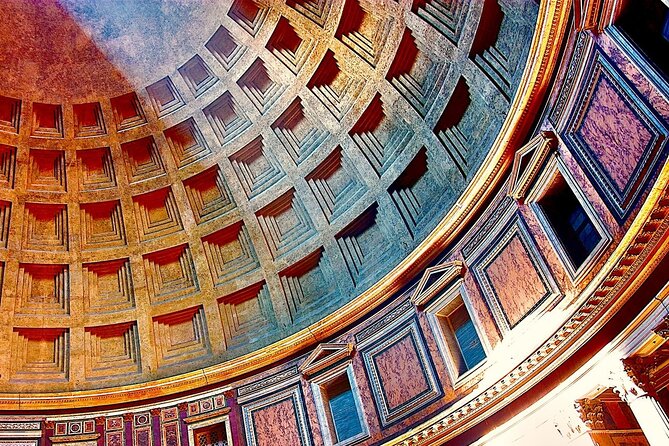
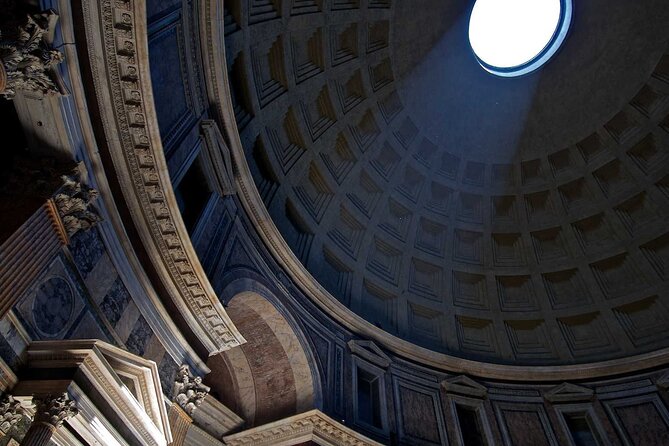
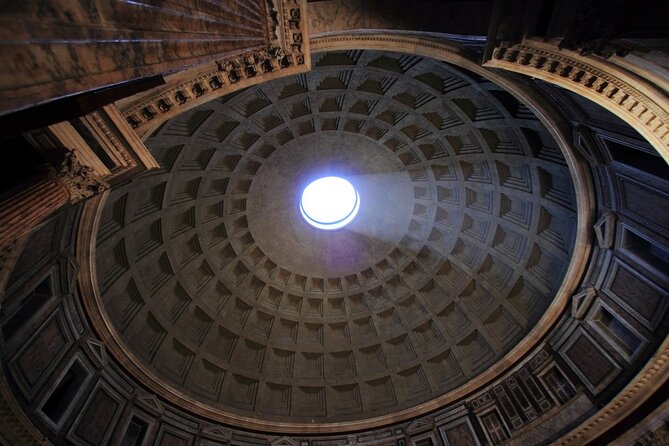
The guided visit focuses on the building’s most famous feature: the massive domed ceiling and its oculus, a round opening that lets natural light pour into the interior. The light isn’t decorative. It changes the mood and helps you understand how this space was designed to feel open to the sky while still being a closed, controlled room.
You’ll also hear the story of how the Pantheon started as a temple for all gods and later became a place associated with notable burials. In particular, the tour connects it to figures like Renaissance artist Raphael and kings of Italy. That part matters because it shows how Rome repurposed sacred space across centuries instead of starting over from scratch.
A heads-up: the Pantheon can face anticipated closures or schedule disruptions due to events like masses or concerts. The tour time might vary if that happens, so keep some slack in your day.
The in-between stops: Bernini, Caesar’s name, and why it’s worth slowing down
After the Pantheon, the route moves to Piazza della Minerva. This is a good example of how Rome rewards attention in small doses. One highlight here is Bernini’s iconic Elephant and Obelisk sculpture. It’s the kind of piece you might miss if you rush, but with a guide you get the context and the visual details in the right order—what you’re looking at and why it matters.
Then you head to Largo di Torre Argentina. Here, ancient history comes to life through the archaeological setting tied to a major moment in Roman politics: the area associated with Julius Caesar’s assassination. Even if you already know the general story, being on the ground where the remains are set into the modern city changes how the events land. You feel less like you’re reading dates and more like you’re standing at a crossroads.
These stops also serve a practical purpose. They break up the main Pantheon moment and the longer Ghetto walk. You get a couple of quick “wow” checkpoints before you move into the narrower streets and squares where the Ghetto story unfolds.
Piazza Mattei and Via del Portico d’Ottavia: walking the Jewish Ghetto heart
Now comes the part that turns a sightseeing outing into a real human history walk. The tour continues through Piazza Mattei and into Via del Portico d’Ottavia—often described as the core area of the Jewish Ghetto.
In this stretch, you’re not just watching buildings. You’re learning how the neighborhood’s history shaped daily life and left cultural traces in the urban layout. Piazza Mattei gives you a place to pause and reset your eyes. Then Via del Portico d’Ottavia brings you into the street feel of the area, where passages, porticoes, and the rhythm of buildings create a different kind of atmosphere than the Pantheon zone.
One review highlight you should take seriously: guides can make this segment especially enjoyable. Maria, for example, was praised for explaining Pantheon history clearly and for guiding guests through the Ghetto streets with a strong sense of pace and context. If you get a guide like that, you’ll likely find yourself asking better questions, not just taking photos.
A practical note: the Ghetto streets are still active city areas. Plan to keep your phone put away for a few minutes at a time so you can hear the guide and follow directions without drifting into the wrong side street.






Ending at Portico of Ottavia: the past still has a face
The tour concludes in front of the Portico of Ottavia. Ending here is smart because it’s a visual and cultural anchor. You get a final landmark that points back to the community’s presence and heritage in Rome.
Think of the ending as a wrap-up moment. You’ve already covered the Pantheon’s transformation across time, plus major Roman political history at Largo di Torre Argentina. Now you’re finishing with a structure that helps tie the Ghetto story to physical Rome—stone you can actually stand in front of while the guide’s narrative is still fresh.
Finishing back at the meeting point also helps. You’re not forced into a complicated transit puzzle right after a 2-hour walk in an old city area.
Price and value: what $42.59 gets you in real terms
At $42.59 per person for about 2 hours, this is priced like a serious guided experience rather than a quick photo walk. The value is strongest if you care about meaning, not just visuals.
Here’s why it feels worth it:
- You get skip-the-line Pantheon tickets via a separate entrance, which can save real time.
- You have headsets, which make it easier to keep up for the whole route.
- You get guided tours not only inside the Pantheon but also through the Jewish Ghetto.
Food and drinks are not included, so plan to eat before or after. But for the actual sightseeing component, what you’re paying for is continuity: one narrative connecting two landmark areas that would otherwise feel separate if you did them independently.
This tour is a great fit if you want a guided explanation that links art, religion, and politics instead of treating them as separate categories.
Who this tour suits best (and who should rethink it)
This is best for people who enjoy structured walking tours and want context. If you like understanding why a monument looks the way it does, and how different eras repurposed sacred space, you’ll enjoy this format.
It also fits families in certain situations, because the tour asks for ID/passports for children, and it runs in a tight 2-hour window.
But it’s not ideal for everyone. The activity notes say it is not suitable for people with mobility impairments, and it also states it is not suitable for wheelchair users. At the same time, it lists wheelchair accessible in the basic description. Because that’s contradictory, I’d treat it as a “needs confirmation” situation if mobility is a concern, and you should check directly with the provider before booking.
Dress code and rules: the small things that can stop you at the door
The Pantheon has strict entry rules. The tour is built around Pantheon admission, so you’ll want to follow the attire requirements to the letter.
In plain terms, the entry condition says suitable attire is required, and it flags no hemline above the knees, no vests, and no sleeveless tops for both men and women. The activity also lists that shorts and short skirts are not allowed.
Other rules are simpler but important:
- No pets
- No weapons or sharp objects
- Sleeveless shirts are disallowed
- Bring a passport or ID card (and for children, a passport or ID card too)
If you’re planning to visit in hot weather, choose breathable layers that still meet the dress rules. Rome in summer is casual on the streets, but the Pantheon entrance is strict.
A quick timing and pacing reality check
This is a 2-hour experience with multiple guided segments. That means the pacing is active. You’re not going to linger for long on every street corner, even though each stop has something worth seeing.
For the Pantheon portion, the guided tour is listed as 45 minutes, and then the other stops add up from there. So if you’re the type who needs extra time for photos, you may want to save your most detailed shots for the end of each guided stop—when the group pauses.
Also remember the Pantheon can shift schedule due to events, so your day plan should allow for a little flexibility.
Should you book this Pantheon and Jewish Ghetto tour?
I’d book it if you want the strongest combination of famous Rome plus meaningful context in one compact package. The Pantheon alone is unforgettable, but the real value here is how the route ties together Roman sacred design, political history, and the Jewish Ghetto’s streets and landmarks—without turning the day into a scattered self-guided scavenger hunt.
I wouldn’t book it if you need long rests, step-free navigation, or guaranteed access regardless of Pantheon events. The dress code can also be a deal-breaker if you show up unprepared. And if mobility is a concern, the mixed accessibility notes are a reason to confirm before committing.
If you like your Rome with a guide’s thread connecting the sights, this one is a solid choice.
FAQ
How long is the tour?
The duration is 2 hours.
Where does the tour start?
It starts at Piazza della Rotonda, 2. The tour ends back at the meeting point.
Is the Pantheon admission skip-the-line?
Yes. The tour includes skip-the-line tickets to the Pantheon and entry through a separate entrance.
What languages is the guide available in?
The live tour guide is available in Spanish and English.
What’s included in the price?
Included: skip-the-line tickets to the Pantheon, headsets, a guided tour of the Pantheon, and a guided tour of the Jewish Ghetto.
What should I wear to enter the Pantheon?
You need suitable attire. Shorts and short skirts are not allowed, and sleeveless tops and vests are also not allowed. Hemlines must be below the knees.