REVIEW · ROME
Christian Rome and Underground: Half Day Semi-Private Tour
Book on Viator →Operated by Welcome Italy · Bookable on Viator
Rome’s oldest faith sites sit under your feet. In this Christian Rome and Underground half-day tour, the story is told in layers: you start at Lateran, then move through major church landmarks before you get the real wow-factor at Basilica of San Clemente. I especially like the fast-track entry that helps you skip extra waiting time, and the intimate feel of a small group that makes it easier to ask questions. One thing to plan for: this is a walking tour with underground steps and places of worship, so you’ll need moderate fitness and a strict dress code.
The pace stays manageable for a 3-hour visit, and the guide’s job is to translate the big, complicated Rome timeline into moments you can actually picture. On days when the group gets larger (up to 12), the tour provides headphones from 9 people, which helps a lot in echoing churches and narrow passageways. Still, if you’re anxious in underground spaces, the tour does include a plan for that, but you should read the dress and comfort rules before you book.
What makes the whole route satisfying is that it’s not just one church. You’ll get the Lateran’s power and history, a quieter stop on the Celio hill at Ss. Quattro Coronati, the underground world at San Clemente, and then you finish at San Pietro in Vincoli to see Michelangelo’s Moses. It’s a classic Christian Rome circuit, but with the underground portion handled in a way that feels organized, not rushed.
In This Review
- Key highlights worth your attention
- Price and logistics: what you’re really paying for
- Meeting at Laterano Caffè and pacing through Lateran Rome
- Lateran’s power center: Arcibasilica di San Giovanni in Laterano
- Ss. Quattro Coronati: a calmer Celio-hill monastery stop
- San Clemente underground: fast-track entry and three levels of Rome
- What you’ll learn in the underground spaces
- Underground comfort: what if you don’t like going below
- Dress code matters here too
- San Pietro in Vincoli and Michelangelo’s Moses in context
- The St. Peter chain relic
- Michelangelo’s Moses
- Dress code and underground etiquette (so you actually get in)
- The guides: why this tour often feels personal
- Who should book this tour (and who should skip it)
- How to get the most from your 3 hours
- Should you book Christian Rome and Underground?
- FAQ
- How long is the Christian Rome and Underground tour?
- Where does the tour start and where does it end?
- What’s included in the price?
- Do I need tickets for the stops besides San Clemente?
- What is the dress code for this tour?
- What if I feel uncomfortable in the underground areas?
Key highlights worth your attention
- Fast-track entry to San Clemente to reduce waiting time before you go underground
- Small-group size (max 12) that keeps questions and photo stops more realistic
- Two superimposed churches plus deeper levels at San Clemente, including a Mithraeum
- Dress code enforced for church entry (knees and shoulders covered) so plan your outfit
- Professional guide + headphones (headphones start from 9 people) for clearer storytelling
- Flexibility if you feel uncomfortable underground: your guide can seat you above while others go down
Price and logistics: what you’re really paying for
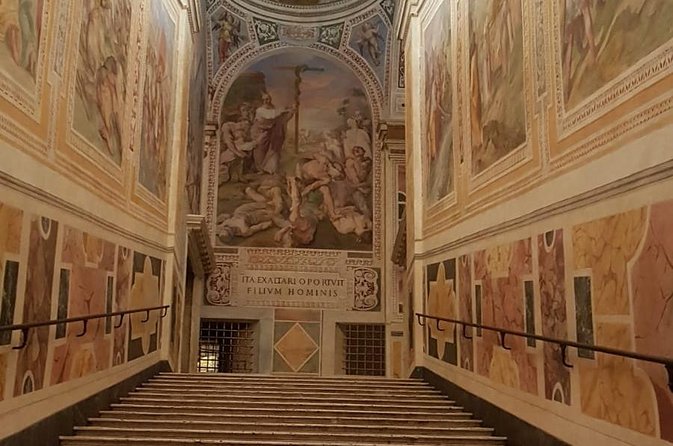
At $176.33 per person for about three hours, this tour sits in the mid-to-higher end for Rome church walking. The best value here isn’t the number of stops—it’s how the experience is structured.
You’re paying for a professional guide, a short, focused route through key Christian sites, and the included entrance ticket to San Clemente (the star of the underground portion). San Clemente is popular and can involve lines. The tour’s fast-track approach matters because it protects your time—especially when you’re also descending multiple levels.
You’re also paying for the format. This is not a giant bus-and-billboard tour. It’s capped at 12 travelers, which is why the tour can feel semi-private rather than chaotic. Multiple reviews mention guides who made the places feel alive, with real explanations and time for questions and photos. That’s exactly what you want when you’re walking into buildings that have been rewritten, rebuilt, and reused across centuries.
One practical point: the tour does not list pickup or drop-off. You’ll meet at Laterano Caffè and finish at San Pietro in Vincoli. That’s fine, but build in time to get yourself to the starting point and be ready to walk the whole route.
You can also read our reviews of more private tours in Rome

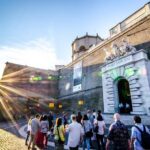

Meeting at Laterano Caffè and pacing through Lateran Rome
The tour starts at 2:30 pm at Laterano Caffè, Piazza di S. Giovanni in Laterano 52. The end point is San Pietro in Vincoli, Piazza di San Pietro in Vincoli 4/A. Expect roughly three hours of guided walking, with stops that range from about 20 minutes to around an hour.
This timing matters. Late afternoon light can be a nice bonus for the open-air parts—especially around the Lateran area—while your most demanding moments (stairs and low-lit spaces) happen at San Clemente, where the schedule is designed around guided access.
The tour is explicitly a walk, and it includes underground areas and places of worship. That combination is the key to understanding the pacing. You won’t spend the whole day in one museum-style queue. Instead, you’ll move site to site, with the guide helping you interpret what you’re seeing as you go.
And yes, it’s “half day,” but don’t treat it as casual sightseeing. Comfortable shoes are a must. The route mixes church interiors, stair descents, and sheltered/underground areas that can feel cool and dim.
Lateran’s power center: Arcibasilica di San Giovanni in Laterano
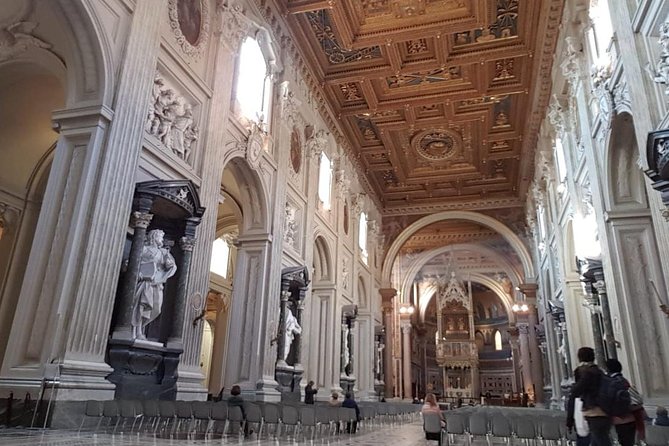
Your first major church stop is the Arcibasilica di San Giovanni in Laterano, the Papal Archbasilica also known as the cathedral of Rome—often described as the mother of all churches. This isn’t just a pretty building. It’s a symbol of how Rome’s Christian leadership developed on top of earlier Roman power structures.
From the context given, the basilica sits near Mount Celio and links back to the early 300s, when Constantine’s era shaped the Christian map. You also get the sense that this area’s story doesn’t start with Christianity. Land owned by the Lateran family and later imperial actions form part of the pre-church backdrop, which helps explain why the Lateran area became so significant.
What you’ll like here is the scale and authority of the place. Even if churches blur together in your mind, San Giovanni in Laterano feels like a headquarters. It sets up the rest of the day, because later stops keep returning to the same theme: Rome building over Rome.
Practical note: plan to follow the dress code before you arrive. If you’re wearing shorts or sleeveless tops, you could be turned away and lose time. (More on the dress code later.)
Ss. Quattro Coronati: a calmer Celio-hill monastery stop
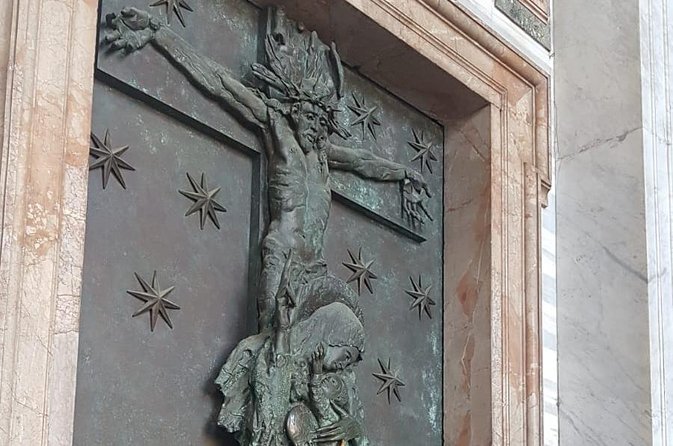
Next comes Ss. Quattro Coronati, a monastery complex on the slopes of the Celio hill. This is one of those stops that balances the big Lateran energy with a quieter, more grounded atmosphere.
The site is associated with a foundation in the mid-5th century, built on remains of a Roman domus. It’s also described as a major basilica of Carolingian Rome. In real terms, that means you’re not just getting a single period church. You’re getting a compound of eras: early Christian roots, later rebuilding, and medieval additions.
The church’s name connects to a tradition of the martyrdom of four Roman soldiers and five stonecutters, which the guide can use to steer you toward the site’s spiritual and artistic meaning. If you’re the type who likes symbols and stories that explain why certain spaces look the way they do, this is a strong stop.
Time here is about 20 minutes, which is just enough to take in the atmosphere and any standout features without feeling like you’re being rushed through.
San Clemente underground: fast-track entry and three levels of Rome
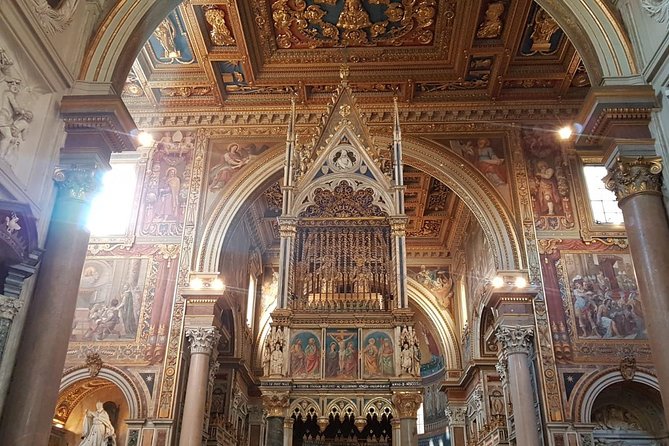
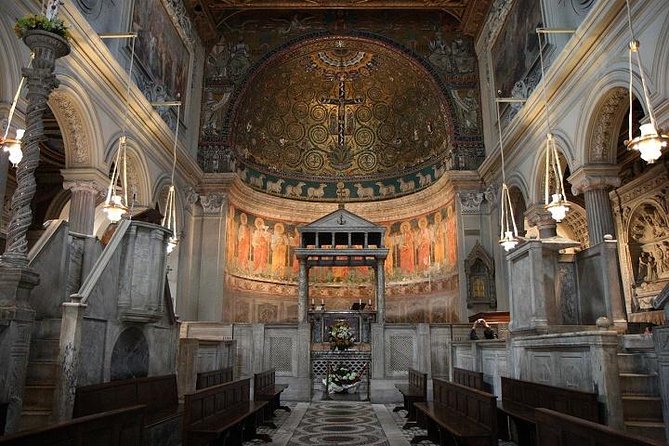
This is the main event: Basilica of San Clemente in Laterano. The reason this stop is worth the money isn’t just that it’s old. It’s that San Clemente is structured like a time machine.
The basilica is described as being built before 385 and dedicated to San Clemente, the third pope after Saint Peter. What makes it special is the layered construction:
- There’s the upper church (the visible basilica)
- Beneath it, there are older Roman buildings and earlier church remnants
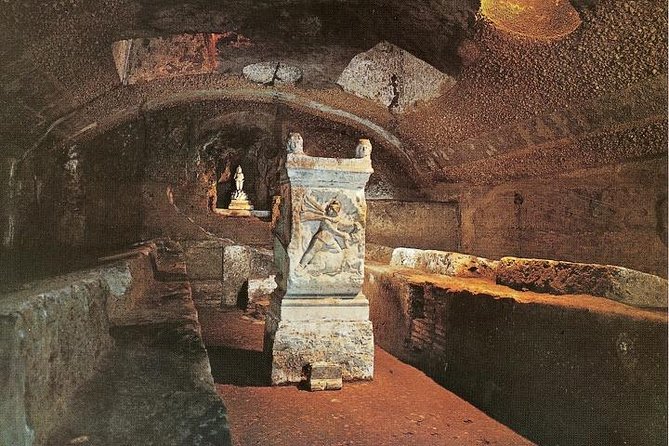
- Even deeper, there’s a Mithraeum, including a marble altar with the depiction of Mithras killing the bull
That combination is the big value of the tour. You see Christian worship spaces tied directly to Roman architecture and religious history.



What you’ll learn in the underground spaces
The guide’s job here is crucial, because the visuals are complex. You’ll likely hear about:
- Frescoes, including the legend of Sisinno
- Relic fragments linked to Saint Cyril and Saint Methodius, along with the Glagolitic alphabet (which connects to the later Cyrillic script)
- The Mithraeum altar scene from the lower level
These details help you connect the dots: Rome didn’t just convert. It repurposed, reused, buried, and rebuilt.
Underground comfort: what if you don’t like going below
The tour notes an important workaround: if anyone feels uncomfortable in underground spaces, the guide can manage it. Those guests can sit comfortably in the top church while the rest of the group visits the underground.
That’s a thoughtful detail—because the experience is worth it even if you don’t handle stairs well. Still, the tour is designed around underground access, so bring the right expectations.
Dress code matters here too
San Clemente is a place of worship and dress rules are required. Knees and shoulders must be covered. No shorts, no sleeveless tops. A scarf can help if you need a quick coverage fix.
San Pietro in Vincoli and Michelangelo’s Moses in context
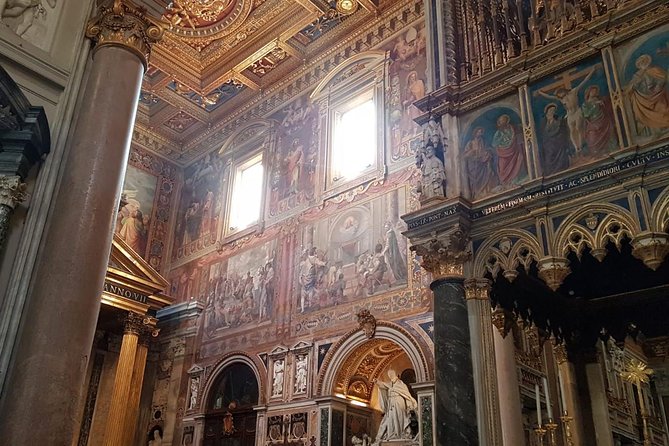
After San Clemente, the tour ends at San Pietro in Vincoli, about 30 minutes at the site. This church is known for two big reasons: the relic connection to St. Peter and Michelangelo’s Renaissance masterpiece, Moses.
The St. Peter chain relic
San Pietro in Vincoli was founded in the 5th century to guard a precious relic: the chain used to tie St. Peter while he was imprisoned in Jerusalem. The relic is preserved under the high altar and shown to the faithful on August 1 each year.
Even if you don’t care about relic traditions, the fact that this church was built around that object tells you something important: Rome’s sacred geography was formed by physical objects tied to belief.
Michelangelo’s Moses
Inside, you’ll find the famous statue of Michelangelo Buonarroti: Moses, sculpted in 1513 for the funerary monument of Julius II. Multiple reviews highlight that the guide explains details that many people miss, including the story behind the horns on Moses’ head.
If you’ve seen the statue in photos, this stop is how you get the full impact—scale, posture, and the way it dominates the visual space in a church setting.
Practical note: if you care about photos, do it efficiently. Church interiors can slow you down, and the guide’s flow is designed to keep the tour on track.
Dress code and underground etiquette (so you actually get in)
This tour is very clear about what you need to wear. For entry into churches and selected worship sites, you must cover knees and shoulders for both men and women.
That means:
- No shorts
- No sleeveless tops
- Knees covered and shoulders covered at all times
- Shoes should be comfortable for walking and stairs
If you’re unsure, bring a scarf. It’s an easy backup for shoulder coverage, and it also helps if indoor spaces feel cool. Your feet will thank you for trainers or shoes with good grip.
Dress rules are not optional on these sites. Even when the guide is kind, entry comes first. So plan outfit and you’ll avoid stress.
The guides: why this tour often feels personal
One of the strongest signals from reviews is how much the guide shapes the experience. People specifically praised guides for making the churches come alive, with explanations that connect architecture, symbols, and Christian development.
Names that show up in reviews include Fabio, Mohammed, Maria, and Severino, and a common thread is clear communication in English, plus a willingness to answer questions. In one case, a stop was closed unexpectedly and the guide handled it by finding a replacement church, then kept the story moving.
That last part matters. Rome isn’t always predictable—open/closed signs, access changes, and timing quirks happen. A guide who can adapt without turning it into chaos improves the whole day.
For your own part: be ready with questions. If you want the tour to feel more than sightseeing, this is the moment to ask why things look the way they do.
Who should book this tour (and who should skip it)
This experience fits best if you:
- Like Christian art and sacred architecture
- Want the underground side of Rome at San Clemente
- Enjoy guided storytelling over wandering alone
- Can handle stairs and low-lit underground spaces
- Are comfortable following dress rules
It may be a poor fit if you:
- Struggle with moderate walking or stair-heavy routes
- Have strong anxiety about underground spaces (even with the seating option, you should consider how much you’ll miss if you stay upstairs)
- Need step-free access (the tour does describe itself as a walking route with underground components, and one review flagged problems related to physical limitations)
I’d treat that “moderate physical fitness” note seriously. This is not a stroll, and the underground portion is central to why the tour works.
How to get the most from your 3 hours
Here are the small choices that make a big difference:
- Wear shoes you can trust on stone steps. Your day will include stair descents.
- Dress early and double-check coverage. Carry a scarf if you think you might need it.
- Arrive a little early at Laterano Caffè so you don’t start late.
- Have your phone ready for quick photos, but let the guide lead the pace in the underground areas.
- If you’re sensitive to underground spaces, tell your guide right at the start. The tour includes a way to manage it.
Also, keep your expectations realistic. You’re seeing four key church sites in a short window, with San Clemente taking the most time. That’s the trade-off. You won’t do deep museum-style lingering at every stop—and that’s by design.
Should you book Christian Rome and Underground?
If you want the Lateran story with the underground part handled professionally, this is a good booking. The fast-track San Clemente entry, the small group size, and the inclusion of San Clemente’s entrance ticket are the main reasons it’s worth your time and money.
Skip it if you can’t manage a walking route that includes underground spaces and places of worship with a strict dress code. Otherwise, it’s one of the most direct ways to understand how Rome’s Christian past sits on top of older worlds—literally.
If your ideal Rome afternoon includes stairs, symbolism, relics, and a guide who connects the dots, you’ll probably love it.
FAQ
How long is the Christian Rome and Underground tour?
It runs for about 3 hours.
Where does the tour start and where does it end?
It starts at Laterano Caffè, Piazza di S. Giovanni in Laterano 52, and ends at Basilica of San Pietro in Vincoli, Piazza di San Pietro in Vincoli 4/A.
What’s included in the price?
The tour includes a professional guide (3 hours), entrance ticket to the Basilica of San Clemente, and headphones for groups of 9 people and above.
Do I need tickets for the stops besides San Clemente?
The itinerary indicates admission tickets are free for some sites and included for others, including Ss. Quattro Coronati and the Basilica of San Clemente.
What is the dress code for this tour?
You must cover your knees and shoulders for entry to places of worship. No shorts or sleeveless tops.
What if I feel uncomfortable in the underground areas?
The guide can accommodate discomfort. Those guests can sit comfortably in the top church while the rest of the group visits the underground.