REVIEW · ROME
Around Rome City Wonders Fun Game for Kids and Families
Book on Viator →Operated by Alberto Tours · Bookable on Viator
Rome feels different when you chase clues. This Rome city treasure hunt turns classic sights into a game, with a guide feeding you facts as you move, and it’s one of the quickest ways to get your bearings in central Rome. I especially like the hands-on hunt format for kids and adults alike, and I like that the route hits big names like Trevi Fountain and Piazza Navona without turning your day into a bus schedule.
Here’s the main trade-off: the Pantheon interior isn’t part of this experience. You get the outside impression and the history angle, but if you want to go inside, you’ll need to plan that separately.
In This Review
- Key things to know before you go
- A fun way to orient yourself in central Rome
- Starting in Piazza Mignanelli: right where Rome looks postcard-perfect
- Fontana di Trevi: clues, coin rituals, and big crowd energy
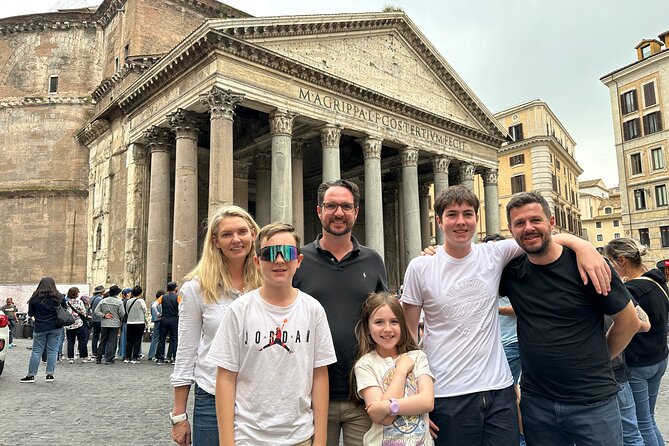
- Passing by the Pantheon: the classic dome moment without interior time
- Piazza Navona: solving clues in a Baroque stage
- Temple of Hadrian and Chiesa di Sant’Ignazio glimpses: more Rome between the big stops
- The treasure hunt experience: friendly competition that keeps attention on track
- Price and value: is $111.70 worth it?
- Who should book this (and who might want something else)
- Booking, tickets, and the practical stuff you’ll care about
- Should you book Around Rome City Wonders Fun Game for Kids and Families?
- FAQ
- How long is the Rome treasure hunt tour?
- Where does the tour start and end?
- What is included in the price?
- Are there any admission tickets required for the stops?
- Does the tour include an interior visit to the Pantheon?
- Is this tour suitable for children?
- How big is the group?
- Will I receive a mobile ticket?
- When will I get confirmation after booking?
- Is the experience refundable or changeable?
Key things to know before you go
- Piazza Mignanelli meeting point: you start next to the Column of the Immaculate Conception, easy to find and great for a clean start.
- Trevi Fountain clues and coin tradition: you’ll learn the wish-and-coin story while hunting for answers at the fountain everyone recognizes.
- Pace that suits families: the structure is short blocks with game moments, so kids don’t melt down by minute 15.
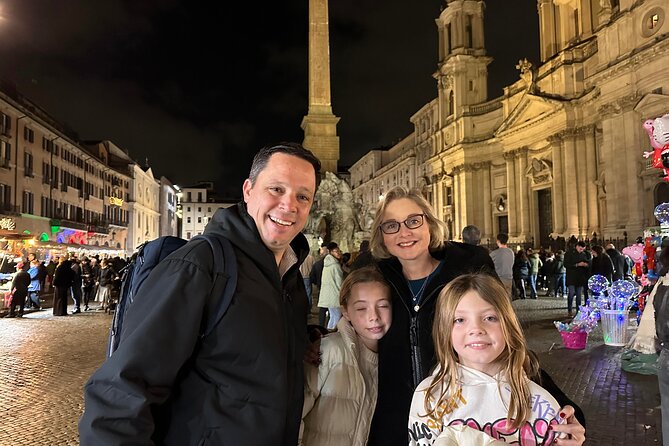
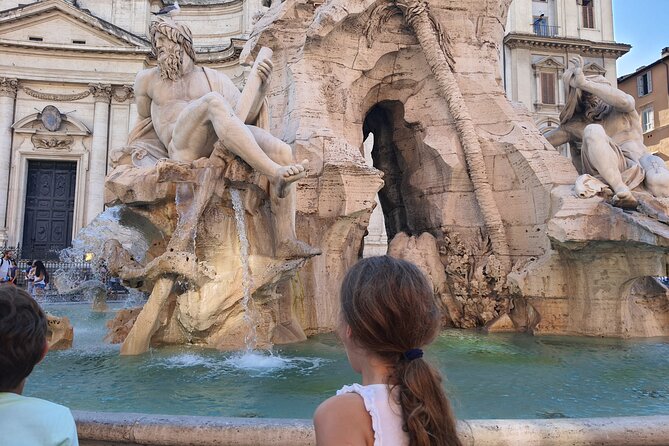
- Piazza Navona plus major fountains: you spend time at the Baroque square known for three monumental fountains, including the Four Rivers.
- Friendly competition and a final prize: it’s not just sightseeing; it’s built to make you pay attention.
- Small-group feel, big-city sights: maximum 50 travelers, and you’re moving together through the core.
A fun way to orient yourself in central Rome
If you’re arriving in Rome and feel like you need a quick “where is everything?” lesson, this is a smart pick. Instead of wandering from landmark to landmark on your own, you’re guided through a tight loop of central sights while solving clues. That game structure matters more than it sounds: it keeps your eyes up and your brain switched on, which is exactly what you want on a first day.
And yes, it really works for families. Kids get something to do that feels like play, adults get a guided layer of context. One of the best parts is how the guide style can make facts stick. A guide named Sicilia gets specifically mentioned for sharing information with a lot of passion, and that matches the whole vibe: you’re not getting a lecture, you’re getting explanations tied to what you’re seeing right now.
The tour is about 2 hours, so it’s not going to replace a long, slow Roman day. But it’s a strong way to start your trip, especially if you’re trying to balance must-sees with “please don’t make us stand still” energy.
You can also read our reviews of more city tours in Rome



Starting in Piazza Mignanelli: right where Rome looks postcard-perfect
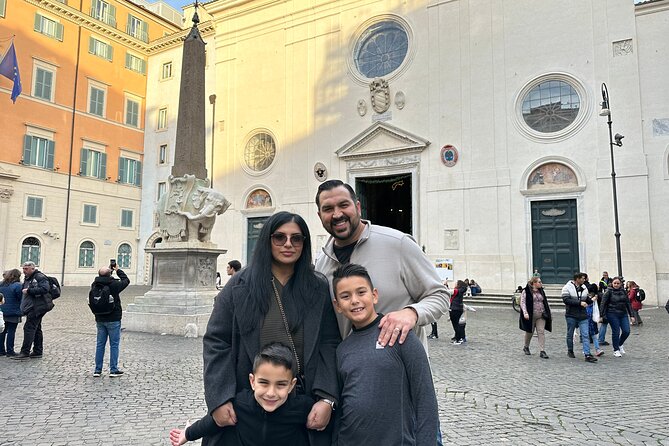
You’ll meet in Piazza Mignanelli, next to the Column of the Immaculate Conception. This start point is practical: it’s central, it gives you a familiar Rome streetscape right away, and it’s close enough to the major sights that the first portion feels like momentum, not a commute.
The early minutes also set the tone. This isn’t just a “follow the leader” walk—expect the guide to explain how the treasure hunt works and to start pushing you toward the first clue. For families, that’s the sweet spot: you’re already engaged before you reach the big magnets like Trevi and Navona.
One more thing to note: since the pace is built for a group game, it helps if your party can walk comfortably for short stretches without long pauses. You won’t be stuck waiting around, but you are moving.
Fontana di Trevi: clues, coin rituals, and big crowd energy
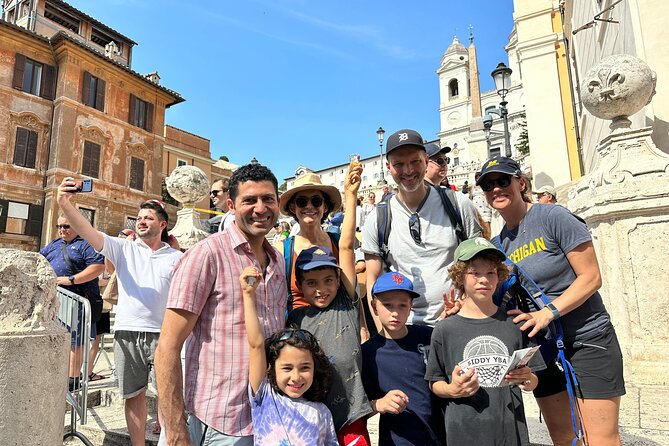
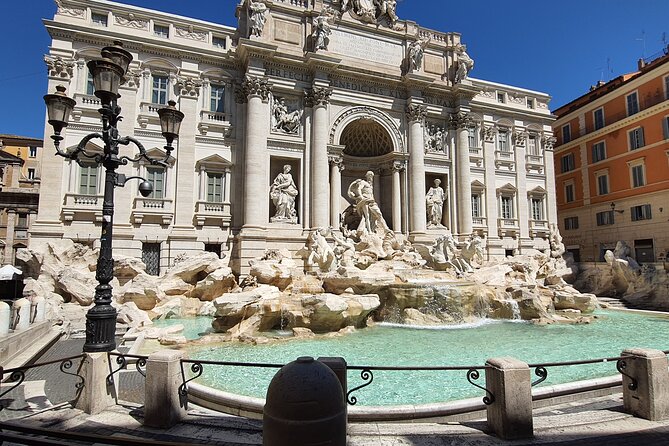
Trevi Fountain is one of those places you either love immediately or you feel overwhelmed by the crowds. The trick here is that you’re not only there to pose—you’re there to learn and play. You’ll spend about 40 minutes at the fountain area, which is enough time to see the key parts and still focus on the hunt.
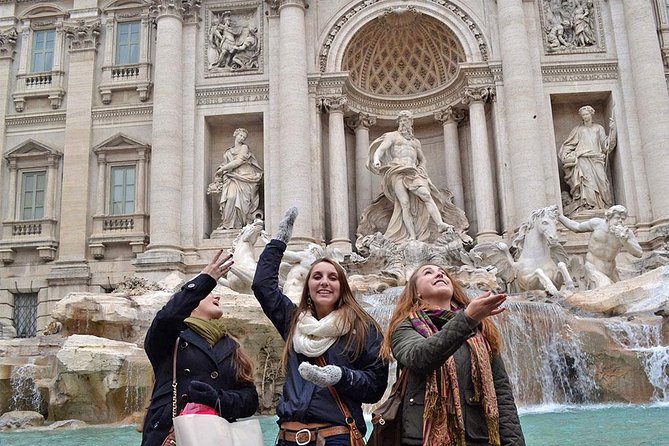
You’ll get the story behind the coin-toss tradition while searching for clues. And here’s a detail that’s worth filing away: one review calls out the classic method—using the right arm to toss, then throwing the coin via the left shoulder. It’s the kind of practical, memorable tidbit that makes the moment feel more personal than just snapping photos.
What I like about this stop is that it turns Trevi into a mini mission. Instead of standing there thinking, I’ve seen it in pictures, you’re looking for answers, patterns, and the fountain’s visual cues. Even if you’ve seen Trevi online before, the physical experience comes into focus when you’re hunting rather than drifting.
Small consideration: Trevi is Trevi—crowds are part of the deal. The game helps, but don’t expect a quiet, museum-like atmosphere. If you hate busy spots, arrive prepared to move with the group and to enjoy the spectacle from within it.
Passing by the Pantheon: the classic dome moment without interior time
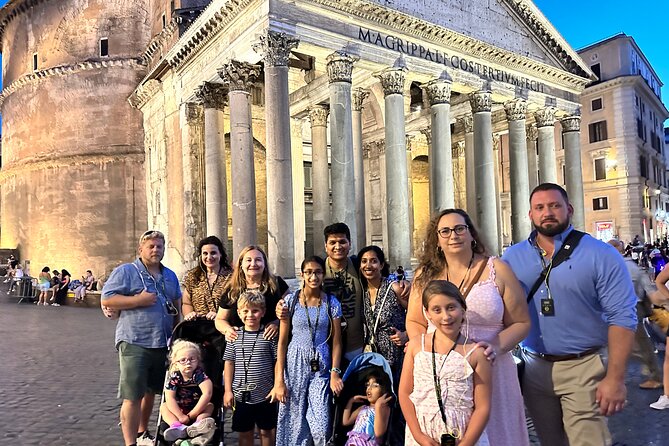
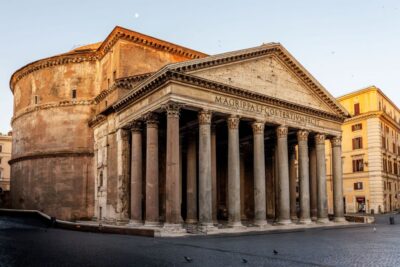
The Pantheon can steal the show even from the outside. In this experience, you don’t do an interior visit, but you do get a guided pass-by that frames what you’re looking at. The standout fact included is the Pantheon’s dome—described as the oldest unreinforced concrete dome in the world.
That matters because the Pantheon feels like a miracle when you understand what you’re seeing. Even without going inside, the exterior perspective can click into place. The guide’s job here is to connect the building’s shape and material to why it still reads as impressive today.
However, if your dream is to walk inside and take your time with the interior details, this isn’t your tour for that. You can use this stop as your warm-up, then schedule an interior visit on another day. Think of it as setting the hook.
Piazza Navona: solving clues in a Baroque stage
Next comes Piazza Navona, and this is where the tour starts to feel like a real Roman “scene.” You’ll spend about 45 minutes here, which is long enough to work through the game logic and still take in what makes the square famous.
Piazza Navona is known for its Baroque layout and its three monumental fountains. One of the big highlights is the Fountains of the Four Rivers. The hunt uses the square’s features—so you’re not stuck staring at open space. Instead, you’re looking for clues around the fountains and learning what you’re seeing as you go.
What makes this stop work so well for families is how visual it is. Kids can spot details faster when they’re looking for “clues” rather than “history.” Adults get enough time to appreciate the art and scale without feeling rushed.
One practical note: because it’s a major square, this area can also be crowded. The group structure helps you find your rhythm, but you’ll still want to keep an eye on where the guide is directing everyone so you don’t get separated.



Temple of Hadrian and Chiesa di Sant’Ignazio glimpses: more Rome between the big stops
Along the way, you’ll also get glimpses of other central landmarks—like the Temple of Hadrian and the Chiesa di Sant’Ignazio (Church of St. Ignatius). Even if you don’t go deep in every one, this is a valuable part of the experience.
Why? Because it turns a short tour into a broader Rome sampler. You see more than the headline sights, and that helps you decide what deserves a longer visit later. If you later find yourself saying, I want to return to that church/that ruin, you’ll already know the general location and vibe.
Just don’t expect long, stand-alone time at each extra stop. This is a game-driven route, so the focus stays on keeping you moving and learning in a tight timeframe.
The treasure hunt experience: friendly competition that keeps attention on track
The heart of the tour is the group treasure hunt with a final prize. The design is simple but effective: you’re given tasks and clues, you move together through the sights, and you end with a competitive moment that gives the tour a finish line.
This is the part I’d call “adult-friendly fun.” Adults don’t have to act like kids to enjoy it, but they do have to pay attention. The payoff is that Rome stops feeling like a checklist and starts feeling like a story you’re solving in real time.
And if you’re traveling with children, this is where the value really shows. Kids often struggle with the long-stare museum approach. A clue hunt changes the rules. They get to be active, they get a goal, and they get a reward at the end.
The tour’s guide role is also key. The information you hear is tied to what you see, so it doesn’t float off into “random facts.” One review highlights Sicilia’s ability to communicate facts with real enthusiasm, and that’s exactly how you want your guide to teach—clear, energetic, and connected to the streets.
Price and value: is $111.70 worth it?
At $111.70 per person for about 2 hours, this isn’t a budget throwaway tour. But it also isn’t overpriced when you look at what you get: a professional guide, a structured group treasure hunt, and time at multiple major central Rome sights (including Trevi Fountain and Piazza Navona).
Here’s how I judge the value:
- You’re paying for guided navigation and storytelling, not just entry to a place.
- You’re paying for a family-focused format that keeps attention on track.
- You’re getting coverage of several high-impact landmarks in a short window—good when your schedule is tight.
If you were planning to do a self-guided route, you’d still spend time walking between sites, and you’d likely lose the “why should I care?” context. This tour sells the why, then adds play to help it stick.
Where it may feel less worth it is if you already know Rome well and you just want deeper interior time at specific attractions. Since the Pantheon interior is not included here, you may end up doing separate plans anyway. But as a first-day anchor, I think it’s a solid value.
Who should book this (and who might want something else)
This tour is a great match if:
- You’re visiting with kids and want a route that feels like an activity, not an endurance test.
- You want an easy first day in central Rome to help you connect landmarks to geography.
- You like learning through doing—following clues, comparing details, and getting explanations as you go.
It’s less ideal if:
- You’re primarily chasing interior access and long museum-style time (Pantheon interior isn’t included).
- Your group needs lots of free time to stop, sit, and wander at their own pace.
- You strongly prefer quiet, low-crowd experiences.
Also, keep in mind it’s a group with a maximum of 50 travelers. That size is big-city practical, but it should still feel organized because the tour has a clear meeting point, defined stops, and a shared end.
Booking, tickets, and the practical stuff you’ll care about
You’ll receive a mobile ticket, which makes last-minute logistics simpler. Confirmation is expected within 48 hours of booking, based on availability. The start is at the Column of the Immaculate Conception in Piazza Mignanelli, and the tour ends in Piazza della Minerva.
If you’re using public transit, you’ll likely find it convenient because the meeting area is near transportation. Service animals are allowed, and children must be accompanied by an adult.
One more note: this experience is non-refundable and can’t be changed. That means it’s best when you feel fairly confident about your dates.
Should you book Around Rome City Wonders Fun Game for Kids and Families?
If you want a fun, guided, family-friendly way to hit central Rome’s biggest sights in about two hours, I’d say book it. It’s a smart “get oriented fast” choice, and the treasure hunt format is exactly what helps kids (and many adults) stay engaged.
I’d skip or pair it with another plan if your top priority is interior time—especially inside the Pantheon. In that case, use this as your warm-up and plan your interior visit separately.
In short: this is Rome sightseeing with a mission. If that sounds like your kind of day, it’s a great fit.
FAQ
How long is the Rome treasure hunt tour?
It lasts about 2 hours.
Where does the tour start and end?
The tour starts in Piazza Mignanelli next to the Column of the Immaculate Conception and ends in Piazza della Minerva.
What is included in the price?
The price includes a professional guide and the group treasure hunt.
Are there any admission tickets required for the stops?
The provided stop details list admission tickets as free for the included sights.
Does the tour include an interior visit to the Pantheon?
No. A Pantheon interior visit is not included.
Is this tour suitable for children?
Yes, it’s suitable for families, but children must be accompanied by an adult.
How big is the group?
The maximum group size is 50 travelers.
Will I receive a mobile ticket?
Yes, the tour uses a mobile ticket.
When will I get confirmation after booking?
You should receive confirmation within 48 hours of booking, subject to availability.
Is the experience refundable or changeable?
No. It is non-refundable and cannot be changed for any reason. If it’s canceled due to a minimum traveler requirement, you’ll be offered a different date/experience or a full refund.