REVIEW · ROME
Appian Way Bike tour Underground with Catacombs & Lunch
Book on Viator →Operated by Roma STARBIKE · Bookable on Viator
The Appian Way goes underground, fast. This Appian Way e-bike tour blends the surface beauty of Rome’s ancient road with Catacombs of St. Callixtus, plus a look into underground spaces that later served as wartime shelters. It’s a mix that feels different from the usual city sightseeing, though the route can be genuinely bumpy and sometimes cave access depends on door/entry logistics.
I like that it’s built around short waits and constant movement: you start at Porta San Sebastiano and keep rolling through the Appian Way Regional Park, with planned stops that actually break up the ride. The tour runs as a small group (max 10), so guides can slow down, help with positioning, and keep everyone together—something I noticed particularly in how guides like Lorenzo and Veronica paced and managed the group.
One thing to consider: the operator states you must know how to ride a bike well, and you may still want to walk sections of cobblestones or narrow paths. If you’re sensitive to rutted ground, rocky dirt, or narrow lanes with brambles, this is not a sit-back-and-glide stroll, even with e-assist.
In This Review
- Quick hits before you ride
- Why this Appian Way e-bike tour works in Rome
- Getting started at Roma STARBIKE and riding like a pro
- Porta San Sebastiano: your gateway to the Via Appia Antica
- Catacombe di San Callisto: the underground cemetery experience
- Cecilia Metella’s mausoleum and the Appian Way’s “descend 40 feet” moment
- The lunch stop in the Appian Way Archaeological Park
- Villa dei Quintili, Santa Maria Nova, and the Egeria story
- Parco degli Acquedotti: riding where nature, ruins, and water meet
- Price and logistics: is $107.41 actually good value?
- What to know before you ride (cobbles, walking, bike control)
- Should you book this Appian Way underground e-bike tour?
- FAQ
- What is the duration of the Appian Way Bike tour Underground with Catacombs & Lunch?
- Where do we meet for the tour?
- What language is the tour offered in?
- How many people are in the group?
- Is the ticket mobile?
- How long is the catacombs visit?
- Are admissions included for major stops?
- Is lunch included?
- Do I need to know how to ride a bike?
- What are the height and weight limits?
Quick hits before you ride
- Small group max 10: easier pacing and safer regrouping on mixed terrain
- Underground time with St. Callixtus: a major official funerary complex with long corridors
- Appian Way stops that include admissions: key sites are handled so you spend less time figuring it out
- E-bikes on cobbles and dirt paths: power helps, but you still need good bike control
- Lunch inside the Appian Way area: part of the experience, not a random restaurant detour
- Route changes can happen: big events and access issues may shift what you see that day
Why this Appian Way e-bike tour works in Rome
Rome’s classics are loud. This tour gives you the opposite. You ride out of the city rhythm and into an ancient landscape where the road itself is the main attraction—and then you go below ground.
The big value for me is the combo: surface Roman monuments + serious underground spaces. You get the Via Appia Antica atmosphere in daylight, then you switch gears to funerary corridors and underground chambers. It’s one ticket that moves between time periods without feeling like you’re being rushed from one unrelated stop to the next.
Another practical win: the tour is designed for movement across several sites in about 5 hours, and it uses e-bikes to keep the pace realistic. You’re not stuck waiting while everyone regains energy; you’re seeing things while the day is still young.
You can also read our reviews of more cycling tours in Rome
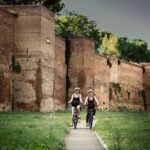
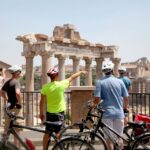
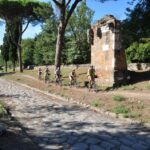
Getting started at Roma STARBIKE and riding like a pro
You meet at Roma STARBIKE, Rome eBike Tours & Experiences, on Via dei SS. Quattro 58 (near public transportation). The tour ends back at the same meeting point, which is handy because you don’t need a second plan for how to get home.
You’ll get a mobile ticket, and the tour is offered in English. The group stays small (max 10), and the guides manage the ride with you in mind—helping you find a comfortable spot, reminding you where it’s okay to walk, and keeping you moving as safely as possible.
The operator is clear: you must know how to ride a bike well. In practice, that means you should feel comfortable with starting, stopping, and steering on uneven surfaces. One review-style detail that matters: guides often encourage people to walk when cobblestones get too rough. So if your bike control is good but your ankles hate cobbles, plan to walk a bit without taking it personally.
Porta San Sebastiano: your gateway to the Via Appia Antica
The first stop is Porta San Sebastiano, an imposing southern gateway tied to the Aurelian Walls (built around 275 AD). This is more than a pretty photo spot; it’s the emotional “beginning of the road” moment. Once you’re here, the Via Appia Antica stops feeling like a line on a map and starts feeling like an actual route with history.
There’s also a human layer you don’t always get at monumental sites: you can spot medieval graffiti that points to the steady flow of pilgrims over centuries. It’s one of those details that makes the past feel lived-in rather than sealed behind glass.
Admission at this first stop is listed as free, and the stop lasts about 20 minutes—enough time to orient yourself before you start riding for real.
Catacombe di San Callisto: the underground cemetery experience
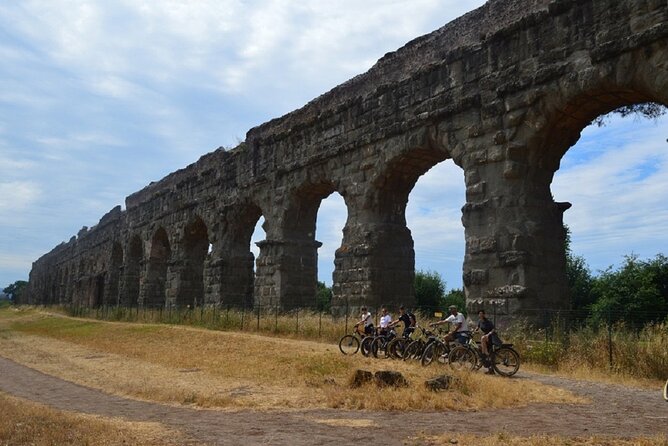
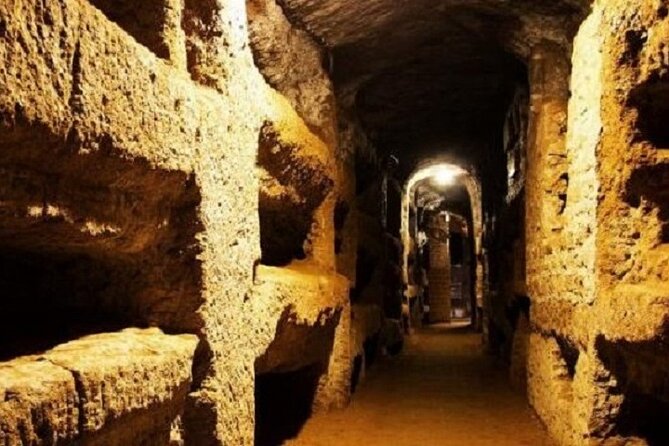
Next up is the Catacombe di San Callisto. This is the official funerary complex of the Church of Rome and it’s the largest underground cemetery in the city. Corridors stretch about 20 km, and the site is associated with burials dating back to the early centuries of Christianity.
It’s also known for what it holds: more than 50 martyrs, 16 popes, and about half a million Christians buried there. That scale matters because the catacombs don’t feel like a single attraction you pass through—they feel like a whole underground city designed for time and memory.
You spend about 1 hour underground, and admission is included. A realistic expectation: the catacomb experience is powerful because it’s structured and enclosed. You’re not just looking at objects; you’re moving through corridors that were built for remembrance. It’s the kind of visit that makes the surface sights afterward feel even more connected.
Cecilia Metella’s mausoleum and the Appian Way’s “descend 40 feet” moment
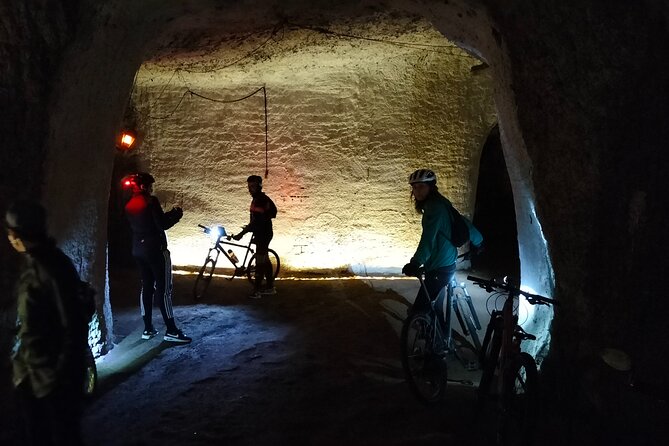
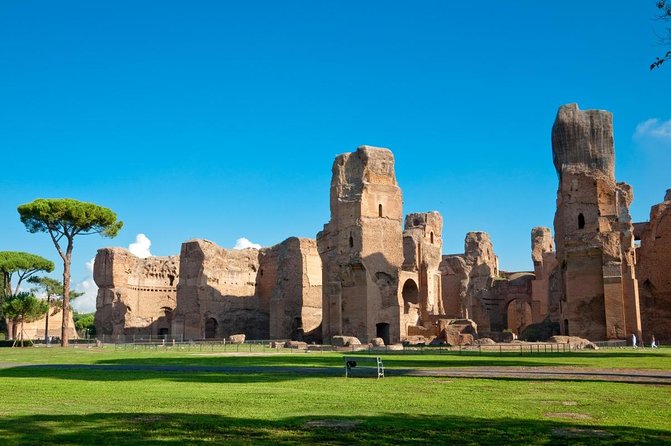
After the catacombs, you head toward Mausoleo di Cecilia Metella e Castrum Caetani, part of Parco Archeologico dell’Appia Antica. The mausoleum is a pagan tomb dedicated to Cecilia Metella and dates to the 1st century BC. It’s also described as the best-preserved mausoleum on the Via Appia Antica, which is exactly what you want from a stop like this: not just a ruin, but a readable structure.
This area also connects to later layers. You can see remnants of the medieval house of the wealthy Caetani family and the perimeter walls of the church of San Nicola. That “layers of reuse” theme shows up repeatedly along the Appian Way, and it’s one of the reasons the park can feel more rewarding than a quick stop at a single big monument.
You get about 20 minutes here, and admission is listed as free.
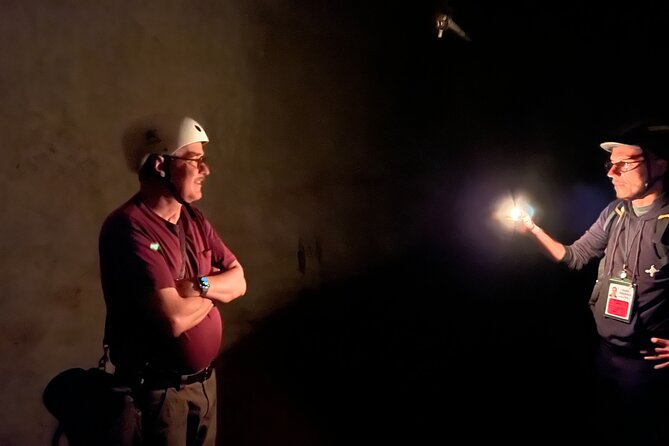
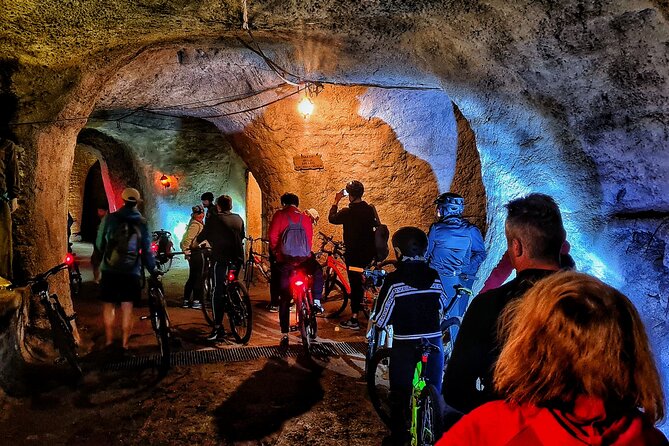
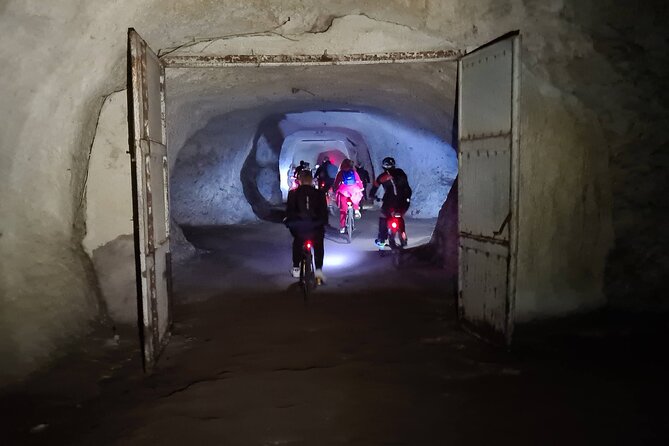
Then comes the standout promised moment on the route: exploring the secrets hidden by descending 40 feet through a Roman quarry into underground tunnels. These tunnels were later repurposed during World War II as air raid shelters. That repurposing is part of what makes this stop click. It’s not only ancient burial space; it’s also human survival space from a modern tragedy.
This is listed as 1 hour with admission included. Practically, you should be prepared for the possibility of access issues—one group noted they were unable to go into the cave section due to a door-locking problem, and they were “upgraded” to lunch instead. So while this is a major highlight on paper, keep in mind that underground entry is always subject to site operations.
You can also read our reviews of more tours and experiences in Rome




The lunch stop in the Appian Way Archaeological Park
After the underground portion, you get to slow down and reset. The tour includes Roman lunch at a local restaurant in the heart of the Appian Way Archaeological Park, with about 1 hour allotted.
This part matters because it helps you digest what you just saw. Catacombs and tunnels can be mentally heavy; lunch gives you breathing room before more outdoor riding.
A small heads-up on drinks: the tour highlights mention a tasty lunch or aperitif. Some people expected wine but did not receive it during their visit. So if you’re hoping for a particular drink, go in expecting lunch first, and treat any extra alcohol as a bonus rather than a promise.
Villa dei Quintili, Santa Maria Nova, and the Egeria story
Back on the bike, you reach Villa dei Quintili e Santa Maria Nova. At around the fifth mile of the Appian Way, you can admire the remains of the Villa dei Quintili, linked to brothers Sesto Quintilio Condiano and Massimo Valerio, consuls in the 2nd century AD. The villa’s story includes conflict: Commodus I is connected to the brothers’ deaths and the villa’s confiscation.
Near that, Santa Maria Nova is present through standing perimeter walls. Even when what you see is partial, stops like this work well on e-bikes because you’re moving at human speed. You can take in what’s visible, then ride a bit more to clear your head.
You’ll spend about 20 minutes, and admission is listed as free.
Then there’s Ninfeo di Egeria, a sacred place tied to the love story of the nymph Egeria and King Numa Pompilius. The story includes grief: Egeria, learning of her beloved’s death, bursts into tears, and from that spring appears. That kind of myth isn’t an add-on here; it gives the park a softer emotional tone between harder monuments.
Again, this is about 20 minutes with admission listed as free.
Parco degli Acquedotti: riding where nature, ruins, and water meet
The final riding segment focuses on Parco degli Acquedotti in the Appian Way archaeological area. This is where you get the payoff of the whole e-bike idea: moving through open space while seeing monuments you’d never reach as efficiently on foot.
You ride through lush park areas and archaeological sites as part of the stop, and this stretch is about 40 minutes. Admission here is listed as free, but the value comes from the bike ride itself: you’re getting views and context without needing to line up for extra transport.
This is also where the guide’s driving skill matters. Rome can throw traffic at you, and cobbles can suddenly appear. One review noted that on a busy Saturday morning, the guide navigated the group perfectly. Another mentioned a major marathon affecting the route, and the guide adjusted by doing the tour backwards until things cleared up. The practical lesson: if you’re flexible and pay attention, route changes usually make the experience smoother, not worse.
Price and logistics: is $107.41 actually good value?
At $107.41 per person for about 5 hours, this tour is priced in the midrange for Rome e-bike experiences. What makes it feel more reasonable than it first appears is that key admissions are included—especially the catacombs and the main underground quarry/tunnel segment. The lunch is included too, and you’re getting the e-bike with a small group guide.
The route also covers multiple sites that would be time-consuming to piece together on your own: a gateway wall, a major official catacomb complex, a preserved mausoleum area, multiple Appian Way park stops, and aqueduct-park riding.
Could you do some of this solo cheaper? Maybe. But in Rome, solo planning is often the hidden cost: transit time, finding entrances, and trying to coordinate a bike-friendly day while navigating busy roads. This tour’s strength is that it gives you a coherent plan in a limited time window—one that stays active without turning into a sprint.
What to know before you ride (cobbles, walking, bike control)
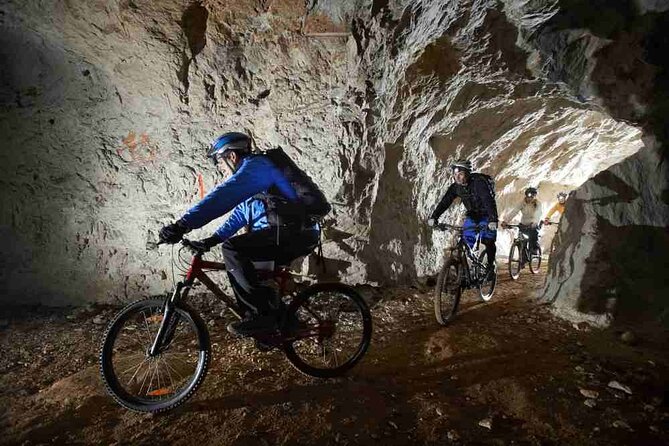
This tour is for people who can ride a bike confidently. The operator states you must know how to ride a bike well, and the reviews back up the reality: there are segments that can be very difficult on cobbled stones, plus rocky dirt paths and narrow sections with brambles.
Here’s how to set yourself up for a smoother day:
- Expect cobblestones and uneven ground. Even with e-assist, your tires and balance matter.
- Don’t fight it—if your guide suggests walking a section, take the win. It’s usually the safest way to keep the group moving.
- Bring your own water if you like to stay ahead. One review suggested water wasn’t provided, and people felt better having it.
- Wear grippy shoes. Underground spaces can feel cooler, but the ride still brings you outdoors quickly.
Also note the bike itself: one review called out worn tires and praised the fact that it wasn’t wet. You can’t control tire condition, but you can arrive early and ask staff if the bikes look road-ready, especially if rain is in the forecast.
One last practical point: the group size is small, but the pace is still active. This isn’t a long beach vacation nap day. It’s a “ride, stop, learn, ride again” format.
Should you book this Appian Way underground e-bike tour?
If you want a Rome day that mixes ancient monuments, underground spaces, and active biking without the stress of building a plan from scratch, I think this is a strong choice. It’s especially good for people who enjoy history but also like movement—someone who’d rather see the Appian Way in a connected route than only hit one museum or one ruin.
Book it if you:
- can ride a bike well and handle cobblestones without panic
- want a serious catacomb experience plus an underground quarry/tunnel segment
- like small-group guidance and a structured day that ends back at the start
Skip it (or consider another option) if you:
- can’t handle uneven or cobbled surfaces and would rather stick to smooth paths
- need fully predictable access to underground sections every time (because entry can depend on site operations)
- are hoping for specific drinks like wine as a guaranteed inclusion
One more tip: plan for flexibility. Rome traffic, access doors, and special events can change the exact route. The guides have shown they can adjust—sometimes even reversing direction to keep things working.
If you’re ready for an active, authentic Appian Way day with real underground texture, this is the kind of tour you’ll remember long after you’ve left the city—because you didn’t just look at Rome. You rode through it, and then you went below.
FAQ
What is the duration of the Appian Way Bike tour Underground with Catacombs & Lunch?
It lasts about 5 hours.
Where do we meet for the tour?
You meet at Roma STARBIKE – Rome eBike Tours & Experiences, Via dei SS. Quattro, 58, 00184 Rome.
What language is the tour offered in?
The tour is offered in English.
How many people are in the group?
The maximum group size is 10 travelers.
Is the ticket mobile?
Yes, the tour uses a mobile ticket.
How long is the catacombs visit?
The Catacombe di San Callisto stop is about 1 hour.
Are admissions included for major stops?
Admission is included for the catacombs stop and for the underground Appian Way segment, plus lunch is included as part of the program. Other listed stops show free admission.
Is lunch included?
Yes. There is a Roman lunch in the Appian Way Archaeological Park included in the tour.
Do I need to know how to ride a bike?
Yes. The requirement is that you must know how to ride a bike well.
What are the height and weight limits?
The max weight is 120 KG (265 pounds). A child reduction (age 6-10) applies only if the child is under 143 cm because they ride in a trailer bike instead of a bike alone.