REVIEW · ROME
Ancient Rome and Colosseum Private Tour with Underground Chambers and Arena
Book on Viator →Operated by Tours of Rome · Bookable on Viator
The Colosseum has layers most people never see. This private tour gets you into the underground and onto the Arena Floor, then rolls right into Palatine Hill and the Roman Forum on the same outing.
I love the way this format turns three famous stops into one story: games below ground, power above it, and the politics that made it all possible. The private pacing also helps—your guide can slow down for questions and photos instead of herding you with the next group.
One consideration: the exact start time can shift based on underground availability, and rain can change how much time you spend walking inside the chambers.
In This Review
- Key things that make this tour worth your time
- Meeting at the Colosseum Metro: what to do first so the day stays easy
- Colosseum Underground Chambers and the Arena Floor: the main event
- First and Second Floors: seeing the Colosseum as a machine
- Palatine Hill in 30 minutes: the emperor’s neighborhood and the view payoff
- Roman Forum: the political, religious, and financial center
- Price and value: what $423.44 covers (and when it’s a smart splurge)
- Weather, crowding, and why your timing matters here
- Who this private tour is best for
- Should you book this private Colosseum + Forum tour?
- FAQ
- Does the tour include access to the Colosseum underground and the Arena Floor?
- Will I visit Palatine Hill and the Roman Forum on the same day?
- Are tickets nominative, and do I need ID?
- Is this tour fully private the whole time?
- Are big backpacks or luggage allowed inside the Colosseum?
- What happens if walking in the underground isn’t possible due to rain?
Key things that make this tour worth your time
- Underground chambers access where you’ll see the building behind the performances
- Arena Floor time so you stand where gladiators stepped into view
- Private guide, real pacing—your questions don’t get cut off
- Palatine Hill + Roman Forum in one day for a connected “power in Rome” route
- Local archaeologist for part of the underground adds authority, even if it means a group segment
Meeting at the Colosseum Metro: what to do first so the day stays easy
You start at Casa dell’Acqua ACEA, right by Piazza del Colosseo 58—an easy landmark once you’re near the Colosseum area. Your guide meets you at the spot in front of the Colosseum Metro station, holding a sign that says TOURS OF ROME. End point is at the Colosseum (Piazza del Colosseo 1), which is convenient because it means you finish where you started.
Before anything else, treat the paperwork like part of the itinerary. Tickets are nominative, meaning each visitor’s full name needs to match the booking, and you must bring a government-issued photo ID (passport or driver’s license) that matches. If the names on the voucher don’t match what the ticket office sees, entry can be denied.
Also plan for the practical rules inside: no big backpacks and no luggage in the Colosseum. The site also bans items like selfie sticks and any kind of flammable sprays, knives, or weapons. If you travel light, you’ll move faster and stress less.
One more small tip: keep your phone accessible. The operator strongly recommends having a cellphone to contact each other, and they provide an emergency number. In Rome, minute changes happen—having your phone on hand makes those changes manageable.
You can also read our reviews of more private tours in Rome



Colosseum Underground Chambers and the Arena Floor: the main event
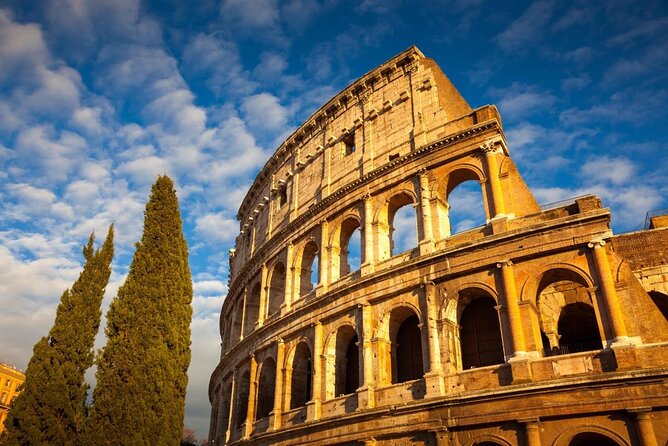
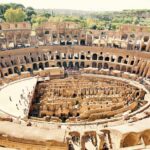
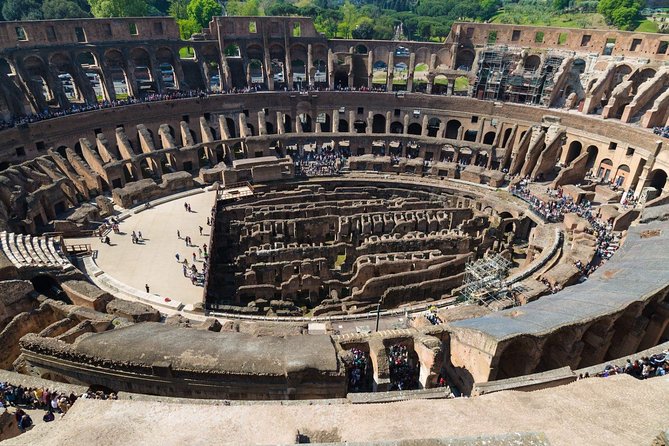
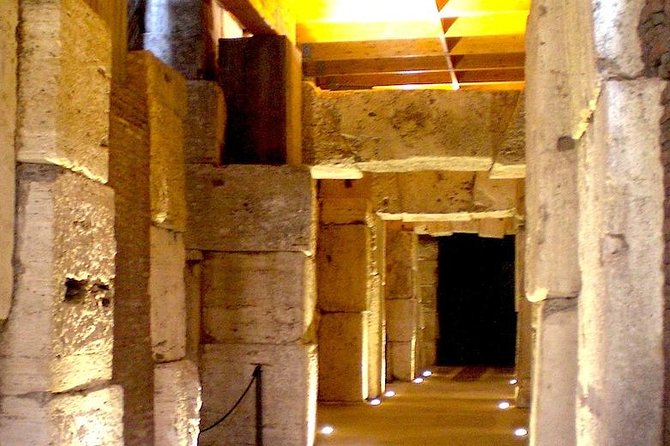
This is the heart of the tour. You get access to areas normally off-limits, including the underground chambers and the arena itself. It’s not just “extra photos.” Underground in the Colosseum is where you understand the system: how spaces fed into one another, how performers and animals were staged, and how the building was engineered to run a show.
You’ll spend about two hours at the Colosseum stop, with the underground and arena floor experience built in. One important reality: because of restrictions by the Colosseum authorities, part of the underground visit is conducted by a local expert archaeologist and is done in a group. That doesn’t make it less valuable—it changes how you experience it. A specialist can explain details you might miss on your own, and the pacing is often tighter in these restricted spaces.
Then comes the Arena Floor. Walking on the arena is one of those moments that turns “I read about this” into “I get it.” You’ll be standing in a space designed for spectacle, in a structure where every level had a job. Even if you’ve been to the Colosseum before, the arena floor time gives you a different viewpoint—lower, closer, and more human-scale.
If the weather turns ugly—specifically, dangerous rain—the underground walking part can be impossible. In that case, you’ll be given 45 minutes on the Arena Floor to see underground sections from there. It’s not the same as walking the chambers, but it protects the experience so you’re not sent away empty-handed.
First and Second Floors: seeing the Colosseum as a machine
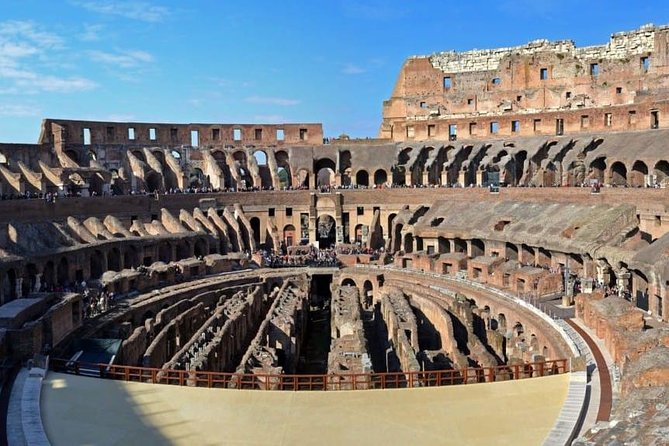
After the underground, you move into the main interior levels. The tour includes the first and second floors, plus time to explore the upper areas with your guide’s commentary. This is where the building stops being a pile of ancient stone and starts behaving like an organized system.
What I like about this part is the “layered understanding.” From the upper levels, the Colosseum becomes a set of routes and seating zones rather than a single iconic view. You can connect what you learned underground with what you see above: the building wasn’t random, and it wasn’t only for drama. It was planned to handle crowds, sightlines, movement, and timing.
You also get a guided walk that’s designed to be more than a slow stare. Your guide helps you interpret shapes and spaces so you don’t just see walls—you see purpose.
One limitation to know up front: the third level and terrace are not accessible for the public, so you’re not chasing those viewpoints on this tour. That’s not a deal-breaker if your priority is underground access and arena time, but it does shape what “more” you can expect on top of what’s already included.
Palatine Hill in 30 minutes: the emperor’s neighborhood and the view payoff
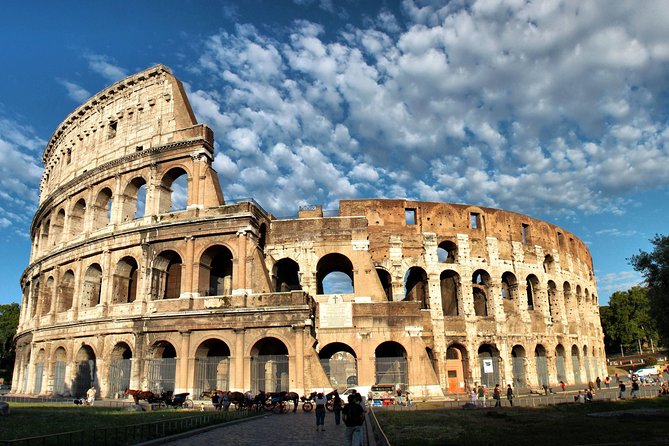
Right after the Colosseum, you head to Palatine Hill for about 30 minutes. Palatine is where Roman emperors lived, so it gives you a different angle on the same theme: power. The hill isn’t just a backdrop—it’s the setting that makes the Colosseum feel less like an isolated monument and more like part of the ruling story.
You walk through historic grounds and take in panoramic views. Even though 30 minutes isn’t a long time, it’s enough to get your bearings and understand why this hill mattered. You’ll connect the “where the rulers lived” idea with the “where the crowd watched” idea back at the Colosseum.
From the way the tour is described, you’ll also see references to where Roman Caesar lived. If that’s a name you’ve studied (or a figure that shows up in the Rome you’ve read about), this stop becomes a quick but satisfying anchor point.
The main drawback here is time. Thirty minutes is a sprint compared with a full Palatine visit. If you want slow wandering and extra museum-style stops, you might prefer adding more time on a separate day. But for a combined day route, Palatine Hill is a strong hinge between the Colosseum and the Forum.
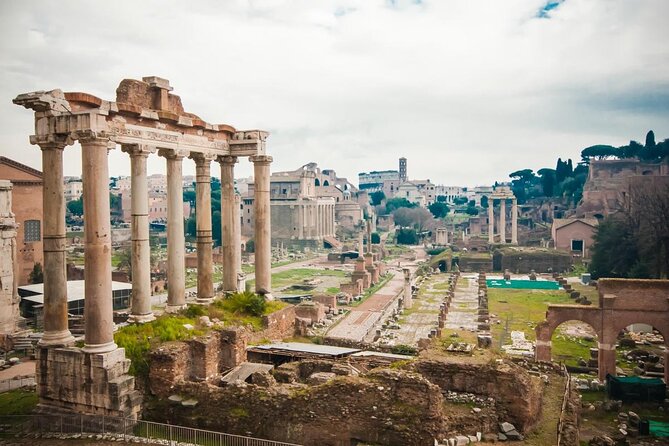
Roman Forum: the political, religious, and financial center
The last stop is the Roman Forum, also about 30 minutes. This is where the tour shifts from spectacle and residences into systems of power—politics, religion, and money all in one compact area.
I like the way this wrap-up works: after you’ve seen where games were staged and where rulers lived, the Forum explains why those rulers needed a stage and why crowds weren’t just entertainment. The Forum is the connective tissue of daily authority.
Your guide helps you understand what you’re looking at as you walk. The Forum can feel confusing if you’re trying to read it on your own. With a guide, you get the story thread: institutions, public life, and the religious meanings that sat alongside political decisions and financial influence.
One practical tip: this is the stop where you’ll notice the flow of foot traffic. Wear comfortable shoes and keep your pace steady. If you’re the type who wants to stop for many photos, you’ll still be able to do it, but you might need to prioritize.






Price and value: what $423.44 covers (and when it’s a smart splurge)
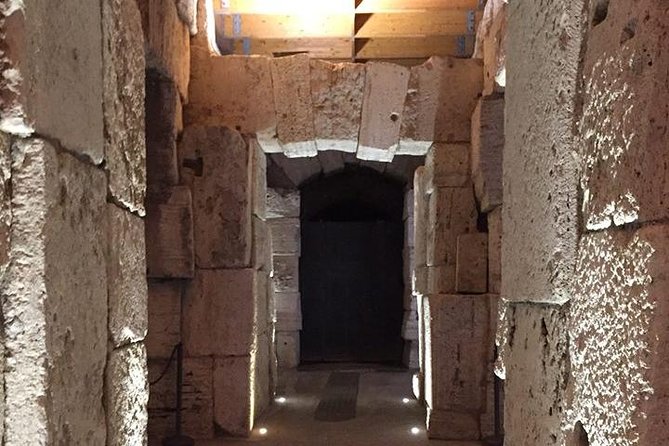
At $423.44 per person for a private tour around three hours, this isn’t a “cheap Colosseum” option. But you’re paying for specific value that’s hard to replicate: underground access, Arena Floor time, and a private guide who keeps the day organized and focused.
Here’s the practical part. The included Colosseum entrance ticket with arena access is listed as valued at €24, and the Colosseum reservation fee is valued at €2. That means a big share of what you pay is for services beyond basic admission—mainly guiding and the special access arrangements for areas not always open the same way.
So when is it worth it?
- If underground access is your must-do, this is the cleanest way to package it with arena time and interpretation.
- If you care about the why behind the ruins, the guided layer helps you build meaning instead of collecting random facts.
- If you’re time-crunched, the “Colosseum + Palatine Hill + Roman Forum” structure saves you from planning three separate visits.
When might it feel overpriced?
- If you only want a quick sweep of the highlights and you don’t care about the underground or arena.
- If you’re the kind of traveler who wants to roam slowly without a schedule. This tour is built for efficiency and narrative, not wandering.
My bottom-line take: for history-focused travelers who want the Colosseum beyond the standard viewpoints, the price makes sense. For pure scenery chasers, you’ll get less satisfaction per euro.
Weather, crowding, and why your timing matters here
Rome doesn’t run on your schedule, and Colosseum tickets often have their own rhythm. The tour start time can be subject to change depending on underground ticket availability, and you’ll receive a message if the start time shifts. That’s normal for this site, but it matters when you’ve planned other activities that day.
Crowds are another factor. On busy days, even a private tour can feel like moving through a major station at rush hour—because the Colosseum itself is crowded. The upside is that your guide helps you manage movement so you don’t lose time waiting in the wrong place.
Then there’s the rain contingency, which is rare but real. If conditions are dangerous, you may get the 45-minute Arena Floor replacement instead of walking inside underground. If your trip is flexible and you can accept weather changes, that contingency is reassuring. If you’re traveling with tight timelines, you should keep your expectations realistic.
Finally, remember that underground access may include a specialist group segment due to site restrictions. That’s not a downgrade; it’s part of how the Colosseum operates.
Who this private tour is best for
This works best if you want more than a photo stop.
History buffs will enjoy how the day connects: games below ground, empire power at Palatine Hill, and civic life in the Forum. Families with teens and older kids often do well too, because the pacing is structured and the guide can answer questions on the spot (one family example in the provided info included kids aged 10, 13, and 16).
You’ll also appreciate this tour if you like seeing the site from different angles. Underground adds function, arena adds scale, and upper levels add context. The Forum and Palatine Hill then turn it into a full-day “how Rome worked” story.
On the guide side, the names that show up repeatedly in strong feedback include people like Franz, Chiara, Andrea Arcieri, Christina, Marilu, Laura, and Barbara. You can’t bank on any specific guide, but it’s a hint that the experience is often anchored by people who can explain what you’re looking at in plain language.
Should you book this private Colosseum + Forum tour?
Book it if you want the best chance to experience the Colosseum beyond the standard route—especially underground chambers plus Arena Floor time—while still covering Palatine Hill and the Roman Forum in one logical day.
Skip it if your priority is low-cost sightseeing or if you’d rather do a flexible, unstructured Colosseum walk and then choose Forum and Palatine at your own pace. This tour is built for guided interpretation and scheduled access. If that sounds like your style, you’ll likely feel you got value for the money. If you want freedom over access, it may feel too rigid.
If you do book, come prepared: bring your ID, travel light, keep your phone handy for timing changes, and arrive at the meeting point ready to start on time. Those small choices make the difference between a smooth Roman morning and a stressful one.
FAQ
Does the tour include access to the Colosseum underground and the Arena Floor?
Yes. The Colosseum portion includes an underground chambers tour and time walking on the Arena Floor, plus tours of the first and second floors.
Will I visit Palatine Hill and the Roman Forum on the same day?
Yes. After the Colosseum, the tour visits Palatine Hill and then finishes with the Roman Forum.
Are tickets nominative, and do I need ID?
Yes. Tickets are nominative, so you must provide full names for every visitor. You must bring a valid government-issued photo ID that matches the names used for the tickets.
Is this tour fully private the whole time?
It’s a private tour/activity for your group, but part of the underground chambers visit is conducted by a local expert archaeologist and will be in a group due to Colosseum authority restrictions.
Are big backpacks or luggage allowed inside the Colosseum?
No. Luggage and big backpacks are not allowed inside the Colosseum.
What happens if walking in the underground isn’t possible due to rain?
If dangerous rain makes underground walking impossible, you’ll be given 45 minutes on the Arena Floor where you can see underground sections without walking inside.