That first drive through Rome is a quick gut-check. You get a private driver and a tight plan that threads together ten major sights in just four hours, from ancient arenas to baroque squares. I especially love how the route mixes famous names with a couple of classic Rome “pause-and-look” stops. One thing to consider: each stop is brief, so this is built for seeing and understanding, not for hanging around for long photo sessions.
You’ll feel the value in the basics: hotel pickup in central Rome, bottled water, and coffee or tea, plus WiFi on board. It’s a practical way to cover a lot without turning your day into a transit scavenger hunt. The tour is in English, and it’s designed for most travelers, but the pace does mean you should be ready to move on when the driver calls time.
In This Review
- Key Highlights Worth Your Time
- The Real Point of This 4-Hour Private Rome Plan
- Price and Value: Does $264.05 Make Sense?
- Hotel Pickup in Central Rome: When “Easy Start” Matters
- Circus Maximus and Buco della Serratura: Two Views of Ancient Rome
- Stop 1: Circo Massimo
- Stop 2: Buco della Serratura
- Bocca della Verità to Piazza del Campidoglio: From Legends to the Seven Hills
- Stop 3: Bocca della Verità
- Stop 4: Piazza del Campidoglio
- Piazza Venezia and Trevi Fountain: Classic Rome Stops With Smart Flow
- Stop 5: Piazza Venezia
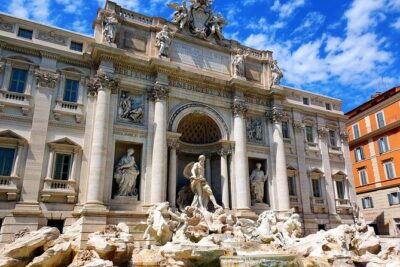
- Stop 6: Trevi Fountain
- Piazza di Spagna and the Pantheon: Elegance, Then Authority
- Stop 7: Piazza Di Spagna
- Stop 8: Pantheon
- Campo de’ Fiori to Piazza Navona: Markets, Night Energy, and Baroque Drama
- Stop 9: Campo de’ Fiori
- Stop 10: Piazza Navona
- What the Best Drivers Do for You (Names You’ll Hear)
- Who This Tour Fits Best
- Should You Book It? My Practical Take
- FAQ
- How long is the Rome tour with a private driver?
- What is the price per person?
- Is this tour private or shared with other people?
- Do I get hotel pickup?
- Is the tour offered in English?
- Does the tour include admission tickets?
- What’s included in the tour price?
- Do I receive a ticket on my phone?
- When is the average booking time?
- What if I need to cancel?
Key Highlights Worth Your Time
- 10 stops in about 4 hours so you can hit the big icons and still keep your day flexible
- Hotel pickup in central Rome helps you start relaxed, not searching
- On-board comforts like WiFi, bottled water, and coffee/tea keep the heat and waiting from taking over
- A mix of headline sights and “look-from-here” moments like Buco della Serratura
- Free admission listed for each stop makes your budget easier to plan
- Drivers who can explain fast and clearly are a repeated theme, with names like Marco, Andrea, and Demi showing up in past experiences
The Real Point of This 4-Hour Private Rome Plan
A short Rome tour succeeds or fails based on one thing: can it help you connect the dots without wasting your time. This one is built around that idea. You’re not just collecting photos. You’re moving through the city in an order that naturally layers ancient Rome, Renaissance-era viewpoints, and the grand set pieces people come from around the world to see.
What makes it feel special is the way the itinerary balances “look at it” stops with “understand what you’re looking at” stops. In practice, that means when you reach something famous like the Trevi Fountain or the Pantheon, you’re already carrying a little context with you. You’ll notice how squares and monuments relate to the hills, the streets, and the flow of Rome—so the city starts to feel less random.
You also get the upside of a private format. Only your group participates, so there’s no awkward timing dance with strangers who want to linger. When you’re moving quickly in Rome, that matters.
You can also read our reviews of more private tours in Rome



Price and Value: Does $264.05 Make Sense?
At $264.05 per person for about four hours, this is not the budget option. But value in Rome isn’t only about the lowest cost. It’s about what you buy with that money: time saved, less stress, and smoother access to a smart cluster of sights.
Here’s what’s included that keeps the price from feeling like you’re just paying for a ride:
- Private transportation (the big ticket item)
- WiFi on board
- Bottled water
- Coffee and/or tea
Add hotel pickup from central Rome, and you get fewer dead minutes at the start. Those minutes add up when you’re in a city where finding meeting points can become its own mini-adventure.
You might also like that the tour offers group discounts. If you’re traveling with friends or family, the per-person cost can feel easier to swallow. And the listed mobile ticket means you’re not scrambling to print anything.
One more practical note: the tour is often booked about 53 days in advance. That’s not a guarantee, but it does hint that the slots fill and this is a popular way to plan a first visit.
Hotel Pickup in Central Rome: When “Easy Start” Matters
The pickup piece is genuinely helpful. Instead of meeting at some distant landmark, you’re offered withdrawal from any hotel in central Rome. For a four-hour tour, that’s huge. The earlier you start moving, the more of your limited time you actually spend at the sights.
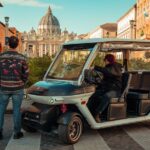
Once you’re on board, the comfort details matter for a city that can swing hot fast. Past experiences mention air conditioning in roomy vans, which is exactly what you want when July sun hits. With WiFi, water, and coffee or tea, the tour feels less like a rushed appointment and more like a guided circuit.
You’ll still want to dress for Rome’s weather and plan for short outdoor moments. But a private vehicle reduces the friction of getting between places quickly, especially around major squares.
Also, the tour is offered in English, and confirmation is received at booking time. If you like knowing your plan is locked, that helps.
Circus Maximus and Buco della Serratura: Two Views of Ancient Rome
Stop 1: Circo Massimo
Your first stop is Circo Massimo (Circus Maximus), an ancient Roman circus dedicated to horse racing. The location matters: it sits in the valley between the Palatine and the Aventine. In a short tour, this is a smart opener because it anchors you in the idea that ancient Rome wasn’t only about temples and forums—it also had big public spectacle.
The visit is about 15 minutes, and admission is listed as free. That short window is a blessing and a limitation. It’s enough time to understand the site’s purpose and pick out what you should look for. It’s not enough to become a deep specialist, so if you love long archaeology sessions, you may want to pair this with another visit later.
You can also read our reviews of more tours and experiences in Rome




Stop 2: Buco della Serratura
Next comes a completely different kind of Rome experience: the Buco della Serratura. This is a “stand here, look there” moment where you can admire a view of the Dome of St. Peter. The description points to the view appearing along an avenue tied to the gardens of the Order.
Why this stop works on a timed tour: it’s short but memorable. You don’t need a long walk to get the payoff. It’s the kind of view that makes you feel like you discovered Rome yourself, even when someone else is managing the schedule.
Plan for about 20 minutes. That usually gives you time to settle, take in the framing, and still move on before the group gets restless.
Bocca della Verità to Piazza del Campidoglio: From Legends to the Seven Hills
Stop 3: Bocca della Verità
At Bocca della Verità, you’re meeting one of Rome’s famous legend magnets: an ancient marble mask located in the church of Santa Maria. Even if you’re not the type who cares about myths, this stop is still worth it because it gives you a human, story-driven entry point into the city.
The time is about 15 minutes, with free admission listed. The practical benefit here is that it’s a compact stop with a clear reason to visit. You can experience the legend, get the context, and then head to the next hill without losing your momentum.
Stop 4: Piazza del Campidoglio
Then you climb into a major power-balance area: Piazza del Campidoglio, also known as Monte Capitolino, one of the seven hills on which Rome was founded. In a tight itinerary, this kind of stop is valuable because it helps you “map” Rome mentally. You start understanding why certain areas feel like they matter.
You’ll spend about 30 minutes. That extra time compared to earlier stops suggests you’ll have a bit more room to look, orient yourself, and absorb how the plaza functions as a focal point.
Here’s the small drawback: if you’re traveling when crowds are heavy, your ability to linger and take photos might depend on timing. On a private tour, your driver can often help you work around the densest moments, but you should still expect busy city energy around landmark plazas.
Piazza Venezia and Trevi Fountain: Classic Rome Stops With Smart Flow
Stop 5: Piazza Venezia
Piazza Venezia sits at the foot of the Capitol, where five important streets of the capital meet. That description is basically the whole point. This is where the city’s movement converges. Even in a short visit of about 15 minutes, you can get a sense of Rome’s layout—where major routes funnel people toward the core.
Free admission is listed, so your budget stays stable. The time is short, so focus on getting your bearings and noticing how the streets and monuments guide you.
Stop 6: Trevi Fountain
Then comes the star everybody recognizes: Trevi Fountain. It’s described as the largest and one of the most famous fountains in the world. Expect to spend about 30 minutes here, and admission is listed as free.
Why it’s worth it even when you’ve seen photos: seeing Trevi in person has a different weight. It’s not just pretty. It’s a major symbol of Rome’s ability to turn a fountain into a spectacle.
One consideration: Trevi is a photo magnet. Even on a private tour, you’ll still be sharing space with the city. Use your time efficiently—look at the fountain for a moment, then decide how much time you want for photos and how close you want to get.
Piazza di Spagna and the Pantheon: Elegance, Then Authority
Stop 7: Piazza Di Spagna
Piazza di Spagna is one of Rome’s most evocative squares. It’s paired in the description with Via Condotti, and it’s known for elegance. You’ll spend about 25 minutes, free admission listed.
What I like about including this stop on a short tour: it breaks the pattern. After ancient and grand civic areas, you get a more refined scene. Even if your feet are tired, the change in atmosphere helps you feel like you’ve experienced more than one Rome.
If you care about walking, you’ll probably want to extend your time around here later on your own. But in the context of this four-hour loop, the goal is to show you the setting without burning your whole day.
Stop 8: Pantheon
Finally, the Pantheon. It’s described as being built as a temple dedicated to all past, present, and future divinities. That framing matters. It tells you the Pantheon wasn’t only about one moment or one belief. It was built to cover time.
You get about 30 minutes, free admission listed. The Pantheon is a perfect stop for a guided circuit because even a quick visit can shift how you think about Roman architecture and public life.
The only real drawback: because it’s popular, your time inside or around key areas may feel tighter depending on crowds. But a private format helps you keep the rest of the tour from stretching, so you’re not sacrificing later stops.
Campo de’ Fiori to Piazza Navona: Markets, Night Energy, and Baroque Drama
Stop 9: Campo de’ Fiori
Campo de’ Fiori is presented as a fascinating area with day markets, restaurants, and clubs that get crowded in the evening. That description is practical because it points to the square’s rhythm.
You’ll spend about 25 minutes here. It’s a good mid-to-late tour stop because you get a sense of daily life rather than only monuments. Even if you don’t plan to eat or shop, it helps you remember that Rome is not just museums and statues.
Stop 10: Piazza Navona
The last stop is Piazza Navona, known for elegant Baroque style and fountains. It’s another location where the square itself is the attraction, not just the buildings around it.
You’ll spend about 25 minutes, free admission listed. This is a strong closer because it feels like a grand stage. After a string of historical stops, Navona provides a visual payoff that feels lively and cinematic.
What the Best Drivers Do for You (Names You’ll Hear)
In a tour like this, the driver matters as much as the route. The standout trait in past experiences is how quickly and clearly the driver explains what you’re seeing.
Names like Marco Accettola show up for promptness and excellent English. Other drivers such as Andrea and Demi are mentioned for being extraordinary hosts behind the wheel. What that translates to for you: you spend less time scratching your head and more time noticing details that actually help the city make sense.
Look for cues in how your driver times transitions, how they handle heat, and how they answer questions on the fly. That’s where the “private” part really pays off.
Who This Tour Fits Best
This is a smart fit if you:
- Want major Rome landmarks in one tight time block
- Prefer the ease of hotel pickup over figuring out public transit for each stop
- Like getting orientation and context fast in English
- Want comfort added to the plan with WiFi, bottled water, and coffee/tea
It’s also ideal if your group includes different ages or interests, since the route covers everything from ancient spectacle spaces to legend stops and major squares.
If you’re a traveler who wants to linger at museums, read every sign, and take slow walks for hours, you may find four hours too short to fully savor each place. For those trips, you might treat this tour as the “set-up day,” then return later on your own.
Should You Book It? My Practical Take
I’d book this 4-hour private driver tour if you want an efficient first pass that gives you a map in your head. The price isn’t cheap, but the included comforts, hotel pickup, and the ability to hit ten famous stops in one sequence can make it feel like a time-saving deal.
Don’t book it if you hate crowds and you need lots of quiet time at each site. Even with private transport, popular squares like Trevi and Piazza Navona can be busy. You’ll still enjoy them, but your experience will be “see it well in limited time,” not “take your time and disappear into it.”
If you’re planning your trip soon, book early since it’s commonly reserved about 53 days in advance. And if your schedule is flexible, you have the option of free cancellation up to 24 hours before the start time, which makes it easier to hold your plans without locking yourself in.
FAQ
How long is the Rome tour with a private driver?
It lasts about 4 hours.
What is the price per person?
The price is $264.05 per person.
Is this tour private or shared with other people?
It’s private. Only your group participates.
Do I get hotel pickup?
Yes. Pickup is offered from any hotel in central Rome.
Is the tour offered in English?
Yes, it’s offered in English.
Does the tour include admission tickets?
The stops are listed with free admission tickets.
What’s included in the tour price?
It includes private transportation, WiFi on board, bottled water, and coffee and/or tea.
Do I receive a ticket on my phone?
Yes. A mobile ticket is included.
When is the average booking time?
On average, it’s booked 53 days in advance.
What if I need to cancel?
Free cancellation is available if you cancel up to 24 hours in advance for a full refund.