REVIEW · ROME
3-Hours Vintage Electric Private Driving Tour of Rome
Book on Viator →Operated by Dolce Vita Tours · Bookable on Viator
A vintage electric cabrio tour is a fast way to see Rome. You’ll cover major sights with smart stops, and the ride feels like a movie set. I especially liked the private, English-speaking driver and the iconic photo moments packed into just over three hours. One thing to consider: this is a quick-hit route, so don’t book it if you want long museum time.
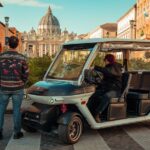
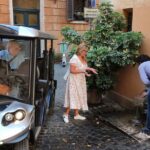
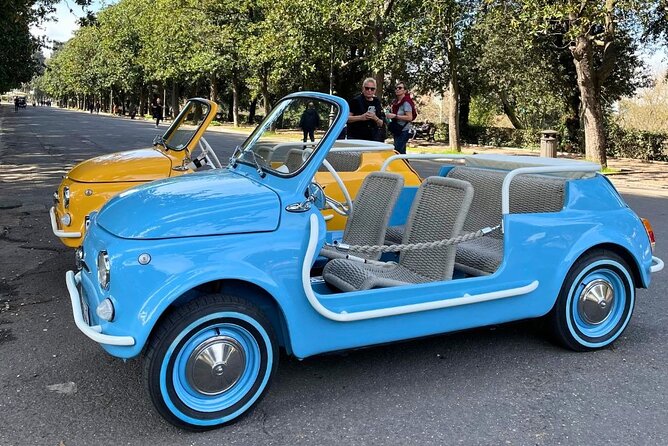
This is the kind of tour that helps you get your bearings fast. You’ll cruise through Rome in an elegant vintage electric open-air cabrio, then hop out briefly for landmark views, viewpoints, and a few “wait, that’s really there” surprises like the Aventine keyhole.
In This Review
- Key highlights to look for
- Why a vintage electric cabrio is the smart way to see Rome fast
- The ride-and-stop rhythm: what 3 hours really feels like
- Is $834.42 worth it for up to three people?
- Villa Borghese Gardens: breathing room and easy photo stops
- Piazza del Popolo and the view game from the Pincio terrace
- Mausoleo di Augusto: a calm, ancient pause in a green setting
- Via del Corso: the classic shopping spine (and a good orientation tool)
- Column of Marcus Aurelius: what you see from the street versus inside
- Piazza Venezia and the Vittoriano: Rome’s big spotlight and photo payoff
- Trajan Market and the Imperial Fora zone: Roman engineering in a compact stop
- Circus Maximus: a huge former chariot-racing arena you can still feel
- Giardino degli Aranci on Aventine Hill: the keyhole moment
- Mouth of Truth: the legend, the line, and why it works anyway
- Teatro di Marcello: Roman Republic theatre without the crowd pressure
- Piazza Navona: fountains, Bernini’s drama, and a great lunch backdrop
- Pantheon exterior: why skipping the inside can be smart on a driving tour
- Sant’Ignazio di Loyola: the False Dome trick you will want to see
- Trevi Fountain and the coin-toss ritual: the classic stop done calmly
- Spanish Steps: where Rome people-watching feels effortless
- Should you book this tour?
- FAQ
- What is the duration of the 3-Hours Vintage Electric Private Driving Tour of Rome?
- How many people are in the group?
- What vehicle is used on the tour?
- Do I get pickup from my hotel?
- Is the tour conducted in English?
- Do I need to buy tickets for the stops?
- Do I get a mobile ticket?
- Are service animals allowed?
- Is this tour dependent on weather?
- Is there free cancellation?
Key highlights to look for
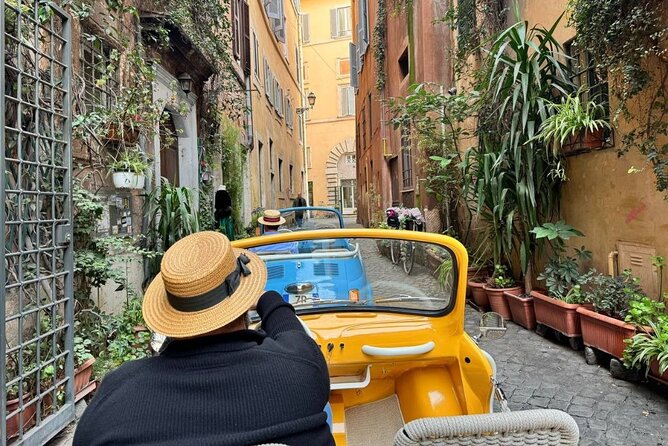
- Vintage electric open-air cabrio for an easy, stylish way to move through Rome
- Hotel pickup from your central hotel, so you lose less time to transit
- Major Rome icons on the route (including Pantheon, Trevi Fountain, and Colosseum)
- Aventine keyhole viewpoint from the Orange Gardens area
- Short, well-paced stops that work even when you do not want a lot of walking
- All in one private vehicle for up to 3 people, which makes the price easier to justify
Why a vintage electric cabrio is the smart way to see Rome fast
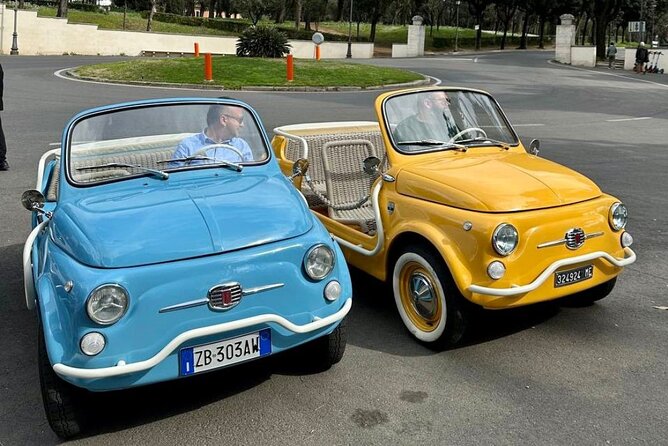
Rome rewards curiosity, but it also punishes wasted time. Between traffic, crowds, and finding parking, a standard day can turn into a patchwork of lines and detours. This tour uses a private electric cabrio to cut through the hard parts. You still get the classic sights, but you do not have to spend your whole day shuffling between neighborhoods.
I like the vibe because it is not just transportation. The open-air feel makes the city feel close—views, architecture, and street life appear in quick, satisfying bursts. The other big win is control: it is private, so you can move at the pace of your group, not a bus schedule.
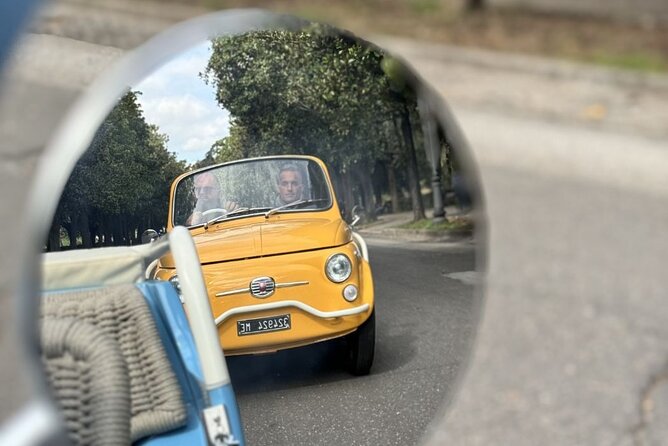
And yes, there is a real “people turn their heads” factor. One review described it like a celebrity ride, and that matches the reality: the vintage cabrio is noticeable from a distance, and it turns your sightseeing into an experience, not just a checklist.
You can also read our reviews of more private tours in Rome


The ride-and-stop rhythm: what 3 hours really feels like
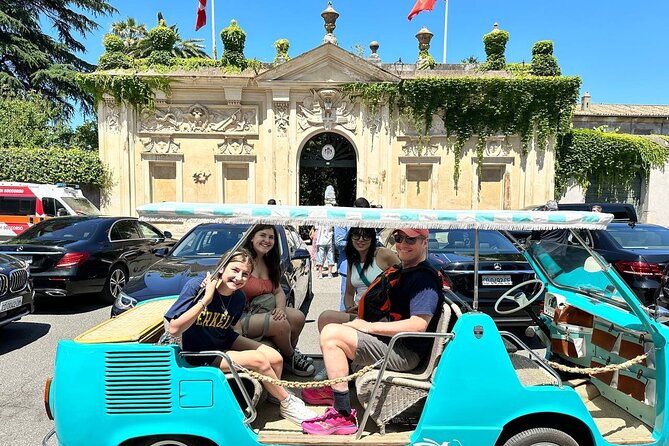
This is about 3 hours 10 minutes of touring with short stops. You will see a lot, but each place gets a focused moment: enough time to orient yourself, take photos, and understand what you are looking at—without losing the whole day to one stop.
Most entries list admission as free at the stops included, and you will not need tickets for the Pantheon stop because you will not be going inside. The one notable exception is that Circus Maximus admission is not included, so you should plan on a separate ticket if required by the site.
If you are trying to choose between a long walking tour and this driving format, think like this:
- If you want depth, linger, and timed entries, choose a longer guided experience.
- If you want the greatest hits plus a few clever viewpoints, this is built for you.
Is $834.42 worth it for up to three people?
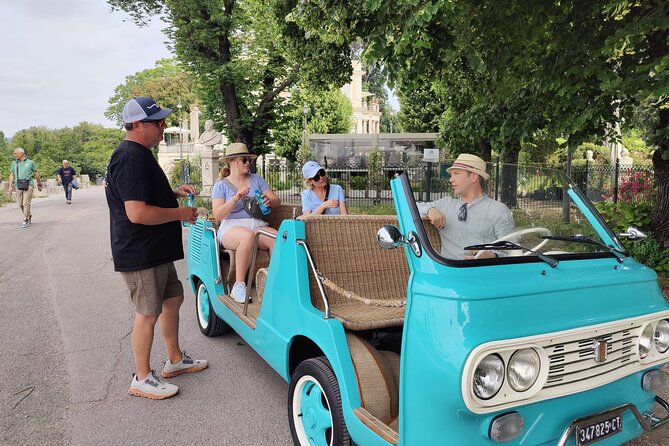
The price is $834.42 per group (up to 3). On its face, that is a lot. But private tours in central Rome often cost more than they look once you factor in time savings and the convenience of pickup.
Here is the practical way I would judge value:
- If you are 3 people, the cost per person drops fast compared with solo pricing for comparable private experiences.
- If you dislike hauling yourselves between far-apart areas, the driver and vehicle are doing real work.
- If you want an English-speaking guide who keeps things moving, you are paying for time efficiency.
If you are traveling as a couple, it can still make sense—especially for a first visit when you want context before you choose where to spend your next day. If you are solo and have the energy to walk and use transit, you might get more sightseeing per dollar elsewhere. This tour is a comfort and time-value play.
Villa Borghese Gardens: breathing room and easy photo stops
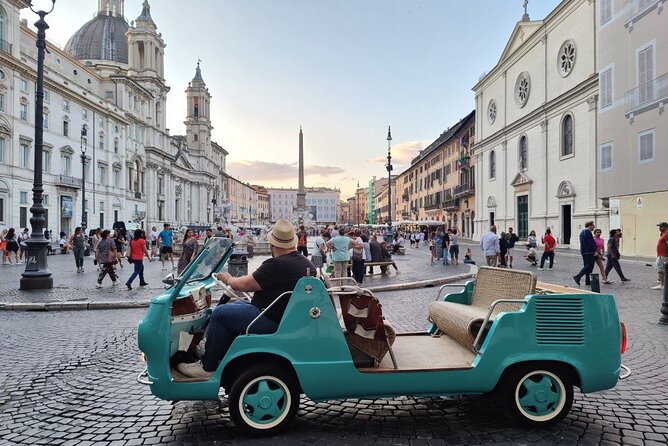
You start in the Villa Borghese Gardens, one of Rome’s biggest green breaks from the dense city core. The park covers over 80 hectares, with lakes, fountains, sculptures, and museums nearby—especially the Borghese Gallery area, even if you are not spending time inside.
For your group, the win is perspective. Rome can feel like it is all stone and lines. Here, you get a smoother pace: greenery, pathways, and space for quick photos. The scheduled time is short, but it is enough to see why people use Borghese as Rome’s reset button.
Tip: if your goal is photos, pick a viewpoint quickly when you arrive. Short stops mean you should decide fast what you want to capture.
Piazza del Popolo and the view game from the Pincio terrace
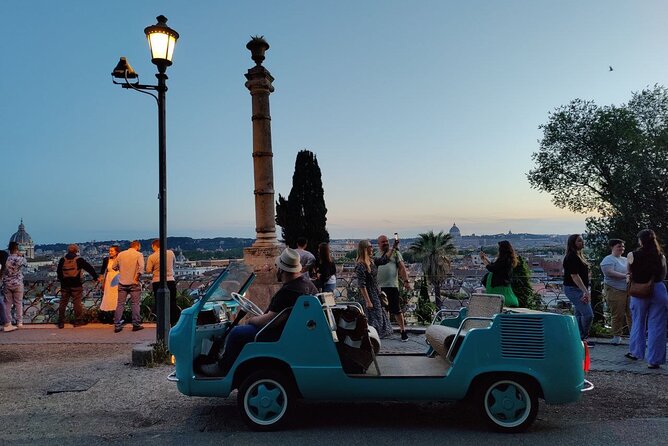
Next comes Piazza del Popolo, a major square anchored by the Egyptian obelisk and surrounded by historic architecture, including Santa Maria del Popolo. It is also a natural launching pad for views.
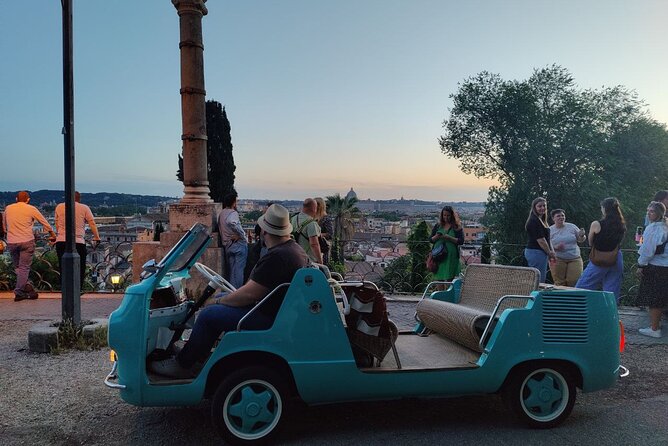
Even in a brief visit, you can get the idea: this is a Rome crossroads where the city opens up. The square links to the Pincio hill terrace for panoramic views, and that matters because many Rome viewpoints require effort to reach. Here, you get a taste of the height advantage without turning the day into a hike.
A small consideration: because it is a central hub, it can be busy at peak times. The good news is you are not stuck there long.






Mausoleo di Augusto: a calm, ancient pause in a green setting
Then you shift to the Mausoleum of Augustus, the grand tomb built to commemorate the first emperor, Augustus. The original construction dates to around 28 BC, and while only part remains today, it still lands as a major moment.
This stop is valuable because it is Roman power shown in a quieter tone. Instead of a noisy street scene, you get the mausoleum in a park-like setting, which makes the scale feel more human. You should also expect to see an exhibit related to Augustus when you’re there, even if your time window is brief.
Via del Corso: the classic shopping spine (and a good orientation tool)
Between big monuments, you get a practical Rome connector: Via del Corso. It runs from Piazza del Popolo to Piazza Venezia, and it is lined with shops and cafes. More than that, it is a handy “orientation street.”
Why I like including a street like this on a driving route: it helps you understand how neighborhoods connect. After your tour, you can look at a map and think, I know that corridor. That makes your next day easier and less stressful.
Column of Marcus Aurelius: what you see from the street versus inside
In Piazza Colonna, the Column of Marcus Aurelius rises to around 38 meters. What matters here is the spiral relief—one continuous carved narrative of military campaigns. It is one of Rome’s best-preserved monuments from antiquity, which is rare.
The tour includes brief time here, and it can also be possible to climb the internal staircase for views. If the line or timing feels tight on the day, you can still enjoy the external structure and relief details without rushing the climb.
Practical mindset: when time is short, decide whether your group wants the climb first. If you go straight for the staircase, you might have less time for close-up relief viewing. Either choice works; just choose on purpose.
Piazza Venezia and the Vittoriano: Rome’s big spotlight and photo payoff
Piazza Venezia is dominated by the Vittoriano, a large white-marble monument dedicated to Victor Emmanuel II. It is one of the most recognizable landmarks in Rome, and from street level it can feel dramatic—almost like a stage set.
This stop is useful because it gives you a broad Rome picture. You can explore museums and exhibitions inside, and you can also climb to get panoramic views. Even if you do not go all the way up, the piazza layout and surrounding architecture help you place landmarks you saw earlier and will see later.
If you like skyline photos, aim to be ready to look up and not just around.
Trajan Market and the Imperial Fora zone: Roman engineering in a compact stop
You then head toward Mercati di Traiano / Museo dei Fori Imperiali, the Trajan Market complex tied to the emperor Trajan. The market served as a commerce hub in its day, and today it is a partial restoration with ruins, interconnected areas, and underground spaces.
Even with short time, this is worth it because it shows Rome’s genius for building upward and below. You can see the complex architectural design, including the famous curved façade.
One good caution: ruins and partial restoration can look confusing if you are not sure what you are looking at. That is exactly where a driver who can help you orient yourself adds value.
Circus Maximus: a huge former chariot-racing arena you can still feel
Circus Maximus was one of the largest sporting venues of the ancient world and could hold up to about 250,000 spectators. Even though much has been lost, the area still carries size and atmosphere.
The tour gives you time to walk along the ancient track area and enjoy views from nearby hills. This is a great stop if you want to connect the dots between Rome’s entertainment past and its modern footprint.
Planning note: the stop lists that admission is not included, so if you want access tied to entry, you may need to pay on-site based on the rules that day.
Giardino degli Aranci on Aventine Hill: the keyhole moment
Next is Giardino degli Aranci, the Orange Gardens on Aventine Hill. This is one of the most satisfying viewpoint stops because you do not have to search for it endlessly. The park is known for citrus trees and a calm, open feeling compared with Rome’s tight streets.
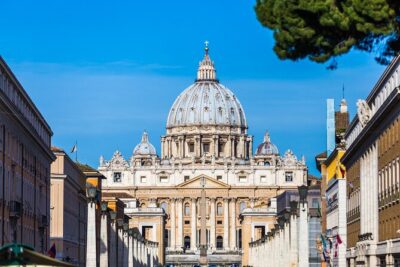
The headline attraction is the Aventine keyhole. From a specific angle, it frames St. Peter’s Basilica in the distance—small, clever, and surprisingly photo-friendly.
This is also a great time to slow down. Even a short stop here feels like an exhale because the garden’s purpose is not to overwhelm you with monuments; it is to give you a quiet city view.
Mouth of Truth: the legend, the line, and why it works anyway
At Bocca della Verità—the Mouth of Truth—you’ll find the carved stone disk at the portico of Santa Maria in Cosmedin. It’s famous for a legend: if you put your hand inside and you lie, you lose your hand. Film fans know the trope from Roman Holiday.
Even if you treat it as theatre, it still works. The stone face is distinctive, the setting is meaningful, and the whole thing turns into a fun photo moment without needing a lot of time.
One practical consideration: you might encounter waiting to take a photo. Your best move is to be ready to act quickly when the moment opens.
Teatro di Marcello: Roman Republic theatre without the crowd pressure
The tour also includes Teatro di Marcello, an ancient open-air theatre built in the late years of the Roman Republic. It is a classic “Roman layers” stop: not as famous as a few names on Rome postcards, but still powerful.
You get a real sense of how performance spaces were built into the fabric of the city. It is also a calmer stop than the super-famous squares nearby, which helps when your schedule is tight.
Piazza Navona: fountains, Bernini’s drama, and a great lunch backdrop
Piazza Navona is one of the easiest places to understand why Rome keeps people outside. The three fountains are the star, especially Fontana dei Quattro Fiumi, designed by Gian Lorenzo Bernini.
Even in a quick visit, you can appreciate the composition: the fountains set the stage, then the surrounding buildings frame the scene. It is also an excellent square for people-watching and for deciding where you might want a longer break later.
If you want photos, try to step back for wide angles. Up close is great too, but the piazza layout is what makes the fountains look monumental.
Pantheon exterior: why skipping the inside can be smart on a driving tour
The Pantheon stop is focused on the exterior and the sense of awe from the architecture outside. The dome is still legendary, and the central opening called the oculus is part of the building’s engineering magic.
Because the tour notes you won’t be going inside, this is best for people who want a quick, high-impact monument moment. You save time and avoid ticket flow during a day that already includes many stops.
This works especially well on the first day, when you’re more about learning the geography of Rome than doing a timed interior visit.
Sant’Ignazio di Loyola: the False Dome trick you will want to see
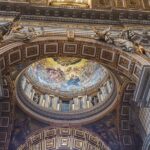
Next is the Chiesa di Sant’Ignazio di Loyola, a Baroque church known for the “False Dome” painted trompe-l’oeil effect. The illusion was created by Jesuit artist Andrea Pozzo.
This stop is a great contrast to Rome’s outdoor monuments because it’s about visual trickery. Even with limited time, you can appreciate how Baroque artists used paint and perspective to create architecture that feels impossible.
If you love art that plays with your eyes, do not rush through this one.
Trevi Fountain and the coin-toss ritual: the classic stop done calmly
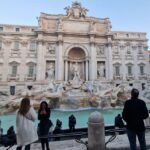
Fontana di Trevi is the big celebrity moment: baroque stonework, Neptune in the center, and the famous coin-toss tradition. The fountain is designed and decorated with detailed sculptural work, and it is always a photo magnet.
Your tour stop is short, so the key is making your expectations realistic. You’re not there for a long romantic sit-down; you’re there to see the masterpiece, get your photos, and keep moving.
Practical tip: go for clean shots before you get stuck watching coins fly. If you want a group photo, position early.
Spanish Steps: where Rome people-watching feels effortless
The final iconic scene is the Spanish Steps, the famous 138-step staircase connecting Piazza di Spagna and Trinità dei Monti. This stop is great because it’s both sightseeing and street life.
You can watch people drift up and down, scan the architecture, and enjoy that classic Rome vibe without needing to climb a major hill or purchase a ticket. It is also near the Barcaccia fountain at the base, so the area works for photos from multiple angles.
Time matters here. If your tour falls earlier in the day, the light may be harsher. Later can look better for photos. Either way, it’s a solid closing point because the steps naturally create a “show” of Rome movement.
Should you book this tour?
Book it if:
- You want a private first-look Rome day with maximum coverage and minimal stress.
- You like photo stops, viewpoints, and monuments without committing to long museum sessions.
- You value hotel pickup and an English-speaking driver who helps keep the day on track.
- You are traveling as a pair or trio, since up to 3 people can make the total price feel more reasonable.
Skip it (or consider something else) if:
- You want deep, slow exploration of one major site, like a full museum day.
- You do not like crowds outside of controlled lines, because some of the best-known spots are still popular even on short visits.
- You are expecting a walking-heavy day. This is built around driving between places with brief time at each stop.
If the weather cooperates, this is an efficient, stylish way to see Rome’s highlights and a few clever moments that you might miss on your own.
FAQ
What is the duration of the 3-Hours Vintage Electric Private Driving Tour of Rome?
It runs for about 3 hours 10 minutes.
How many people are in the group?
This is a private tour, and it’s priced per group for up to 3 people.
What vehicle is used on the tour?
You ride in an elegant vintage electric cabrio.
Do I get pickup from my hotel?
Yes. The driver guide waits at the main entrance of your central hotel in Rome. If your hotel is outside the central area, you meet the driver at a designated meeting point or another central location.
Is the tour conducted in English?
Yes. The tour is offered with an English-speaking driver.
Do I need to buy tickets for the stops?
Most stops list admission as free. Circus Maximus is noted as not included. The Pantheon stop is described as not going inside, so there’s no admission needed for that part.
Do I get a mobile ticket?
Yes, the tour includes a mobile ticket.
Are service animals allowed?
Yes, service animals are allowed.
Is this tour dependent on weather?
Yes. It requires good weather. If it’s canceled due to poor weather, you’ll be offered a different date or a full refund.
Is there free cancellation?
Yes. You can cancel for a full refund up to 24 hours in advance.