REVIEW · ROME
Rome: Jewish Ghetto and Trastevere Small Group Tour
Book on GetYourGuide →Operated by LivTours - We craft tours, you live them · Bookable on GetYourGuide
A walk with meaning and good street-level sights. Rome’s Jewish Ghetto and Trastevere mix everyday atmosphere with big moments from ancient to modern Rome. You’ll connect the geography to the stories, from the Tiber’s curve to the buildings people still use today.
Two things I especially like are the small group size—limited to 6—and the way the tour stitches together landmarks like Santa Maria in Trastevere with Jewish life in Rome. One possible drawback: it’s a 2-hour walking tour, so it moves at a steady pace and you’ll cover a lot without long stops inside sites.
The coffee or gelato stop is a smart finish, not an afterthought. And the guide energy matters here: I’ve heard from guides like Andy (knowledgeable and funny) and Mike (friendly and full of local detail), and that tone fits this kind of tour well.
If you’re hoping for lots of interior access, just note the Great Synagogue visit is outside, and some stops are exterior views and historical wayfinding rather than long museum time.
Key things to know before you go
- Max 6 people means you get real attention, not just a headset and a rush
- You’ll see the Great Synagogue area and understand how it fits into Jewish life now
- The tour tracks Rome’s story by crossing the river and using landmarks like Portico d’Ottavia
- Tiber Island (Isola Tiberina) is treated as a key clue to the old Jewish presence
- A guided stop at Santa Maria in Trastevere adds art-and-faith context in the neighborhood
- You end with a free coffee or gelato break on you
In This Review
- Why the Jewish Ghetto and Trastevere work so well together
- Starting at Piazza Trilussa: get your bearings fast
- Ponte Sisto to Trastevere streets: moving across layers of Rome
- Santa Maria in Trastevere: a guided stop with atmosphere
- The Tiber Island connection: Isola Tiberina as a historical clue
- Teatro Marcello and the Portico d’Ottavia: Roman Republic meets modern footprints
- The Great Synagogue of Rome: what you’ll see and why it matters
- Coffee or gelato break: a smart reset for the last stretch
- How much you cover in 2 hours (and what to expect from the pace)
- Who this tour suits best
- Should you book this Jewish Ghetto and Trastevere tour?
- FAQ
- How long is the Rome Jewish Ghetto and Trastevere small group tour?
- What is the maximum group size?
- Where does the tour start?
- Where does the tour end?
- What language is the tour in?
- Does the tour include a visit to the Great Synagogue?
- Are there stops for major landmarks and churches?
- Is there food or a drink included?
- What is the price per person?
- Can I cancel and get a full refund?
Why the Jewish Ghetto and Trastevere work so well together
Rome’s Jewish community is often described as one of the oldest in the Western world, and this tour uses that fact in a practical way. Instead of starting with a textbook, you start on the streets—where Trastevere still feels like a neighborhood, not a theme park.
I like that the tour treats the area as a timeline. You move from today’s street life near Piazza Trilussa, back to Roman and river-era sites like Tiber Island, and then forward again to the Jewish presence centered at the Great Synagogue.
Starting at Piazza Trilussa: get your bearings fast
Your tour begins at Piazza Trilussa, in front of the stairs, and your guide will be holding a LivTours sign. This is a good choice because the square is lively with local life, including younger Romans gathering, so you immediately feel like you’re in real Rome.
From there, you start walking toward the river. The pace is meant to keep you oriented while you learn, and it’s especially helpful if this is your first visit to the area.
You can also read our reviews of more tours and experiences in Rome.

Ponte Sisto to Trastevere streets: moving across layers of Rome
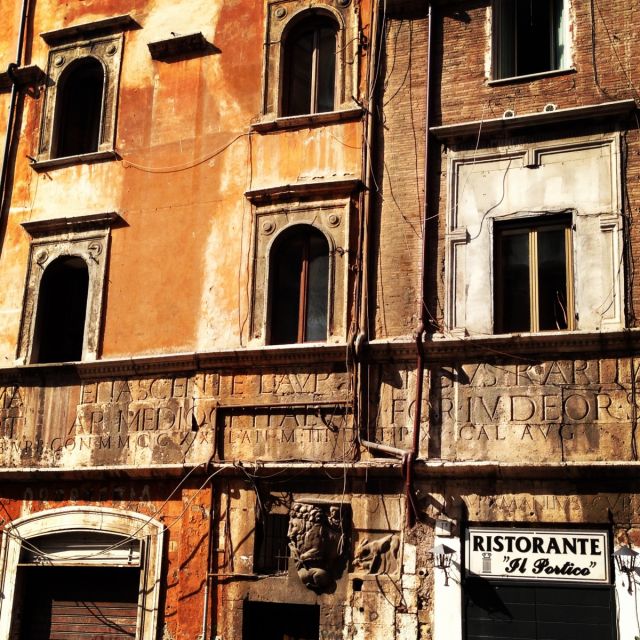
One of the first moments you’ll use is the Ponte Sisto area. Crossing here matters because you’re building mental geography—how the river divides and connects neighborhoods and how Rome’s structures sit along that line.
Then you head into Trastevere proper, where the tour’s “walking history” approach clicks. The idea is simple: you’re not just seeing buildings, you’re learning why these streets became important corridors for everyday life and community movement.
Santa Maria in Trastevere: a guided stop with atmosphere
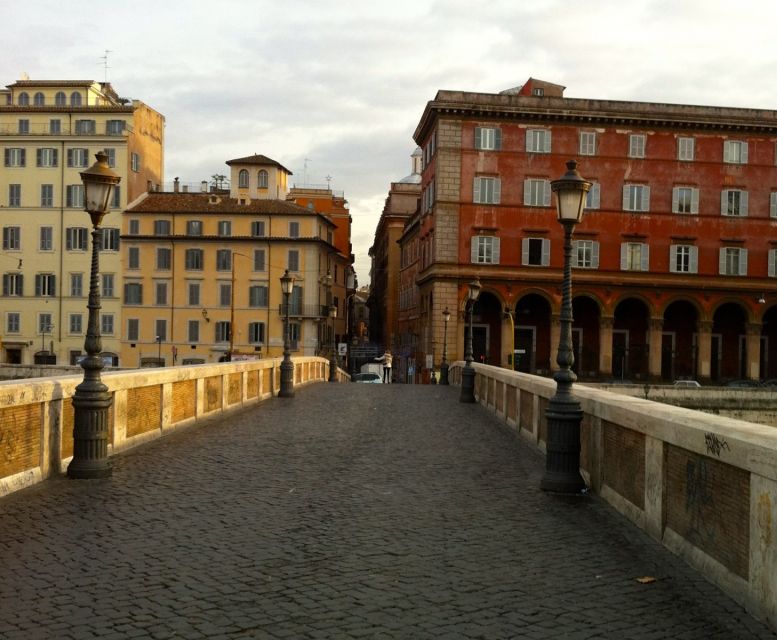
The tour includes a guided visit to Santa Maria in Trastevere. This is where you get a break from pure exterior landmarks and step into a place that’s still active and meaningful.
Why it’s valuable for this particular tour is the contrast. You’ll be learning about a community’s historical presence and survival, and then you visit a major religious site in a neighborhood that’s always been Roman and always been lived-in. It helps you understand Rome as a city of overlapping identities, not one single story.
The Tiber Island connection: Isola Tiberina as a historical clue
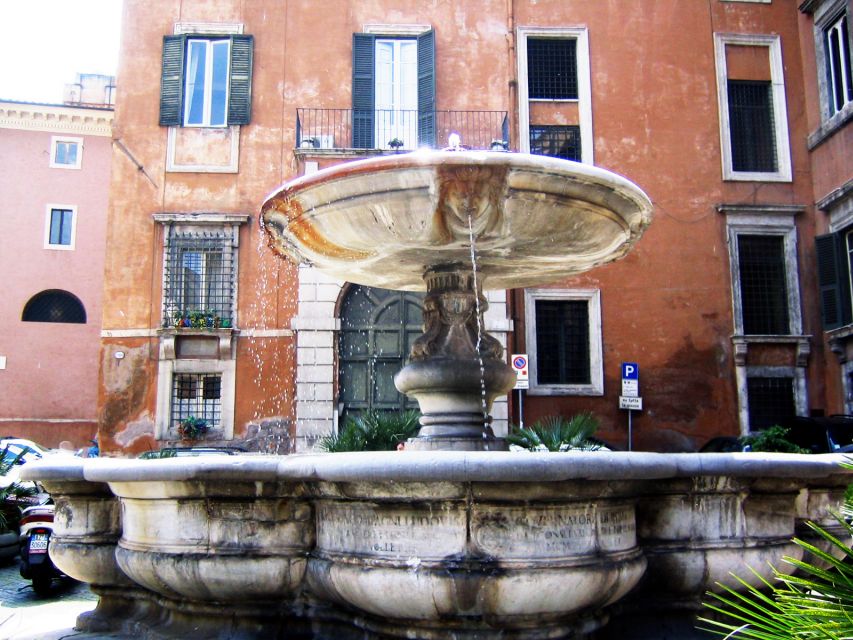
Next comes Isola Tiberina (Tiber Island), guided with the specific goal of explaining how this spot relates to the Jewish Ghetto in ancient Rome. Since it’s in the middle of the Tiber, you’re not just reading history—you’re looking at the exact kind of location that would shape settlement patterns, movement, and protection.
Even if you don’t know the full background beforehand, the river setting does half the teaching. The guide helps you connect the geography to the idea of a “ghetto” space without turning it into doom-and-gloom.
Teatro Marcello and the Portico d’Ottavia: Roman Republic meets modern footprints
The tour moves through a section centered on major Roman ruins and settings. You’ll visit the open-air Teatro Marcello, described as built toward the end of the Roman Republic, and that timeframe is key. It turns the walk into a timeline where Roman civic power and later community life sit in the same visual frame.
Then you’ll see the Portico d’Ottavia, with the specific detail that it once enclosed the temples of Jupiter Stator and Juno Regina. Seeing ruins with that kind of “who was here and what it was for” framing makes the structure feel less like scattered stone and more like a former purpose-built space.
One practical note: these are exterior experiences. You’ll learn a lot from the guide, but your time is spent looking and listening, not entering every ruin.

The Great Synagogue of Rome: what you’ll see and why it matters
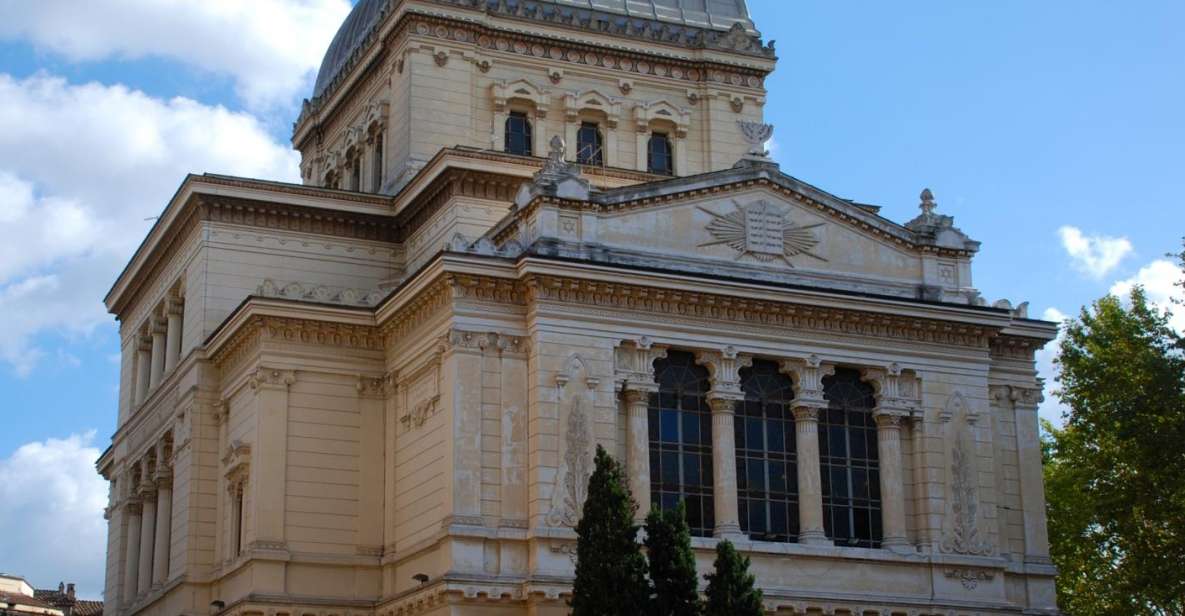
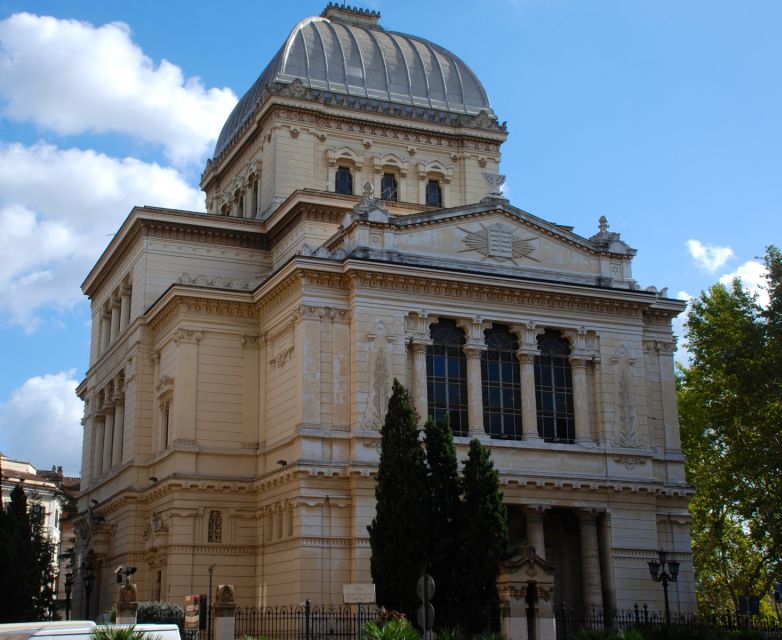
The tour includes a stop at the Great Synagogue of Rome, the largest and most important synagogue in Rome, but the listing information specifies a synagogue outside visit with sightseeing. That still works, because the point is to anchor your route in the Jewish life that continues now.
This is where the “past to present” theme becomes concrete. You’ll see how the neighborhood’s current identity connects to historical presence and how the community still has a strong center in the city.
If you like tours where the guide explains what you’re looking at before you wander off on your own, this stop is a good fit.
Coffee or gelato break: a smart reset for the last stretch
About mid-tour, you’ll pause for a local café break, with coffee or gelato included. For a 2-hour format, this is the right kind of break: short enough to keep momentum, long enough to reset.
This is also the best time to ask questions. The tour notes that the area has exceptional restaurants featuring ancient Roman–Jewish kosher food, so your guide can point you toward places to try after the walk while everything is still fresh in your mind.
How much you cover in 2 hours (and what to expect from the pace)
This is a 2-hour small group tour limited to 6 participants, so it’s designed to stay personal. The tradeoff is time: you’ll get guided highlights at each stop, but you won’t linger like you would on a half-day museum plan.
Price-wise, at $134.81 per person, you’re paying for guided storytelling plus site time (including Santa Maria and Tiberine Island coverage) and that included refreshment. It’s not a bargain-basement walk, but it does feel like a value if you want a coherent route through multiple “Rome layers” without planning every connection yourself.
Think of it as a high-impact orientation to a meaningful area. It’s a great way to start your day before you branch into longer independent exploring.
Who this tour suits best
This tour is ideal if you want:
- A small group pace with a guide who can explain what you’re seeing
- A route that connects neighborhood life in Trastevere with the historical Jewish Ghetto
- A guided walk that touches major points like Tiber Island, Portico d’Ottavia, and Teatro Marcello
- A way to understand the role of the Great Synagogue in the city today (even from the outside)
It’s also a good match for first-timers who feel overwhelmed by Rome’s sheer size. You’ll leave with a map in your head because the tour keeps pointing you back to the same logic: river, streets, key buildings, then back to community centers.
Should you book this Jewish Ghetto and Trastevere tour?
Yes—if you want a focused, human-scale introduction to Rome’s Jewish history paired with Trastevere neighborhood walking. The combination of small group size, guided stops tied to specific places (like Isola Tiberina and Portico d’Ottavia), and an included coffee or gelato makes it feel like time well spent.
I’d skip it or adjust expectations if you’re only interested in long indoor visits, since the Great Synagogue stop is outside, and several landmark moments are exterior and view-based. Also, if you prefer slow wandering with no structure, a 2-hour timed format may feel a bit brisk.
If you book, show up early enough to find the meeting point confidently: Piazza Trilussa, in front of the stairs, where the guide holds a LivTours sign.
FAQ
How long is the Rome Jewish Ghetto and Trastevere small group tour?
The tour is 2 hours long.
What is the maximum group size?
The group is limited to 6 participants.
Where does the tour start?
It starts at Piazza Trilussa, 00153 Roma RM, Italia, in front of the stairs, with the guide holding a LivTours sign.
Where does the tour end?
The activity ends back at the meeting point.
What language is the tour in?
The live guide speaks English.
Does the tour include a visit to the Great Synagogue?
You’ll see the Great Synagogue of Rome with sightseeing, and the synagogue visit is listed as outside.
Are there stops for major landmarks and churches?
Yes. The tour includes Santa Maria and covers stops including Tiberine Island, the Jewish Ghetto, and Roman sites such as the Portico d’Ottavia and Teatro Marcello.
Is there food or a drink included?
Yes. You get coffee or gelato included, with a break at a local café.
What is the price per person?
The price listed is $134.81 per person.
Can I cancel and get a full refund?
Yes. You can cancel up to 24 hours in advance for a full refund.