REVIEW · ROME
3 Hours Mosaic Workshop in Trastevere
Book on Viator →Operated by Romeing · Bookable on Viator
Skip museum hour and make your own Roman mosaic. In Trastevere, I love the step-by-step guidance from instructor Nadia and the finished take-home box you can carry anywhere. The only catch is that getting your first stones to sit just right takes patience.
This class runs about 3 hours in a studio in Trastevere, with a maximum of 6 people, so you’re not lost in a crowd. English is offered, but Nadia’s English can be limited, so you’ll rely on clear demonstrations, helpful back-and-forth, and even Google Translate when needed.
In This Review
- Key things to know before you pick a mosaic class
- Why Trastevere feels right for a mosaic workshop
- Meet at Via Corsini 8 and get oriented fast
- Choosing your pattern and colors (your mosaic, but with guidance)
- The real work: cutting, gluing, and setting tiles
- Taking your mosaic home: the travel-ready box
- Small group energy: up to 6 people and real help
- Price check: is $168.67 worth it?
- Who this mosaic workshop is best for
- Practical tips to make the class smoother
- Should you book 3 Hours Mosaic Workshop in Trastevere?
- FAQ
- How long is the mosaic workshop?
- Where do I meet for the class?
- Is the class taught in English?
- What will I make, and can I take it home?
- How big is the group?
- What do I get after booking?
- Are service animals allowed?
- Can I get a full refund if I cancel?
Key things to know before you pick a mosaic class
- A real workshop, not a look-and-watch lesson: you’re cutting, placing, and working toward a finished piece.
- Design choices come from a set: you pick a pattern/layout and then personalize it with your own stone colors.
- You learn the technique behind the tiles: cutting, gluing, and setting take some practice, but the pace is manageable.
- Small group means attention: with up to 6 people, Nadia can correct details and help you improve fast.
- Your mosaic leaves with you, packed: it’s boxed so it can survive travel.
Why Trastevere feels right for a mosaic workshop
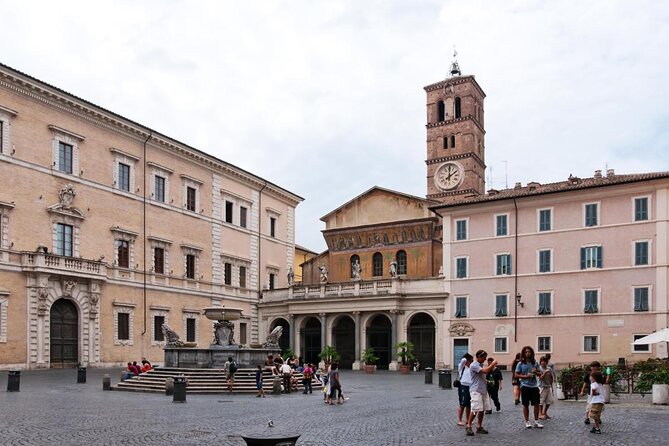
Trastevere is the kind of Rome neighborhood where you can slow down. For this class, that matters. You’re not just passing through sights—you’re settling into a working studio environment for a focused block of time, away from the loud rush of the city streets.
Inside, the workshop is set up so you can create something you’ll actually keep. Roman mosaics are everywhere in Rome’s churches and public spaces, and it’s easy to appreciate them from a distance. Doing the hands-on work changes what you notice. You start seeing the craft: the planning behind the pattern, how tiny decisions affect the final look, and why each tile matters.
I also like that the class is small. With a maximum of 6 participants, the instructor can keep an eye on your placement and help before mistakes pile up. That’s a big deal in a craft like this, where timing and technique affect the end result more than you’d expect.
The vibe is practical and friendly, not precious. Even if your hands aren’t used to detail work, you’ll still have a path to something you can be proud of.
You can also read our reviews of more tours and experiences in Rome



Meet at Via Corsini 8 and get oriented fast
You’ll meet at Via Corsini, 8, 00165 Roma RM. The good news is that it’s set up to be straightforward: the activity starts there and ends back at the same point.
Once you arrive, you’ll get your bearings quickly. From the start, you’re working toward one goal: selecting a design, choosing materials, and getting your mosaic assembled during the session. You’re not waiting around for long explanations, and you’re not expected to arrive already knowing how to cut or place anything.
This matters for time and energy. A three-hour workshop is not a whole-day project. So the class structure is built to get you moving: pick your layout, pick your stones, then learn the steps you’ll use repeatedly while you build.
One small consideration: the pace can feel a bit technical early on. If you’re the type who likes instant results, give yourself permission for a learning curve. Your first placements may look rough—then suddenly they start looking like a mosaic.
Choosing your pattern and colors (your mosaic, but with guidance)
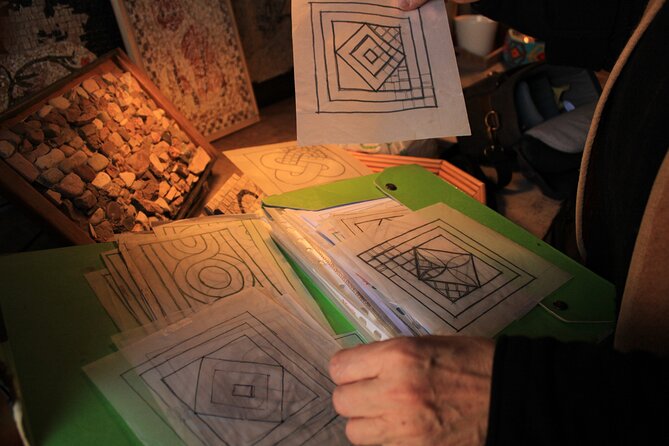
The most important part of the design stage is that you don’t start from a blank page. You choose from a set of patterns/layouts, and then you personalize with your own stone selections and colors.
In at least one class experience, the pattern menu was large—around 20 options—so you can still find something that matches your taste. That selection step is also a helpful way to manage complexity. Mosaics look simple when they’re framed behind glass or mounted in a church. Up close, they’re math and patience. Starting from an organized layout keeps you from getting overwhelmed.
Once you’ve picked a pattern, you’ll decide what stone colors to use. This is where your mosaic starts to look like you. Different stones create different vibes. Some colors feel softer; some feel punchier. And because you’re choosing the palette, you get a souvenir that doesn’t look like everyone else’s.
If you were hoping to invent a totally freehand design, adjust your expectations: the class is built around set layouts. That doesn’t reduce the fun—it just keeps the workshop doable in the time you have.
The real work: cutting, gluing, and setting tiles
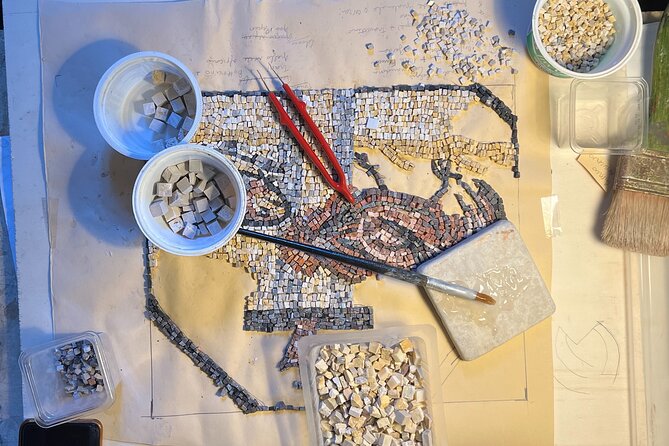
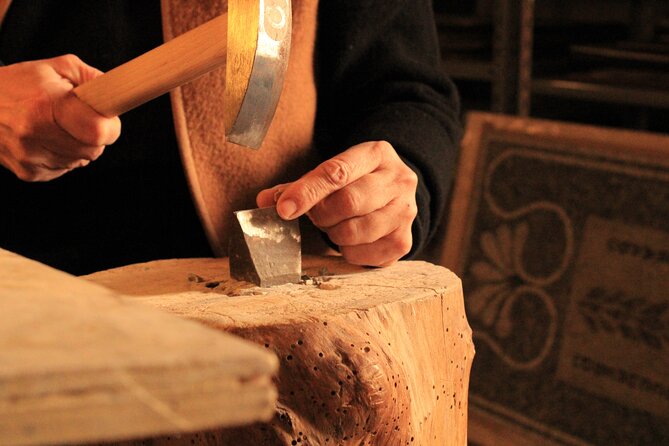
This is where the class earns its reputation. You’ll learn techniques from the instructor as you work, step by step. The process typically includes choosing materials, then cutting stones, gluing them in place, and building up your piece until it’s ready to be finalized and packed.
A big detail: mosaic work uses your forearms. It’s not just fine motor control from your fingers. When you’re cutting and positioning, you’ll feel it in your arms and wrists. Plan to take it slow at first and focus on accuracy, not speed.
Here’s what you’ll likely notice as you go:
- Early on, the instructor helps you place tiles so lines and shapes read clearly.
- As you gain comfort, the work becomes more satisfying. You start seeing the pattern take form instead of just sitting in pieces.
- Some tiles and elements are easier than others, depending on the shape and design.
Also, don’t expect it to look perfect immediately. Mosaic crafting rewards incremental improvement. The class is built for that. Nadia’s style is patient—she works with you until you get the hang of it, not until you rush through it.
Even when language is a challenge, the teaching doesn’t stop. One helpful approach noted in similar sessions: Nadia used Google Translate to communicate and pass knowledge more clearly. In a workshop like this, visuals and demonstrations carry a lot of weight anyway.
Taking your mosaic home: the travel-ready box
One of the best parts of this experience is how it ends. Your mosaic isn’t just thrown into a bag. It’s packaged in a box you can take with you, so you don’t have to solve the fragile-souvenir problem yourself.
This is a big value point for the price. Art classes in Europe can be great, but if your finished piece has no safe way to travel, you lose the payoff. A proper box turns the workshop into a true keepsake instead of a temporary craft project.
Packing also changes how you treat the work at the end. You’ll likely spend the last stretch focusing on completion and readiness, knowing you’ll walk out with something you can actually keep in your life—on a shelf, in a home office, or as a conversation starter when friends ask what you did in Rome.
And yes, you’ll appreciate the lesson of how much care goes into transport once you see how expert packing protects the work.
You can also read our reviews of more tours and experiences in Rome





Small group energy: up to 6 people and real help
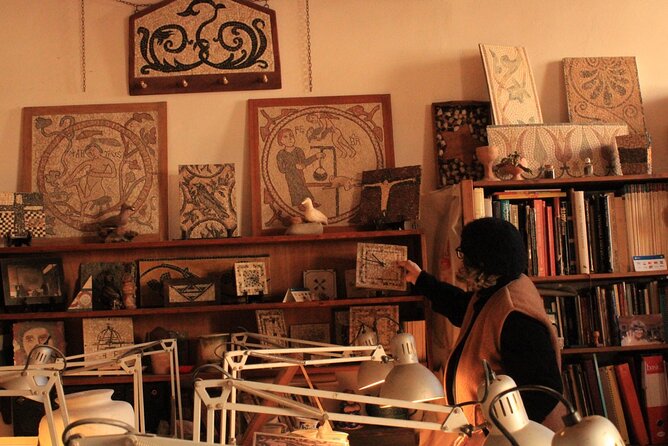
With a max group size of 6, the workshop feels personal. You’re not waiting for long stretches while the instructor handles other people’s questions. That matters when you’re learning a hands-on craft where timing and tiny adjustments make a difference.
It also makes the room calmer. You can concentrate without the usual workshop chaos. The class gives you quiet, focused time to learn while still being social enough to enjoy the experience with others.
The English component is “offered,” but you should know the reality. Nadia’s English can be limited, and she may use translation tools. Don’t let that scare you off. If you can follow visuals and ask questions, you’re fine. The instructor’s process is designed to teach the technique, not just explain it with words.
Bottom line: if you like hands-on activities and you want a souvenir tied to a real skill, the small group setup is a strong match.
Price check: is $168.67 worth it?
At $168.67 per person for about 3 hours, this class isn’t a budget craft. But it also isn’t a quick demo.
You’re paying for:
- expert instruction from a practicing artist (Nadia)
- tools and materials used during the session
- a complete guided process, not just sitting at a table picking colors
- a take-home result that’s boxed for travel
- a small group size, which usually means more individualized help
If you’ve spent money on museum tickets without coming away with something you made, this is a smart alternative. It’s also a good add-on earlier in your trip. Once you know what goes into cutting, placing, and setting tiles, you’ll notice mosaics in churches and public spaces with better eyes.
For couples, this often works well too. You get a shared project, a clear timeline, and a finished product that marks the day.
Is it worth it for everyone? Not if you’re allergic to craft work or you hate learning curves. But if you’re okay with a little mess, tired forearms, and a learning process, it’s a high-quality use of time in Rome.
Who this mosaic workshop is best for
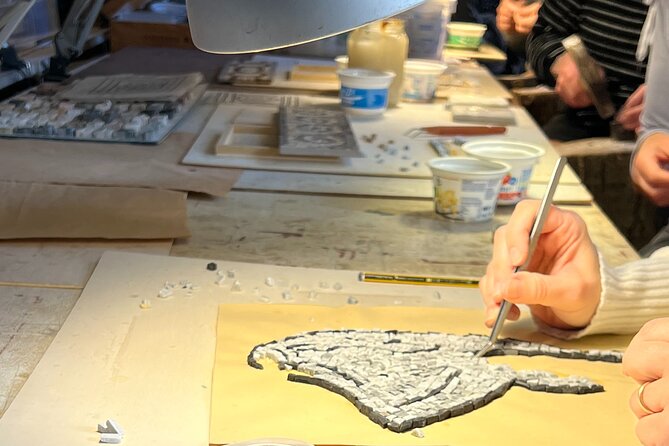
This experience is ideal for people who want a break from walking. You still get Roman culture, but you do it by making something rather than only looking at it.
It’s especially good if you:
- want a hands-on activity that results in an actual keepsake
- like art, design, and detail work (even if you’re not an artist)
- want a class with a small group and steady guidance
- can tolerate that it’s a technical craft and takes practice
It may not be the best fit if you:
- need a totally hands-free, relaxing activity where you do minimal physical work
- expect to invent a brand-new original design from scratch
- want guaranteed fluent English from the instructor (English is offered, but translation may be used)
If you fall in the first group, you’ll probably leave feeling like you unlocked a different way to read Rome’s mosaic artistry.
Practical tips to make the class smoother
A few simple things will help you enjoy the workshop more.
Wear clothing you don’t mind getting dusty or slightly messy. Even with careful setups, mosaic work is tactile and hands-on.
Arrive ready to focus for a solid block of time. This isn’t a photo-stop. It’s a making session.
Bring patience for the first part. You might feel awkward when you start cutting and placing. That’s normal. The instructor’s job is to help you adjust technique so your piece improves as you go.
Also, plan your day so you don’t feel rushed afterward. Your mosaic will be boxed for travel, but you’ll still want time to store it safely and keep it from becoming an afterthought.
Should you book 3 Hours Mosaic Workshop in Trastevere?
I think this is worth booking if you want a Roman souvenir that isn’t just a postcard. The combination of expert guidance (including Nadia), a guided process you can actually complete in about 3 hours, and a travel-ready boxed result makes it a strong value.
If you’re on the fence, ask yourself one question: do you want to create something and learn a craft for real? If yes, go for it. If you want passive sightseeing only, choose a museum day instead.
One last reason to choose it: mosaics are everywhere in Rome, but you often only understand them after you’ve worked with the process. This class is one of the most satisfying ways to turn those church-floor details into something you genuinely understand.
FAQ
How long is the mosaic workshop?
The workshop is about 3 hours. The making time is described as around 2 to 3 hours, in a studio in Trastevere.
Where do I meet for the class?
You meet at Via Corsini, 8, 00165 Roma RM, Italy. The activity ends back at the meeting point.
Is the class taught in English?
English is offered. The instructor may have limited English, but the teaching is guided step by step and communication can include translation support.
What will I make, and can I take it home?
You’ll create your own mosaic during the workshop. Your mosaic is packaged in a box so you can carry it with you.
How big is the group?
The class has a maximum of 6 travelers, which keeps the workshop experience more personal.
What do I get after booking?
You receive confirmation at the time of booking, and you’ll have a mobile ticket.
Are service animals allowed?
Yes, service animals are allowed.
Can I get a full refund if I cancel?
Yes. Free cancellation is available if you cancel up to 24 hours in advance for a full refund.