REVIEW · ROME
Trastevere, the neighborhood of the first Christians
Book on GetYourGuide →Operated by Vitus · Bookable on GetYourGuide
First Christians, right in the streets of Trastevere. This 3-hour walk connects the 1st-century roots of Christianity to the Rome you can see today, with stops at Basilica di Santa Maria in Trastevere and Chiesa del Gesù plus views around the river.
I especially like two things. First, the guide turns big ideas into a clear, human timeline of the early Christian community in Rome. Second, the route mixes Trastevere and the Jewish Ghetto, so you’re not just looking at famous buildings, you’re also seeing how neighborhoods fit into the story.
One consideration: it’s a walking tour with moderate walking, and you’ll be on your feet for a few hours. Plan for comfortable shoes, bring water, and if mobility is an issue, you may want to think carefully since the experience isn’t ideal for everyone.
In This Review
- Key things I’d count on
- Trastevere: where Rome’s earliest Christians took root
- Starting at Basilica di Santa Maria in Trastevere
- Trastevere and the Jewish Ghetto: history you can walk through
- Tiber Island and Portico d’Ottavia: a broader Rome view
- Chiesa del Gesù: baroque drama after the early story
- Campo de’ Fiori finish: turn history into a real evening
- Price and value for $46 in 3 hours
- Who this tour fits best (and who should think twice)
- Small practical tips that make a difference
- Should you book this Trastevere and first Christians tour?
- FAQ
- How long is the tour?
- What does the tour cost?
- Where does the tour start?
- What are the main places you visit?
- Is the tour offered in English?
- Are meals included?
- Is flash photography allowed?
- Is the tour wheelchair accessible?
Key things I’d count on
- A tight, 3-hour route that hits the key Christian sites in this part of town without dragging
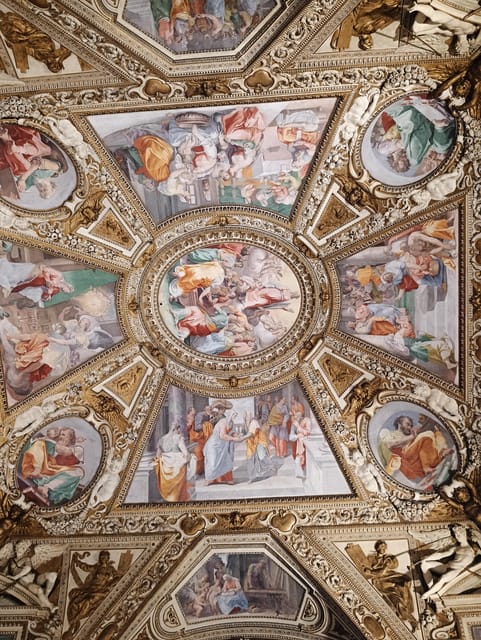
- Santa Maria in Trastevere as the anchor stop, with lots of context (not just architecture talk)
- Trastevere and the Jewish Ghetto in the same walk, so the setting makes sense
- Tiber Island and Portico d’Ottavia for a change of pace and a broader view of Rome
- Chiesa del Gesù’s baroque contrast to the early Christian story
- A fun finish in Campo de’ Fiori with street artists and lively cafés
Trastevere: where Rome’s earliest Christians took root
Trastevere is one of those neighborhoods where time feels layered. You’re walking through small streets and viewpoints that still match the general feel of old Rome, but you’re also hearing how people moved, worshiped, and organized themselves long before the city became the postcard Rome most people picture.
This tour is built around that idea: early Christianity isn’t treated like a distant concept. It’s presented as something that grew inside Rome’s real communities, including the Jewish quarter nearby. And that matters. If you only focus on churches, Christianity can feel like a set of impressive buildings. When you include the neighborhoods, it feels more like a lived community story.
You can also read our reviews of more tours and experiences in Rome.



Starting at Basilica di Santa Maria in Trastevere
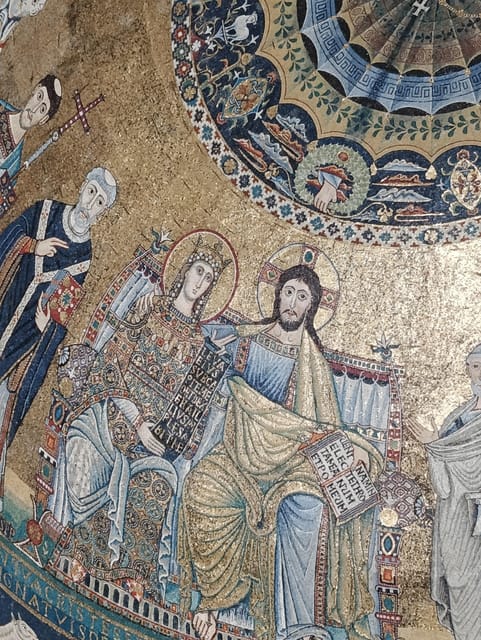
You begin in front of the Basilica of Santa Maria in Trastevere, in the area often associated with art and local life. The guide starts you with the essentials—what made this spot important and why it’s linked to the very early Christian presence in Rome.
What I like here is that Santa Maria isn’t treated as a “look up at the facade” stop. You’re guided through the meaning behind what you see, with a pace that keeps you oriented without rushing. The tour also connects the church to the wider narrative you’ll keep hearing as you move through the neighborhood.
A bonus on this kind of visit is that the guide may point you toward details that don’t come up in a typical quick stop. One of the strongest mentions is how the tour brings attention to archaeology and layered history under/around the church area, the kind of thing that can feel startling when it’s explained clearly.
Practical tip: this is an indoor/outdoor mix, so bring sunglasses or a hat if the sun is strong. You’ll also want your camera ready, but remember flash isn’t allowed inside certain attractions.
Trastevere and the Jewish Ghetto: history you can walk through
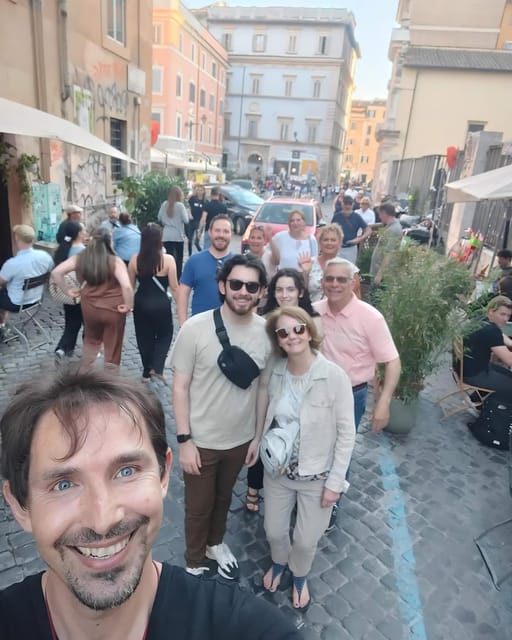
After Santa Maria, the tour shifts into neighborhood mode. Trastevere becomes your classroom—streets, viewpoints, and local streetscapes used to explain where early Christians settled and how the community took shape in the 1st century.
What makes this part work is the balance. You’re not only hearing Christian history. You’re also hearing about the proximity to the Jewish quarter and how that relationship helps you understand the setting. Rome didn’t exist in sealed-off compartments. People lived near each other. Ideas traveled. That’s the feeling you get as the guide links sites to the broader story of the first Christian community.
The Jewish Ghetto portion is especially valuable for first-time visitors, because it gives you a sharper sense of what “neighborhood history” really means. The goal isn’t to turn it into a museum lesson. It’s to help you read the city’s geography: why certain areas mattered, and how communities formed in close physical space.
One more thing I appreciate: the tour is led by an English-speaking guide, and names that come up often include Ilaria and Fiona. In both cases, the emphasis is on lively explanation and answering questions, which helps when you run into terms like early Christian community, first-century Rome, or church history that you might not expect to meet on a walking tour.
Tiber Island and Portico d’Ottavia: a broader Rome view
Then you cross the storyline from neighborhood faith to city geography. The tour includes Tiber Island, which is one of those spots where your brain automatically wants to zoom out. It’s a natural way to understand Rome as a river city—trade routes, crossings, and the kind of movement that shaped daily life.
From there, the walk brings you toward Portico d’Ottavia. This is a moment where the tour quietly does something smart: it shows you how Christian history sits inside a much older urban fabric. Even if you came for Christianity, you end up with a sense of how Roman life worked around public spaces and structures that predate the churches.
The drawback here, if there is one, is that this section is more about orientation and context than dramatic “wow” monuments. If you want only big-ticket sights, this is a gentle intermission. But if you want the story to make sense, this is where the tour earns its keep.
Chiesa del Gesù: baroque drama after the early story
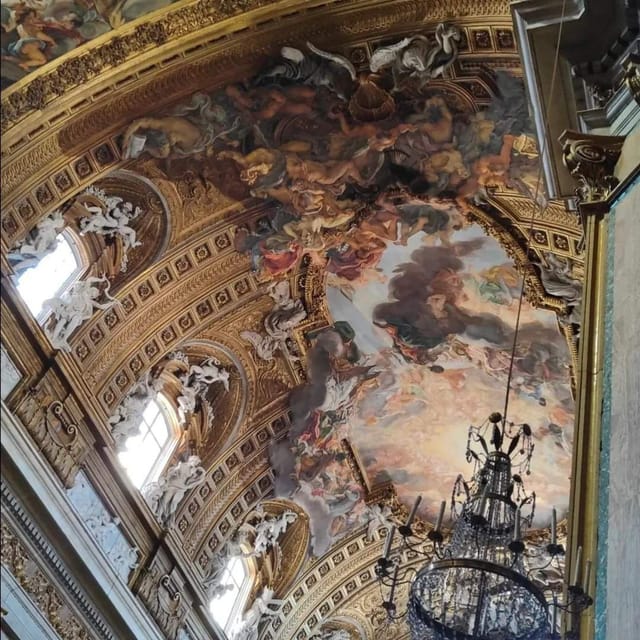
Next is Chiesa del Gesù, and it plays an interesting role in the pacing. After the early Christian setting and neighborhood context, the baroque style hits like a contrast filter. The guide focuses on the baroque feel of the church of Jesus, giving you a sense of how later eras expressed faith in a very different visual language.
This is one of those stops where it helps to have narration. Without explanation, baroque church details can blur together. With a guide, you’re more likely to notice why certain elements were used, and what the design communicates.
Also, this is where you’ll want to pay attention to photography rules. The tour notes that flash photography is not allowed inside certain attractions. So set up for normal light photos, and consider taking a slow look with your eyes first. Baroque interiors reward that.




Campo de’ Fiori finish: turn history into a real evening
The tour ends in Campo de’ Fiori, a square that’s popular with locals and visitors alike. You’ll find street artists, live music, and plenty of cafés nearby, which makes it an easy place to turn your history walk into an actual plan for the next hour or two.
This ending is practical. You don’t get stuck at some remote landmark with no nearby options. Instead, you land in a lively public space where you can grab a drink, refuel, or just wander while the story is fresh in your head.
Just keep in mind it can be busy. If you’re sensitive to noise, think about timing your meal right after the tour or stepping out to a quieter side street for a breather.
Price and value for $46 in 3 hours
At $46 per person for about 3 hours, the value comes from two things: you’re paying for a guided narrative and a route that links multiple neighborhoods and religious sites.
If you were to try this on your own, you’d likely hit Santa Maria, maybe another major church, and then call it a day. The difference here is the connections: early Christianity in the 1st century, the neighborhood context in Trastevere, and the proximity to the Jewish Ghetto. That’s exactly the stuff that requires explanation to really click.
You also get a structure that keeps the walking efficient. The tour includes a guided walk through the Trastevere area, time around Tiber Island, and a guided visit to Chiesa del Gesù, with the day ending somewhere you can keep going without planning your next move.
What’s not included is also important for budgeting: meals and drinks aren’t part of the price, and you’ll need to handle transportation to and from the start on your own. The tour does mention you’ll have opportunities to buy food during the outing, though, so it’s not a problem if you eat before or after.
Who this tour fits best (and who should think twice)
This is a great fit if you want:
- A walking tour that mixes church history with neighborhood context
- A clear focus on early Christianity in Rome, especially tied to Trastevere
- An English guide who answers questions and explains sites in plain terms
- A route that ends in a lively area where you can keep your evening flexible
It may be less ideal if:
- You need something with minimal walking. Even with moderate pacing, you’re on your feet for 3 hours.
- Mobility is a major challenge. The activity notes wheelchair accessibility, but it also says it’s not suitable for people with mobility impairments. If you’re unsure, I’d treat that as a strong warning to ask questions before booking.
Small practical tips that make a difference
- Wear comfortable walking shoes. This is a neighborhood walk, not a bus tour.
- Bring a hat, sunscreen, and water. The tour notes you’ll want hydration and sun protection.
- Plan for weather. Rome changes fast, and you’ll be walking outside.
- If you’re photographing, remember no flash inside certain attractions.
- If you have questions about early Christianity or how Rome’s Jewish and Christian communities interacted, bring them. The guide is set up to answer.
Should you book this Trastevere and first Christians tour?
Yes, if you want your Rome to have context. This is one of those tours where the “so what” is built in. You’re not just seeing church doors and calling it history. You’re learning how early Christianity actually sits inside Rome’s real neighborhood geography, from the Basilica of Santa Maria in Trastevere to Chiesa del Gesù, with Tiber Island and Portico d’Ottavia adding the larger city perspective.
Book it if you like guided explanations and want an efficient 3-hour route with a friendly ending in Campo de’ Fiori. Skip it only if you strongly prefer fewer stops, very short walking, or purely architectural highlights without the human timeline.
FAQ
How long is the tour?
The tour lasts 3 hours.
What does the tour cost?
The price is $46 per person.
Where does the tour start?
The meeting point is in front of the Basilica of Santa Maria in Trastevere.
What are the main places you visit?
You see Basilica of Santa Maria in Trastevere, parts of Trastevere and the Jewish Ghetto, Tiber Island (with mention of Church of San Bartolomeo), Portico d’Ottavia, and Chiesa del Gesù, and it ends in Campo de’ Fiori.
Is the tour offered in English?
Yes, the live tour guide provides English.
Are meals included?
No. Meals and drinks are not included, but there are opportunities to purchase them during the tour.
Is flash photography allowed?
Photography is allowed, but flash photography is not permitted inside certain attractions.
Is the tour wheelchair accessible?
The activity states it is wheelchair accessible, but it also notes it is not suitable for people with mobility impairments. The tour involves a moderate amount of walking, so this is worth considering carefully.