REVIEW · ROME
Trastevere Quarter and Tiberine Island Private Tour with Gelato
Book on Viator →Operated by Raphael Tours & Events · Bookable on Viator
One of Rome’s prettiest neighborhoods is Trastevere at human speed. This private walk pairs river views (via Sistus Bridge) with classic streets like Vicolo del Cinque and ends with artisanal gelato you get to sample, so you’re not just looking—you’re also tasting. I love that the tour is private, so you can set the pace on cobblestones and ask questions as you go; I also love how the guide angle can be very “history teacher” (I’ve seen guides like Thomas, Italo, Rosy, and Andrea), which makes the sights feel connected. The main drawback is that you’ll spend most of your time on foot, and depending on the day, some interiors or small sites may be closed, which can make it feel more exterior than you expected.
If you’re trying to escape the crush of central Rome, this is a smart reset. You’ll get fortification-era walls (Porta Settimiana, tied to Emperor Aurelian) and then classic devotional Rome at Santa Maria in Trastevere, one of the area’s oldest and most important churches. Just wear comfortable shoes and plan on a couple of short steps that add up.
Best moments also depend on what you care about. If your ideal Rome day is big monuments at full power, you might find this more “neighborhood + churches + gelato.” But if you want atmosphere and conversation, the format works.
In This Review
- Key highlights to know before you go
- Trastevere at walking speed: what you’ll actually experience
- Piazza San Bartolomeo all’Isola: the start point and first impressions
- Crossing the Tiber on Sistus Bridge: the scene shift
- Porta Settimiana and Aurelian’s 3rd-century walls
- The Raphael thread: Arco di Settimio Severo and street-level storytelling
- Basilica di Santa Maria in Trastevere: the church moment that anchors the walk
- The quiet lanes: Vicolo del Cinque, old walls, and everyday Trastevere
- Gelato finish: why the last stop can matter more than you think
- Price and value: is $353.27 per person worth it?
- Who should book this Trastevere and Tiber route?
- Should you book this private tour?
- FAQ
- How long is the tour?
- How much walking is involved?
- Is gelato included?
- Is this a private tour?
- Where does the tour start and end?
- What’s the cancellation policy?
Key highlights to know before you go
- Private walking pace with only your group and an English-speaking guide
- 1.5 km of walking on cobblestones, plus plenty of photo stops
- River-to-neighborhood route, starting at Piazza San Bartolomeo all’Isola and crossing the Tiber on Sistus Bridge
- Raphael-linked stops, including the Arco di Settimio Severo connection tied to his muse
- Santa Maria in Trastevere as the core church moment of the day
- Gelato is included and is treated as a major finish, not a quick afterthought
Trastevere at walking speed: what you’ll actually experience
Trastevere has a different rhythm than the Roman postcard center. On this tour, you’re not racing from one monument to the next. You’re moving through quieter lanes past colorful houses, craft shops, old bakeries, and long views along the edges of the neighborhood. That changes the whole feel of the visit: you notice details because the walking pace gives you time.
I especially like how the route keeps you close to real neighborhood life. You’ll see local corners like Piazza Trilussa (named for the famous Roman dialect poet) and you’ll pass through small lanes such as Vicolo del Cinque, which is exactly the kind of street you normally only stumble across by accident.
The tone can be very guide-driven. Some guides you may encounter bring an academic style—Thomas has been described as both an archaeologist and professor, and Rosy and Andrea also come through with strong teaching energy. That matters because churches and art references land better when someone explains how they connect.
You can also read our reviews of more private tours in Rome



Piazza San Bartolomeo all’Isola: the start point and first impressions
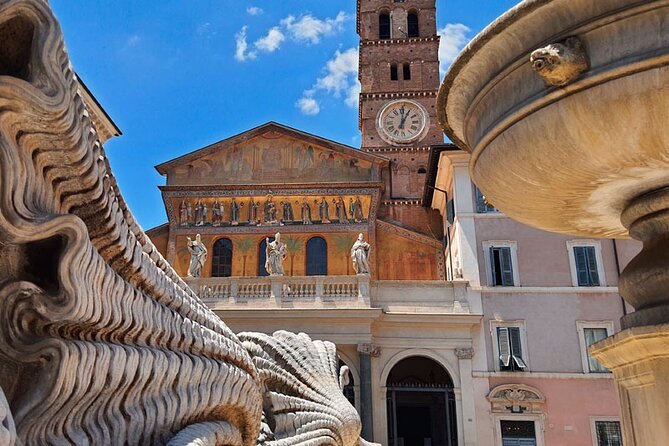
You start at Piazza San Bartolomeo all’Isola (00186 Roma RM). It’s a good way to begin because you’re already in the Trastevere orbit before the walking starts in earnest. From there, your guide leads you through the early stages of the neighborhood route so you can get your bearings fast.
This is also where timing flexibility helps. The tour offers choice of tour times, so you can pick what fits your day. That matters in Rome because you’ll often get different crowd levels and different lighting depending on when you go.
One practical note: this is a private experience with no hotel pickup or drop-off. You’ll want to build in a little time to reach the meeting point by foot, tram, or bus (public transportation is nearby).
Crossing the Tiber on Sistus Bridge: the scene shift
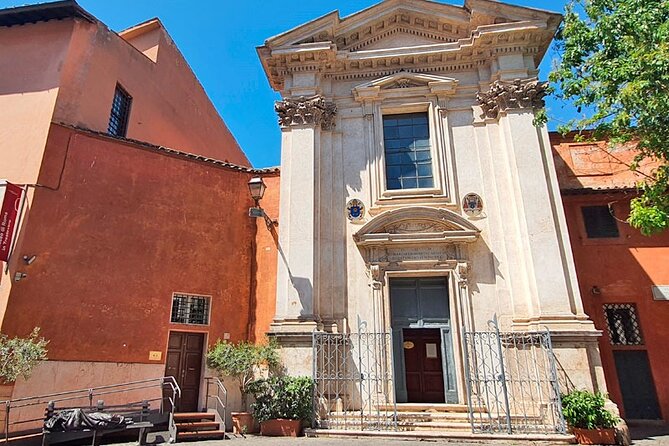
Soon after meeting, you head to Sistus Bridge to cross the Tiber. Even if you don’t consider yourself a “river view person,” crossing the river early gives you a mental reset. Rome looks different when you view it from across the water, and it sets up why the Trastevere side feels like a separate world.
From here, the walk stays intentionally grounded. You’re not sprinting to a single landmark. You’re transitioning into the fortified edge of the neighborhood, which keeps the story moving instead of stopping and starting.
If you’re bringing kids, teens, or anyone who gets restless, this early segment can help because it’s not only stone and signage. You get open sightlines, then you head back into lanes where the pace becomes slow and conversational.
Porta Settimiana and Aurelian’s 3rd-century walls
A highlight route element is a stop near Porta Settimiana, a gate in the fortified walls associated with Emperor Aurelian in the 3rd century. This is one of those Rome details that sounds niche until you see it. A gate in a wall gives you a sense of how cities were shaped to defend themselves, not just to look impressive.
I like that this tour includes defensive architecture because it balances the church focus later. You’re learning Rome as a lived-in place that had to protect itself, not just as a museum.
The trade-off is that fortification stops can be less “wow” if you’re mainly chasing interior art. You’ll see structures and context more than a grand interior. Still, the surrounding alleyways and ruins make the walls feel connected to the neighborhood rather than pasted on like set dressing.
The Raphael thread: Arco di Settimio Severo and street-level storytelling
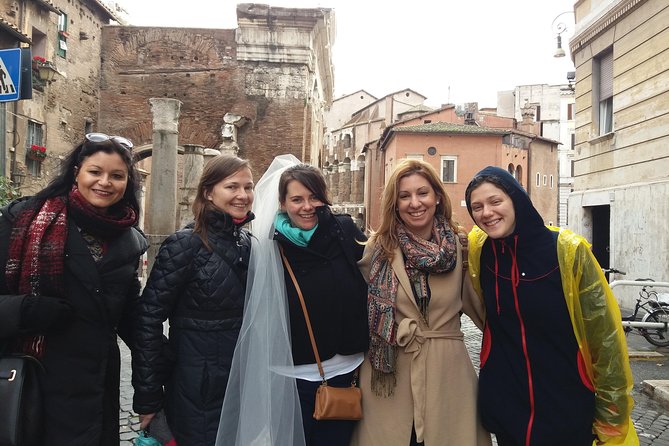
One of the more memorable segments is the Arco di Settimio Severo stop. The tour frames it with a specific story: it’s linked to Raphael the painter seeing for the first time the woman who became his muse and lover. That kind of detail turns an arch from a background object into a prompt for imagining how art and life overlapped in Rome.
Even if you don’t know Raphael well, the point of this stop is simple: the guide doesn’t treat art history as trivia. It’s used as a lens for how to look.
You’ll also move through streets that feel like they’re built for wandering, including areas tied to Palazzo San Callisto and the lead-in toward Piazza Trilussa. When the tour is run well, these pauses feel planned instead of random.
A practical heads-up: a good portion of the “Raphael thread” works best if you like stories. If you prefer facts without a narrative, just tell your guide what you want more of. Private tours let you steer that conversation.





Basilica di Santa Maria in Trastevere: the church moment that anchors the walk
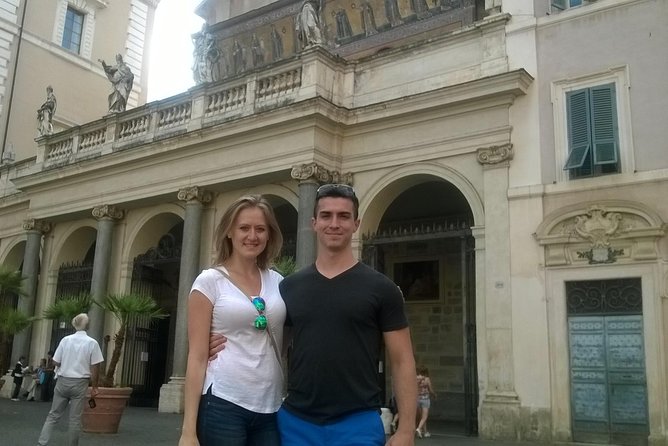
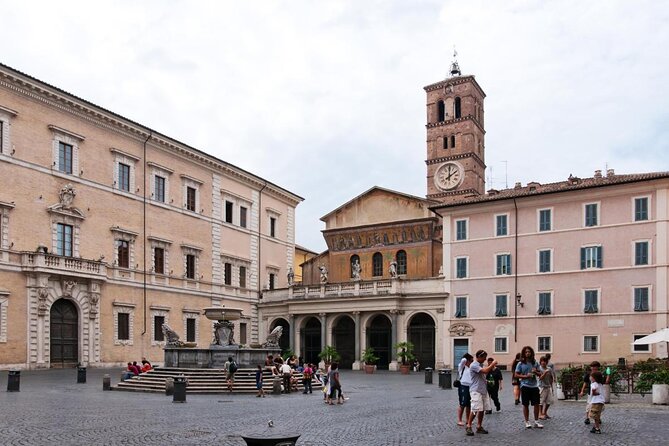
The tour’s biggest anchor is Basilica di Santa Maria in Trastevere. This is presented as one of the oldest churches in the area and the most important one in the neighborhood. It’s also described as being raised where the first Christian community used to meet.
That matters because it turns “church visit” into a time-travel feeling. You’re not only looking at architecture. You’re standing in a place tied to early Christian gathering in Trastevere. The guide’s explanations are usually what make this stop click, especially if your guide leans into teaching mode like Thomas or Rosy.
There’s a downside to know in advance: if your tour day lands on a Sunday, you may find some smaller chapels or interior access limited. That won’t ruin the walk, but it can shift the emphasis toward exteriors and neighborhood streets rather than full indoor viewing.
Also, give yourself mental flexibility. This is not a quick photo stop. Even with short views, it’s a meaningful pause in the schedule.
The quiet lanes: Vicolo del Cinque, old walls, and everyday Trastevere
Between big landmarks, the tour does what Trastevere does best: it slows you down in the lanes. Expect cobblestones, color, and the kind of old-world textures you don’t always get when you rush through the center. You’ll pass craft shops and old bakeries, plus smaller sight points and ruins that make the neighborhood feel layered.
Stops like Vicolo del Cinque and the surrounding streets help you see why Trastevere is still popular for a reason. It’s not just a “pretty district.” It’s also a place where the streets still function like streets.
If you like street art, keep an eye out. One of the most repeated positives from this style of walk is that you can spot interesting murals and contemporary touches tucked into older blocks. That mix is one reason Trastevere feels more lived-in than many other historic areas.
Gelato finish: why the last stop can matter more than you think
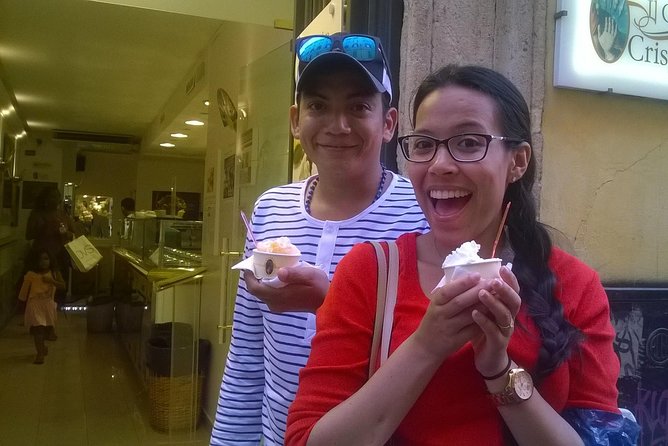
The end of the walking tour is a beloved gelateria, and this is treated as the peak payoff. You’ll stop at a gelato shop considered by some to be the best spot for Roman gelato in the area, and you get samples as part of the tour.
I like this kind of finish for two reasons. First, it gives you a concrete taste memory you can compare later, which makes the whole day feel more personal. Second, it’s a natural pause point where you can sit, talk, and let the neighborhood soak in.
Since gelato is included, it helps justify the overall cost if you were going to buy it anyway. And honestly, in a neighborhood like Trastevere, the best gelato moments often happen at the end when you’re warm, tired, and ready to enjoy something simple.
Your tour ends around Via dei Pettinari. From there, you can continue exploring on your own, or you can head toward nearby bus or taxi options with the guide’s help.
Price and value: is $353.27 per person worth it?
At $353.27 per person for an approximately two-hour private walking tour, this is a splurge compared with standard group tours. So you should only book it if the private format matches your travel style.
Here’s the value equation I see:
- You get a local guide with fluent English and private attention.
- You get artisanal gelato included, not just a suggestion.
- The route covers multiple “must-see-and-also-feel” Trastevere moments—Tiber river crossing, historic gates, key church time, and neighborhood lanes.
- You don’t pay for hotel pickup (which keeps the price tied to the experience itself).
If you’re traveling as a couple or a small group and you’ll actually use the private attention (questions, pacing, extra context), the cost starts to make sense. If you want to move fast, don’t care about guide storytelling, and only want a couple of stops, you might do better with a cheaper walking option.
One more signal: the experience averages 4.7 with 7 reviews, which suggests the guide quality and overall pace are landing well for most people.
Who should book this Trastevere and Tiber route?
This is a great match if you want:
- A neighborhood tour instead of another Roman highlight stampede
- Time with an English-speaking guide who likes teaching the details
- A church visit that’s explained, not just photographed
- An included gelato stop that’s actually part of the itinerary
It’s a weaker fit if:
- You dislike walking on cobblestones and don’t want a walking-focused day
- You want mostly open-air views with no church time
- You’re booking for a day when you strongly need interiors to be open (some smaller sites may be closed depending on the schedule)
Should you book this private tour?
Yes—if your ideal Rome day is Trastevere as a place to experience, not just a place to check off. The biggest reason to book is the combination of private guiding plus a route that mixes Tiber river context, historic walls, key Trastevere sights, and a gelato finish that’s genuinely part of the fun.
If you’re unsure, do this simple test: ask yourself whether you’d rather spend two hours being guided through alleyways and churches—or spend those two hours grabbing a fast bus ride and doing on-your-own photos. This tour wins when you want the first option.
FAQ
How long is the tour?
The tour runs for about 2 hours.
How much walking is involved?
Expect approximately 1.5 km of walking, and you’ll be on paved streets with cobblestones.
Is gelato included?
Yes. The tour includes artisanal gelato, and samples are part of the experience.
Is this a private tour?
Yes. It’s private, meaning only your group participates.
Where does the tour start and end?
It starts at Piazza San Bartolomeo all’Isola and ends at Via dei Pettinari.
What’s the cancellation policy?
You can cancel for a full refund up to 24 hours in advance. If you cancel less than 24 hours before the start time, the amount paid is not refunded.