REVIEW · ROME
Trastevere & Campo de’ Fiori Street Food Tour, Eat Like a Local
Book on Viator →Operated by Hili Travel s.r.l. · Bookable on Viator
Rome tastes best on foot. This Trastevere & Campo de’ Fiori street food walk turns a hungry plan into a real neighborhood route, with small-group guiding and gelato baked into the deal. I also like how the route mixes classic market stops with quieter backstreets, so you’re not just eating—you’re understanding where Rome’s flavors show up.
One clear catch: this tour is not for celiacs, so if you need gluten-free meals, you’ll have to plan a different option.
In This Review
- Key highlights you’ll care about
- Trastevere and Campo de’ Fiori: A food route that actually feels local
- Start at Piazza di San Simeone for the tour’s Rome vibe
- Via del Governo Vecchio: the scenic street you’ll want to revisit
- Campo de’ Fiori: market aromas, local condiments, and that early energy
- Ponte Sisto: a bridge break with skyline views
- Trastevere alleys: where the heart-of-Rome feeling turns real
- Basilica di Santa Maria in Trastevere: the fountain legend stop
- What you’ll likely taste: pizza, pork, sweets, and gelato
- Guide power: when the walk becomes a story you can use
- Duration and walking pace: 2.5 hours is real time on your feet
- Group size and the value of getting questions answered
- Price check: is $53.23 a good deal?
- Who should book this street food tour (and who might skip it)
- Should you book it?
- FAQ
- How long is the Trastevere & Campo de’ Fiori Street Food Tour?
- What’s included in the price?
- Is the tour available for celiacs or gluten-free travelers?
- How many people are in the group?
- What language is the tour offered in?
- Where do you meet and where does the tour end?
Key highlights you’ll care about
- Small-group size (max 14) keeps it personal and helps you actually hear your guide
- Food tastings plus gelato included means you can budget without hunting for dessert
- Campo de’ Fiori morning market setting gives you a true local-food backdrop
- Ponte Sisto bridge viewpoints add a scenic reset between tastings
- Trastevere alley walking is the whole point, so wear shoes you trust
- English-speaking guide keeps the food stories clear and practical
Trastevere and Campo de’ Fiori: A food route that actually feels local

This is a walking food tour with a simple promise: you’ll eat your way through two Roman neighborhoods, with stops that fit the neighborhoods’ rhythm. Campo de’ Fiori brings the morning market energy. Trastevere brings the older-streets, evening-out vibe—tight lanes, real storefronts, and the feeling that the city lives right here, not in a postcard.
The best part for me is the pacing. You’re not sprinting from one photo spot to the next. You’re moving, pausing, tasting, and getting enough context that each bite makes sense. And because the group is capped at 14, you’re less likely to feel like a faceless number.
You can also read our reviews of more food & drink experiences in Rome

Start at Piazza di San Simeone for the tour’s Rome vibe
Your tour meets at Piazza di San Simeone, by the fountain (Fontana di Piazza San Simeone). It’s a good “warm-up” meet point: you can look around, take in the square, and get your bearings fast.
Right away, you get the feel of how the guide will work the walk—short orientation, then movement. If you’re the type who likes to understand a city while you’re walking through it, this opening helps you settle in instead of waiting for the food to start.
Practical note: since the whole thing is on foot, comfortable shoes matter from minute one. Rome can be charming and still punish your sneakers.
Via del Governo Vecchio: the scenic street you’ll want to revisit
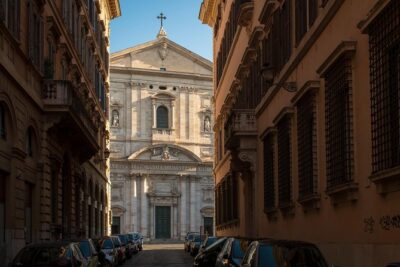
After the initial square stop, you’ll walk along Via del Governo Vecchio, described as one of Rome’s most picturesque streets. That matters because this tour isn’t only about eating. It’s about walking through the city in a way that makes the neighborhoods feel lived-in.
This stretch is also a nice “transition” moment. You’re moving from the opener into the market area, so it keeps the momentum without feeling rushed. If you like wandering, you’ll appreciate this kind of route—it’s the kind of street you might miss if you only follow the biggest sights.
Campo de’ Fiori: market aromas, local condiments, and that early energy
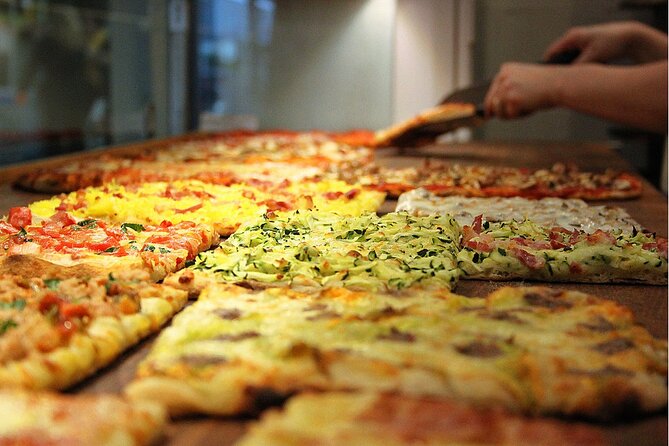
Then comes Campo de’ Fiori, home to the oldest market of Rome (open in the morning). This is where the tour earns its name: street food and market culture are the same story told in two different ways.
Here’s what you can expect in spirit: you’ll see the market setting, then sample items that fit the place. In past tastings, people have mentioned everything from market condiments to classic bites like suppli-style snacks. Even if the exact items vary day to day, the takeaway doesn’t change—you’re getting food you’d realistically encounter while walking and shopping.
One small consideration: market days can be lively and busy near the stalls. That’s normal here. If you’re sensitive to crowds, plan to arrive with patience and a calm pace.
Ponte Sisto: a bridge break with skyline views
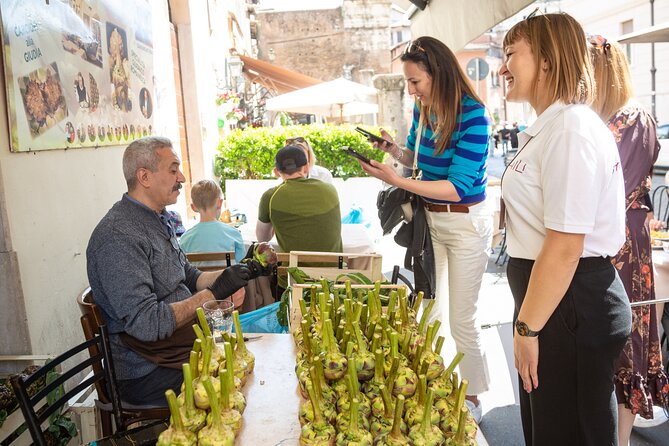
Next, you’ll cross to Ponte Sisto, one of the most popular bridges over the Tiber. This stop works as a reset. You’re trading food-and-street noise for a view, including a perspective toward St. Peter’s and Rome’s skyline.
It’s also a smart tour design move. After tasting and walking through dense streets, you get open sightlines and a breather. Even if you don’t consider yourself a view person, you’ll probably appreciate the pause.
You can also read our reviews of more tours and experiences in Rome





Trastevere alleys: where the heart-of-Rome feeling turns real
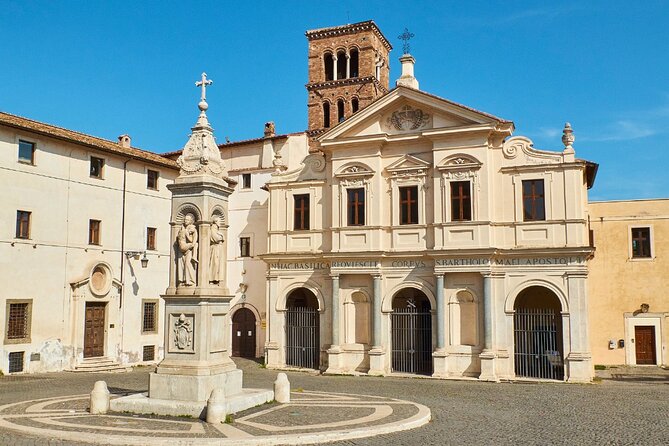
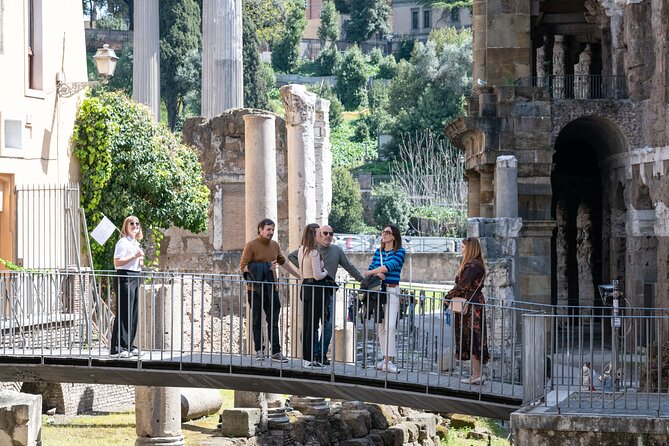
Now you step into Trastevere, on the west side of the Tiber, south of the Vatican area. The tour describes it as a place that’s kept its authentic charm—old streets, architectural layers from different periods, and that “movie set” feeling when you wander too far down a lane to turn around.
You’ll walk with your guide through the neighborhood’s intricate alleys and side streets. This is the part of the experience that’s easiest to underestimate. It’s not a quick loop. You’re meant to feel how Trastevere moves—slow enough to notice details, but purposeful enough to keep the food route flowing.
This is also where guide personality matters a lot. Different guides bring different styles of storytelling. Names that come up in people’s experiences include Silvia, Emilia, Leonardo, Daniele, Alessandra, Gabrielle, Alex, Anna, and Tiziana. The common thread in those accounts is that the guide doesn’t just point. They explain how to see the neighborhood.
Basilica di Santa Maria in Trastevere: the fountain legend stop
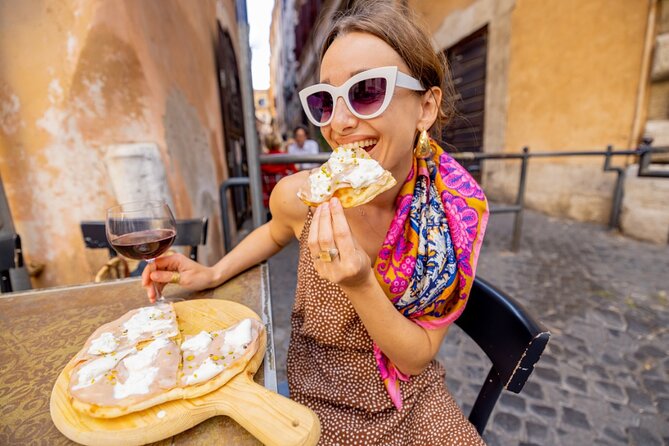
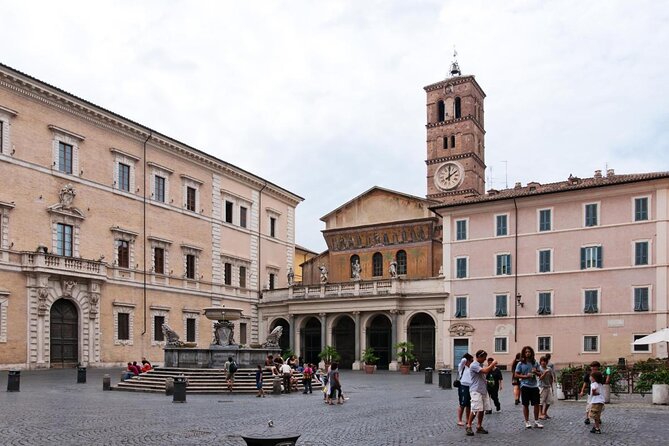
A big landmark stop follows: Basilica di Santa Maria in Trastevere. Right near it is the fountain in Piazza Santa Maria in Trastevere, surrounded by legend. Tradition says it’s the oldest fountain in Rome, dating to the 8th century, even if the exact construction date isn’t known. There’s also an old reference: it appears on a city map from 1471 by Pietro del Massaio, and that early drawing shows two basins pouring into a lower one.
Why include a fountain legend on a street food tour? Because Roman food culture is inseparable from Roman daily life—public spaces, fountains, and neighborhood stories. Even when you’re eating, you’re learning how the city shares water, space, and tradition.
If you like trivia that actually connects to the physical city, this stop delivers.
What you’ll likely taste: pizza, pork, sweets, and gelato
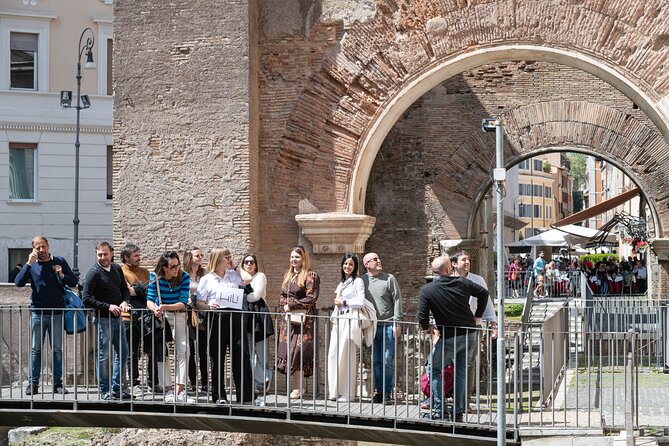
The tour includes food tastings and gelato. Drinks are not included, so if you like sipping while you eat, you’ll want to plan to buy water or a drink on your own.
People have talked about a range of Roman street-food classics on this route, including:
- suppli-style snacks (fried rice with a melty inside)
- lemoncello samples (served as part of the food stopping rhythm)
- Roman-style pizza, sometimes in multiple flavors
- pork sandwiches (porchetta-style)
- marritozza (a sweet bread often filled with cream)
- gelato as the finishing note
A quick heads-up from one cautionary experience: one of the stops can feel more retail-facing than “food culture museum.” If you’re hoping for only the smallest, oldest, least-touristy places, manage expectations. Still, the pizza stop tends to get singled out as a strong point.
Guide power: when the walk becomes a story you can use
The tour’s “top rated tour guide” promise shows up in a simple way: you’ll get food plus context. Many guides focus on what you’re eating and how it fits Roman habits—how Romans snack, how they order, what you’re seeing around you, and where to go next.
You’ll also get practical help beyond the tastings. Several guide experiences mention that the guide gave personal recommendations for later in the trip—places to eat and ways to avoid tourist traps. That’s not a small bonus. If you’re only in Rome for a few days, one great recommendation can save you money and time later.
Still, let’s be honest: not every day hits the same “education depth.” One experience described the tour as more light on food history and food culture explanation. So if you want heavy academic-level food anthropology, you might find this varies with guide style. The upside is that the tasting portion stays consistent with the tour’s core value.
Duration and walking pace: 2.5 hours is real time on your feet
The tour runs about 2 hours 30 minutes. That’s long enough to feel full by the end, but not so long that you’re trapped in a marathon. The key is that it’s a walking tour, with multiple stops.
Why this matters for you:
- If you’re prone to blisters, bring a plan (Band-Aids help).
- If you take photos constantly, you’ll need a little extra patience. The tour is built for walking and tasting, not for an hour of staring upward.
Most people can participate, and it’s near public transportation, which helps if you need to reset before or after.
Group size and the value of getting questions answered
With a maximum of 14 travelers, this tour stays in that sweet spot between personal and social. You’re not fighting for attention at each stop. That’s how you get useful answers—questions about what you’re eating, how Romans typically eat it, and what to do next.
This also makes the tour feel more like a group outing with a local guide rather than a conveyor belt. If you prefer asking “why is that made this way?” questions, this structure helps.
Price check: is $53.23 a good deal?
At $53.23 per person, you’re paying for guide time plus multiple food tastings and gelato. Drinks are not included, so don’t treat the price as an all-in bar bill.
Is it good value? I think it is if you line it up with your goals:
- If you want a mix of neighborhoods without planning each stop yourself, the guide time is worth it.
- If you’d normally spend this amount on eating in Rome without context, tastings plus gelato add up fast.
- If you’re planning your whole trip around maximizing your “first-week” knowledge, it can be a helpful way to get local recommendations.
One more angle: the tour is booked about 51 days in advance on average, which usually signals that people find it in-demand. If you’re traveling in peak periods, booking earlier protects you from sold-out schedules.
Who should book this street food tour (and who might skip it)
This tour fits you if:
- You like walking through real neighborhoods, not just major sights.
- You want a guided food sampler with gelato included.
- You like learning while you eat, especially when the stories connect to what you see outside the window.
You might think twice if:
- You have celiac disease or need gluten-free meals (this tour cannot be done for celiacs).
- You’re specifically seeking a deep, uninterrupted food-education class. Some guide styles may focus more on tastings than food culture lectures.
- You hate retail-like tasting stops. One experience described a more touristy limoncello shop feel, where purchases seemed part of the rhythm.
Should you book it?
Yes, if your ideal Rome day includes walking, eating, and leaving with a short list of where to eat next. The strong points are the small-group feel, the included gelato, the market-to-neighborhood route, and the way many guides bring personality—sometimes funny, sometimes story-heavy, often practical with recommendations.
If you’re gluten-free, skip it. If you want food history in lecture form, pick a different kind of food experience. But if you want a smart, guided way to taste Rome while seeing Trastevere and Campo de’ Fiori in motion, this is a very reasonable place to start.
FAQ
How long is the Trastevere & Campo de’ Fiori Street Food Tour?
It lasts about 2 hours 30 minutes.
What’s included in the price?
Food tastings and gelato are included. Drinks are not included.
Is the tour available for celiacs or gluten-free travelers?
No. The tour cannot be done for celiacs.
How many people are in the group?
The tour has a maximum of 14 travelers.
What language is the tour offered in?
The tour is offered in English.
Where do you meet and where does the tour end?
You meet at Piazza di San Simeone (Piazza di S. Simeone, 00186 Roma) and the tour ends at Piazza di San Giovanni della Malva (00153 Roma).