REVIEW · COLOSSEUM
Best of Colosseum Experience: Exclusive Tour in 40 Languages
Book on GetYourGuide →Operated by VEDITALIA · Bookable on GetYourGuide
Rome’s biggest arena needs less waiting. This skip-the-line tour gets you into the Colosseum, Roman Forum, and Palatine Hill with expert storytelling, and it can add AI Real-Time Multilingual Translation for a smoother experience across many languages.
I really like the pacing here: you spend real time inside the Colosseum and still have guided stops on Palatine Hill and the Roman Forum, where you connect the myths to the stone you can actually see. One drawback to keep in mind is the time box: it is a 3-hour tour, so you get a strong highlight run rather than a slow, linger-everywhere day.
Key things to know before you go
- Skip-the-line entry uses a separate entrance, so you do not lose your morning to queues.
- Guided stops are tight: about 1.5 hours at the Colosseum, then 45 minutes at Palatine Hill, then 45 minutes for Via Sacra and the Roman Forum.
- AI translation is optional and works with an earphone-based narration system you rent for your language.
- Small group size (up to 20/25) keeps the tour from turning into a school-bus shuffle.
- Bring passport or ID because it is mandatory for entry.
In This Review
- Entering The Colosseum Without the Queue Headache
- Inside the Colosseum: Gladiator Rooms, Animals, and the Shape of Power
- Palatine Hill: The Myth of Romulus and Remus Plus the Best Views
- Via Sacra and the Roman Forum: Where You Can Still Feel the Arguing
- AI Real-Time Translation: Making Rome Understandable in Your Earphones
- What the Tour Feels Like: Timing, Group Size, and Walking Reality
- Price and Value: Is $45.55 Really Fair for 3 Hours in Rome?
- Who Should Book This Colosseum-Forum-Palatine Tour
- Quick Heads-Up Before You Go: The ID Rule
- Should You Book It?
- FAQ
- Is a passport or ID required?
- How long is the tour?
- What stops are included?
- What does skip-the-line mean here?
- How big is the group?
- Do I get audio help during the tour?
- Is the AI translation available in many languages?
- Where do I meet the guide?
- Is food included?
- Is the tour wheelchair accessible?
Entering The Colosseum Without the Queue Headache
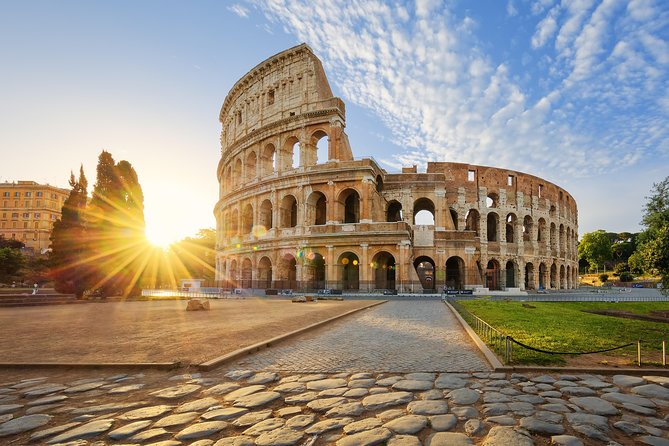
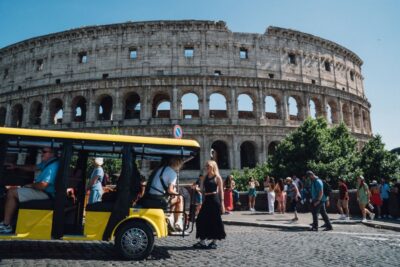
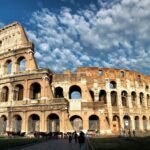
The best part of this tour is also the most practical: you are not stuck in the slow, sun-baked line outside one of the world’s most famous sites. Instead, you use skip-the-line admission through a separate entrance. That matters in Rome because time evaporates fast, and the Colosseum area can feel chaotic once you are behind schedule.
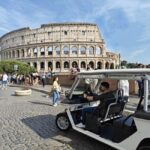
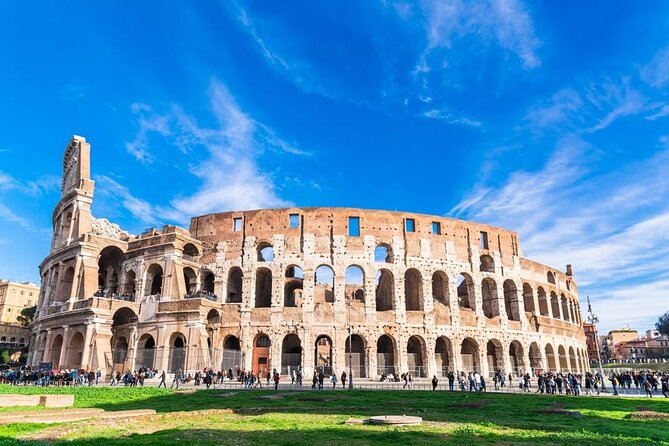
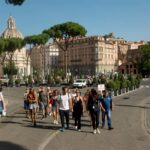
You also start with a clear structure. Your pickup can be one of two starting points near the Colosseum area (often Colosseo, Piazza del Colosseo), and the guide leads you into the first big moment: the Colosseum itself. The tour ends back at the meeting point area, so you are not left trying to figure out your next move while your feet are still vibrating from all those ancient stairs.
Inside the Colosseum: Gladiator Rooms, Animals, and the Shape of Power
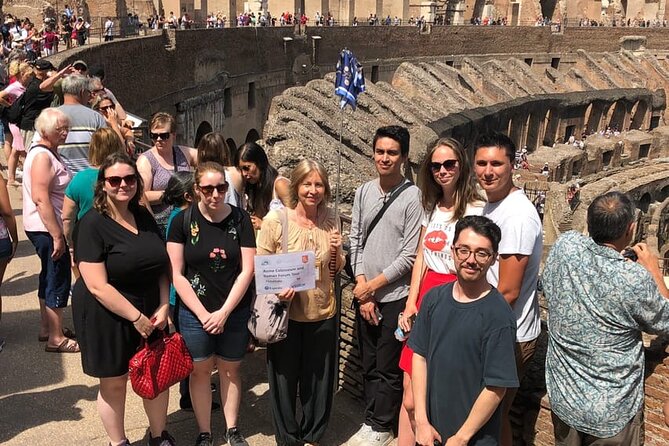
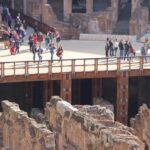
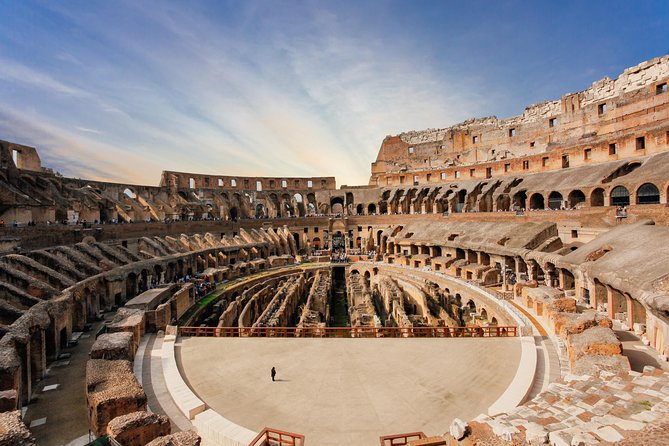
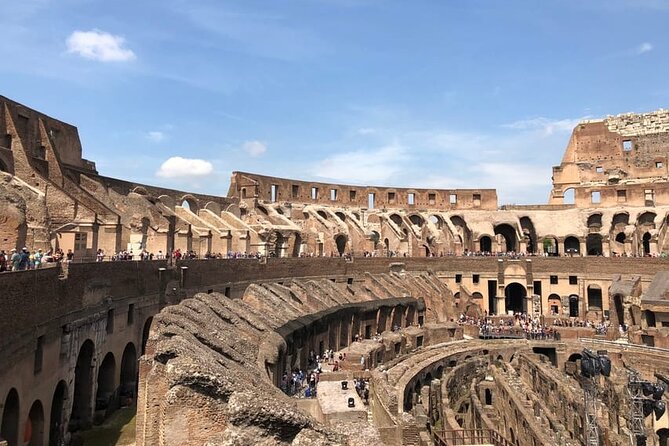
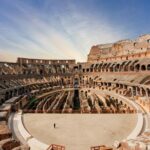
Once you’re in, the Colosseum stops being a postcard and becomes a working machine of entertainment. You get a guided look at the holding cells where gladiators were kept before they entered, and the arena’s cruel entertainment context, including the idea of men facing wild animals for the crowds.
A licensed guide brings it into focus. You hear how the Roman Empire thought, acted, and staged spectacle, not just dates and names. Guides here tend to keep the tone lively, too. People highlight guides such as Laura and Marco, and you’ll often hear stories told with humor and energy rather than reading-from-a-script vibes.
One practical consideration: this is not a “wander for hours” Colosseum visit. The Colosseum stop is about 1.5 hours, which is plenty for the big visuals and key explanations, but if you want to study every arch at a slow museum pace, you may feel slightly rushed. That trade-off is the same math behind all skip-the-line tours: you save time by moving efficiently.
You can also read our reviews of more tours and experiences in Colosseum.

Palatine Hill: The Myth of Romulus and Remus Plus the Best Views
Palatine Hill is where Rome turns myth into a viewpoint. You visit with a guide and you get the story of Rome’s founding—Romulus and Remus, the she-wolf legend, and why people considered this area so important long before the city became an empire.
What I like is the mix of story and scenery. You get to see ruins tied to the legendary origins of Rome and then you take in the panoramic views over the city. Even if you have already seen photos, this is one of those places where the scale of Rome lands differently once you are standing on the higher ground.
The Palatine Hill segment is about 45 minutes, so it is best used for getting your bearings and understanding what you are looking at. If you are hoping to add extra time here for photos or extra ruins, plan to do a separate self-guided walk afterward.
Via Sacra and the Roman Forum: Where You Can Still Feel the Arguing
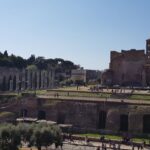
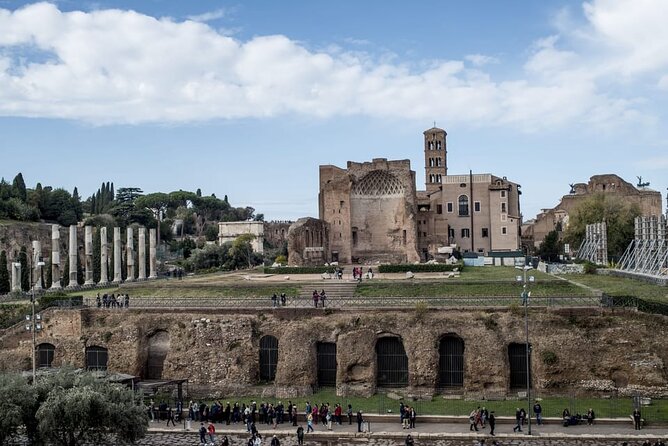
After the amphitheater, the mood shifts. The Roman Forum is not a single monument; it is a whole conversation in stone. You walk Via Sacra, the historic route that armies and processions used, and then you explore the Forum ruins with a guide focused on how Roman power worked in daily life.
You also get the Julius Caesar moment. The tour includes a visit to the altar where Julius Caesar was cremated, which is one of the sharpest emotional anchors you can experience in the Forum area. Even if you only know the basics of Roman history, that stop gives your visit a clear storyline: ambition, conflict, public ritual, and what happens when leadership changes.
You then see the “everyday empire” layer—temples and marketplaces in the Forum zone. That is the part many first-time visitors miss when they only think of Rome as arenas and emperors. This tour nudges you to connect the Colosseum spectacle with the civic and religious space that shaped the empire.
AI Real-Time Translation: Making Rome Understandable in Your Earphones
This tour can include AI Real-Time Multilingual Translation, if you select that option. The concept is simple: the guide speaks naturally in their native language, and the narration is translated in real time directly to your earphones.
Why this is useful: Rome is full of details—names, locations, myths, political context—and it is easy to miss that while juggling your camera, your walking pace, and a crowded site. When translation is on, the explanations stay with you while you look at what the guide is pointing out.
Here’s what the setup is described to do well:
- Speak naturally: you listen to the translated narration in your language.
- High accuracy: tested translation accuracy is described around 90% to 100% across multiple languages.
- Effortless experience: you rent the device, listen during the tour, and return it afterward.
If you travel in a mixed-language group, this feature can reduce the usual friction. One person hears the guide in English and everyone else feels lost; with AI translation, your group can stay synced.
Language coverage is wide, including English, Spanish, French, German, Italian, Russian, Arabic, Chinese, Japanese, Korean, Hindi, Bengali, and many more. The tour lists a long catalog of languages, reaching well beyond the common European set. If your language is on the list, this option can be a real upgrade.
What the Tour Feels Like: Timing, Group Size, and Walking Reality
This is a 3-hour tour with a moderate amount of walking. It is designed to cover three major areas: the Colosseum, Palatine Hill, and then Via Sacra plus the Roman Forum. The route is outdoors and includes uneven steps and walking surfaces, so good footwear is non-negotiable.
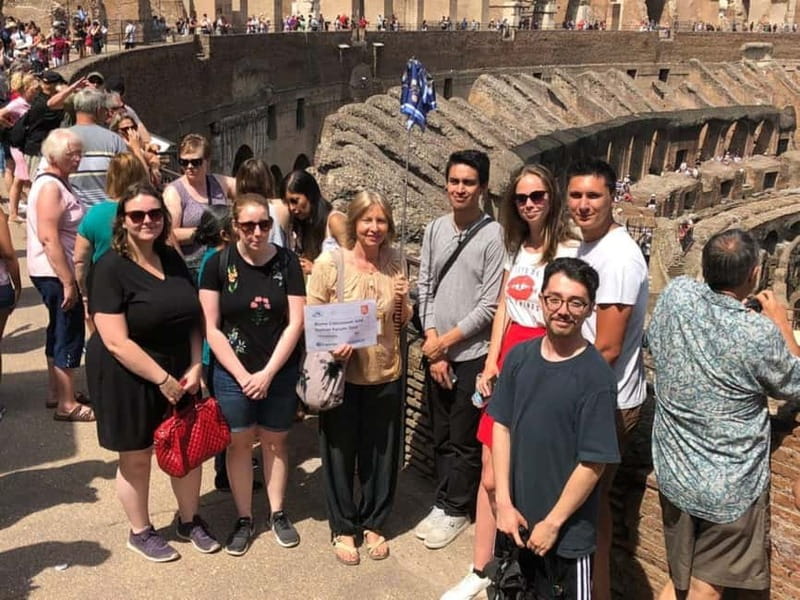
The group size stays small enough to feel guided: up to 20/25 people. If your group is larger than 6, you get audio headsets, which helps the guide stay audible without you craning your neck in the crowd.
Two “plan ahead” notes from the practical side:
- Bring a bottle of water. The tour info specifically encourages hydration, and you may find chances to refill while walking in the area.
- Wear comfortable walking shoes. Even if you are fit, uneven stones around these ruins can turn a short tour into a foot workout.
Also note: the activity is listed as not suitable for wheelchair users. If mobility is a concern, you’ll want to look for alternatives that reduce stairs and rough ground.
Price and Value: Is $45.55 Really Fair for 3 Hours in Rome?
At $45.55 per person, this tour sits in the “serious value” zone for central Rome. Why? Because you are not only paying for a guide. You are also paying for skip-the-line entrance tickets to the Colosseum, Roman Forum, and Palatine Hill.
You are also getting a guide-led sequence designed to keep your time efficient:
- 1.5 hours in the Colosseum where you focus on key structures and meaning
- 45 minutes on Palatine Hill for myth and views
- 45 minutes on Via Sacra and the Roman Forum for storyline continuity
If you try to piece this together yourself without skip-the-line access, you can burn time on queues and still end up unsure what you are looking at. The licensed guide helps translate the site from famous shapes into understandable context—especially helpful if this is your first serious shot at Ancient Rome.
If your group includes non-English speakers, the AI translation option can raise the value even further. Instead of splitting up by language comfort, everyone can hear the story in their preferred language.
Who Should Book This Colosseum-Forum-Palatine Tour
I think this is a strong match if you want:
- A first-timer’s version of Ancient Rome that connects the big sites in a logical flow
- Guided interpretation rather than just wandering
- A group format with small-tour energy, not mass chaos
- Optional AI translation for multi-language travel
It is also a good fit for history lovers who want their visit to feel like a guided narrative, not a list of monuments. If you’re traveling with kids or friends who feel bored by lectures, the tour’s storytelling style tends to land as fun and structured—people specifically mention guides like Marco and Elena as energetic and engaging.
Quick Heads-Up Before You Go: The ID Rule
This is the one non-negotiable item: it is mandatory to bring passport or ID to access the Colosseum. Do not treat this like a suggestion. Bring the document you booked with, or whatever ID you are using for entry, and keep it easy to reach.
Also, meeting points can feel confusing in the Colosseum area because multiple operators are nearby. Give yourself a few minutes of buffer and look for the correct guide name and group details for your booking.
Should You Book It?
If you want to see the Colosseum, Roman Forum, and Palatine Hill in one focused window, this tour is a smart call. The skip-the-line access and small group format help you spend time on stories and views instead of queues and guesswork. If you can fit a 3-hour schedule and you are okay with moderate walking, you’ll likely feel like you made strong progress in a short day.
Skip this only if you know you want to linger for long stretches at the Colosseum itself. This tour is built for efficiency, not for wandering until the site empties out.
FAQ
Is a passport or ID required?
Yes. Passport or ID is mandatory to access the Colosseum.
How long is the tour?
The tour duration is 3 hours.
What stops are included?
It includes the Colosseum, Palatine Hill, and the Via Sacra plus the Roman Forum.
What does skip-the-line mean here?
You enter through a separate entrance with skip-the-line entrance tickets for the Colosseum, Roman Forum, and Palatine Hill.
How big is the group?
The tour is described as a small group of no more than 20/25 people.
Do I get audio help during the tour?
Audio headsets are included for groups of more than 6 people.
Is the AI translation available in many languages?
Yes. The tour lists many supported languages, and AI Real-Time Multilingual Translation is included if you select the option.
Where do I meet the guide?
The meeting point may vary depending on the option booked, with Colosseo/Piazza del Colosseo listed as one starting option. The tour ends back at the meeting point area.
Is food included?
No. Food and drinks are not included.
Is the tour wheelchair accessible?
No. It is listed as not suitable for wheelchair users.