REVIEW · ROME
Rome: Colosseum, Roman Forum & Palatine Hill Experience
Book on Viator →Operated by TravelR · Bookable on Viator
Three monuments, one ticket, and you call the pace. This Rome experience lets you choose a morning or afternoon entry and pause wherever you want, with an audio guide you can replay as you walk. I love the freedom to hit the big sights (Colosseum, Roman Forum, Palatine Hill) without juggling separate bookings. The trade-off: it’s mostly self-guided once you’re inside, so you’ll get the best results if your phone, headphones, and patience for crowds are in good shape.
Booked through TravelR, the group stays small (up to 25), and you’ll have staff help you get sorted at the Colosseum area. If you happen to meet someone like Raju, you’ll likely get fast, friendly guidance at the start—exactly what you want when Rome is loud, crowded, and full of “Where’s the entrance?” moments.
In This Review
- Key things to know before you go
- The real value: timed access with a flexible pace
- Meeting point clarity at the Colosseum metro
- Entering the Colosseum: what to expect once you’re in
- Roman Forum: where the ruins start to make sense
- Palatine Hill: views and the imperial backstory
- Audio guide reality: good for stories, picky about your tech
- Price and value: what you’re paying for (and what you’re not)
- Lines, crowds, and the big expectation-setting moment
- Who this fits best (and who should rethink it)
- Should you book this Colosseum–Forum–Palatine visit?
- FAQ
- How long is the Colosseum, Roman Forum, and Palatine Hill experience?
- What’s included in the ticket price?
- Do I need a tour guide to understand what I’m seeing?
- What do I need for the audio guide?
- Where is the meeting point for redemption?
- What ID do I need to enter?
- Can I choose a morning or afternoon entry?
- Is this experience refundable?
- How many people are in the group?
Key things to know before you go
- Timed entry + ticket handling: You’re not just wandering up and hoping for the best.
- Audio guide is your main narrator: Bring your own phone headphones and plan for mobile data.
- Small group size (max 25): Less chaos than the giant bus tours.
- You’ll walk up stairs at the Colosseum: Comfort shoes matter.
- You’re choosing your pace: It’s flexible, but you’re responsible for keeping track of your flow.
- Meeting point is very specific: Follow it closely, or you’ll waste time.
The real value: timed access with a flexible pace
The best part of this experience is how it balances structure and freedom. You get entry that’s arranged so you can avoid the worst uncertainty, but you’re not stuck in a single pace for hours. You can stop to look, step aside to catch your breath, and linger at the spots that grab you—like the view corridors in the Colosseum and the “wait, this is still standing!” angles on the Forum.
Price-wise, it’s not only about getting into the buildings. The ticket portion is specifically called out: the Colosseum admission ticket is valued at €18, and there’s a €2 reservation fee. The rest of what you pay goes to agency services and the audio guide experience. In plain terms: you’re paying for less friction, not for a full lecture.
One note to keep you comfortable with expectations: this is not a nonstop guided tour where someone tells you exactly where to stand and what to notice at each checkpoint. You’ll rely on the audio for the story, and some people find it works best when you know what you’re looking at already.
You can also read our reviews of more tours and experiences in Rome.



Meeting point clarity at the Colosseum metro
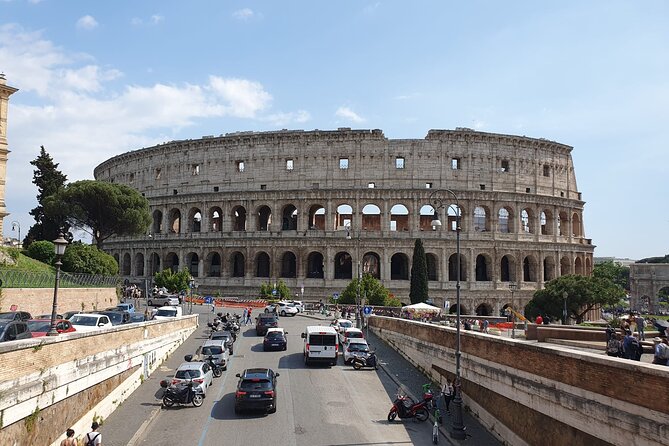
You’ll redeem at Colosseum, Piazza del Colosseo, 00184 Roma RM, Italy. The staff meet you at the Colosseum metro area down the stairs near the green kiosk—look for the TravelR team.
Two practical rules keep this smooth:
- Arrive early enough that you’re not sprinting. When people show up late, the whole exchange gets harder.
- Have your phone ready. You may be asked for details like downloading links or using your device for the audio setup.
Also bring the exact documentation required. Your booking name has to match your ID, and you’ll need a valid passport or ID document. Adults and children names should not be mixed up. You’ll also be asked for a valid phone number.
If you’re the type who hates last-minute tech tasks on vacation: you’re still fine here, just make sure you’ve charged your phone before you leave your hotel.
Entering the Colosseum: what to expect once you’re in
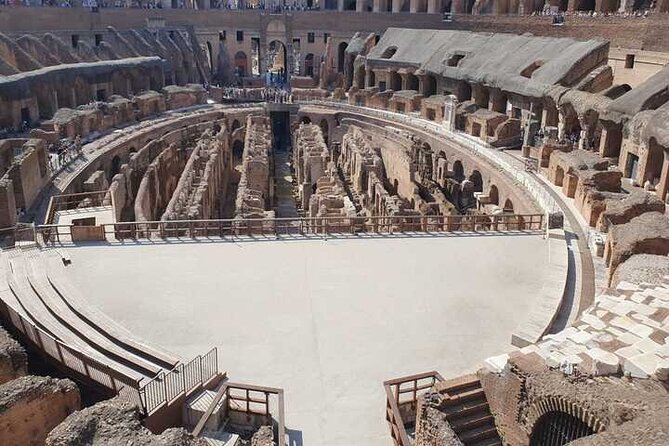
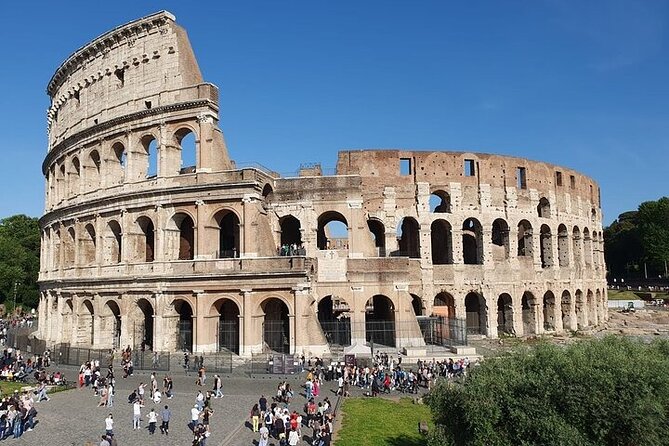
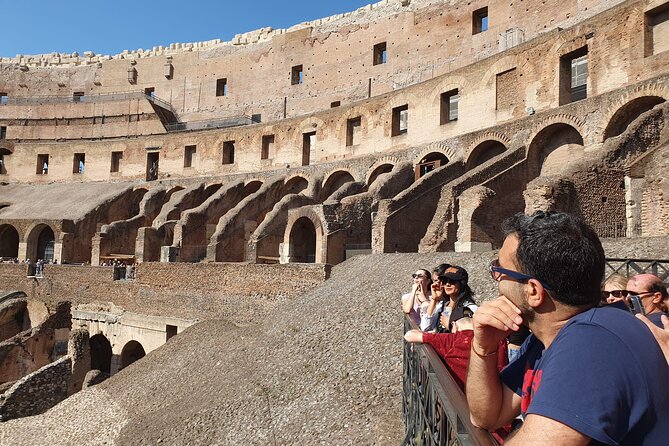
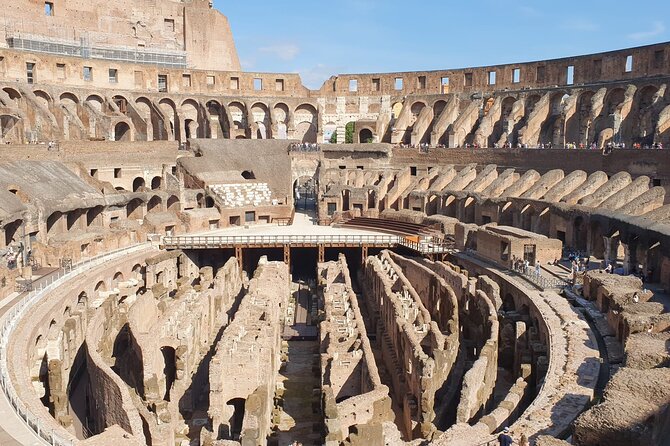
The Colosseum visit is the anchor of the whole trip, and it runs about an hour. The building is big in a way that photographs don’t fully explain. Up close, you feel the scale immediately—corridors, arches, and openings that make the whole structure look like it’s built for movement.
This is where the “timed access” part matters. Rome’s entrance areas can get clogged. Even when lines look intimidating, the goal here is that you’re funneled through a pre-arranged process rather than starting from zero.
Comfort reality check: stairs. There are stairs and there’s walking. One review flagged this clearly, so take it seriously. Wear shoes you’d actually wear for a city hike, not sandals that turn into foot pain by hour two.
What about guidance? You won’t necessarily get a live person walking you through every section. The audio guide is the main tool. Some people feel the audio isn’t always perfectly timed to your exact spot, so use the audio as a story aid—not as a GPS voice that tells you exactly where to stand.
Roman Forum: where the ruins start to make sense
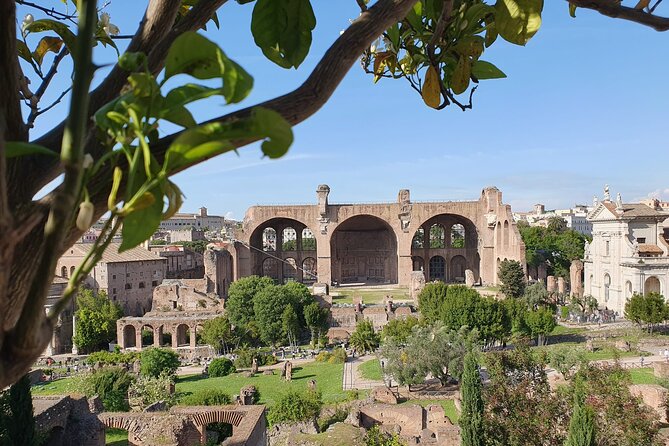
The Roman Forum is usually the “aha” stop for first-time visitors. It takes about 45 minutes, but that’s enough if you move with intention. The Forum is full of architectural remains—temples, basilicas, arches, monuments—so it can feel like a jumble at first.
Here’s the trick: don’t try to see everything. Pick a few anchor points and walk between them slowly. When you pause and look at what’s still upright—columns, arches, fragments of walls—you start to understand the logic of how this space worked.
If you’re the kind of person who loves naming things, the Forum rewards that impulse. If you prefer atmosphere, it also delivers: standing amid the remains feels like standing in a “meeting place” that’s been waiting for you for 2,000 years.
Potential drawback: even with tickets, you might still spend some time queuing around the entrances to move between zones. A few people found there wasn’t a dramatic “skip the line” difference at every step. So build in mental flexibility. The goal is better access, not magic.
Palatine Hill: views and the imperial backstory

Palatine Hill rounds out the experience, again around 45 minutes. This is the part many people remember most, because it combines viewpoints with the sense of why the place mattered.
Palatine is strongly tied to the founding legends of Rome and later to imperial power. You’re in an area that once hosted aristocrats and emperors, with palaces and gardens. Even if you don’t know the names right away, the mix of layout, elevation, and excavated remnants helps you picture why the elite wanted to live here.
The payoff is the perspective. From Palatine you can see the Forum area in a way that turns “ruins” into “a city.” It becomes easier to understand where major spaces sat in relation to one another.
Also: it’s a good place to slow down. There’s less “checkpoints to finish” energy and more “look around” time. If you’re traveling with someone who gets tired fast, this is often the stop where they can rest without missing the core experience.






Audio guide reality: good for stories, picky about your tech
The audio guide is included, but it has a big condition: bring your own mobile headphones and plan to use mobile data to listen. That means your phone battery and your headphone quality matter.
The audio can be genuinely useful, and a few people liked how easy it was to get working quickly. But don’t assume the audio will perfectly match what you’re staring at at every instant. One comment described it as general knowledge rather than pinpoint guidance for the exact spot. Another noted that it’s not a full live narrative as you move around.
So how do you use it well?
- Treat it like a companion, not like a tour escort.
- If you hear something that doesn’t connect to the view in front of you, pause, look around, then press play again when you’re oriented.
- Keep your phone in a safe, easy-to-reach pocket. You’ll want both hands when walking.
If you’re traveling as a family or with older relatives, this can still work well—because you’re not stuck with a fast-moving group pace. Just make sure everyone understands the audio setup before you start.
Price and value: what you’re paying for (and what you’re not)
At $43.53 per person for a 2–3 hour experience, the value comes down to stress reduction. You’re buying:
- Colosseum admission access and a reservation fee
- Roman Forum and Palatine Hill access
- An audio guide experience
- Agency services (the part that helps with ticket exchange and getting you to the right places)
You are not paying for a live tour guide. The listing clearly states tour guide isn’t included. That’s why some people felt disappointed when they expected a full guided explanation inside. If you want a person talking you through every step, you’ll likely be happier with a different style of tour.
On the other hand, if you want to control pace and you’re comfortable reading ruins with the help of audio, this can be a very efficient way to “see the big three” without multiple separate bookings.
Is it always cheaper than going directly to official sites? Not guaranteed. Some people felt third-party pricing didn’t justify the experience. My practical advice: if you’re price-sensitive, compare what you’d pay for official tickets plus your time cost of figuring out entry. If saving time and hassle is worth it to you, the agency fee can make the day feel easier.
Lines, crowds, and the big expectation-setting moment
Rome rarely cooperates. Even with reserved entry, you may still face crowds at certain steps—especially around transitions between areas. Several comments pointed out that the “skip the line” promise didn’t always feel dramatic, and you might still queue near entrances.
So set expectations like this:
- You should aim to get in faster than total chaos.
- You may still wait some, especially if you arrive late or if routes are crowded.
- Your best defense is timing and calm.
The biggest “line-killer” is showing up on time and following the meeting instructions precisely. When people missed the start or couldn’t find the meeting point, the whole experience turned into a scramble.
Also, the walking adds up. You’ll likely want water. One review mentioned limited drinking access during a long day. Don’t plan on buying convenience drinks inside at every stop. Bring a bottle if you can.
Who this fits best (and who should rethink it)
This experience fits you well if:
- You like the idea of freedom to pause and choose your sightseeing pace
- You’re comfortable using an audio guide
- You want to see Colosseum + Forum + Palatine Hill in one go
- You’re traveling with multiple ages and need flexibility (especially if someone tires from long live commentary)
You might want a different option if:
- You strongly prefer a live guide explaining each ruin on the spot
- You don’t want to rely on phone-based audio and data
- You dislike third-party ticket handling and would rather buy only from official sources
Should you book this Colosseum–Forum–Palatine visit?
Book it if you want a clean, efficient day with timed access and a flexible pace, and you’re happy to let an audio guide do most of the storytelling. It’s a practical way to cover the big sights without turning your trip into a logistics project.
Skip it (or look for an alternative format) if you’re expecting a full guided tour inside each site, or if your phone setup is unreliable. In that case, you’ll likely end up stressed during ticket exchange and audio setup—exactly the opposite of what you want at the Colosseum.
FAQ
How long is the Colosseum, Roman Forum, and Palatine Hill experience?
It runs about 2 to 3 hours.
What’s included in the ticket price?
Roman Forum and Palatine Hill access are included, plus a Colosseum entrance ticket and Colosseum reservation fee. You also get an audio guide.
Do I need a tour guide to understand what I’m seeing?
A tour guide is not included. You’ll have an audio guide to explain the sites, and you’ll explore largely on your own.
What do I need for the audio guide?
You need personal mobile headphones and you should have mobile data available to listen.
Where is the meeting point for redemption?
The redemption point is at the Colosseum area, Piazza del Colosseo. Staff meet you at the Colosseum metro station downstairs near the green kiosk, looking for TravelR.
What ID do I need to enter?
You must present a valid passport or ID document that matches the name used at booking. Adults and children’s names must be correct.
Can I choose a morning or afternoon entry?
Yes, you can choose a morning or afternoon entry based on your schedule.
Is this experience refundable?
No. It is non-refundable and cannot be changed for any reason.
How many people are in the group?
The maximum group size is 25 travelers.