REVIEW · ROME
Tour of Rome in Mini Cooper Classic Cabriolet
Book on GetYourGuide →Operated by MINI TOUR ROMA · Bookable on GetYourGuide
A vintage Mini turns Rome into a joy. You get Rome’s biggest landmarks in a classic Mini cabriolet with a real Roman guide who brings the city to life. The possible catch: the guide’s energy can be a lot if you prefer a quieter, more formal style.
You’ll roll past icons like the Colosseum, Vatican-area sights, Piazza Navona, Trevi Fountain, the Pantheon, Trastevere, and more, with stops for photos as often as you want. The tour ends with an included drink in a local-feeling spot, plus a matching hat set for the aperitif moment. It’s set up for a small group (max 6 people across two vintage cabriolets), so you should expect lots of attention and flexibility in the moment.
In This Review
- Highlights You’ll Actually Notice on the Drive
- Why Rome in a Classic Mini Works So Well
- Your 3-Hour Route: Colosseum, St Peter’s, Trevi, the Forum, and Trastevere
- Colosseum Area: Rome’s Most Immediate Scale
- St Peter’s Area: The City’s Religious Center in View
- Piazza Navona and Trevi Fountain: Quick Looks, Strong Atmosphere
- Circus Maximus and the Roman Forum: Where Rome’s Daily Life Sounds in Your Head
- Terme di Caracalla and the Pantheon: Big Names, Different Vibes
- Trastevere and the Old District Feeling: Rome Beyond the Icons
- Vittoriano and Castel Sant’Angelo: Modern Power Meets River Rome
- The Hills Where the Views Earn Their Place
- Photo Stops That Keep the Trip Relaxed
- The Aperitif Ending: Why the Hat Gift Matters
- Price and Value: Is $198.25 Per Person Worth It?
- Who This Tour Suits Best (And Who Should Rethink It)
- Should You Book This Classic Mini Tour of Rome?
Highlights You’ll Actually Notice on the Drive
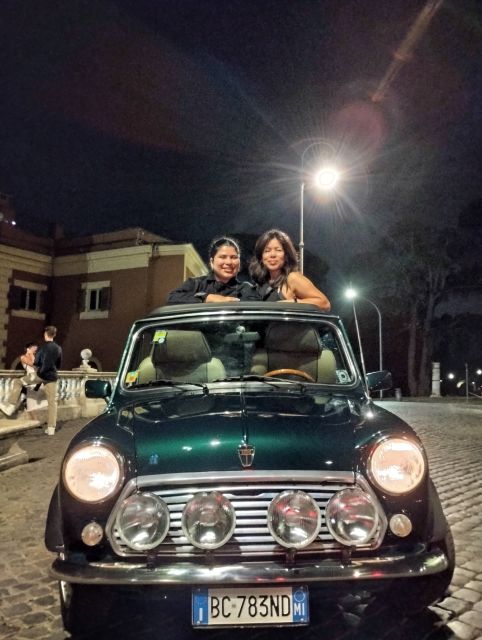
- Small group, two vintage cabriolets: up to 6 people total keeps the experience personal
- Roman guides with strong personality: English live guidance from people who truly love Rome
- Big sights in a tight 3 hours: Colosseum, St Peter’s area, Piazza Navona, Trevi Fountain, Pantheon, Trastevere
- Picture breaks on demand: you can stop often to shoot photos without feeling rushed
- Three viewpoints for the “Rome was born here” feeling: Gianicolo, Monte Aventino, and Campidoglio
- Aperitif + hat included: water and soft drinks during the tour, then a drink in a cool Roman hangout
Why Rome in a Classic Mini Works So Well
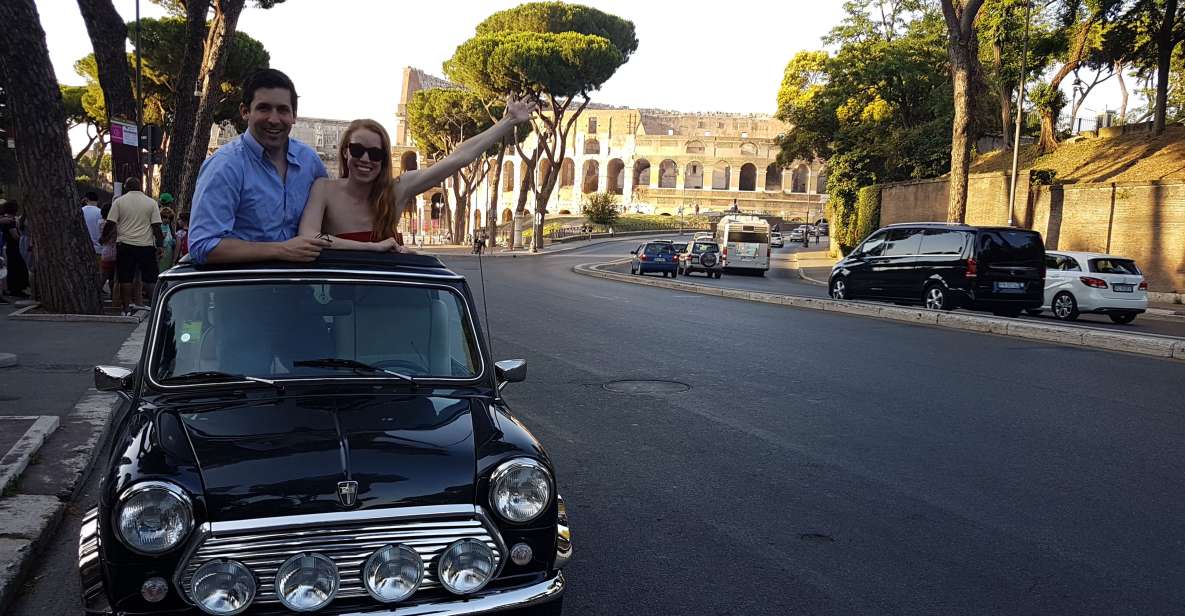
Rome can overwhelm you fast. Too many streets, too many crowds, and too little time to connect the dots. This is the kind of tour that helps you get your bearings—because you’re not stuck walking the same loops or searching for the next viewpoint.
The classic Mini cabriolet is more than a novelty. It’s a practical way to move through central Rome while staying close to the street-level details that make Rome feel real: stone textures, street angles, sudden views, and that “wait, look at that” feeling when you round a corner.
And the human factor matters. The guides tied to this experience are Roman by roots and by storytelling. In particular, Luca and Danilo show up in the guide lineup with the same theme: Rome isn’t a script—it’s a lived-in place.
You can also read our reviews of more tours and experiences in Rome.



Your 3-Hour Route: Colosseum, St Peter’s, Trevi, the Forum, and Trastevere
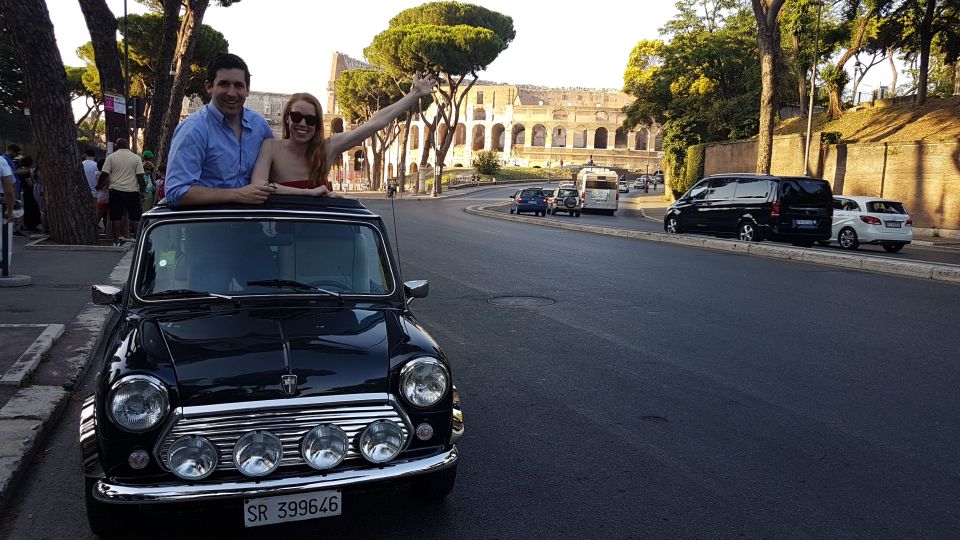
This tour is designed as a hit-list loop, but it doesn’t feel like a checklist. In about three hours, you’ll see a sequence of landmarks that help you understand where Rome’s power shifted over time—empire to church to modern city.
Here’s what you can expect on the drive, plus why each stop matters.
Colosseum Area: Rome’s Most Immediate Scale
You start with the Colosseum area, one of the fastest ways to feel Rome’s ancient scale. Even if you’ve seen photos, seeing it in person—even from the right viewpoint angle—helps you understand how massive the ancient city was compared with today’s streets.
This is where your guide’s framing really helps. You’re not just seeing a monument; you’re building a mental map for the rest of the day.
St Peter’s Area: The City’s Religious Center in View
Next comes the Vatican-side atmosphere, including San Pietro (St Peter’s). This is Rome’s “vertical” moment: big domes, grand geometry, and long sight lines.
If you’re trying to picture how church Rome grew from earlier Rome, this stop gives you the contrast. It’s a good reminder that Rome kept changing its center of gravity.
Piazza Navona and Trevi Fountain: Quick Looks, Strong Atmosphere
Piazza Navona and Trevi Fountain are two of Rome’s most photogenic stops, and you’ll get both on this route. The key here is how the tour handles timing: you can pause for pictures as often as you want, rather than being trapped in a long queue or forced to rush.
Piazza Navona helps you read Rome’s street plan like a pattern. Trevi Fountain shows you how monuments become symbols—everyone knows the spot, but your best photos come from stopping at the right moment, not just being near it.






Circus Maximus and the Roman Forum: Where Rome’s Daily Life Sounds in Your Head
Then you head toward Maximus Circus (Circus Maximus) and the Roman Forum. Even if you’re not spending hours inside, the drive-by sequence does something valuable: it turns “ancient Rome” into a place you can imagine—public spaces, crowds, motion, politics.
Circus Maximus is especially good for perspective because the scale stretches your imagination. The Forum is where the story becomes dense. The guide’s role is to help you see why those buildings mattered beyond their labels.
Terme di Caracalla and the Pantheon: Big Names, Different Vibes
You’ll pass Terme di Caracalla (Caracalla’s Baths). These ancient baths feel different from the blockbuster sites because they’re less about one postcard angle and more about ruins you can sense as part of everyday life.
Then comes the Pantheon. The Pantheon is the one you recognize instantly, and it tends to reset your expectations about what “ancient” looked like in real Roman life. From street-level views, it’s easier to understand how important the structure was and why it still dominates the area.
Trastevere and the Old District Feeling: Rome Beyond the Icons
You’ll also visit the ancient district of Trastevere. This is where the tour starts to feel less like a museum and more like a living neighborhood. The streets and angles look old in a way that text descriptions never capture.
If you want your first Rome experience to include atmosphere—not just monuments—Trastevere is the moment.
Vittoriano and Castel Sant’Angelo: Modern Power Meets River Rome
Vittoriano (Altare della Patria) and Castel Sant’Angelo bring you into the river-and-capitals story. Vittoriano is a bold modern monument inserted into Rome’s older layers. Castel Sant’Angelo feels like a silhouette you understand instantly once you see it in the city’s layout.
These stops help connect the timeline. You’re not treating Rome as one era—you’re seeing the city as a stack.
The Hills Where the Views Earn Their Place
The tour finishes with three small mountains that shaped Rome’s ancient beginnings and now deliver some of the best photo angles in the city: Gianicolo, Monte Aventino, and Campidoglio.
This is where the open-air feeling of the experience pays off. You get that “Rome goes on forever” perspective, and the drive up and through these spots tends to be the part you remember when everything else fades into photos.
Photo Stops That Keep the Trip Relaxed
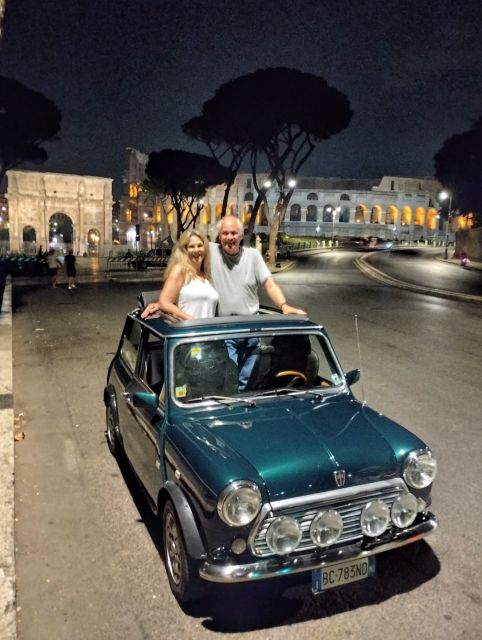
One thing I really like about this tour style is the permission built into it: you can stop for pictures as often as you wish. That changes the whole mood. You’re not stuck with one long stop and then back into traffic.
A few practical notes for getting the most out of photo time:
- Think about light direction before you’re at the fountain or viewpoint. Even a small shift in where you stand can change your result.
- When you’re at busy places, quick photos can beat long hovering. The guide’s job is to keep the flow moving while still giving you the shots.
- Because you’re riding in a vintage cabriolet format, keep an eye on weather. If rain comes through, you’ll feel it more than in a closed vehicle.
The Aperitif Ending: Why the Hat Gift Matters
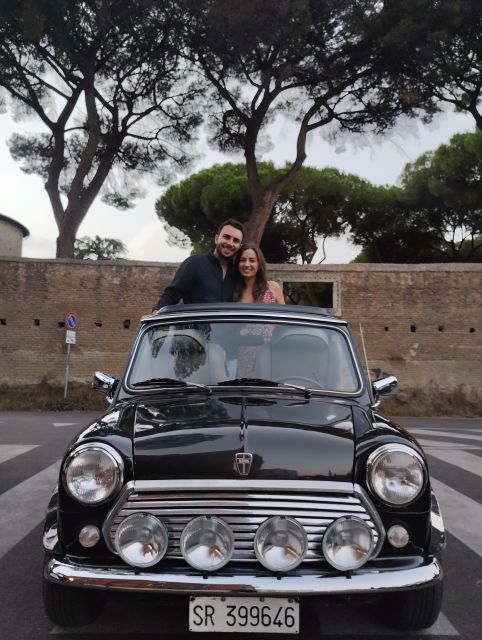
This tour doesn’t end with a drop-off at a landmark. It ends with a drink.
You get an aperitif in a location described as very cool, plus water and soft drinks like orange and Coca-Cola during the ride. A photo is included too, and there’s a hat gift that comes along with the aperitif moment.
That might sound like a fun extra, but it actually solves a real travel problem. A lot of tours end while you’re still buzzing on adrenaline. Here, the final stop lets the experience land. You’ll have a minute to talk, compare photos, and soak up the feeling of Rome as people actually live it—not just as a list of places to cross off.
Price and Value: Is $198.25 Per Person Worth It?
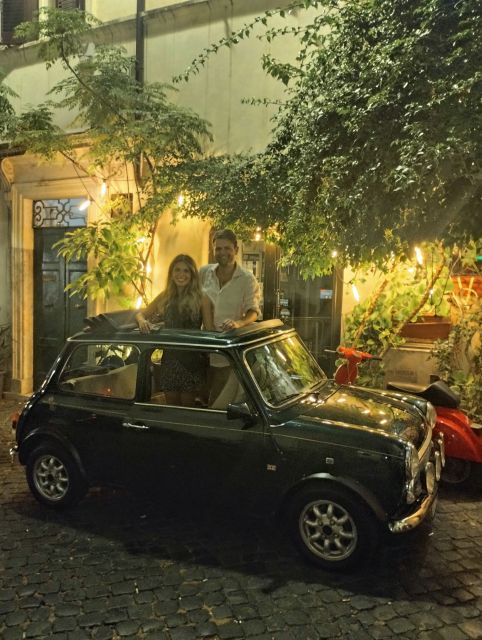
At $198.25 per person for a 3-hour private group, this isn’t a budget add-on. It’s priced like an experience that prioritizes comfort, time, and personal guidance.
Here’s the value math that matters:
- You’re in a private setting with a maximum of 6 people total, across two classic Mini cabriolets. That means less waiting, less crowd energy, and more flexibility.
- Your cost includes the driver, live English guidance, drinks during the tour, and the aperitif with a hat included.
- You’re covering an impressive number of major sights, plus the viewpoint hills, without having to fight the walking lines.
When it makes the most sense:
If you’re traveling with a small group and you’d rather pay for convenience than spend half a day commuting between “must-see” spots, this can feel like good money.
When you might hesitate:
If you’re solo or on a tight budget and you mainly want a few monuments, you could choose a less expensive group format. Private value is highest when you can split the cost and fully use the time.
Who This Tour Suits Best (And Who Should Rethink It)
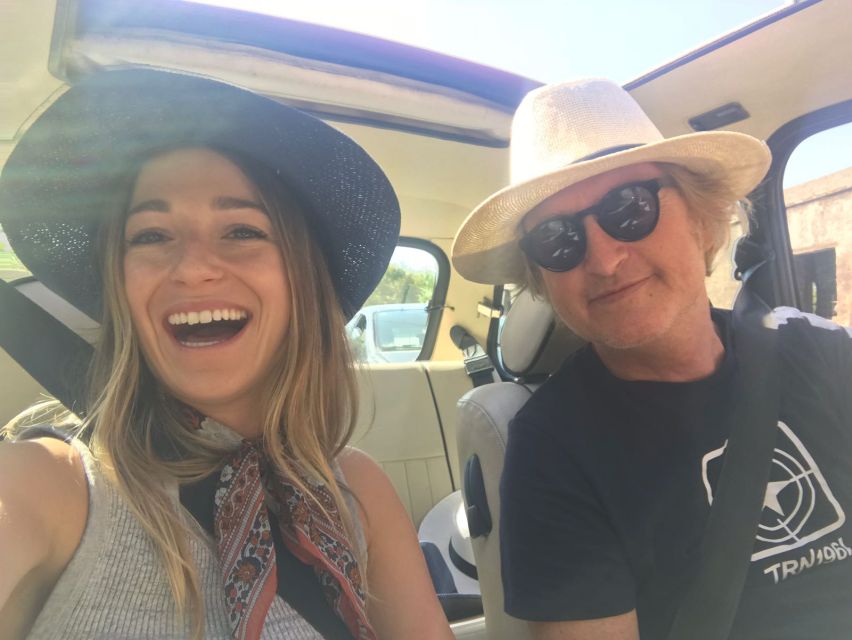
This works especially well if you want a first-time Rome overview that feels personal.
You’ll likely enjoy it if:
- You want to see a lot of Rome quickly in one session
- You like a guide who tells stories with personality (Luca and Danilo’s style tends to land strongly)
- You care about photo time and a relaxed rhythm
- You want an end point that feels social, not just transport
You should consider alternatives if:
- You need wheelchair access: it’s not suitable for wheelchair users
- You don’t want a more energetic guide vibe. One review notes the guide may not be for everyone, described as a lot to take.
- You’re traveling with pets or plan to smoke. Smoking isn’t allowed, pets aren’t allowed (assistance dogs are allowed), and food isn’t allowed in the vehicle.
Also plan around luggage. Oversize luggage isn’t allowed, so pack light.
Should You Book This Classic Mini Tour of Rome?
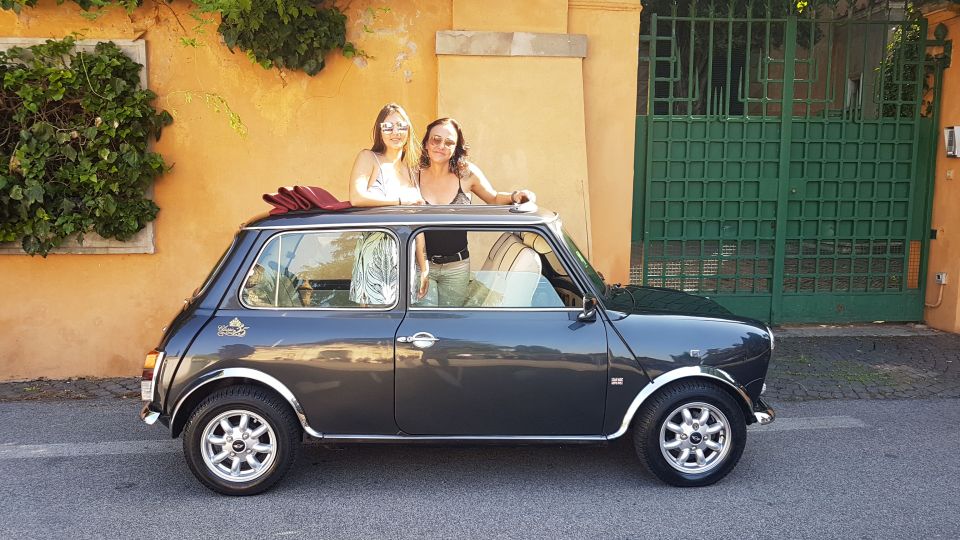
If you want Rome to feel like a place with a pulse—not just a photo album—this tour is a strong choice. The small group size, the vintage Mini format, the English live guidance, and the included aperitif all push the experience toward “local-feeling” rather than “bus tour fatigue.”
Book it if your priorities are:
- Getting your bearings fast
- Seeing the major icons plus the hill viewpoints
- Maximizing photo stops without stress
- Ending with aperitif + hat instead of rushing back out
Skip it if you want a quiet, sit-down museum pace, or if access needs make a non-wheelchair-friendly vehicle a problem.
If you’re coming to Rome for the first time, and you want one memorable intro that blends history with real streets, I’d say go for it.