REVIEW · ROME
THINK BIG, GO MINI! Rome Day&Night in Mini Cooper Classic Cabrio
Book on Viator →Operated by MINI TOUR ROMA · Bookable on Viator
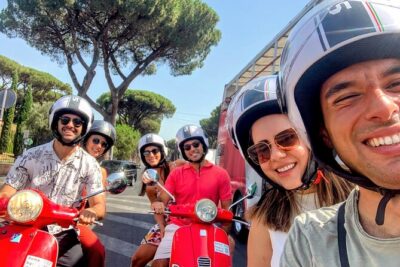
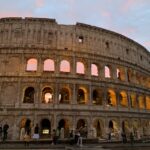
A classic MINI cabrio turns Rome into a moving postcard. This 3-hour Rome day-and-night loop is built for quick hits of big sights, hill views, and photo moments, all while you cruise in style. I love that it is small-group and private, so you can slow down for pictures without feeling herded, and I love that the day includes an aperitif and food plus snacks, water, and alcoholic drinks.
I also like how the route mixes recognizable landmarks (Piazza Navona, Trevi, the Pantheon area) with viewpoints that help you understand the city’s shape. And with guides like Luca and Fabio leading from the driver side, the ride comes with stories that make the stops feel connected, not random.
One consideration: with so many stops in a short window, you will get short breaks—great for photos, but not ideal if you want long museum-style time at each site. If you hate quick walk-throughs, this may feel a little fast.
In This Review
- Key highlights worth your time
- Why a MINI Cooper Cabrio is the right way to see Rome fast
- How the 3-hour route strings together Rome’s icons and skyline views
- Piazza Navona, Trevi Fountain, and Piazza di Spagna without wasting your whole trip
- Pantheon and St. Peter’s Basilica: big stops in quick bursts
- Castel Sant’Angelo plus hilltop viewpoints: where Rome turns scenic
- Trastevere at night: aperitif break and real neighborhood mood
- Largo Argentina and Altare della Patria: fast history in the historic center
- Foro Romano to Palatine Hill: ancient Rome in a concentrated walk
- Aventine Hill, the secret keyhole view, and the calm side of Rome
- Passing the Pyramid of Caius Cestius and other Roman remnants
- Price and value at $209.70: what you actually get
- What it feels like with Luca and Fabio driving the story
- Practical tips so your 3 hours feel smooth
- Should you book the Rome Day and Night in a Mini Cooper Classic Cabrio?
- FAQ
- How long is the Rome day-and-night MINI Cooper Classic Cabrio tour?
- Is pickup available?
- What language is the tour in?
- Are snacks and drinks included?
- Are there admission tickets included for the stops?
- Are children allowed on the tour?
Key highlights worth your time
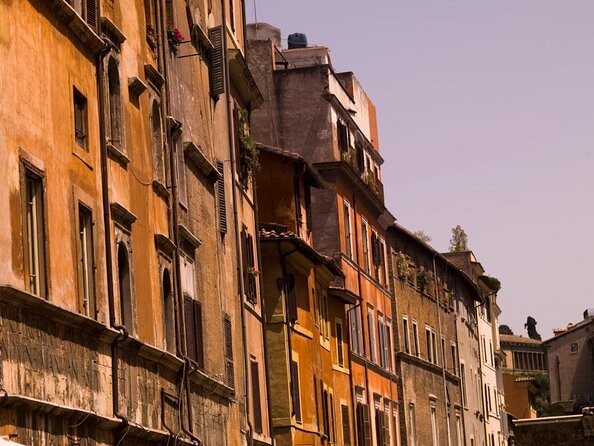
- Classic MINI Cooper Classic Cabrio rides for an easy, fun way to cover a lot of ground in 3 hours
- Small-group, private setup so your pace and questions matter more
- Aperitif and food stop with snacks, bottled water, and alcoholic beverages included
- Hilltop photo moments, including Aventine Hill and the secret keyhole view area
- Rome night-life flavor with Trastevere included in the loop
- Major sights with short photo breaks, including Piazza Navona, Trevi Fountain, Pantheon, and St. Peter’s Basilica
Why a MINI Cooper Cabrio is the right way to see Rome fast
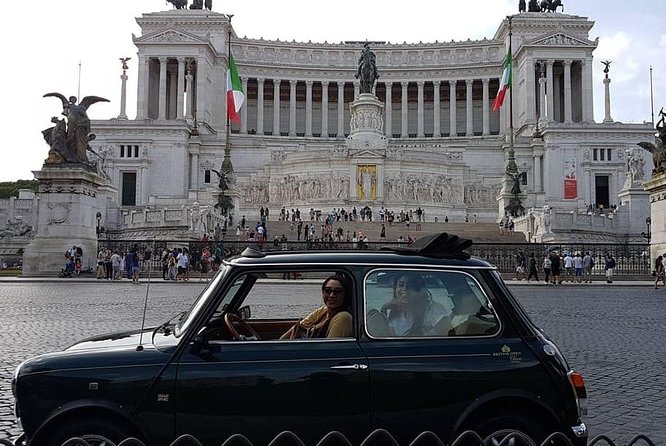
Rome can be a lot—busy streets, long distances, and crowds that show up exactly when you want a clean photo. A day-and-night MINI ride helps you solve the problem by trading time in traffic and ticket lines for time at viewpoints and landmark corners.
This is also a social format without the chaos of big buses. You are in your own group, and you are not sharing the experience with strangers you will never see again. That is a big deal for a route that is packed with famous stops and several quick “get out, look, take photos, get back in” moments.
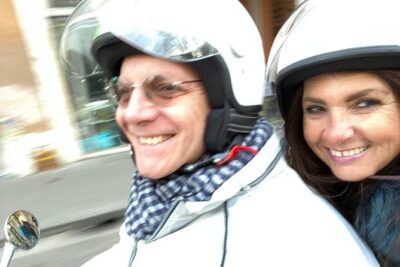
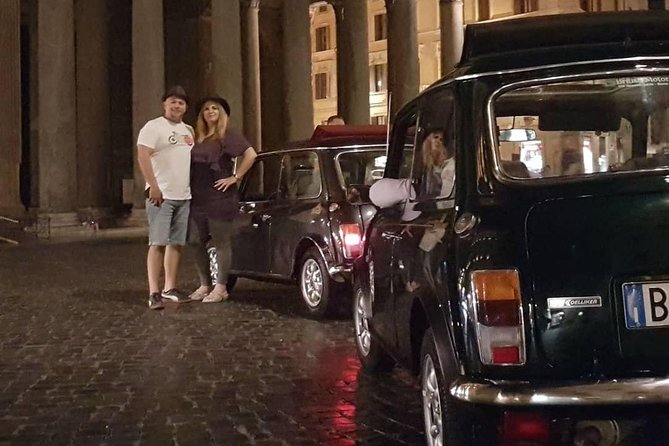
I especially liked the vibe from the guide side. In one recent group setup, Luca guided the experience, and Fabio also helped lead from a second MINI. The result: you get guidance and context, but you still move like you are sightseeing with friends.
You can also read our reviews of more evening experiences in Rome
How the 3-hour route strings together Rome’s icons and skyline views
You should think of this as a guided loop that constantly changes your view. In about three hours, you will bounce between classic squares, major monuments, and hilltop outlooks where you can actually see the city spread out.
Most stops are short—roughly 5 to 10 minutes—so the plan is built around quick orientation. You will get enough time to step out, grab photos, and absorb a few highlights without losing the rhythm of the drive.
The big theme is contrast. You start with landmark squares like Piazza Navona and Trevi Fountain in the early part of the loop, then you pivot into religious and ancient Rome touchpoints, and later you shift toward skyline views and Trastevere’s night energy. If you are short on time in Rome, it is a practical way to get your bearings fast and still feel like you did something memorable.
Piazza Navona, Trevi Fountain, and Piazza di Spagna without wasting your whole trip
The first stretch sets you up with the postcard stuff. Piazza Navona is a strong opener because it is anchored by Fontane del Bernini and the chiesa del Borromini area. In a quick stop, you can still frame the scene, notice the details around the fountains and churches, and walk away with a clear “this is Rome” snapshot.
Then you move to Trevi Fountain, described with construction dates from 1732 to 1762 and credited to Nicola Salvi. Even if you only have a short window, it is one of those places where the size and placement do most of the talking for you. You get the photo moment and the feeling of standing in one of the city’s most famous scenes.
Next comes Piazza Di Spagna with La Barcaccia by Bernini. The loop keeps you rotating through Rome’s major squares so you get different visual styles back-to-back—ideal if you do not have days to spread these out.
Practical note: because each of these is a quick stop, it helps to travel with a simple photo plan. Decide what you want first (classic fountain angles, square views, and architecture frames), then you will enjoy the rest without feeling frantic.
Pantheon and St. Peter’s Basilica: big stops in quick bursts
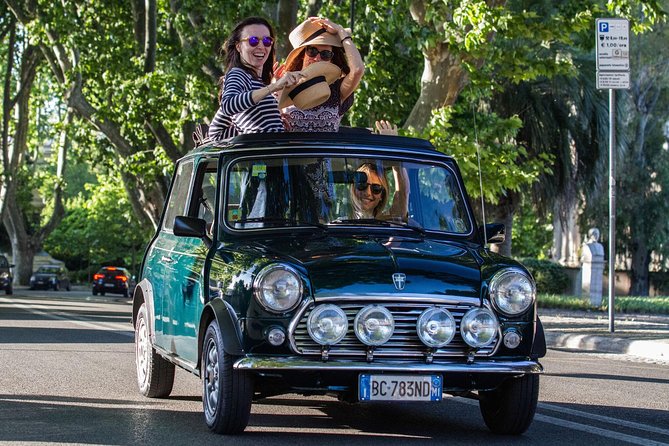
From Piazza land, the route shifts into heavyweight monuments. You stop at the Pantheon, identified here as Tempio Pagano. The short time is enough to get the exterior impression and snap your main photos without turning the afternoon into a long commitment.
Then you continue to St. Peter’s Basilica, listed as a Basilica from the 1500s. This is another place where even a brief window can feel like you stepped into a different scale of Rome. The key is to treat it like a “see it and appreciate the presence” moment rather than a deep study session.
The practical value of this section is pacing. You are not trying to cram a full self-guided visit into three hours. Instead, you’re getting orientation at the sites people build their Rome plans around.
If you want to spend a full afternoon at just one of these, you will still want another day in the city. For time-efficient Rome, this pairing works.
Castel Sant’Angelo plus hilltop viewpoints: where Rome turns scenic
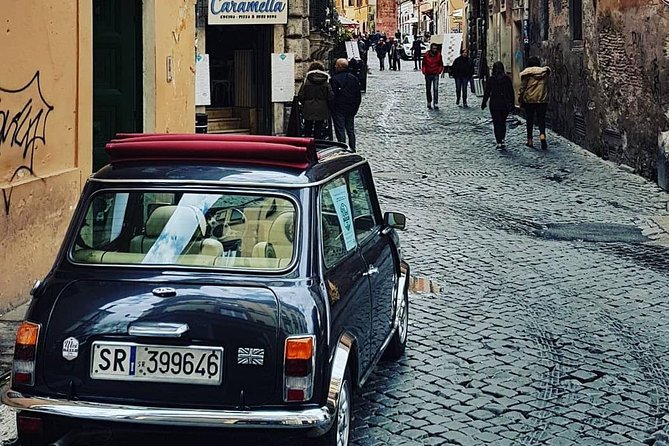
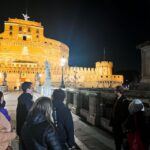
After the classic monuments, the route leans into views. You visit Castel Sant’Angelo, listed as Tomba di Adriano. Even with limited time, it is a strong visual anchor, especially because you are traveling by car and can appreciate it from different angles.
Next you head to Colle del Gianicolo, with its beautiful view of Rome. This is the kind of stop that makes the whole “day and night” idea click. A viewpoint break helps you understand what you already saw, and it gives you fresh images for your camera roll.
You also visit Fontana dell’Acqua Paola with another listed Rome view. These viewpoint stops are the moments you will actually remember when the rest of the day starts blending together—because the photos look different and the city feels broader from above.






Trastevere at night: aperitif break and real neighborhood mood
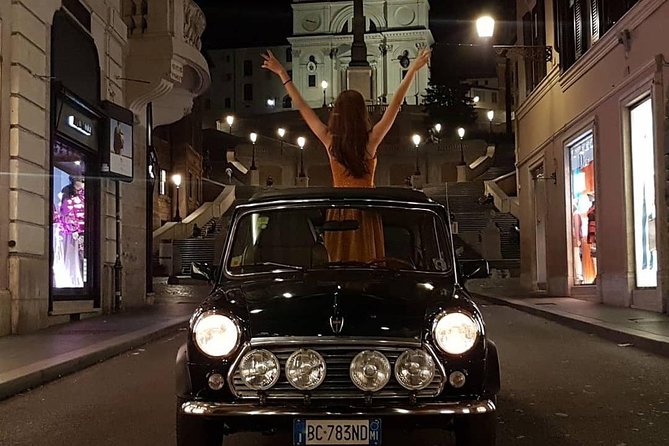
Rome is not only monuments. It is also streets, conversations, and night scenes—and the loop includes Trastevere, described here as one of the best and biggest areas for nightlife and noted as around 1000 years old.
This is where the experience becomes more than sightseeing. The highlights say you will enjoy an aperitif and food at a local spot, and that matters because you get a planned break instead of grabbing food on the run. When you are covering major landmarks back-to-back, having a set food moment is what keeps the trip enjoyable rather than exhausting.
If you care about night atmosphere, this portion is one of the best reasons to book. You get a taste of the evening vibe without needing to plan your own route across districts.
Tip: keep your shoes comfortable. You are doing multiple quick walks, and Trastevere’s streets are not designed for quick, flip-flop hopping.
Largo Argentina and Altare della Patria: fast history in the historic center
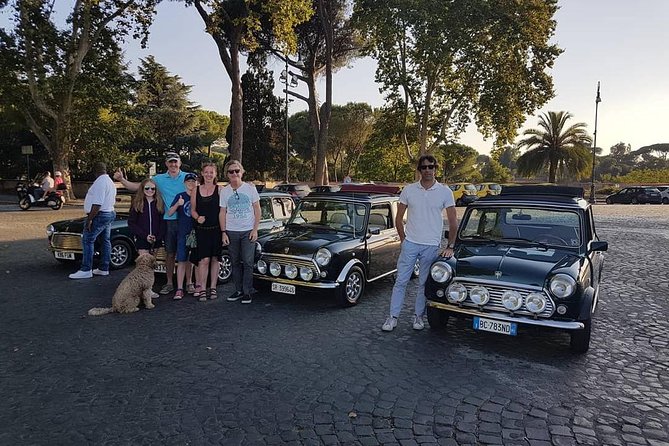
The route moves into the historic center with two high-impact stops. Area Sacra di Largo Argentina is listed as the exact place where Julius Caesar was killed. Even if you only have minutes, it lands hard as a moment of Rome that people remember for one specific event.
Then you visit the Complex of the Victorian Ala Brasini, including Altare della Patria. Think of this segment as “Rome’s power center,” in the sense that these places feel built for public scale and major attention.
There is also a stop noted only as the oldest in the world. The way the loop is designed makes that kind of mystery feel like a fun payoff: you get one more “pause and look” moment even if you do not have it memorized in advance.
This section works best if you like your history compressed. If you want long explanations on one topic, you might prefer a slower walking tour that stays put longer. But for a day-and-night hit list, this gives you big moments without dragging.
Foro Romano to Palatine Hill: ancient Rome in a concentrated walk
You continue to Foro Romano, described as the cultural and political center of old Rome. Then you move to Palatine Hill, identified as one of Rome’s seven hills.
Here’s what I like about how this is handled: you do not just drive past and forget. You get short, guided pauses that help you place what you saw earlier. It is a way to tie together the “old Rome” theme after you already visited landmarks across the city.
This part is also where the private, small-group format really helps. If you want to linger for a photo at one point, it is easier to do when you are not stuck behind a packed crowd.
Aventine Hill, the secret keyhole view, and the calm side of Rome
The loop’s photo highlight is Aventine Hill—listed as one of the seven hills of Rome—plus views from Orange Park and the secret key hole viewpoint connected to Sant’Anselmo Church.
This is the kind of stop that makes the day feel special. Big landmarks are exciting, but viewpoints like this give you images that feel personal and slightly unexpected. It is also a great spot for a break where you do not have to rush through crowds to find a perspective.
If you like taking photos at the golden-hour edge (or anytime you want softer lighting), this is worth paying attention to. The stop is built for pictures, so come ready with your camera angles.
Passing the Pyramid of Caius Cestius and other Roman remnants
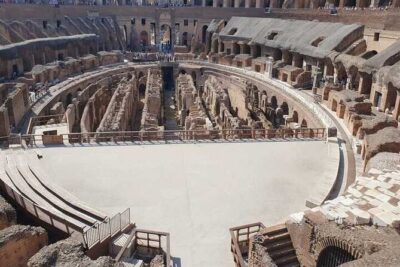
Near the end, you pass by several Roman-era landmarks and areas, including Piramide Tomba di Caio Caestio (12 a.C.) and stops listed as Antica Arena, Antiche terme Romane, and Old Market.
Because these are included as part of the loop with short time blocks, they are not treated like a long excavation visit. Instead, you get the “I saw it in Rome” moment—enough to spark curiosity and help you decide what to revisit later on a separate day.
This is the tour’s overall strategy: give you a wide sweep in limited time, then let you choose what deserves deeper attention next.
Price and value at $209.70: what you actually get
At $209.70 per person, this is not a budget-only option. But in Rome, the math often comes down to time and friction. A lot of what you are paying for here is the convenience of having transport built in, plus the flexibility of short guided stops that keep you moving.
You also get practical inclusions:
- Snacks and bottled water
- Alcoholic beverages
- Aperitif and food at a local spot
- Pickup offered
- Mobile ticket
- English-speaking guide
- Private tour format (only your group)
If you compare this to spending a half-day zigzagging across Rome by yourself and paying for food, drinks, and transport on top, the bundled value can make sense—especially if you only have one afternoon or evening and want to stack major sights efficiently.
One more angle: the reviews strongly emphasize how much fun and how personable the guides are (Luca especially). That personality factor is part of what you are paying for, not just the car.
What it feels like with Luca and Fabio driving the story
The standout theme from the experience is joy paired with competence. Luca is repeatedly described as friendly, passionate, and very committed to showing Rome in a way that feels personal. Fabio also appears as part of a guided setup where the group toured around Rome in two beautiful MINI Coopers.
The best part for me is not just the vehicle—it is the way the tour gives you room to breathe. One key idea you can plan around: you are not forced into a rushed line. You can take your time at certain stops, stroll a bit, and capture photos without feeling bullied by the clock.
Also, the MINI itself becomes part of the street theater. When you drive past in an eye-catching classic car, Rome reacts. That means extra little moments—waves, cheers, people filming you as you pass—that turn the sightseeing into a story you will remember later.
Practical tips so your 3 hours feel smooth
A few habits will help you make the most of the packed schedule:
- Wear comfy shoes. You will step out repeatedly, even if each stop is brief.
- Have a simple photo plan. Pick your must-shots at each square so you do not waste time searching.
- Think light for drinks. Alcoholic beverages are included, so pace yourself if you plan to do lots of walking.
- Use the guide for speed. If you want a quick explanation at each stop, ask early rather than saving questions until the last minute.
- Travel with a clear meeting point in mind. The tour meets at scheduled hours on weekdays, and you’ll want to arrive on time so the loop stays on rhythm.
If you are the kind of traveler who likes seeing a lot but still wants a human touch, this format matches that mood.
Should you book the Rome Day and Night in a Mini Cooper Classic Cabrio?
Book this if you want:
- A fun, memorable ride through Rome in a classic cabrio MINI
- A guided route that hits major landmarks plus viewpoint stops
- An evening-in-the-city feel with Trastevere
- Included food and drinks so you do not have to plan meals during your only Rome afternoon
Skip it (or consider something slower) if:
- You want long time inside major sites rather than short photo breaks
- You hate a schedule that moves quickly from place to place
- You are extremely sensitive to walking, since the day includes multiple on-foot moments
My bottom line: this is a strong value when you want to compress Rome into one afternoon and still come away with hill views, famous squares, and a local aperitif moment. For first-time Rome visitors with limited time, it is an easy yes.
FAQ
How long is the Rome day-and-night MINI Cooper Classic Cabrio tour?
It lasts about 3 hours.
Is pickup available?
Yes, pickup is offered.
What language is the tour in?
The tour is offered in English.
Are snacks and drinks included?
Yes. Snacks, bottled water, and alcoholic beverages are included, and you also enjoy an aperitif and food at a local spot.
Are there admission tickets included for the stops?
The stops listed are marked with admission tickets as free, and the tour includes what is needed for your visit at each stop.
Are children allowed on the tour?
Children must be accompanied by an adult.