REVIEW · ROME
Pantheon, Trevi Fountain and Caravaggio tour with virtual guide
Book on Viator →Operated by Touring Fixer · Bookable on Viator
Rome’s art hits fast—especially with a virtual guide. This tour strings together the Pantheon, Trevi Fountain, and key Caravaggio-related stops, with a narrated walkthrough that keeps you moving without turning the day into a lecture. I like the mix of big landmarks plus specific art stops, and I also like that the Pantheon part includes an admission ticket and skip-the-line entry.
Two things make this work for most visitors: you get structured time at each site, and the pacing is light enough to still enjoy the spaces. The one consideration: audio earphones aren’t included, so plan to bring your own if you’ll need them.
In This Review
- Key highlights (what you’ll notice right away)
- From Piazza della Rotonda to Piazza di Spagna: the route that makes Rome make sense
- Pantheon time: why the included ticket and skip-the-line matter
- Santa Maria sopra Minerva: the Gothic twist in the middle of classic Rome
- Piazza Navona and Bernini’s fountains: the square that pulls you in
- San Luigi dei Francesi: Caravaggio’s presence without the guesswork
- Sant’Ignazio di Loyola and Andrea Pozzo: a ceiling that plays tricks
- Trevi Fountain for 30 minutes: iconic, but manageable
- Spanish Steps: a smart finale with a built-in rest
- Virtual guide experience: what it’s good for (and what it can’t do)
- Price and logistics: does $31.31 feel like value or just a deal?
- Who should book this Pantheon–Trevi–Caravaggio route
- Should you book it? My take on the call
- FAQ
- What’s the duration of the Pantheon to Trevi Fountain and Caravaggio virtual guide tour?
- Where does the tour start and where does it end?
- Is the Pantheon ticket included, and is there skip-the-line access?
- What’s included with the virtual guide experience?
- Are audio earphones included?
- Is the tour available in English, and how many people are in a group?
Key highlights (what you’ll notice right away)
- Skip-the-line Pantheon entry plus a full 40 minutes inside
- Caravaggio focus at San Luigi dei Francesi with time set aside for the Contarelli Chapel area
- Andrea Pozzo’s illusion ceiling at Chiesa di Sant’Ignazio di Loyola
- Baroque visuals in two stops: Piazza Navona fountains and Sant’Ignazio’s theatrical ceiling
- Classic photo moments at a human pace: Trevi Fountain (30 minutes) and Spanish Steps (30 minutes)
- Small group limit of up to 15, which helps the experience feel manageable
From Piazza della Rotonda to Piazza di Spagna: the route that makes Rome make sense
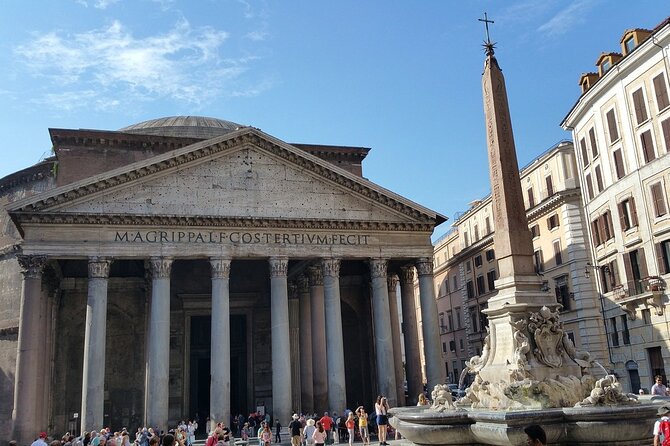
This is a straight-shot Rome walking day that starts at the Pantheon (Piazza della Rotonda) and finishes at the Spanish Steps (Piazza di Spagna). The idea is simple: you go from ancient Rome to Renaissance/Baroque art, then end at the two-photo finish most people want.
What I like about this format is that it’s not just a checklist. Each stop has a clear reason to exist in the route: the Pantheon shows how Romans built awe into stone; then the churches shift the spotlight to faith and art; and the squares and fountains land the cultural “pop” you came for.
The tour runs about 1 to 3 hours, depending on how you absorb each site and how long you pause for photos. It also caps at 15 people, so it doesn’t feel like you’re being swept through.
You can also read our reviews of more guided tours in Rome



Pantheon time: why the included ticket and skip-the-line matter
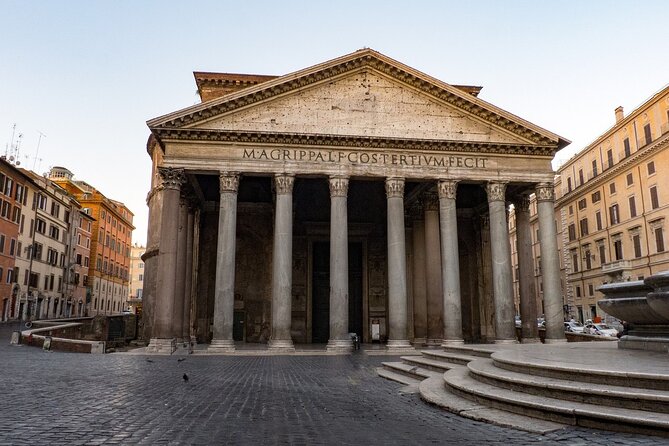
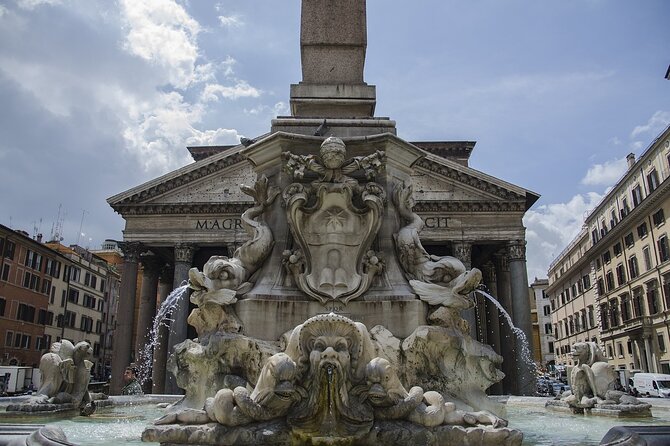
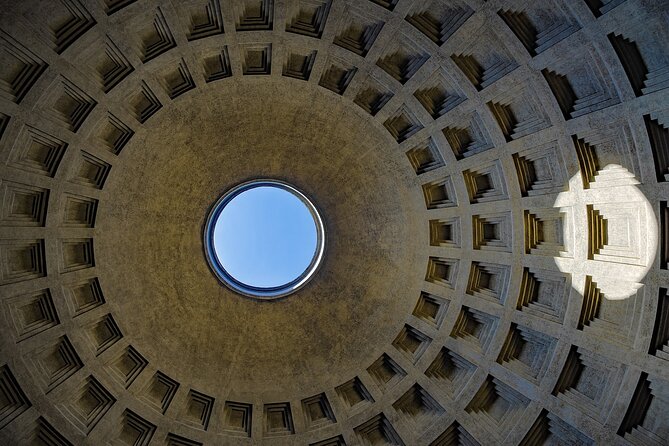
The Pantheon visit is the anchor of the whole experience, with 40 minutes and the admission ticket included. Even if you’ve only seen it in photos, standing under that dome changes the scale in your head. The big detail is the oculus—that open circle at the top that brings in natural light and turns the interior into something that feels alive through the day.
And here’s where the value shows up: skip-the-line access saves you from wasting part of your precious Rome time. The tour gives you the entry piece; you don’t have to chase tickets or lose minutes figuring out the right desk.
Practical tip: plan to arrive ready to look up. The Pantheon rewards attention, and with 40 minutes, you can do a first pass for the wow-factor and a second pass for the architectural details without feeling rushed.
Possible drawback? The Pantheon is popular. Even with skip-the-line, you’ll still want to manage expectations—this is Rome’s showpiece.
Santa Maria sopra Minerva: the Gothic twist in the middle of classic Rome
Next comes Chiesa di Santa Maria sopra Minerva, a Gothic church in Rome. The short visit is 20 minutes, so you’re not “touring a museum.” Instead, it’s more like a focused detour: you see a different architectural voice than the Roman and Baroque scenes around it, then you move on.
This stop is about contrasts. Rome often feels like one style stacking on another, but this church signals that the city’s artistic timeline has curveballs. You also get the sense that the church is meant to hold meaningful treasures, so it’s worth slowing down just a bit and looking carefully rather than snapping and sprinting.
Why it’s a good inclusion: it breaks up the day so the later art-heavy stops don’t feel repetitive.
Piazza Navona and Bernini’s fountains: the square that pulls you in
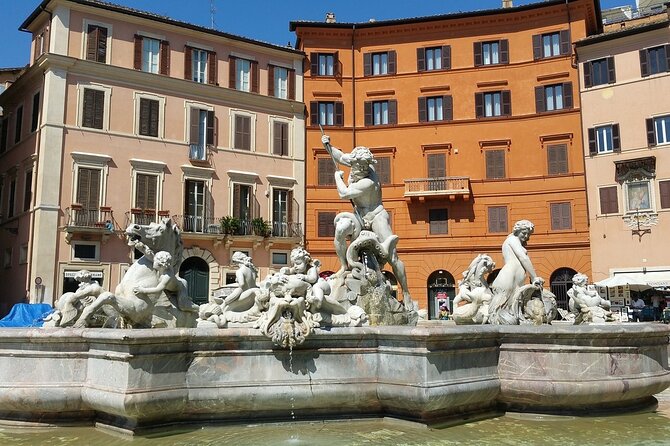
Piazza Navona is next, with 20 minutes and no ticket requirement listed. It’s famous for its elliptical shape and its Baroque fountains, especially Bernini’s Fountain of the Four Rivers.
This is the stop where Rome feels like Rome. You’re not inside; you’re in the open-air stage of the city. The trick is to time your attention: spend a few minutes just taking in the geometry of the square, then go back to the fountains and notice how the sculptural drama is built to be seen from multiple angles.
One consideration: because it’s open and busy, your “learn something” moment can get diluted if you treat it like a quick photo stop. With a short time window, it pays to decide what you’re looking for before you arrive (for example: the Four Rivers centerpiece).
San Luigi dei Francesi: Caravaggio’s presence without the guesswork
The Caravaggio part of the day lands at Church of St. Louis of the French (San Luigi dei Francesi). You get 20 minutes, and the attraction here is specifically Caravaggio’s masterpieces in the Contarelli Chapel.
This is a smart way to handle Caravaggio, because the details can overwhelm you if you don’t know where to aim. A structured visit helps you focus on what matters most, so you spend your time looking rather than trying to decode what you’re seeing.
Also, this church carries a historical thread: it celebrates the cultural and historical link between France and Italy. That adds context to why the church exists and why the art sits where it does.
A reality check: the time is short. If you’re the type who wants to linger for a long, quiet study session, you may feel a bit time-pressed here. But if your goal is to experience Caravaggio’s impact and move on with the rest of the day, this hits the sweet spot.



Sant’Ignazio di Loyola and Andrea Pozzo: a ceiling that plays tricks
Next is Chiesa di Sant’Ignazio di Loyola, dedicated to Ignazio di Loyola, founder of the Society of Jesus. You get 20 minutes in a church known for Andrea Pozzo’s Baroque ceiling fresco, famous for optical illusions.
This stop is pure visual theater. Pozzo’s work uses perspective so the ceiling can feel deeper than stone should allow. In short time, you can still understand the idea: the art is engineered to mess with your expectations, in a good way.
How to enjoy it in 20 minutes: do one steady look from your entry spot to understand the layout, then shift your viewpoint slightly to see how the illusion changes. The tour’s structure keeps you from wandering, and that helps you catch the effect instead of missing it.
Trevi Fountain for 30 minutes: iconic, but manageable
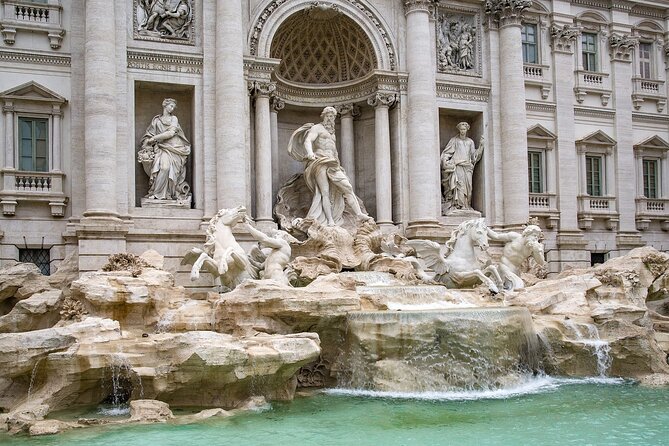
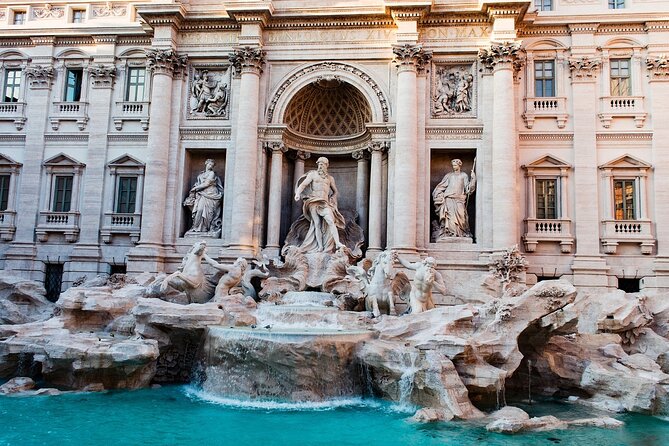
Now you reach Trevi Fountain with 30 minutes and no admission ticket listed. The fountain is powered by one of Rome’s oldest aqueducts, and it features the God of the sea on a chariot pulled by sea horses and tritons.
This is a stop that can go two ways: either it becomes a frantic crowd selfie moment, or it becomes a satisfying, story-filled landmark. The virtual guide format helps because you’re not only looking at the sculpture—you’re learning what the pieces represent, which makes the place feel less like a postcard.
With 30 minutes, you get time to step back, take in the central composition, and still catch a closer view when the moment works for you.
Little practical note: even if you don’t plan to stay for long, Trevi is one of those places where people gather fast. Move with purpose and you’ll feel like you’re in control.
Spanish Steps: a smart finale with a built-in rest
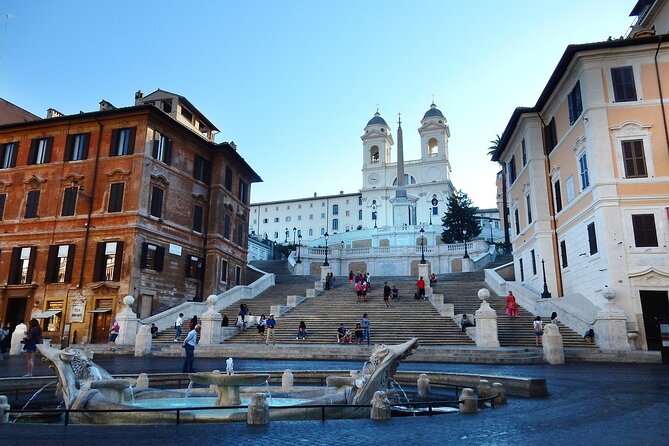
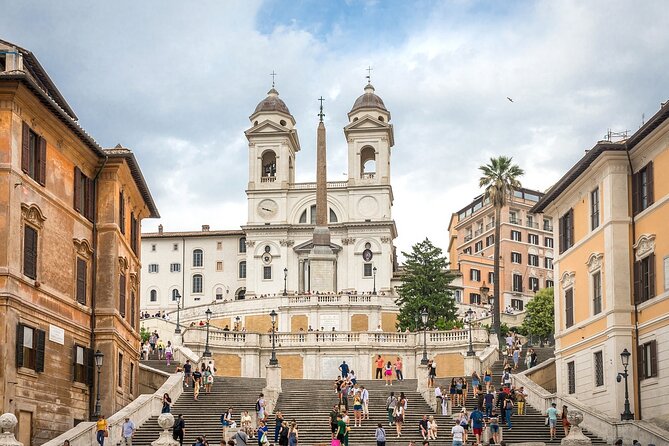
The tour ends at the Spanish Steps, with 30 minutes at Piazza di Spagna. This area is known for the Trinità dei Monti staircase and the Barcaccia Fountain.
As a finale, it’s a good choice. By the time you arrive, you’ve already seen Pantheon engineering, church art, and Baroque spectacle. The Spanish Steps shift the tone to atmosphere—Rome as a place to pause, watch, and absorb.
Best way to use the time: pick one angle to enjoy the staircase as a whole, then use the remaining minutes to enjoy the surrounding details around the square. With a fixed tour end, you can plan to linger a bit without fearing you’ll lose the last stop.
Virtual guide experience: what it’s good for (and what it can’t do)
A virtual guide can be hit-or-miss, but the strongest sign here is the way it keeps you oriented. The narration is built to carry you through the meaning of each site, and it’s especially helpful when a place has layers and you don’t want to guess.
I also like that the tour is designed for your pace. You’re given structured timing at each stop, but you’re not trapped in constant group choreography. That matters in Rome, where you’ll want to stop for a view, a detail, or just a breather.
One small limitation to keep in mind: because it’s virtual, you won’t get live back-and-forth answers on the spot. If you’re the type who loves asking questions mid-walk, you might prefer a live guide for some parts. If you’re happy with a scripted narrative that keeps you moving, this format fits well.
Price and logistics: does $31.31 feel like value or just a deal?
At $31.31 per person, this tour prices itself as an efficient way to cover a lot without paying separate admission for the Pantheon. Since the Pantheon ticket is included, skip-the-line entry is part of what you’re paying for, and that’s usually the cost-saver.
For the rest, the stops are listed as free for admission in the tour plan, including Santa Maria sopra Minerva, Piazza Navona, San Luigi dei Francesi, Sant’Ignazio, Trevi Fountain, and the Spanish Steps area. That means your money mostly supports organization, narration, and the Pantheon entry advantage.
Duration matters too. With 1 to 3 hours and timed stops, you’re not looking at a full day. You’re getting a concentrated route that hits major anchors for ancient architecture, major Baroque sites, and Caravaggio’s connection.
Two practical notes:
- It’s offered in English, which is great if that’s your working language.
- It’s often booked ahead (on average about 21 days), so reserving earlier can help you lock in your dates.
Who should book this Pantheon–Trevi–Caravaggio route
This tour makes sense if you want structure without a heavy schedule. It’s a strong pick for:
- First-timers who want the major icons connected in one walk
- Art-and-history travelers who prefer clear explanations and direction
- People who want the Pantheon access advantage without adding extra planning stress
It also fits a range of travelers since most travelers can participate, it allows service animals, and it’s near public transportation. If you’re relying on a specific accessibility setup, you’ll want to double-check your own comfort with walking between stops, since the format is clearly a moving city route.
Should you book it? My take on the call
Book this tour if you want a smooth Rome route that connects Pantheon engineering, Caravaggio’s presence, and Baroque highlights without turning your day into a stressful logistics puzzle. The combination of virtual guidance and skip-the-line Pantheon entry is the main reason this works at the price.
Skip it if you strongly prefer a live guide for ongoing questions and flexible deep dives. With multiple art sites and short time windows, a live guide can sometimes let you slow down where you personally care most.
If you like your Rome days well-shaped, this is a solid way to get the essentials while still giving yourself time to enjoy the street-level magic between stops.
FAQ
What’s the duration of the Pantheon to Trevi Fountain and Caravaggio virtual guide tour?
The tour lasts about 1 to 3 hours depending on how you move through the timed stops.
Where does the tour start and where does it end?
It starts at the Pantheon (Piazza della Rotonda, 00186 Roma RM, Italy) and ends at the Spanish Steps (Piazza di Spagna, 00187 Roma RM, Italy).
Is the Pantheon ticket included, and is there skip-the-line access?
Yes. The Pantheon entrance ticket is included, and the tour includes skip-the-line entry for the Pantheon.
What’s included with the virtual guide experience?
Included items are the virtual guide, Pantheon entrance ticket, and skip-the-line access.
Are audio earphones included?
No. Audio earphones are not included, so you may want to bring your own if you need them.
Is the tour available in English, and how many people are in a group?
The tour is offered in English, and it has a maximum group size of 15 travelers.