REVIEW · ROME
Rome: Colosseum Arena, Roman Forum & Palatine Hill Tour
Book on Viator →Operated by Nicom Tours · Bookable on Viator
The Colosseum hits different from inside. This 3-hour tour packs arena-floor access and guided storytelling into a tight route through Rome’s power center.
You’ll see the Colosseum from the first and second tiers and step onto the Arena Floor via Gladiator’s Gate—usually off-limits. Add headsets (when you’re on the live-guide option), and you’ll actually catch what your guide is saying, even with crowds.
One thing to plan for: this is a lot of walking and stairs, including uneven pavement and steep sections.
In This Review
- Why This Tour Feels Worth It
- Key Highlights at a Glance
- Arena Floor Meets Ancient Politics: What This 3-Hour Route Includes
- Starting at Via delle Terme di Tito: The Meeting Point That Keeps You From Losing Time
- Entering the Colosseum: Gladiator’s Gate and Arena Access
- Colosseum Tiers and Seats: What You’ll Learn While You Walk
- Security Reality Check: What the Colosseum Will Say No To
- Palatine Hill After the Colosseum: Views, Palaces, and Steep Stairs
- Roman Forum: Temple Ruins, Curia, and the Story of Power
- Timing, Crowds, and Group Size: How It Should Feel
- Price and Value: Is $71.20 a Good Deal?
- What to Bring and How to Prepare So the Day Doesn’t Beat You
- Should You Book This Tour? My Take
- FAQ
- How long is the Rome Colosseum, Roman Forum & Palatine Hill tour?
- Does this tour include Colosseum arena access?
- Is there a live guide in English?
- Are headsets provided?
- Do I need my own headphones?
- Where do we meet for the tour?
- What items are not allowed at the Colosseum security?
- Can I cancel for a full refund?
Why This Tour Feels Worth It
I like that this isn’t just a “see the building” stop. You’re guided into the Colosseum’s guts, including the Arena Floor, and then you move directly into the Forum and up to Palatine Hill—so the places connect in your mind.
You’ll also get the kind of context you can’t easily pull from signs alone, especially when your guide can bring the Roman story to life. Names I’ve seen recommended include guides like Patricia, Nancy, and Ian, and that matters because your whole experience depends on whether you can hear the commentary and follow the timing.
Key Highlights at a Glance
- Arena Floor access via Gladiator’s Gate, plus time on the first and second tiers
- Headsets for live groups (not included if you choose the audio-guide option) to keep you in sync
- One ticket bundle for three major sites—Colosseum, Palatine Hill, and the Roman Forum
- Small groups capped at 24, which helps with crowd flow
- A guide-led route that prevents you from wandering in circles across the ancient center
You can also read our reviews of more tours and experiences in Rome.



Arena Floor Meets Ancient Politics: What This 3-Hour Route Includes
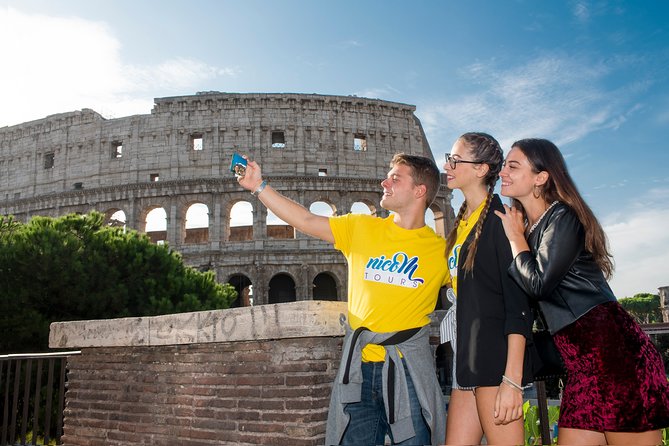
This tour is built like a fast, focused Rome lesson. You start at the Colosseum, move through the amphitheater experience, then walk outward into the ancient city’s political and religious core.
Plan on about 3 hours total. Most of the structure is steady—roughly an hour at each stop—but in real life, you may run long a bit depending on timing and crowd movement. The good news? The route is designed so you don’t waste time figuring out what to look for.
If you like your Rome days with clear direction—less guessing, more “oh, that’s what I’m seeing”—this format works well.
Starting at Via delle Terme di Tito: The Meeting Point That Keeps You From Losing Time
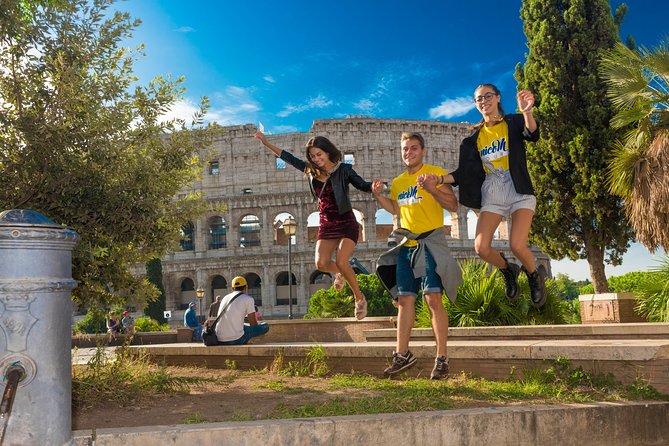
The meeting point is Via delle Terme di Tito, 93 (00184 Roma RM), with the tour ending back at the Colosseum area on Piazza del Colosseo, 1.
This matters because Colosseum days are time-sensitive. Rome’s big landmarks pull you into lines, detours, and security slowdowns fast. A tight starting location plus a guided route is the difference between feeling organized and feeling like you’re constantly catching up.
Pro tip: arrive a few minutes early. Colosseum access depends on checks, and you don’t want to be the person sprinting at the gate.
Entering the Colosseum: Gladiator’s Gate and Arena Access
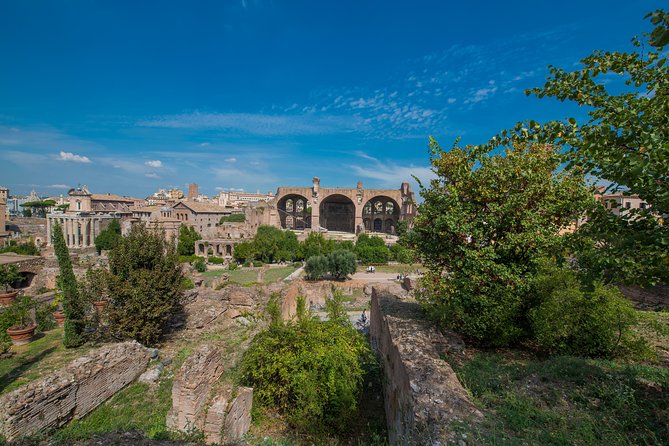
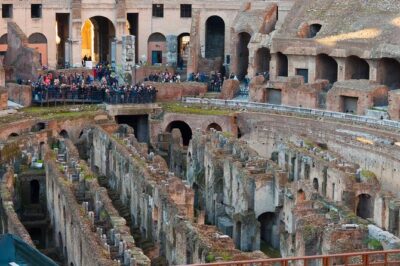
Your first stop is the Colosseum, and the headline is stepping onto the Arena Floor with your guide leading the way. You’ll walk through the Gladiator’s Gate and onto the Arena Floor, which is usually restricted.
That shift in perspective is huge. On the outside, the Colosseum reads like a monument. On the inside—at floor level—it reads like a machine made for spectacle. You can better picture how games were staged, how the arena space shaped sightlines, and why crowds cared so much.
After the Arena Floor moment, you’ll explore the first and second tiers with commentary about how seating worked. You’re not just touring stairs and stone. You’re seeing the social logic of the place—who sat where, and what it signaled.
Colosseum Tiers and Seats: What You’ll Learn While You Walk
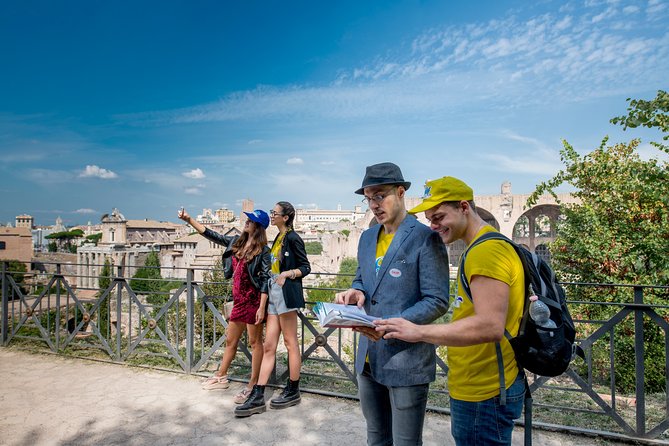
Inside the amphitheater, the guide’s job is to help you “read” what you’re standing on. One of the most useful pieces of context is the idea that seats weren’t random; they reflected social class. That’s the kind of detail that makes your photos more meaningful. You’ll look at the levels and think: this is about status.
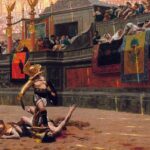
You’ll also hear the story of gladiator games and the entertainment culture that surrounded them. It’s graphic by nature, but the tour frames it in a way that makes the spectacle part of Rome’s politics and public life.
Crowds can be intense. Even with a reservation, the Colosseum area stays busy. When you have headsets, it’s much easier to focus instead of shouting over other groups.






Security Reality Check: What the Colosseum Will Say No To
The Colosseum security rules are strict, and there’s no “just bring it anyway” wiggle room.
Metal detectors are used at entrances, and there’s no bag check service. The tour info lists items you cannot bring, including:
- glass bottles, spray cans, alcohol
- large bags/backpacks/suitcases
- umbrellas with pointed tips
- tripods, drones
- knives, scissors, and any sharp/dangerous objects
- food/drinks in glass containers
Only small bags are permitted, and they must be inspected.
Also, double-check your name on your documents. Some people have been denied entry when the name on the reservation didn’t match ID exactly. If you’re traveling with family, confirm the spelling for every person before you go.
Palatine Hill After the Colosseum: Views, Palaces, and Steep Stairs
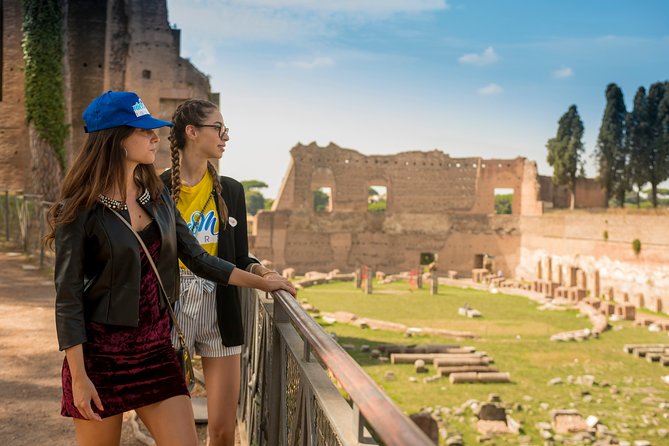
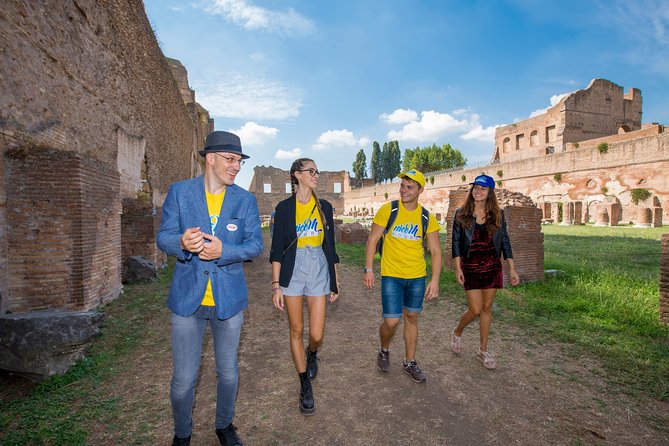
Next comes Palatine Hill, “the heart of ancient Rome,” with a guided walk that points you toward the ruins associated with emperors’ palaces.
This stop is all about context and viewpoint. You’re not just climbing because it’s on the map. You’re going uphill to understand where power lived and why the hill mattered in the city’s geography.
The practical drawback: Palatine can be physically demanding. The tour is marked for moderate physical fitness, and the combination of uneven ground, stairs, and heat can catch people off guard. If you’re heat-sensitive, mornings tend to feel better than peak afternoons.
A smart move is to treat Palatine Hill like an “energy test.” Pace yourself. Take breaks when you need them.
Roman Forum: Temple Ruins, Curia, and the Story of Power
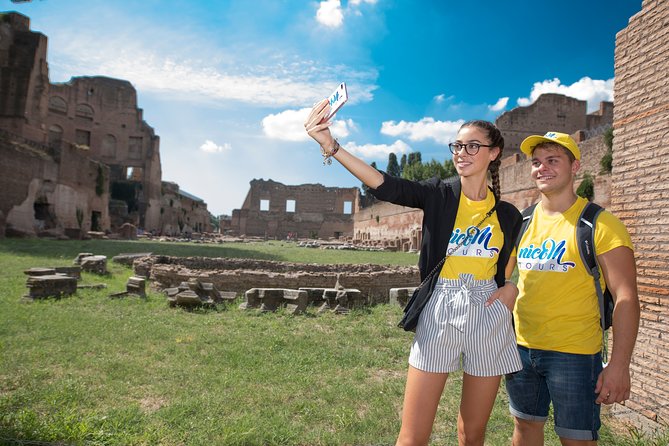
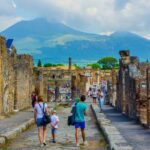
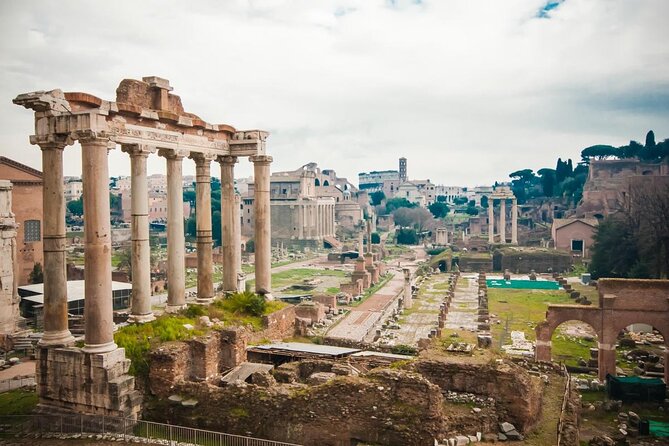
Then you shift from entertainment to government and daily life at the Roman Forum. This is where your brain can start connecting dots: triumphs, speeches, rivalries, and political maneuvering.
You’ll see landmark ruins such as:
- the Temple of Saturn
- the Curia
- the Temple of Caesar
The tour’s Forum focus is the political drama—power, backstabbing, and ambition. That framing helps the ruins stop being random piles of stone and start feeling like the stage for Roman decision-making.
One more reality: the Forum can feel less rushed than the Colosseum, but the tour still runs as a timed route. If you’re the type who wants to linger, this is where you’ll feel the difference between a guided flow and roaming independently.
Timing, Crowds, and Group Size: How It Should Feel
The tour is scheduled for about 3 hours, and it runs with a group size capped at 24 travelers. That smaller cap helps keep movement more controlled, especially at bottlenecks like the Colosseum entrances and transition walks between sites.
Still, timing is real. Some people report the tour running longer than expected. That’s not automatically a problem—Colosseum crowds can slow everything down. But if you have a strict afternoon plan (another ticket, a dinner reservation far away), give yourself buffer time.
Also, language clarity matters. Many guides do well in English, but a few reports mention accent or audio clarity issues. Your best hedge is choosing the live-guide option that includes headsets provided for groups.
Price and Value: Is $71.20 a Good Deal?
At $71.20 per person, the value depends on what you’re buying: time saved, access details, and whether the guide changes what you learn.
Here’s what’s included:
- a Colosseum entrance ticket with arena access (arena floor included)
- a Colosseum reservation fee
- a professional guide (when you select the live-guide option)
- headsets for groups (again, not included with the audio-guide-only option)
Also, the tour info prices in your ticket access across the route—Colosseum, Palatine Hill, and the Roman Forum—so you’re not juggling multiple stand-alone ticket purchases.
In practical terms, you’re paying for:
- arena-floor time (the biggest “only with a good ticket” part)
- a route that’s hard to self-assemble efficiently on a first visit
- context that turns monuments into a story
When this price feels less worth it is when the guide’s English is hard to follow or when the tour runs later than you can handle. If you’re sensitive to pacing, choose a time slot that fits your energy level.
What to Bring and How to Prepare So the Day Doesn’t Beat You
This tour is doable, but you’ll feel it. Bring basics that help you stay functional:
- Water: there are taps with fresh water at points where you can refill
- A hat and sun protection if it’s warm
- Comfortable walking shoes (uneven pavement is part of the deal)
- Your ID matching your reservation name exactly
- If you choose the audio-guide option: your own headphones, plus a fully charged phone and the POP GUIDE app downloaded in advance
One more small but important point: the Colosseum security rules mean you may travel lighter than you’re used to. Plan for that so you aren’t stuck reorganizing at the entrance.
Should You Book This Tour? My Take
Book it if you want the Colosseum Arena Floor experience plus guided context that makes the Forum and Palatine Hill click. This is a great choice for first-timers who don’t want to spend their limited Rome time figuring out what matters.
Skip (or reconsider) if you:
- hate stairs and steep, uneven walking
- need very slow pacing
- rely heavily on perfect audio delivery and worry about understanding accents
If you’re a confident walker, can handle heat, and care about what you’re seeing, this tour is a strong way to hit three top sites in one focused half-day.
FAQ
How long is the Rome Colosseum, Roman Forum & Palatine Hill tour?
It runs for about 3 hours (approx.).
Does this tour include Colosseum arena access?
Yes. The tour includes a Colosseum entrance ticket with arena access, plus the reservation fee.
Is there a live guide in English?
The tour offers English. You’ll have a professional guide unless you select the audio guide option.
Are headsets provided?
Headsets are provided for groups on the live-guide option. If you choose the audio guide option, you’ll use your own setup.
Do I need my own headphones?
If you select the audio guide option, yes—you’ll need your own headphones.
Where do we meet for the tour?
The meeting point is Via delle Terme di Tito, 93, 00184 Roma RM, and the tour ends back at the Colosseum near Piazza del Colosseo.
What items are not allowed at the Colosseum security?
The tour lists restrictions including no large bags, no tripods, no drones, no knives/scissors, and no glass bottles or glass food/drinks. Only small bags are permitted.
Can I cancel for a full refund?
Yes. You can cancel up to 24 hours in advance for a full refund. If you cancel within 24 hours, the amount paid is not refunded.