REVIEW · ROME
The Genius of Caravaggio: Rome Private Tour
Book on GetYourGuide →Operated by Crazy4rome srls · Bookable on GetYourGuide
Caravaggio in Rome is art you can feel. This private tour takes you from church to church tied to his commissions, and you get the stories behind the paintings without getting lost in the weeds. I especially like the chance to see two standout scenes in Santa Maria del Popolo and then finish with the early altarpieces at San Luigi dei Francesi. You’ll also get a live official expert guide (with guides praised for being engaging and friendly, including Chiara and Maria).
The main thing to consider is movement and logistics: there’s no transportation included, and the tour starts at Via del Governo Vecchio and ends at Piazza di Spagna. If you’re relying on taxi or public transit to connect your next plan, you’ll want to build in a little time.
In This Review
- Quick hits before you go
- Why Caravaggio’s Roman churches hit harder than museums
- Meeting at Via del Governo Vecchio and pacing your 3 hours
- Stop 1: Santa Maria del Popolo and the shock of two scenes
- Stop 2: Sant’Agostino and The Madonna of Pilgrims
- Stop 3: Rione IV Campo Marzio and how artists found their rooms
- Stop 4: San Luigi dei Francesi and Caravaggio’s early altarpieces
- What the best guides do for you (and why it matters)
- Value for money: is $456.21 per group a smart deal?
- Who this tour is perfect for
- A couple of things to watch so you don’t waste time
- Should you book The Genius of Caravaggio: Rome Private Tour?
- FAQ
- How long is the Caravaggio private tour?
- Where does the tour start?
- Where does the tour end?
- Are tickets required for this tour?
- Do I need a printed voucher?
- How large is the group?
- Is transportation included?
- What languages are available for the guide?
- Is the tour wheelchair accessible?
- Can I request hotel drop-off by taxi?
Quick hits before you go
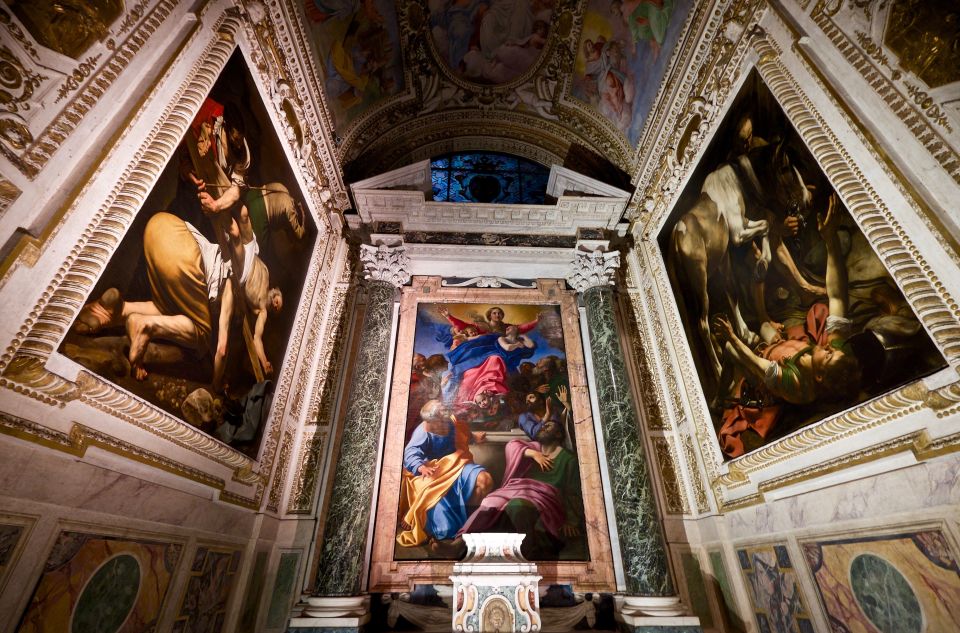
- Santa Maria del Popolo: Saint Paul’s Conversion and the Crucifixion of Saint Peter, with guided context to make the images click fast
- Sant’Agostino: The Madonna of Pilgrims, studied in the church where it was meant to be seen
- San Luigi dei Francesi: three paintings on the life of Saint Matthew, described as Caravaggio’s first altarpieces
- A tight 3-hour private format: fewer people, more time at the paintings that matter
- Multi-language guides: Spanish, English, French, German, Italian, Arabic, Portuguese, Russian
- Skip the ticket line: handy when you’re trying to maximize your time inside churches
Why Caravaggio’s Roman churches hit harder than museums
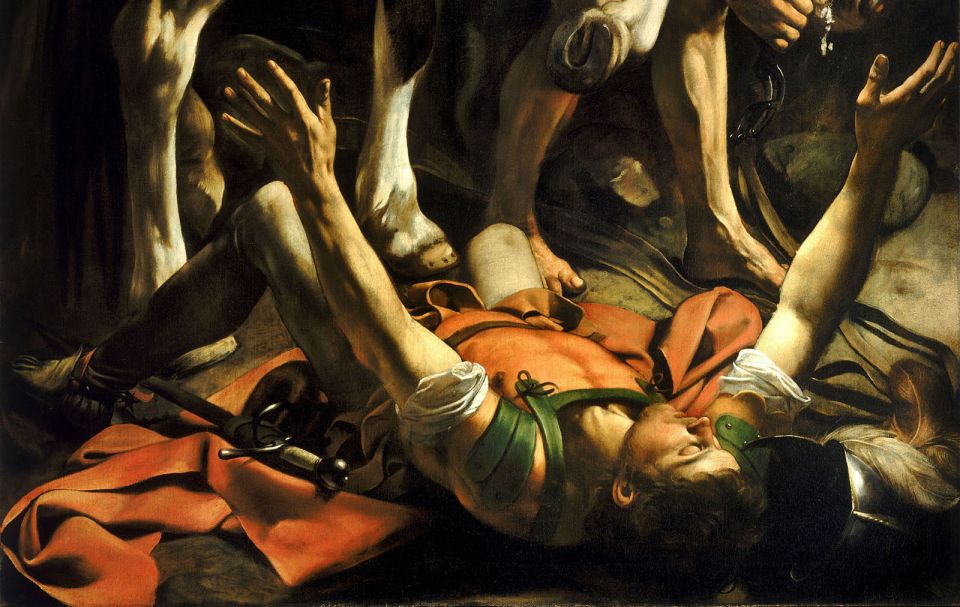
Caravaggio’s work was made for specific places, for specific viewers, and for the kind of faith that was active in everyday life. That’s the big win on this tour: you’re not just looking at famous paintings. You’re seeing them in the settings that originally asked for them.
You’ll also get a sense of the artist behind the drama. Michelangelo Merisi da Caravaggio was born in Milan in 1571 and was in Rome by the end of the 1580s. The guide focuses on the stories, the anecdotes, and the practical techniques that helped his name stay famous for more than 400 years.
And honestly, this kind of tour is a good antidote to art overload. Rome has so many big masterpieces that you can start treating art like a checklist. Here, you slow down. You look closely. Then you move on with a clearer story in your head.
You can also read our reviews of more private tours in Rome

Meeting at Via del Governo Vecchio and pacing your 3 hours
The tour begins at the exit of the Book Store Altroquando, Via del Governo Vecchio, 82. From there, you head into churches and a nearby Rome district stop, with guided time carved out for each place.
Expect a mostly church-based route with short guided blocks. The schedule is built around three longer viewing stops inside churches (about 45 minutes each), plus additional time for a smaller district visit and for another church stop (also guided). Because it’s private, you can ask questions as you go instead of waiting for a group to shuffle along.
One practical note: this experience asks for a printed voucher. I’d treat that like your ticket. If you don’t want to print, plan ahead before you leave home.
Stop 1: Santa Maria del Popolo and the shock of two scenes
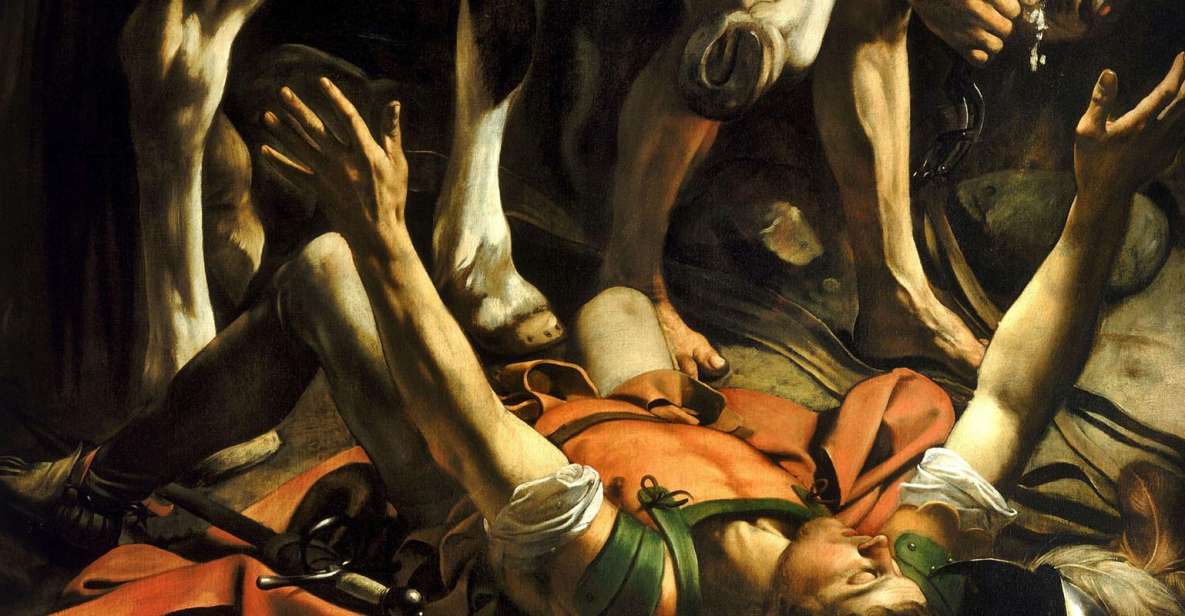
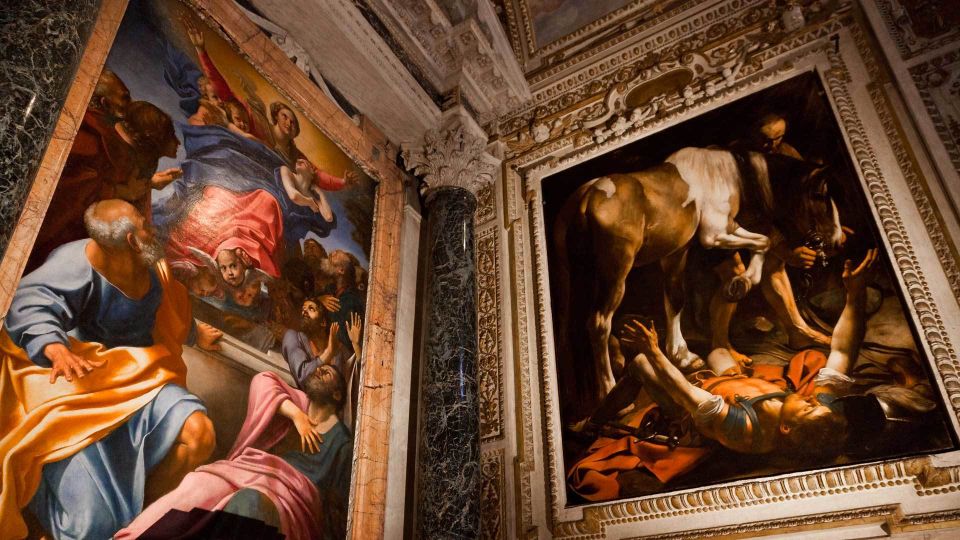
Santa Maria del Popolo is one of the places where Caravaggio’s reputation becomes instantly understandable. You’ll spend about 45 minutes here with a guide, focused on two works: Saint Paul’s Conversion and the Crucifixion of Saint Peter.
What I like about starting here is how it teaches you how to look. The guide’s job is to help you connect the story to what you see—composition, expression, and the way the scene is staged so it hits emotionally. Even if you already know Caravaggio by reputation, the guided approach usually helps you spot what people mean when they talk about his technical skill.
The other reason this stop works is pacing. You’re still fresh. You haven’t been steered into a dozen rooms. You get two major scenes, you understand the narrative, and you’re ready to compare how the next church frames its own Caravaggio moment.
A possible drawback: church lighting and crowd levels can vary. If the space is busy, you’ll get the most out of this stop by staying flexible—move when the guide tells you to, and don’t obsess over one perfect viewpoint.
Stop 2: Sant’Agostino and The Madonna of Pilgrims
Next you go to the Basilica of St. Augustine (Sant’Agostino) for another guided session (about 45 minutes). Here the focus is The Madonna of Pilgrims.
This is a different flavor than the conversion and crucifixion scenes. Instead of digging into major dramatic events, you get a chance to study a sacred image that would have mattered to people in that church’s orbit. The guide helps you study what’s going on—how the painting functions as devotion, not just decoration.
I like this stop because it balances your understanding of Caravaggio. Some people first encounter him through the most dramatic narratives. This church painting reminds you he also mastered the quiet power that comes from an image being believable, human, and emotionally direct.
If you’re the kind of visitor who loves comparing how one artist handles different subjects, this stop is a strong pivot point. You’ll leave thinking about Caravaggio not as a single style, but as a set of choices made for specific commissions.
Stop 3: Rione IV Campo Marzio and how artists found their rooms
Between churches, the tour includes a stop in Rione IV Campo Marzio for about 30 minutes. This isn’t just wandering. The guide connects the art to place—where Caravaggio lived and worked in Rome, and how that neighborhood setting mattered for his work.
This matters for your brain. Art history can feel abstract when you only see paintings. Once you connect those paintings to the streets and districts where the artist moved, the whole story stops floating.
Also, this is a good reset. You get a breath of fresh air before the final big church stop. And because it’s still guided, you’re not left trying to piece together what you’re seeing from your own guesswork.





Stop 4: San Luigi dei Francesi and Caravaggio’s early altarpieces
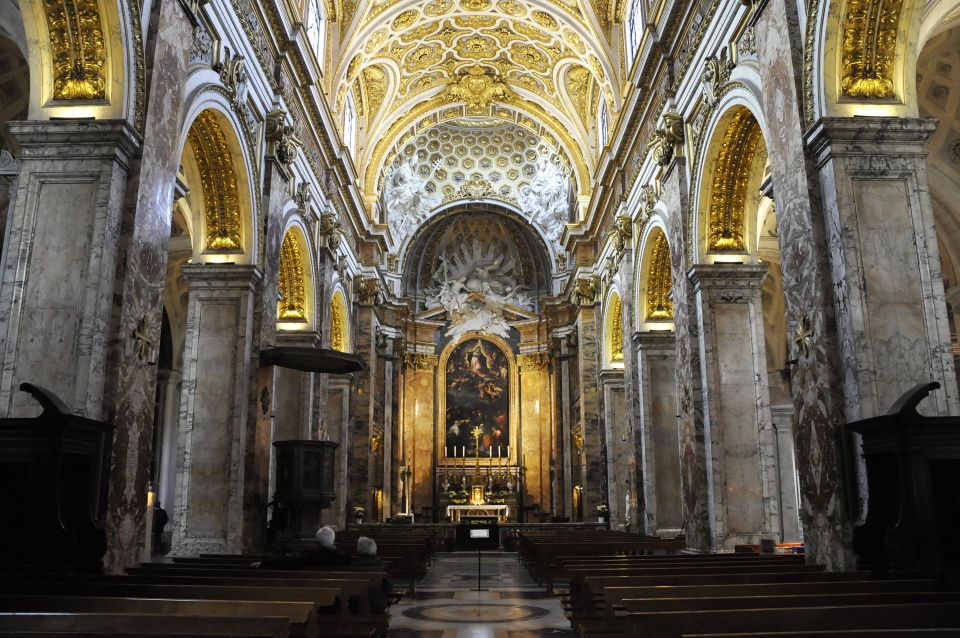
The finishing highlight is San Luigi dei Francesi, a church with a strong French identity in Rome. You’ll get about 45 minutes inside, focused on the three paintings representing the stories of Saint Matthew.
This is where the tour earns its title. The guide explains that these were the first altarpieces ever painted by Caravaggio. That detail is more than trivia. It helps you watch with fresh eyes. If you think of these works as early, you start noticing the ambition: the storytelling, the confidence in dramatic emphasis, and the way the scenes are designed for an altar setting.
I also like that your tour doesn’t just hand you names of paintings. It frames what you’re looking at as a sequence—Saint Matthew’s stories as the church would have experienced them in order.
One more practical benefit: finishing here puts you in a lively central area for your next plan. The tour is listed to finish at Piazza di Spagna, which is a great launching point for dinner or a quick walk around the center of Rome.
What the best guides do for you (and why it matters)
This is a private tour, and that changes the whole experience. You’re not stuck waiting for everyone else to finish taking photos. You can ask the guide why a painting is staged a certain way, or how the story connects to the church’s mission.
The experience includes a private official expert guide, and the language options are wide: Spanish, English, French, German, Italian, Arabic, Portuguese, Russian. If you’re more comfortable in a specific language, that reduces the friction that can happen with art. You spend more time understanding, less time guessing.
It’s also clear from strong feedback that guides often bring energy to the walk. Chiara is praised as engaging and strong at explaining, with a bonus tip about a good gelato spot. Maria is described as extremely expert and an excellent guide, and other feedback highlights guides who are both competent and friendly.
That matters because Caravaggio can be intense. A good guide helps you process the intensity instead of getting overwhelmed by it.
Value for money: is $456.21 per group a smart deal?
The price is $456.21 per group, up to 4 people, for 3 hours. The value depends on how you travel.
- If you’re a couple, you’re likely sharing the cost in a way that feels reasonable for a private, official expert guide across multiple major church stops.
- If you’re traveling with a small group of 3–4, the per-person cost drops fast, and you’re basically buying time with an expert in places where that art was commissioned.
What you get that’s not always included elsewhere:
- Private guide service and an official expert guide
- A structured route with guided time inside key churches
- Skip-the-ticket-line access (even though tickets aren’t required for this experience, having that skip option still helps with smooth entry)
What you should budget separately:
- Meals or beverages
- Transportation to or from
- Optional hotel drop-off by taxi on request, at your own expense
In other words, the price feels like it’s paying for expert guidance and efficiency, not for a bus ride or a package lunch.
Who this tour is perfect for
This tour is a great fit if you want:
- A focused Caravaggio experience without racing through Rome
- Churches where you can understand the paintings as part of commissioned work
- A guide who can translate art into story—conversion, crucifixion, and Saint Matthew’s sequence
It’s also a smart pick if you’re not trying to master the entire Renaissance catalog. You’ll leave with a handful of paintings you truly understand, and that’s often more satisfying than collecting 50 names.
A couple of things to watch so you don’t waste time
Because the tour is private and time-boxed, you’ll get the most out of it by coming ready to look. If you’re the type who likes spending 30 minutes photographing one tiny detail, you might find the pacing a little tight. You can still ask questions, but the route is designed around guided blocks.
Also, the ending point can matter for your plans. The route is described to finish at Piazza di Spagna, but you’ll want to double-check your confirmation details so you’re not surprised by where you land for dinner or your next reservation.
Should you book The Genius of Caravaggio: Rome Private Tour?
Yes, if you want Caravaggio in the places that commissioned him, and you like the idea of learning how to look—story first, technique second, then the bigger context. This private 3-hour format is built for people who don’t want art overwhelm. You’ll see major works in Santa Maria del Popolo, key devotional work in Sant’Agostino, and the early Saint Matthew altarpieces at San Luigi dei Francesi.
If you’re traveling solo with low interest in guided explanations, you might prefer a self-guided plan where you can linger at your own pace. But if you want the “why” behind what you’re seeing, this is the kind of tour that turns famous names into real pictures you can remember.
FAQ
How long is the Caravaggio private tour?
It lasts 3 hours.
Where does the tour start?
The tour starts at the exit of the Book Store Altroquando on Via del Governo Vecchio, 82.
Where does the tour end?
The itinerary lists the finish at Piazza di Spagna. Check your voucher for the exact end point details.
Are tickets required for this tour?
Tickets are not required.
Do I need a printed voucher?
Yes. A printed voucher is required.
How large is the group?
It’s a private group.
Is transportation included?
No. Transportation to or from is not included.
What languages are available for the guide?
The guide can be Spanish, English, French, German, Italian, Arabic, Portuguese, Russian.
Is the tour wheelchair accessible?
Yes, it’s wheelchair accessible.
Can I request hotel drop-off by taxi?
Yes, hotel drop-off by taxi is available on request, at your own expense.