REVIEW · ROME
Rome Unforgettable Highlights by Golf Cart Tour
Book on Viator →Operated by Loving Rome · Bookable on Viator
Rome from a golf cart feels surprisingly easy. This 3-hour highlights loop turns Rome’s biggest hits into a calmer, faster first look, with an English-speaking driver-guide pointing out what you’d otherwise miss. I especially love the small-group setup (max 7) and the way guides such as Julius, Dario, and Francesco keep the stops organized and the stories clear.
The main thing to watch is that this is external access only, so you’ll see the monuments up close from the outside, but you’ll need separate tickets if you want inside. And if you sit farther back, traffic noise can make it harder to catch every word.
In This Review
- Key Highlights at a Glance
- Why a Golf Cart Tour Works in Rome
- The Real Value: Small Group + English Guidance
- Where You Start: Piazzale del Museo Borghese
- The Comfort Factor: Electric 7-Seater Carts and Headsets
- Villa Borghese Stop: Gardens, Art, and a Breather From Streets
- Piazza del Popolo: The Obelisk and Two Churches
- Spanish Steps: The 135 Steps You Can’t Ignore
- Trevi Fountain: Baroque Drama and the Coin Tradition
- Colosseum Area: Big Exterior Views, Big Questions
- Piazza Venezia: Where Rome’s Major Roads Meet
- Pantheon: The Dome Moment You Feel Immediately
- Piazza Navona: Baroque Fountains and Street-Life Atmosphere
- Castel Sant’Angelo: Fortified History Along the Tiber
- How the Stops Add Up for First-Time Rome
- Timing, Weather, and What to Wear
- What’s Included vs What You Must Plan Yourself
- Price and Value: $60.07 for a Lot of Seeing
- So, Should You Book It?
- FAQ
- How long is the Rome Unforgettable Highlights by Golf Cart Tour?
- What is the price per person?
- Is the tour offered in English?
- How big is the group?
- Does the tour include tickets to attractions?
- Where does the tour start and end?
- Does the tour include hotel pickup and drop-off?
- What should I bring?
- What items are not allowed?
- What happens if it rains?
Key Highlights at a Glance
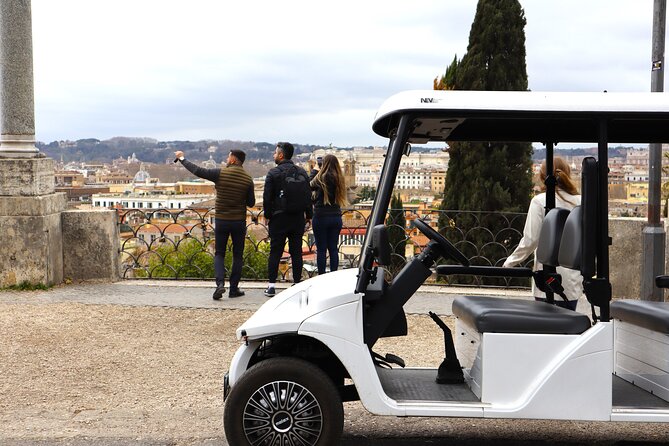
- Max 7 people in a 7-seater electric cart: more room to hear and ask questions than big-bus tours
- English driver-guides that travelers call out by name (Julius, Dario, Francesco, Ivano, Matteo): clear explanations at each stop
- Iconic Rome stops in one loop: Villa Borghese, Piazza del Popolo, Spanish Steps, Trevi, Colosseum area, Piazza Venezia, Pantheon, Piazza Navona, Castel Sant’Angelo
- Headsets if needed: helpful when streets get loud
- No hotel pickup, no entry tickets included: plan on buying monument tickets yourself if you want interiors
Why a Golf Cart Tour Works in Rome
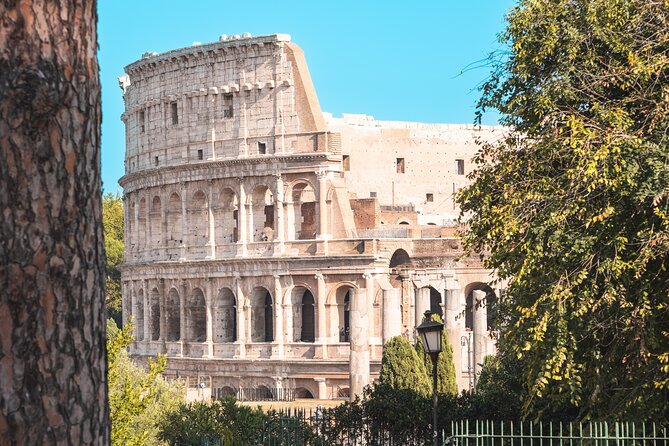
Rome is perfect for walking… and also exhausting after a few days. This electric golf cart format gives you the best of both worlds: you still hit the sights, but you’re not spending the whole day grinding your feet in stop-and-go traffic and crowded sidewalks.
The value is in the pacing. You cover a lot in 3 hours without the long waits that can come with larger group tours. Plus, because the cart can move through tighter streets than many buses, you get those “how did we get this close” moments.
You can also read our reviews of more tours and experiences in Rome.



The Real Value: Small Group + English Guidance
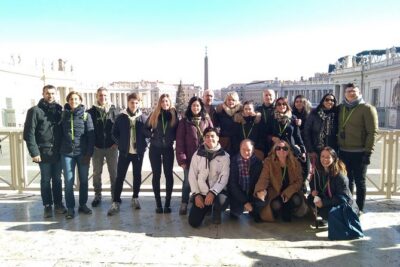
One of the best parts of this tour is the group size (up to 7). It’s not just about comfort. With fewer people, the guide can slow down where you need it—photos, quick questions, and the tiny bits of context that make famous buildings click.
Guides come up often in feedback—Julius, Dario, Francesco, Ivano, Matteo, Luca, and Robin are names you’ll see associated with clear English and friendly, on-the-spot help. That matters in Rome, where landmarks can blur together fast if someone isn’t framing what you’re seeing.
Where You Start: Piazzale del Museo Borghese
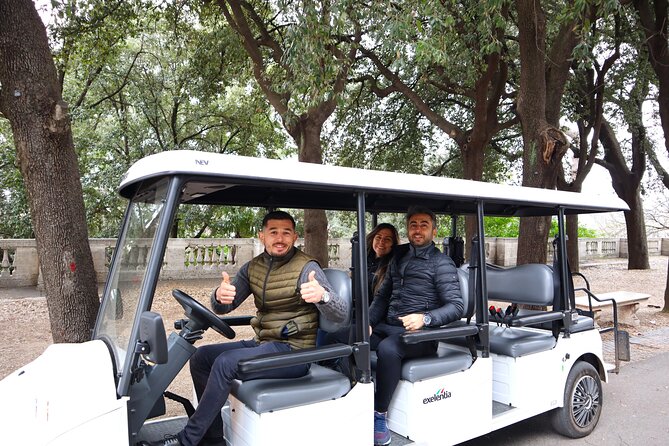
Your meet-up point is Piazzale del Museo Borghese (start and end). It’s a handy area because it’s near public transportation, so it’s easier to get there even if you’re not using a hotel shuttle.
This tour also ends right back at the same spot, which is a small but real convenience. You don’t have to figure out how to “escape” a central area afterward. Just plan your day so you’re not rushing to your next reservation right when the tour wraps.
The Comfort Factor: Electric 7-Seater Carts and Headsets
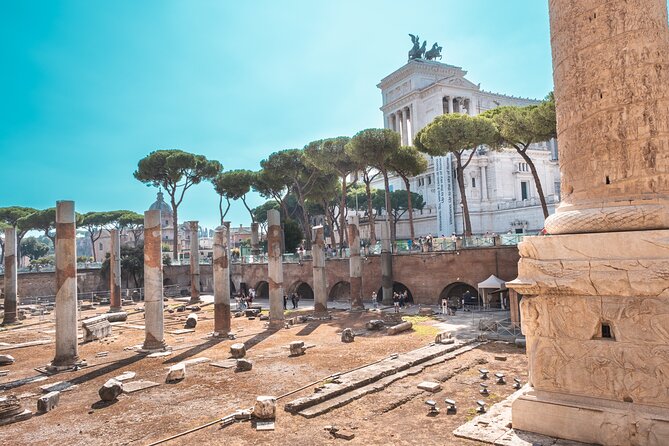
The tour uses an electric golf cart (7-seater), and headsets are available if needed. If you’re sensitive to sound or you know you struggle to hear in busy street conditions, this is worth paying attention to.
One consideration: hearing can depend on where you sit. If you sit in the back, you might get less of the narration, especially near louder streets. If you’re concerned, ask early about headsets or any seating strategy the guide recommends.
Villa Borghese Stop: Gardens, Art, and a Breather From Streets
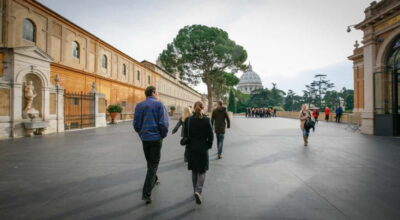
The tour kicks off with Villa Borghese, one of Rome’s signature retreats. It covers a huge area of gardens, lakes, and old trees, and the feel is different from the stone-and-traffic energy of central Rome.
Even if you don’t go inside any galleries on this specific tour, the value here is a change of pace. You get scenic outlooks and a sense of how the city planned space for leisure back in the 1600s. If you want the Galleria Borghese collection, you’ll need separate entry—this tour doesn’t include interiors.
Practical tip: wear shoes that handle uneven paths and keep your camera ready. The viewpoints around this area are the kind you’ll want more than one photo for.






Piazza del Popolo: The Obelisk and Two Churches
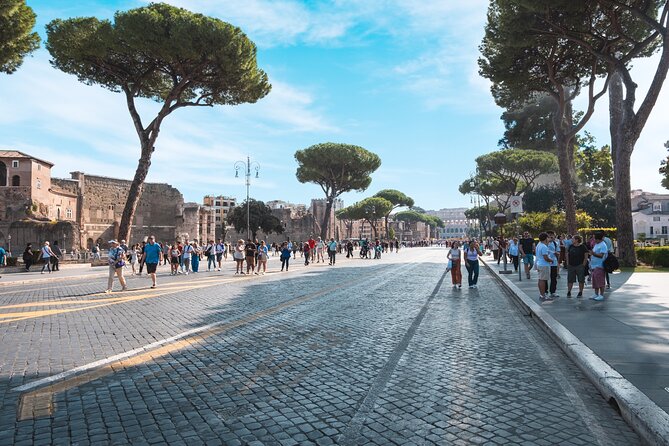
Next up is Piazza del Popolo, a major square at the northern edge of the historic center. It’s framed by impressive buildings and flanked by twin Baroque churches, and the centerpiece is an Egyptian obelisk—an old imperial symbol standing in a very Roman setting.
Why this stop works on a golf cart tour: it gives you a quick “north-south” orientation. Once you see how this square connects to the rest of the city, it’s easier to understand the geometry of Rome’s routes later when you’re walking on your own.
If you like architecture details, this is a good place to slow down. Look up at the facades, then step back and take in the whole square so it stops feeling like a random stop.
Spanish Steps: The 135 Steps You Can’t Ignore
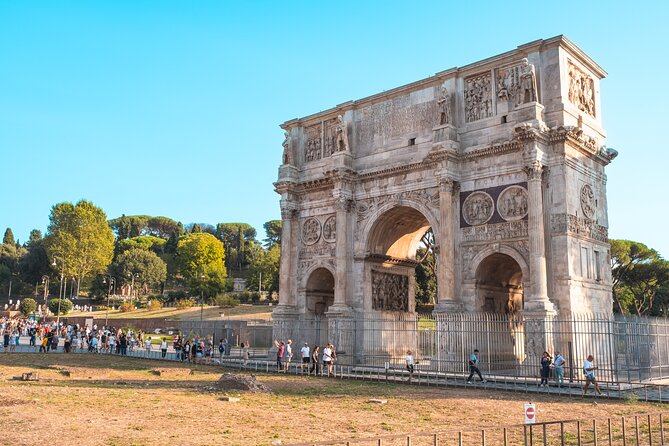
The Spanish Steps (Scalinata di Trinità dei Monti) are an instantly recognizable Rome scene: 135 steps linking Piazza di Spagna with the church above. This is also where the city’s “social Rome” vibe shows—people sit, chat, and watch the flow below.
At the base is the Barcaccia Fountain by Bernini, and in spring the azaleas around the area add color. Even if you’re not traveling in peak bloom, it’s worth noting because the setting shifts with season and that changes the mood a lot.
On a cart tour, you’ll get a chance to take photos and soak it in briefly. If you want a longer sit-down moment with a café nearby, this stop is a great place to plan it for later the same day.
Trevi Fountain: Baroque Drama and the Coin Tradition
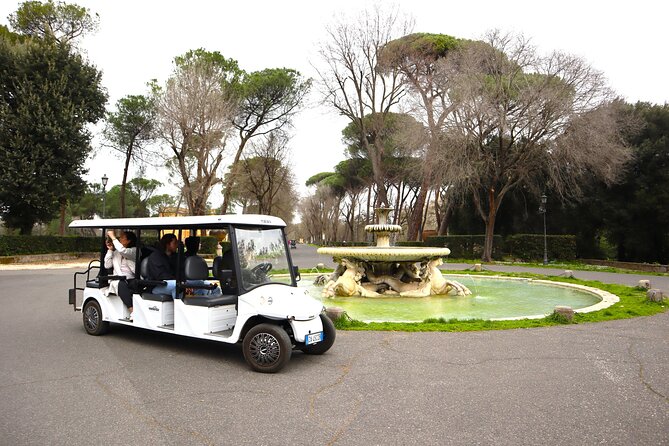
Fontana di Trevi is the kind of place where you understand why people come even when you’ve seen pictures before. The fountain’s Baroque design includes sea-themed sculptures, with Oceanus as the central figure, and the cascading water gives it a constant sense of motion.
The famous tradition—tossing a coin over your shoulder—gets tourists involved immediately. This is one of those Rome rituals that’s silly and fun at the same time, and it’s part of the experience even if you don’t take it too seriously.
One practical note: this area can be loud and crowded. Plan your photos, then focus on the details once you’re close—sculpture work, water flow, and the surrounding historic facades. That’s where Trevi goes from famous to memorable.
Colosseum Area: Big Exterior Views, Big Questions
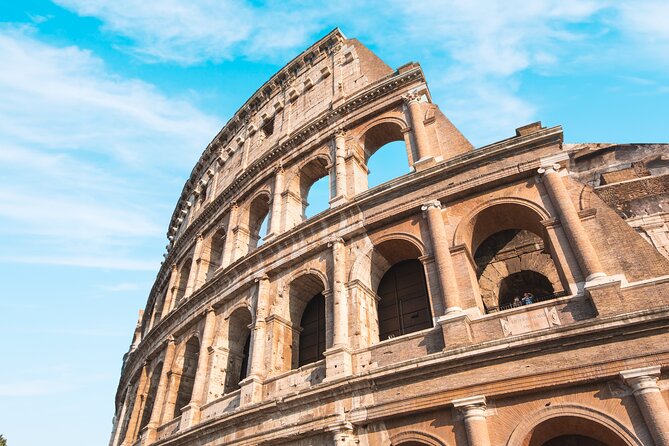
The tour includes a stop for the Colosseum (Colosseo). Even from the outside, it’s hard not to feel the scale: the elliptical shape, multiple levels of arches, and that travel-famous travertine look.
It’s also a place where context matters. The Colosseum was built for massive public spectacles, once capable of holding enormous crowds, and it functioned as more than just an arena. A good guide helps you connect the architecture you see to the kind of performances it hosted long ago.
Keep expectations realistic: because the tour is external access, you won’t get inside the Colosseum with this ticket. If you want the full experience—areas, levels, and the history you can read on-site—you’ll need to plan separate entry.
Piazza Venezia: Where Rome’s Major Roads Meet
Piazza Venezia is central and strategic. It’s dominated by Altare della Patria (Altar of the Fatherland), and the square connects you to major routes heading toward the Roman Forum and Colosseum area, plus another route that leads into central shopping streets.
This is a useful stop for orientation because it frames how Rome is built around key arteries. When you later choose where to walk next, you’ll remember how these roads line up.
If you like quick architectural landmarks, the surrounding palaces and civic feel here make it an easy “anchor” stop. It helps you map the city in your head.
Pantheon: The Dome Moment You Feel Immediately
The Pantheon is one of the most impressive architectural feats you’ll see anywhere in Europe. Its domed roof with the central oculus lets daylight pour in, turning the interior into a kind of natural light show.
A key detail that makes this stop stand out: the dome is massive and built as unreinforced concrete. Outside, you can still appreciate the scale and design logic, but if you want to experience the light in person, you’ll need separate entry since this tour focuses on external access.
Even as a photo stop, the Pantheon has a “stop you in your tracks” effect. Look for the geometry first—columns, height, and the perfect circle shape of the oculus from outside angles.
Piazza Navona: Baroque Fountains and Street-Life Atmosphere
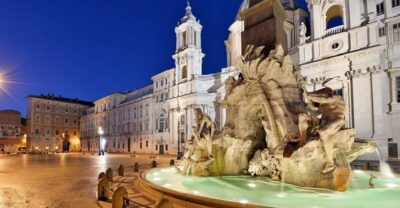
Piazza Navona is famous for its Baroque design and its three fountains, including Fontana dei Quattro Fiumi by Bernini in the center. The square sits on the former Stadium of Domitian, and that layers old Rome under the modern scene.
This is a great pause on a golf cart tour because you can actually walk around and absorb the vibe without feeling like you’re rushing. Outdoor cafés and street performers can pop up here, so it often feels like a lively public square rather than a monument stop.
A practical strategy: spend a couple minutes locating the fountain and one church/palace feature, then take your time. Navona rewards a slow look because the square is designed to pull your eyes in multiple directions.
Castel Sant’Angelo: Fortified History Along the Tiber
At the end, you reach Castel Sant’Angelo, perched on the Tiber River. It began as Emperor Hadrian’s mausoleum and later served multiple roles—fortress, papal residence, and even a prison.
On the skyline, it’s instantly recognizable: the cylindrical mass, the strong fort-like silhouette, and the archangel statue near the top. As a final stop, it works well because it’s a different kind of monument than what you saw earlier—more military and river-defensive than temple or fountain.
This is also a good spot to compare Rome’s eras. You’ve already seen ancient public spectacle (Colosseum), imperial planning (Piazza Venezia), religious architecture (Pantheon), and civic baroque design (Navona). Castel Sant’Angelo adds the survival story: Rome rebuilt itself again and again.
How the Stops Add Up for First-Time Rome
This tour is built around classic Rome landmarks, but the real win is how the loop gives you an overview of different “Rome types” in a short window. You go from gardens to squares, then fountains, then ancient architecture, then the river.
If it’s your first night, this is a great way to get your bearings fast. After that, your next walks feel more intentional. You start recognizing sections of the city rather than just collecting sights.
Timing, Weather, and What to Wear
The tour lasts about 3 hours, so you’ll feel the pace—but it’s not frantic. You do need comfortable shoes. Even with limited walking, you’re stepping on uneven sidewalks, stopping for photos, and moving in and out of areas with crowds.
Weather matters in Rome. The tour goes ahead in light rain, but you’ll still want weather-appropriate clothing. Bring a light layer if you’re traveling in shoulder seasons and be ready for sun if you’re there in warmer months.
What’s Included vs What You Must Plan Yourself
Here’s the practical breakdown:
Included:
- Electric golf cart (7 seaters)
- English driver-guide
- External access to the attractions
- Headsets if needed
Not included:
- Entry tickets to the attractions
- Hotel pickup/drop-off
- Food and drink
- Audio guides
- Tips
That’s important for budgeting. You might think you’re paying for a full museum day, but you’re really paying for a guided highlights circuit with a smooth ride and lots of context.
If you want interiors at the Pantheon or Colosseum, I’d plan those as separate add-ons. This tour is the spark. Then you choose what you want to go back for.
Price and Value: $60.07 for a Lot of Seeing
At $60.07 per person for about 3 hours, the price is reasonable when you compare it to the cost of organizing multiple separate guided experiences. You get a guided overview, movement through tight streets, and a small-group setup that helps you actually hear the guide.
Is it expensive compared to doing everything on your own? Sure, if you’re comfortable building a route and dealing with crowds on foot. But for a first-time visit—or for days when you’re trying not to burn out—this is a smart way to buy time and energy.
You’ll also feel the value most if you’re okay with exterior viewing and you treat entry tickets as your next step.
So, Should You Book It?
Yes, if you want a short Rome crash course that still feels personal. This tour makes the best sense for first-timers, people who want to see the major landmarks without a full-day march, and anyone who likes learning details as they look rather than reading guidebooks alone.
Skip it or pair it carefully if you only care about interiors. Since this experience is external access and entry tickets aren’t included, you’ll still need to plan separate reservations for places like the Colosseum and Pantheon if those are your must-dos.
If you want a safe bet, book early. This tour is commonly reserved about 53 days in advance, so choosing dates earlier helps you lock in the time you want.
FAQ
How long is the Rome Unforgettable Highlights by Golf Cart Tour?
It’s approximately 3 hours.
What is the price per person?
The price is $60.07 per person.
Is the tour offered in English?
Yes, it’s offered in English.
How big is the group?
The tour has a maximum of 7 travelers.
Does the tour include tickets to attractions?
No. Entry ticket costs and internal access are not included; the tour provides external access.
Where does the tour start and end?
It starts and ends at Piazzale del Museo Borghese, 00197 Roma RM, Italy.
Does the tour include hotel pickup and drop-off?
No hotel pickup and drop-off are included.
What should I bring?
Bring a passport or ID card, comfortable shoes, and weather-appropriate clothing.
What items are not allowed?
Luggage or large bags, weapons or sharp objects, unaccompanied minors, strollers, and pets are not allowed.
What happens if it rains?
The tour will proceed in the event of light rain.