REVIEW · ROME
Rome Tailor-Made: Choose Your Private Tour
Book on Viator →Operated by Eyes of Rome · Bookable on Viator
Rome feels less chaotic with a guide. This private, choose-your-own tour lets you pick the sights that matter most, with entrance fees included when needed and fast-track help at the Vatican. I like the flexibility to mix squares, ancient ruins, and art in one morning, and I love the way your guide turns famous landmarks into specific stories like Bernini’s Four Rivers fountain and Michelangelo’s Sistine frescoes. One catch: Rome’s religious sites and the Colosseum have strict dress code and footwear rules, so plan your outfit early.
For about $294.89 per person for roughly 3–4 hours, you’re paying for time, focus, and a guide who can adjust the pace. Some routes include hotel pickup by private vehicle, while others are mainly on foot. If you’re hoping to cram everything into one stop-to-stop checklist, you’ll need to choose your theme wisely.
In This Review
- Key things I’d pay attention to
- How the private tour lets you shape your Rome day
- Picking your theme: ancient Rome, Vatican art, squares and fountains
- Piazza Navona: the Four Rivers moment (and how to notice it)
- Trastevere walk: swapping crowds for lived-in streets
- Vatican Museums and the Sistine Chapel: where fast-track helps most
- St. Peter’s Basilica: priceless art, plus entry rules
- Pantheon and the art of noticing ancient details
- Spanish Steps area and Via Condotti: what to do with shopping energy
- Tiber Island and the Jewish Ghetto atmosphere
- Roman Forum and Colosseum: the two big ancient wins
- Pickup, private vehicle time, and why it changes your day
- What the guide quality looks like in real life
- Price and value: $294.89 per person for a half-day
- Practical tips so you don’t get stopped at the door
- Should you book Rome Tailor-Made?
Key things I’d pay attention to
- Choose-your-own themes: Colosseum/Roman Forum, Squares and Fountains, Vatican Hidden Gems, Jewish Rome, Wine Tasting, and Early Morning Vatican.
- Half-day structure: expect about 30–40 minutes per major stop on a typical route, with longer time at the biggest sites.
- Fast-track Vatican Museums: you get skip-the-line entry into the Museums complex.
- Real-world pacing: the tour can move on foot or by private vehicle depending on your chosen theme.
- Strict entry rules: shoulders/knees covered, closed-toe non-slip shoes, plus passport or photo ID for the Colosseum.
How the private tour lets you shape your Rome day
This is not one fixed “show up and march” itinerary. You choose a private theme, and your guide builds the route around the sights that match your interests and timing.
What that means for you is simple: you spend less time translating maps and more time understanding what you’re seeing. The guide’s job is to connect the dots—so Piazza Navona isn’t just pretty, the Roman Forum isn’t just columns, and Vatican art isn’t just crowd-eye-candy.
It’s also a good setup if your group is mixed: history lovers, art fans, first-timers, and people who just want their feet on the ground for a few hours.
You can also read our reviews of more private tours in Rome


Picking your theme: ancient Rome, Vatican art, squares and fountains
The tour offer is built around several popular directions:
If you’re all-in on ancient power, go for the Colosseum and Roman Forum style route. If you want the city’s postcard scenes with context, choose Squares and Fountains. If you care most about art and sacred spaces, select one of the Vatican-focused themes (including options like Vatican Hidden Gems or Early Morning Vatican). For culture and story tied to place, choose Jewish Rome.
This matters because Rome is big, and a private half-day only has so many hours. I’d match your theme to what you want most on your limited time—then let the guide do the ordering and pacing.
Piazza Navona: the Four Rivers moment (and how to notice it)
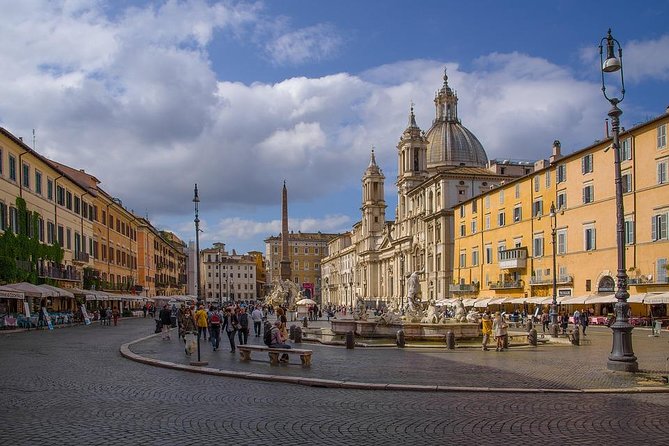
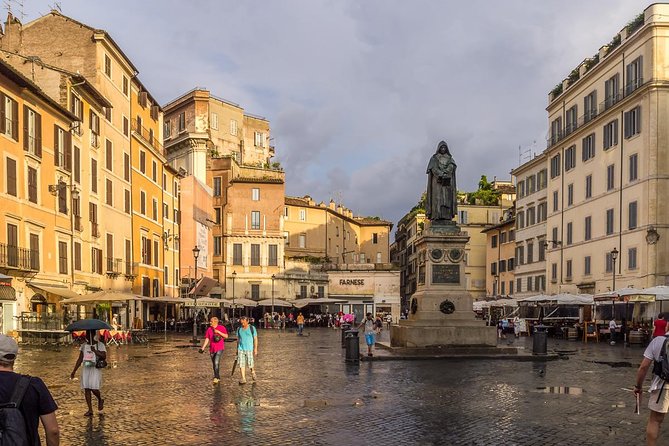
A classic route often starts at Piazza Navona, a famous Roman square known for its three major fountains. The star is Fontana dei Quattro Fiumi by Bernini, and your guide points out what to look for so you don’t just snap photos and move on.
Here’s the practical advantage: in Rome, the best “wow” moments usually hide in details. Your guide helps you notice symbols and design choices that you’d miss if you were walking alone.
And yes, the square is a people-watching stage. Outdoor cafes and restaurants line the scene, so you’ll feel that lively square energy while still getting the meaning behind the architecture.
Trastevere walk: swapping crowds for lived-in streets
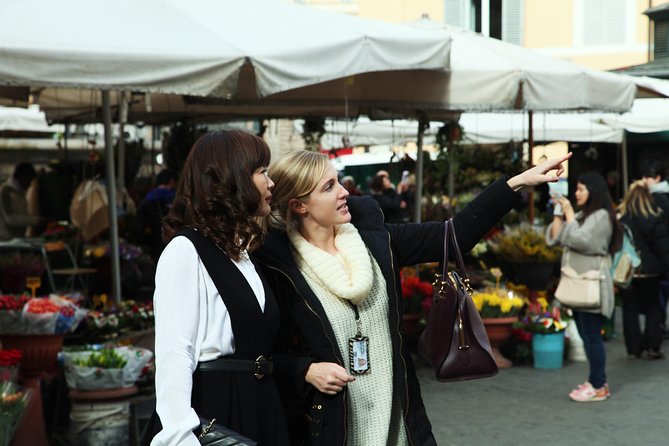
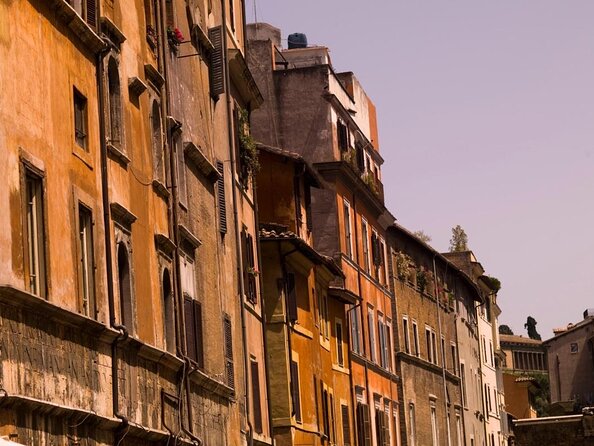
After the big-picture landmarks, you may head into Trastevere, an area known as a former working-class neighborhood. The point isn’t that it’s “less famous.” It’s that it’s easier to feel the texture of everyday Rome.
This stop is typically short—think around 30 minutes—but it’s timed to change the mood. You go from grand monuments to smaller streets, old facades, and corners you might not intentionally choose on your own.
If your walking tolerance is good, this is the kind of pause that makes the whole tour feel more human. If your legs need frequent breaks, tell the guide up front and you’ll likely get a smoother pace.
Vatican Museums and the Sistine Chapel: where fast-track helps most
If Vatican crowds are your fear, this is where the tour earns its keep. You get skip-the-line / fast-track entry to the Vatican Museums complex, which can save real time in one of Rome’s busiest queues.
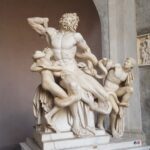
From there, expect an overview that helps you connect what you’re seeing with why it mattered. You’ll likely pass through the Belvedere Courtyard, then move through rooms that cover masterpieces from antiquity through later periods. The tour highlights sculpture and art objects like the Laocoön and the Belvedere Torso, works that Renaissance artists deeply revered.
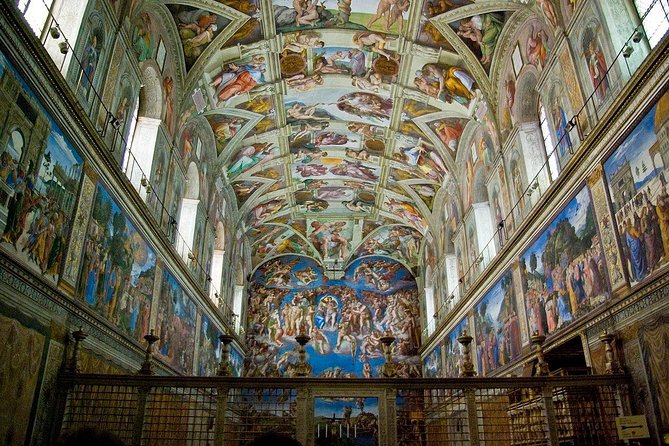
Then comes the Sistine Chapel, tied to Pope Sixtus IV della Rovere, who restored the earlier chapel between 1477 and 1480. The guide ties it to the space’s ceremonial role—like conclaves—and to its most famous artistic claim: Michelangelo’s frescoes.
One consideration: Vatican time is unforgiving. Even with fast-track entry, the Sistine Chapel portion can’t feel long if you’re also covering other neighborhoods. If you want “only Vatican,” the Vatican-themed options are the better bet.






St. Peter’s Basilica: priceless art, plus entry rules
A common follow-up is St. Peter’s Basilica, where the atmosphere shifts from museum hush to cathedral scale. Your guide points out major artworks, including Michelangelo’s Pietà, and you may also stop by the venerable tomb of Saint John Paul II (Karol Wojtyła).
This stop often clocks around 40 minutes, which is enough for the highlights and a calm look if the pace is right. If you’re the type who loves to stand back and really scan ceilings and altars, you’ll want to keep an eye on the schedule and ask your guide to prioritize your favorites.
And don’t treat the entry rules like a vague suggestion. The tour includes reminders that knees and shoulders must be covered. That means no shorts, no sleeveless tops for both men and women, or you risk being turned away.
Pantheon and the art of noticing ancient details
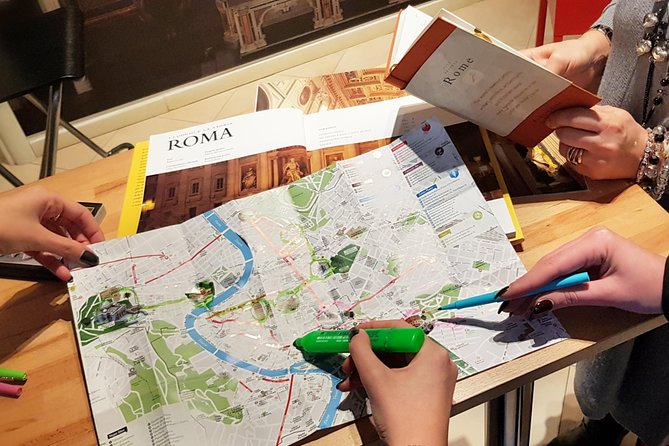
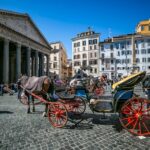
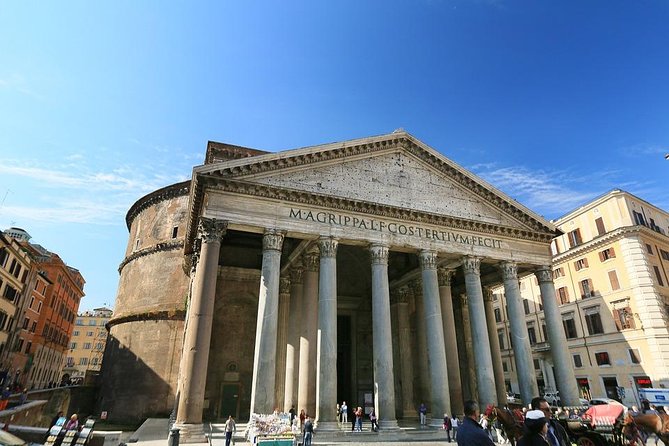
From the Vatican area, many routes shift into classic Rome walking mode. One of the strongest single stops is the Pantheon, often described as the most well-preserved ancient temple structure in the world.
Your guide’s framing helps here: Michelangelo was impressed with the building’s design, calling it angelic and not of human design. Whether you’re a design nerd or just a curious visitor, that kind of explanation helps you look up at the dome with a reason, not just awe.
This is also where you’ll feel the value of a guide. Without one, the Pantheon can be a “been there, nice building” stop. With guidance, it becomes a quick lesson in why the form works so well.
Spanish Steps area and Via Condotti: what to do with shopping energy
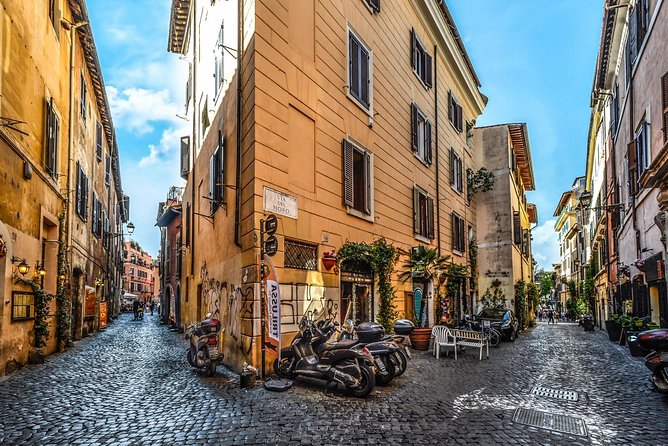
Many tours include time around Via Condotti, near the base of the Spanish Steps. This is prime territory for people who like street scenes and fashion-window browsing, but it’s also more than a shopping corridor.
A good guide will give you the history and context of the Spanish Steps so the place clicks as a real cultural location, not just a photo spot. You can also use this time to reset your energy—Rome walking can add up fast.
If your group is more into cafes than shopping, you can often ask your guide to slow down and build in a quick sit-down moment at the right angle to see the area without rushing.
Tiber Island and the Jewish Ghetto atmosphere
Some half-day routes cross into the river setting with Tiber Island, a small island on the Tiber River connected by Ponte Cestio and Ponte Fabricio. It’s one of those locations that feels cinematic because you’re watching water, bridges, and changing city views at once.
From there, the tour may include the historic Jewish Ghetto area. This part works well because it’s not just sightseeing—it’s place-based storytelling, with the atmosphere doing half the work for you.
I’d treat this section as a chance to slow your pace. Even if you’re moving fast, ask your guide to give you the key background so you don’t just walk through an interesting neighborhood without understanding what you’re seeing.
Roman Forum and Colosseum: the two big ancient wins
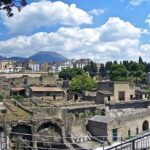
The Roman Forum and Colosseum are the big-ticket icons, but they’re also the easiest places to feel overwhelmed if you don’t know what you’re looking at.
Your guide helps you make sense of how ancient Rome celebrated and worshipped. In one typical Forum-focused portion, you’ll hear stories connecting mythology and popular celebrations to religious timelines—like the way pagan holiday Saturnalia influenced the calendar you recognize today. You’ll also hear about the Lapis Niger (Latin for black stone), described as the most ancient Latin text discovered and said to be housed in the foundation of a column in the Forum.
You’ll also get pointed attention to the Temple of the Vestal Virgins, including the idea that maintaining the sacred fire of Vesta symbolized Rome’s endurance.
Then the route moves to the Colosseum, usually with entrance included. It’s often the longest single stop on a sample half-day route—around 1 hour 30 minutes—because there’s simply no fast way to read it. Your guide’s role is to give you a mental map so you can follow the structure instead of wandering randomly.
Two practical reminders that really matter here:
- Bring a current passport or photo ID, since it’s required for Colosseum entrance.
- Wear closed-toe, non-slip shoes. Access can be denied without proper footwear.
Pickup, private vehicle time, and why it changes your day
Depending on your chosen theme, the tour may include hotel pickup with a private vehicle, except for options like Squares and Fountains and Jewish Rome. That distinction is more important than it sounds.
When you get pickup, you lose less time commuting between areas. When you’re mainly on foot, you get flexibility—quick bathroom breaks, quick pauses for photos, and the ability to adjust when the group is tired.
Either way, this tour is private, so you’re not trapped with someone else’s pace. That’s a major value driver for people who hate standing in the wrong place at the wrong time.
What the guide quality looks like in real life
A big reason these tours score so well is the guide interaction. In past tours, guides such as Gianluca, Rosalba, Katie, Paola, Roberta, Marco, Barbara de Rosa, Denis, Rosie, Maria Linda, Francesco, and Stefania repeatedly came up for one theme: they adjust to your interests and your group.
I like that because Rome punishes rigid plans. Your questions will change what you focus on, and a private guide can flex.
It also shows up in family tours. Several experiences highlighted guides working well with kids, including very young travelers, with explanations scaled to the group.
So if you’re traveling with children—or you just want a tour that doesn’t talk over your heads—this style is a strong fit.
Price and value: $294.89 per person for a half-day
Let’s talk value in plain terms. At $294.89 per person for about 3–4 hours, you’re not just paying for “a guide.” You’re paying for:
- A private group experience (your party only)
- Entrance fees included where needed
- Often hotel pickup by private vehicle (depending on the route)
- Fast-track entry into the Vatican Museums complex
Yes, food and drinks are not included, and hotel drop-off isn’t listed as included. But compared with the cost of solo entry tickets, plus the time saved from complicated logistics, the price starts to make sense—especially if you care about maximizing a limited time window.
For couples, this is also a great deal because a private guide is often cheaper per person than booking separate guides or trying to do everything alone.
The only real value mismatch is if you want a long, slow “see everything” day. This is a half-day plan built for focus. Pick what you want most, and you’ll feel the payoff.
Practical tips so you don’t get stopped at the door
Rome’s entry rules can be strict, and you’ll save time if you prepare early. For worship sites and selected museums, expect:
- No shorts or sleeveless tops
- Knees and shoulders covered for both men and women
- Closed-toe, non-slip shoes
For Colosseum entry, bring a current passport or photo ID. If you forget, you can lose the entrance even if you have everything else planned.
Also watch for timing changes due to the Jubilee, where some monuments can be under restoration or closed during extraordinary celebrations. This is rare, but when it happens, having a guide who can adjust your route is worth its weight in gold.
Should you book Rome Tailor-Made?
Book it if:
- You want Rome to feel organized without feeling like a rigid group tour.
- Vatican access and art context matter to you.
- You’d rather spend your limited time understanding what you’re seeing than searching for answers.
Skip it or choose a narrower theme if:
- You’re planning a long list of must-sees and hope a half-day route covers everything.
- You don’t want to follow dress and footwear rules for major sites.
My take: this is one of those rare Rome experiences that pays off because it reduces friction. If you match the theme to your interests, you’ll walk away with stories, not just snapshots—and you’ll keep your schedule from turning into a stressed sprint.