REVIEW · ROME
Rome Sightseeing Private Tour: Best of Rome’ Fountains and Squares
Book on Viator →Operated by Tours of Rome · Bookable on Viator
Fountains, squares, and stories in three hours. This private Rome walk sets you up to see the Spanish Steps and Trevi Fountain, then ties it all together with a guide who explains the art and architecture in plain language. It is a great way to get oriented without trying to build your own route from scratch.
I love how the tour includes a Pantheon inside guided stop, not just a quick look from the outside. I also like the way the itinerary strings together Piazza Navona and the fountain cluster around it, so you can really notice how the city uses sculpture, water, and space to make public life feel dramatic.
One possible drawback: you start at Fontana della Barcaccia near Piazza di Spagna and end at Piazza Navona (Fontana dei Quattro Fiumi), so plan your pickup or next move accordingly. And during the Jubilee, some monuments may be under restoration, which can mean changes to what you see.
In This Review
- Key takeaways before you go
- Why this 3-hour Rome route fits your first days
- Start at Fontana della Barcaccia: simple logistics that matter
- Piazza Navona: the square that teaches you how Rome stages drama
- Fontana dei Quattro Fiumi: reading the fountain like a guidebook
- Trevi Fountain: the coin toss is the easy part
- Fontana della Barcaccia: the fountain that links you to Piazza di Spagna
- The Pantheon inside: where Rome’s design makes sense
- Spanish Steps: a short visit that still feels complete
- How to judge the value of $290.89 per person
- Who this tour suits best (and who should pick something else)
- Should you book this Rome fountains and squares tour?
- FAQ
- How long is the Rome Sightseeing Private Tour Best of Rome Fountains and Squares?
- What is the price per person?
- Where does the tour start and where does it end?
- What are the main sights included in the tour?
- Is the tour admission free for the sights?
- What is included in the tour?
- What do I need to bring?
- Is this tour private?
Key takeaways before you go
- Pantheon inside guide time: you get interpretation where it matters most, not just a photo stop.
- A tight 3-hour route: enough big sights to feel like you covered Rome, without burning a whole day.
- Fountains in context: Trevi and the Navona fountain area are easier to understand when seen in sequence.
- A guide who keeps your group together: the point is not just facts, it is staying oriented.
- Private tour pace: only your group joins, so you can ask questions and move at a human speed.
- Jubilee restoration updates: expect possible changes and pay attention to messages.
Why this 3-hour Rome route fits your first days

If Rome feels like too many landmarks at once, this kind of tour is the antidote. In about 3 hours, you hit the iconic “greatest hits” in a logical walking arc: Piazza Navona, Trevi Fountain, the Spanish Steps area, and the Pantheon inside. It is also private, so the guide can shape the pace to your group instead of herding everyone through like a line item.
What makes this experience useful is the focus. You are not bouncing around randomly. You are seeing squares and fountains as part of how Rome tells stories—through architecture, public art, and the way people gather in open spaces. Even if you are only in town for a short trip, this helps you build quick mental maps: where the major sights sit relative to each other, and what visual themes repeat across the city.
I also like that the tour is built around walkable “anchor points.” Once you understand those anchors, you can branch out on your own the next day without feeling lost.
You can also read our reviews of more private tours in Rome



Start at Fontana della Barcaccia: simple logistics that matter
The tour begins at Fontana della Barcaccia, in the Piazza di Spagna area (00187 Roma RM). You end at Fontana dei Quattro Fiumi, Piazza Navona 90 (00186 Roma RM). That end point is convenient because Piazza Navona is a hub for walking onward to nearby streets and cafés—but it also means you will want a plan for getting back to your hotel after the tour.
You will also want to read the small details before you show up:
- You need a mobile ticket.
- You must bring an identity card or passport.
- Dress code is smart casual.
- You need to arrive at least 10 minutes early. If you miss that window, they cannot accommodate you.
- It is private, so your group is the only group participating.
I find that kind of clarity removes stress. You are not guessing where to meet or what to bring. It is also near public transportation, which helps if you are juggling a tight schedule.
If you are traveling during the Jubilee, watch for updates. The info you receive may include changes if monuments are under restoration.
Piazza Navona: the square that teaches you how Rome stages drama
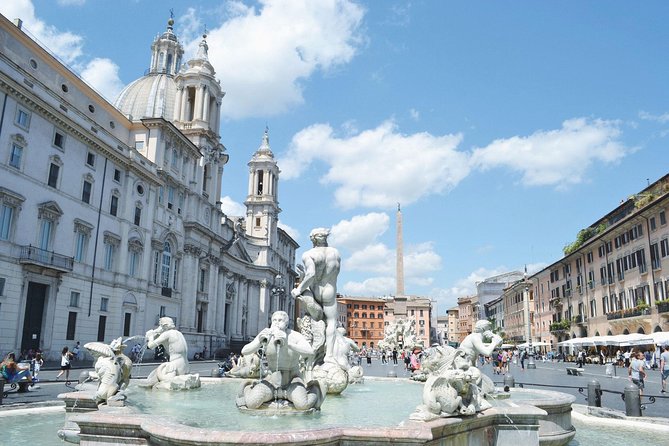
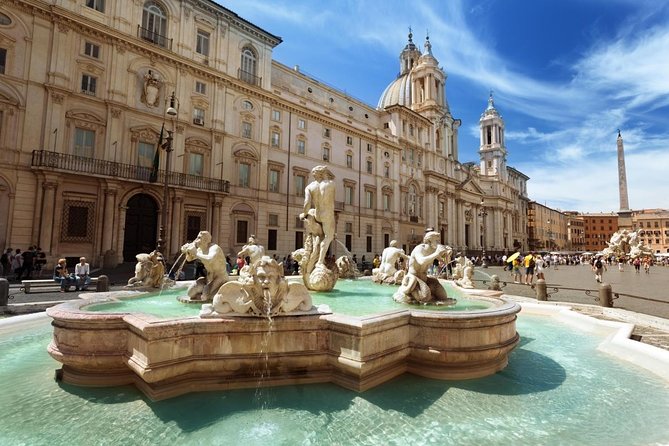
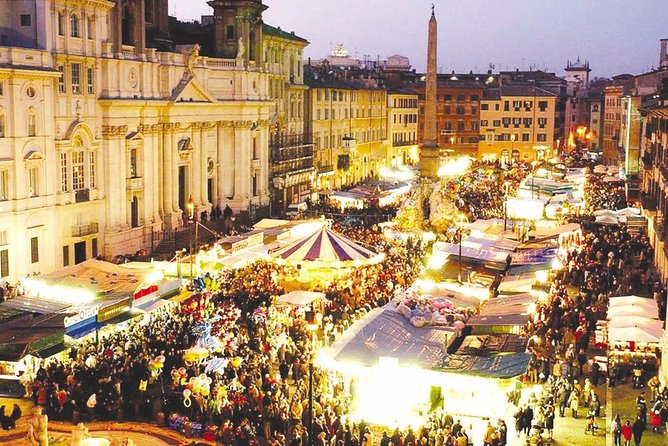
Your first stop is Piazza Navona. This is one of those Roman spaces where everything looks composed—buildings framing the square, street life flowing around it, and fountains turning the whole place into a stage.
The tour keeps you there long enough to notice more than one thing. At about 20 minutes, you can look at the geometry of the square and then shift your viewpoint to understand how the fountains define the space. If you have ever looked at a photo of Piazza Navona and thought, How is this so different in real life?—this is where you get the answer. The scale, the sightlines, and the way people move around the water make it feel bigger and more theatrical than most images show.
A key bonus here: seeing Piazza Navona early in the route helps everything afterward make sense. Later, when you stand near other fountains, you will understand what Rome is doing with public space—how water and sculpture create a focal point, and how the surrounding buildings help frame the view.
Fontana dei Quattro Fiumi: reading the fountain like a guidebook

Next you spend a short burst at the Fontana dei Quattro Fiumi (Fontain of the Four Rivers). The tour keeps it to around 10 minutes, but that is enough time to shift from “pretty fountain” to “I get what this is doing.”
The value of this stop is not just aesthetics. It is about comparison. Piazza Navona has one fountain energy, while other Roman fountain locations bring their own mood. When you see Quattro Fiumi right after you have oriented yourself in the square, the symbolism and composition feel more connected to the setting. You start to notice that fountains are not random decorations; they are part of Rome’s visual language for power, culture, and memory.
Since this is a guided walking experience, the guide’s job is to help you connect the dots quickly. You do not need to know everything. You just need a few points that make the fountain feel understandable.
Trevi Fountain: the coin toss is the easy part
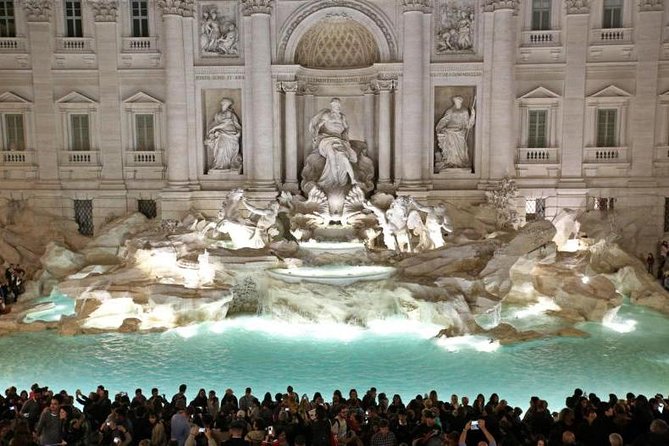
Then comes Fontana di Trevi, one of the world’s best-known fountains. You get around 20 minutes here, which is the right amount for experiencing it without getting swallowed by the crush.
The classic moment is throwing a coin, but the smart move is to use your time wisely: take a couple of minutes to step back, look at the overall composition, then move closer to see how the stone carving is arranged. Trevi can feel overwhelming in the crowd; guidance helps you know where to look first.
Trevi also works well within this tour because you are not only collecting “I saw it” photos. You are learning the story behind what you are seeing—stories that explain why the fountain looks the way it does and what it represents in Rome’s art and architecture traditions. That background turns a crowded stop into something you actually remember.






Fontana della Barcaccia: the fountain that links you to Piazza di Spagna
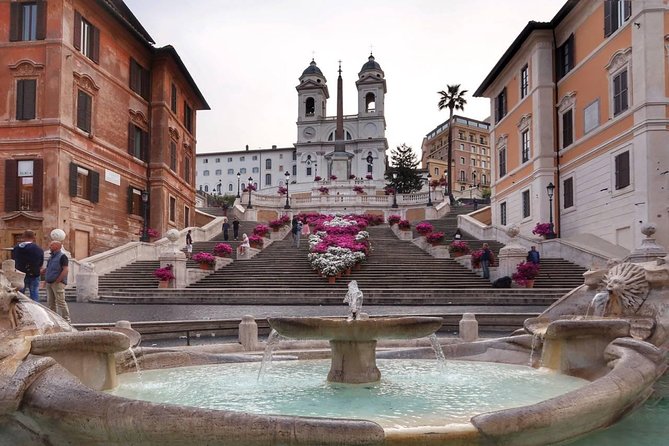
You have a separate stop for Fontana della Barcaccia, with about 20 minutes. You also start the tour at the meeting point at Fontana della Barcaccia, so this stop is a useful reset point early on.
This is one of those fountains where the setting matters. Near Piazza di Spagna, it helps you connect the feeling of this part of Rome—steps, streets, and viewpoints—to a landmark you can anchor in your mind. It is the kind of stop that makes your later Spanish Steps experience click, because you begin to understand how the area is meant to be viewed and walked through.
If you like walking tours that teach you how to look, you will enjoy this one. The guide’s interpretation helps you see why the fountain belongs here, not just that it exists.
The Pantheon inside: where Rome’s design makes sense
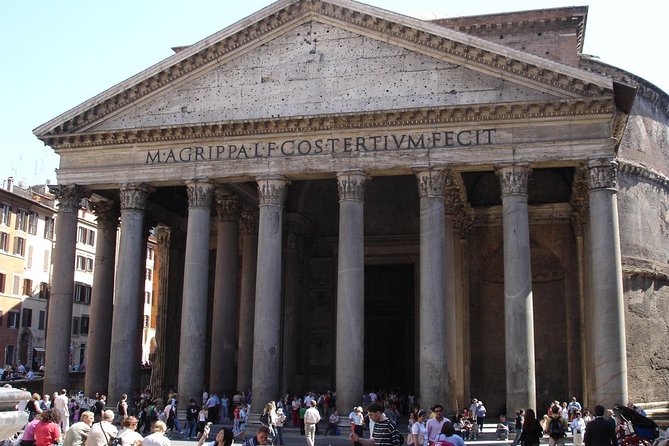
The Pantheon stop is one of the biggest reasons this tour is worth your time. You get an inside guided tour for about 20 minutes.
Even if you have seen the Pantheon on postcards, standing inside changes the experience. The building feels intentionally built to control your experience—how light hits the space, how your eye moves, and how the scale lands after you enter. A guided stop helps you notice what matters fast, instead of drifting and hoping it clicks on its own.
This is where you will feel the difference between a “see it” tour and an “understand it” tour. The guide helps translate the Pantheon into something practical: what to look for, why the space feels the way it does, and how the architecture supports the experience of being there.
If you only care about the big exterior sights, you might skip inside tours. But if you want Rome to feel real and not like a checklist, this inside time is a major win.
Spanish Steps: a short visit that still feels complete
After the Pantheon, you move to the Spanish Steps, with about 10 minutes. That timing is brief, but it is enough to get the core experience: seeing the steps in person and getting your bearings in the area.
Here is a helpful way to think about it: the Spanish Steps stop on a walking tour is not the moment to linger for an hour. It is the moment to connect the geography. Once you have the guide’s story and context, the Spanish Steps stop becomes a reference point for your future wandering.
Also, because this tour includes the Pantheon and the key fountain sights, your Spanish Steps visit will feel less random. You will see it as part of the same city pattern: famous public spaces that pull people in and hold attention.
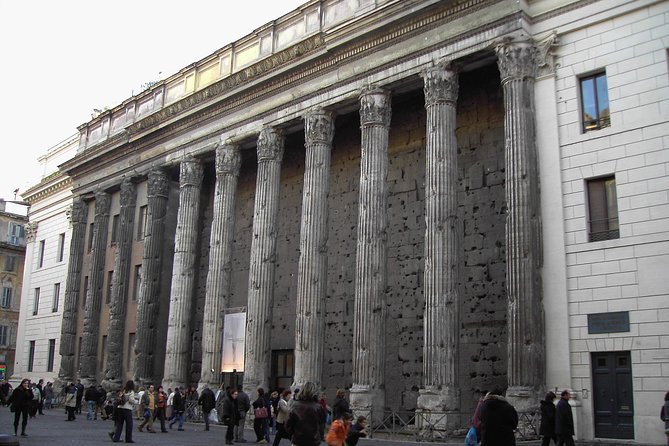
You will also have a stop listed for the Temple of Hadrian. Since the details and timing are limited, treat this as a bonus glimpse rather than a long museum-style visit.
How to judge the value of $290.89 per person
At $290.89 per person for a private 3-hour walking tour, the big question is: what are you actually paying for?
You are paying for:
- A guided route through multiple top sights (squares and fountains).
- Guided time inside the Pantheon.
- A private experience, meaning your group is the only group on the tour.
- Interpretation that helps you understand what you are seeing, not just where it is.
You are not paying for meals or transportation to/from attractions—that part is on you. And many of the stops you view outdoors come with free admission as listed for the tour stops, so the value is mainly the guide and the time structure.
For me, the best value comes when you fit two conditions:
1) You want a guide to help you look smarter at famous sights.
2) You are traveling with people who will actually ask questions and walk at a steady pace.
If you prefer to wander independently with no schedule, a guided route may feel too structured. But if you want your time to count early in the trip, the private pace plus Pantheon inside makes the price feel more reasonable.
Also note: the tour uses a mobile ticket, so you are not stuck with printed paperwork. That reduces friction on travel days.
Who this tour suits best (and who should pick something else)
This is a strong match if:
- You are visiting Rome for the first time and want your bearings fast.
- You want the major fountain and square sights without planning a route.
- You care about understanding what you see, especially the Pantheon inside.
- Your group can keep a walking pace for about 3 hours.
It might not be the best fit if:
- You hate being on a schedule at all.
- You want long, slow time at only one or two monuments.
- You are not comfortable with a start-and-finish plan across different parts of central Rome.
Good news: the tour states that most travelers can participate, service animals are allowed, and it is near public transportation. If you have specific mobility constraints, you should consider how the walking time will feel for your group.
One more practical point: it is non-refundable and cannot be changed. If your trip dates are uncertain, that matters.
Should you book this Rome fountains and squares tour?
If you want a fast, guided introduction to the city’s most famous public spaces—plus the Pantheon inside—the odds are good you will enjoy this one. I like that it is private, structured, and focused on places where a guide can actually improve your experience.
Book it if you:
- Want Trevi, Piazza Navona, the Spanish Steps area, and Pantheon in one efficient plan.
- Prefer a guide to explain the art and architecture so you do not leave with only a pile of photos.
- Like the feeling of being kept together so you do not spend your tour figuring out where to go next.
Skip it if you only want to pop into places casually, or if you already have a strong self-guided plan and do not care about inside guidance.
FAQ
How long is the Rome Sightseeing Private Tour Best of Rome Fountains and Squares?
It lasts about 3 hours.
What is the price per person?
The price is $290.89 per person.
Where does the tour start and where does it end?
It starts at Fontana della Barcaccia, Piazza di Spagna, 00187 Roma RM, Italy and ends at Fontana dei Quattro Fiumi, Piazza Navona, 90, 00186 Roma RM, Italy.
What are the main sights included in the tour?
You visit Piazza Navona, Trevi Fountain, Fontana dei Quattro Fiumi, Fontana della Barcaccia, the Pantheon (inside guided tour), and the Spanish Steps, with a stop listed for the Temple of Hadrian.
Is the tour admission free for the sights?
The tour information lists free admission for Trevi Fountain, Spanish Steps, and Navona Square, and for the other listed outdoor stops.
What is included in the tour?
Included: Trevi Fountain, Spanish Steps and Navona Square, Spanish Steps and Barcaccia, and a guided tour inside the Pantheon.
What do I need to bring?
You need an identity card or passport.
Is this tour private?
Yes. It is a private tour/activity, and only your group participates.