REVIEW · ROME
Rome Self-Guided City Experience
Book on Viator →Operated by Vox City International Ltd · Bookable on Viator
Rome without a guide can work. This Vox City offline self-guided route is great because you get recorded, local-expert stories at major sights and you can pace yourself without joining a group shuffle. I also like the value for the price since it’s built for quick wandering (about 2 to 3 hours) across Rome’s best-known landmarks. The catch: the app has had serious tech hiccups for some people, including map/download problems or the app not recognizing a prior purchase.
If you want independence but still crave helpful context, this format fits. The tour uses your phone for navigation (with geo-tagging so you don’t feel totally untethered) and includes walking itineraries plus free Wi‑Fi spots. One more thing to consider up front: some attractions require separate entry, and at least one major stop lists tickets as not included.
In This Review
- Key things to know before you go
- How this self-guided Vox City Rome tour really works
- Pantheon to Piazza Navona: the classic Rome front-row route
- Vatican Museums and St. Peter’s Basilica: the ticket reality check
- Squares, staircases, fountains: Piazza Cavour to Piazza del Popolo
- The route along Via Della Conciliazione and Castel Sant’Angelo
- Villa Borghese and Piazza della Repubblica: Roman grandeur without the stress
- Via Nazionale, Piazza Venezia, and the big-road scale of Rome
- Via dei Fori Imperiali and Circo Massimo: where you can feel Rome’s layout
- Bocca della Verità and Insula dell’Ara Coeli: fun stops with character
- Abbazia di San Paolo Fuori Le Mura: a calmer alternative feel
- Offline use, free Wi‑Fi, and the phone-power reality
- Price and value: what $11.58 buys you in Rome
- Who should book this (and who should skip)
- FAQ
- FAQ
- How long is the Rome Self-Guided City Experience?
- Does the app work offline?
- What’s included in the price?
- Are attraction tickets included?
- Do I need earphones?
- What devices does the app work on?
- Should you book Vox City’s self-guided Rome route?
Key things to know before you go

- Offline-capable navigation and audio help you avoid roaming hassles while you walk.
- Geo-tagging is meant to keep you oriented even when streets get chaotic.
- 130+ points of interest means you’re not stuck staring at only one monument.
- Most stops are marked free to enter, but Vatican Museums are explicitly not included.
- Phone reliability matters—a few cancellations happened the hard way when the app froze or wouldn’t load.
How this self-guided Vox City Rome tour really works

This isn’t a tour bus experience. It’s a phone-guided walk (and occasional public-transport hop, since the route is near transit) with recorded narration about Rome’s history, culture, and monuments. Your ticket is mobile, and the app acts like your virtual guide: map, route, and stories, all in one place.
The biggest practical win is how flexible it feels. Your “tour” is only as fast or slow as you want it to be, and you can pause at a fountain, stand under a colonnade, or just take a breather at a square. The coverage is designed for a compact run through Rome, timed to land you at a long list of recognizable stops without needing to plan each one from scratch.
You do need to be comfortable using your phone in the real world: outdoors, bright light, lots of turning, and sometimes spotty connectivity. Vox City includes offline operation in the pitch, and that’s crucial in Rome. But your success also depends on whether the app loads properly on your device.
You can also read our reviews of more guided tours in Rome



Pantheon to Piazza Navona: the classic Rome front-row route
Your day starts with the Pantheon, which is a smart place to begin because it sets the tone for everything you’ll see afterward. Even if you’ve visited Rome before, it’s one of those sites where context matters—this app gives you history and monument-focused stories so you’re not only looking at the building, you’re also understanding what you’re seeing.
From there, you move through a cluster of central icons that work well on foot. Piazza Navona is next, and it’s the kind of square where the setting does half the storytelling. Expect to linger: fountains, open space, and that classic Rome-meets-stroll vibe. The app-style narration helps you connect the sights to the city’s bigger picture instead of just collecting photos.
The same idea continues through Piazza di Spagna and Fontana di Trevi. These are obvious landmarks, but they’re also where it’s easy to miss details if you don’t slow down. The recorded facts make it easier to notice what makes each stop unique, even when the crowds tempt you to rush.
Practical tip: build in time for stops that are free to enter and take advantage of the fact that this route includes many “quick-hit” points. If you plan your timing right, you can spend longer where you care most and still finish in the intended 2 to 3 hours.
Vatican Museums and St. Peter’s Basilica: the ticket reality check

This is one of the most important sections to understand before you download anything. The tour lists Vatican Museums with admission ticket not included. Meanwhile, St. Peter’s Basilica is marked as admission ticket free within the experience details.
So what should you expect in practice? You’ll likely be able to reach the Vatican area via the route and then decide how you want to handle entry for what you care about. If Vatican Museums are a must, you’ll need to plan that separately since the tour doesn’t bundle the ticket.
St. Peter’s Basilica is different—since it’s marked free in the experience details, you can think of it as a high-impact stop you can enjoy without extra entry fees connected to the app.
Also, treat this area as a “slow down” zone. Even with a self-guided plan, Vatican-adjacent crowds can change your walking pace fast. Having the app narration while you wait or shuffle forward can still make the time feel useful instead of wasted.
Squares, staircases, fountains: Piazza Cavour to Piazza del Popolo

After the heavy hitters, the route keeps moving through a string of big Roman public spaces. Piazza Cavour and Piazza del Popolo are both on the list, and they’re good examples of why a self-guided route can work better than a rigid guided schedule.
Why? Because squares are where Rome breathes. You’re not always fighting entry lines or ticket checks. You can pause for a snack, watch street life, and read the stories tied to what you’re seeing. The app’s narration gives you context you might otherwise skip during a quick pass.
If you’re the type who likes to understand what you’re looking at, you’ll appreciate the “why this place matters” angle. If you’re the type who just wants to take photos and move, you can still use the map and audio as optional extras.
The route along Via Della Conciliazione and Castel Sant’Angelo
Next up is Via Della Conciliazione and then Museo Nazionale di Castel Sant’Angelo. This section is useful because it transitions you from the big square-and-basilica world into something that feels more like an architectural corridor—more “walk and absorb” than “only stop and pose.”
Castel Sant’Angelo is marked as admission ticket free in the experience details, which suggests you can treat it like another accessible sight on the route. Still, Rome has a way of changing how you access things depending on time and setup, so keep a little flexibility in your schedule around museums and sites even when they look free.
If you like history but don’t want another full ticketed museum day, this kind of stop can offer a satisfying middle ground.
You can also read our reviews of more city tours in Rome






Villa Borghese and Piazza della Repubblica: Roman grandeur without the stress
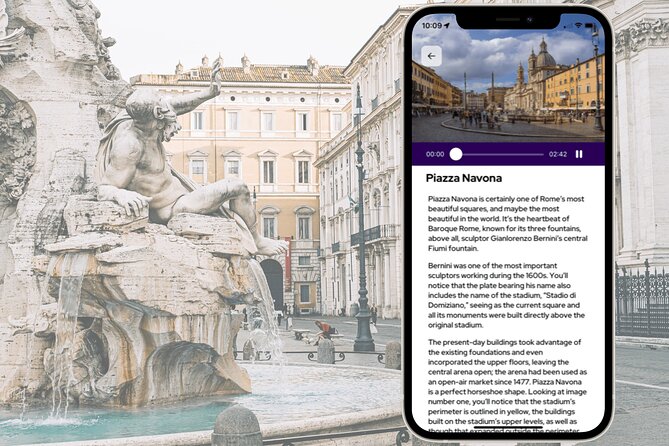
Villa Borghese and Piazza della Repubblica sit on the route as well, and that pairing makes sense. One is greenery and space; the other is a more urban, monument-style square experience.
This is where the app format can help you avoid the “I’m in Rome, where should I go next?” feeling. You’ve got a supported path and narration without being locked into guided pacing.
If you’re tired after repeated major sights, this portion can feel like a reset. You still get iconic scenery, but you’re less likely to be trapped in an all-day museum sprint.
Via Nazionale, Piazza Venezia, and the big-road scale of Rome
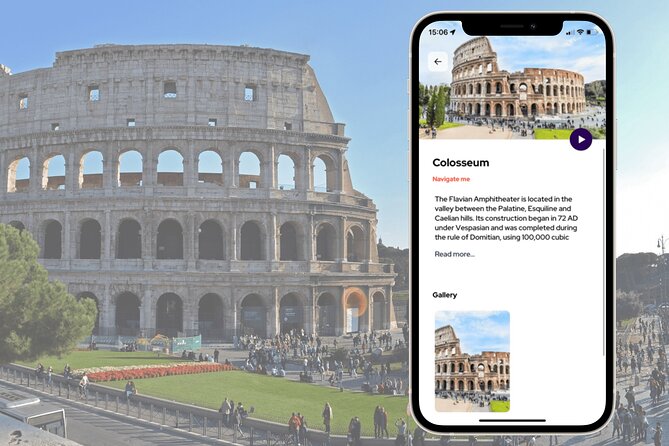
As you move to Via Nazionale and then Piazza Venezia, the city’s scale becomes part of the experience. These are areas where streets and viewpoints help explain how Rome developed and how monuments anchor the city.
Piazza Venezia is a meaningful stop because it helps you tie together what you’ve already seen. Even if you’re not chasing every detail, the narrated context makes the spaces feel connected rather than like isolated postcards.
Via Nazionale also serves a practical purpose: it’s a “keep moving” segment that helps you maintain the time window of the 2 to 3 hours overall.
Via dei Fori Imperiali and Circo Massimo: where you can feel Rome’s layout
Via dei Fori Imperiali and Circo Massimo are on the list, and they’re exactly the kind of stops that reward paying attention to layout. You can look down and understand how Rome’s ancient spaces relate to modern movement.
This is also a smart place to use your phone audio thoughtfully. Listening to short stories while you walk helps you build a mental map. Without that, you might see impressive ruins and still feel like the city’s timeline is all jumbled together.
Circo Massimo is also an ideal stop for a quick breather. Even if you don’t spend ages here, it’s one of those spots that can make your Roman day feel more “real” because it’s about space and scale.
Bocca della Verità and Insula dell’Ara Coeli: fun stops with character
Bocca della Verità adds a different kind of energy: playful, memorable, and very Rome. It’s listed as a stop you can reach on the route, and the app’s narration helps keep it from becoming just a quirky photo moment.
Then comes Insula dell’Ara Coeli. This is more of a “pay attention” type of stop, where the story component matters because many people walk into these places without knowing what to look for.
If you’re the sort of traveler who likes curiosity and facts, these are strong points of the route. They also break up the heavier monument density with something that feels more human-scale and story-driven.
Abbazia di San Paolo Fuori Le Mura: a calmer alternative feel
Abbazia di San Paolo Fuori Le Mura rounds out the list before you finish back at the meeting point. This is a good reminder that Rome isn’t only major squares and famous facades. A church setting can slow your pace naturally, and it’s a nice contrast to the earlier fountain-and-street-life stops.
Also, since many of these stops are marked admission ticket free, it’s easier to keep your day fluid. You’re not forced into a single-ticket-museum marathon to get value from the experience.
Offline use, free Wi‑Fi, and the phone-power reality
The promise here is offline operation. That’s a big deal because it can help you avoid roaming charges and rely less on spotty mobile data as you move around.
You also get free Wi‑Fi spots mentioned as part of the experience. That’s helpful when you’re preparing your route or if the app needs a moment to sync.
But I need to be honest about the risk: a few accounts report the app not working, map downloads failing, or the app locking up and requiring a restart. That means you should treat your phone as the tool, not the only safety net.
My practical prep checklist (simple, but important):
- Charge your phone fully before you start.
- If possible, test the app flow before you leave the hotel.
- Bring a small power bank so you’re not forced to stop mid-walk.
- Consider having a backup plan on your map app in case Vox City navigation hiccups.
Also, earphones are not included. If you’re using the audio narration, you’ll likely want your own. Without them, you may end up listening at low volume while trying to hear through street noise.
Price and value: what $11.58 buys you in Rome
At $11.58 per person, this is priced for travelers who want information without extra logistics. When a tour is this inexpensive, the value comes from two places: the narration and the convenience of built-in mapping across many sights.
You’re effectively buying:
- an app-based route,
- recorded stories you can access without hiring a guide,
- and the ability to customize your pace.
What you’re not buying is included attraction entry everywhere (Vatican Museums are explicitly not included), public transportation tickets, or any earphones/audio devices. So the value makes sense if you’re mostly visiting free-access areas and you’re okay planning any paid entries separately.
If you’re trying to squeeze in major sights fast, this can feel like a bargain. If you’re expecting an everything-included guided experience with tech that always works perfectly, it may not match your expectations.
Who should book this (and who should skip)
This works best for you if:
- you want flexibility and don’t want to follow a strict group schedule,
- you’re comfortable using an app as your main guide,
- you like quick, fact-filled stops more than slow museum deep dives.
You might skip it if:
- you rely on your phone for everything and can’t handle a backup if the app freezes or fails to load,
- you need a fully guided, live experience to manage lines and tickets,
- Vatican Museums are central to your plan and you’d rather have everything bundled.
It also makes sense if you’re traveling with time constraints. The experience is designed for around 2 to 3 hours, and it hits a wide range of famous sights in that window.
FAQ
FAQ
How long is the Rome Self-Guided City Experience?
It’s listed as about 2 to 3 hours.
Does the app work offline?
Yes. The app can operate offline, and that helps you avoid expensive roaming charges.
What’s included in the price?
You get the mobile app, walking itineraries, free Wi‑Fi spots, and 130+ points of interest.
Are attraction tickets included?
Entry is not included for everything. Vatican Museums are listed as admission ticket not included. Other listed stops are marked as admission ticket free in the experience details.
Do I need earphones?
Earphones are not included. If you want clear audio narration, you’ll likely need your own.
What devices does the app work on?
You can use it on any Android or Apple mobile device.
Should you book Vox City’s self-guided Rome route?
If you want a low-cost way to get context while you wander and you’re confident using your phone for navigation, I’d say go for it. The mix of offline capability, geo-tagging, and recorded narration can make a compact Rome route feel far more meaningful than just checking boxes.
But if you’re the type who needs guaranteed tech reliability and ticket management with no surprises, I’d be cautious. A couple of reports point to app failures like map issues and freezing. Your best bet is to prepare before you start, keep your phone charged, and have a backup navigation plan just in case.