REVIEW · ROME
Rome: Villa Farnesina Renaissance Tour
Book on GetYourGuide →Operated by Through Eternity Tours · Bookable on GetYourGuide
Raphael, minus the line. Villa Farnesina lets you see top Renaissance art in a setting that feels personal and lived-in, not just staged for crowds. I love how the tour connects the murals to the people behind them, especially the story-linked fresco spaces tied to Agostino Chigi and his circle. You also get the rare feeling of stepping into a Renaissance home in the middle of Rome, yet in a quieter pocket around Trastevere.
My other favorite part is the private guide format with skip-the-line entry, so you spend your time looking, not waiting. The main consideration is practical: this is a museum-style walking visit with steps and staircases, so bring comfortable shoes and plan for some walking. If you have mobility concerns, you’ll want to flag them so the team can accommodate you as best they can.
In This Review
- Key Highlights That Matter on the Ground
- Why Villa Farnesina Feels Like a Private Renaissance Home
- The 2-Hour Flow Inside: Meeting Point, Pace, and What You’ll Actually Do
- Loggia di Galatea: The Fresco Program and Raphael’s Galatea
- Hall of the Perspectives: When Paint Creates Architecture
- Wedding Hall: Myth Meets Status Through Alexander and Roxana
- Cupid and Psyche: A Ceiling Full of Story That Lands at the Wedding Banquet
- Skip-the-Line Entry: The Real Value Is Time and Flow
- Price and What You’re Actually Paying For
- Who This Tour Suits Best (and Who Should Think Twice)
- Should You Book the Villa Farnesina Renaissance Tour?
- FAQ
- How long is the Rome Villa Farnesina Renaissance tour?
- Where do I meet the guide?
- Where does the tour end?
- Is skip-the-line access included?
- Is the tour private?
- What languages are available for the guide?
- What should I bring with me?
- Is the tour wheelchair accessible?
- Are transportation and meals included?
- Can I cancel and get a refund?
- Will restoration work affect the experience?
Key Highlights That Matter on the Ground
- Skip-the-line entry via a separate entrance, so you lose less time to queues
- Raphael’s Galatea and the Loggia di Galatea’s fresco program tied to horoscope themes
- Hall of the Perspectives that creates an illusion of an enormous portico space
- Wedding Hall with frescoes that link myth and power through Alexander the Great and Roxana
- Cupid and Psyche ceiling storytelling that ends at the myth wedding banquet scene
Why Villa Farnesina Feels Like a Private Renaissance Home
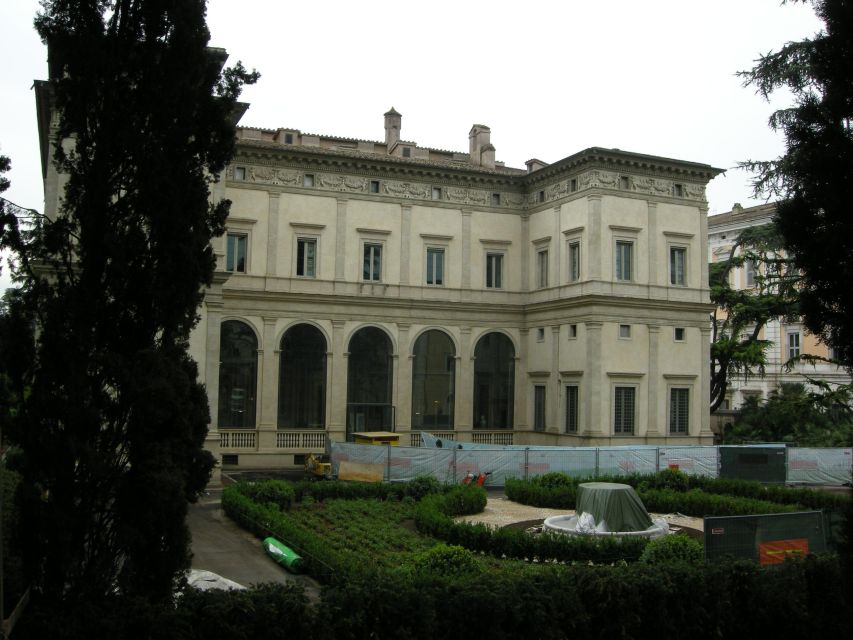
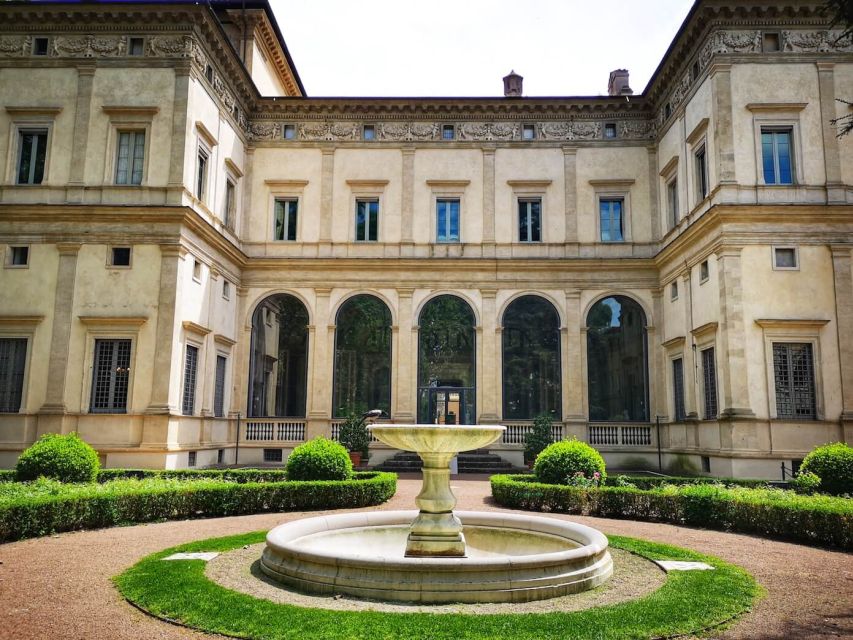
Villa Farnesina is in the center of Rome’s Trastevere area, and it’s a short walk from the Vatican. That location matters because it makes a visit easy to pair with other Rome sights, but the villa itself stays calm compared to the big-name attractions. It’s the kind of place you might only hear about if someone art-minded points you toward it.
Inside, the rooms and garden create a sense of Renaissance atmosphere: decorated walls, elegant halls, and spaces that feel made for celebration and display. The tour’s focus on specific rooms helps you understand the villa as more than a “pretty building.” You start seeing it as a carefully designed stage for myth, status, and spectacle.
You can also read our reviews of more tours and experiences in Rome.



The 2-Hour Flow Inside: Meeting Point, Pace, and What You’ll Actually Do

You meet your guide right outside the Villa Farnesina entrance, looking for a Through Eternity sign or flag. The tour loops back to the meeting point at the end, so you’re not worrying about where to go next.
A typical visit runs about two hours, and it’s structured around the key rooms that showcase the villa’s most famous fresco programs. Since it’s a private group, your guide can pace things with your questions in mind, and you’re not stuck watching over other people’s shoulders.
If you’re traveling with a group of 6 or more, you’ll have headsets included to hear the guide clearly. Even with a small party, expect normal museum movement: you’ll be walking through interior halls and transitioning between spaces at a steady pace.
Loggia di Galatea: The Fresco Program and Raphael’s Galatea
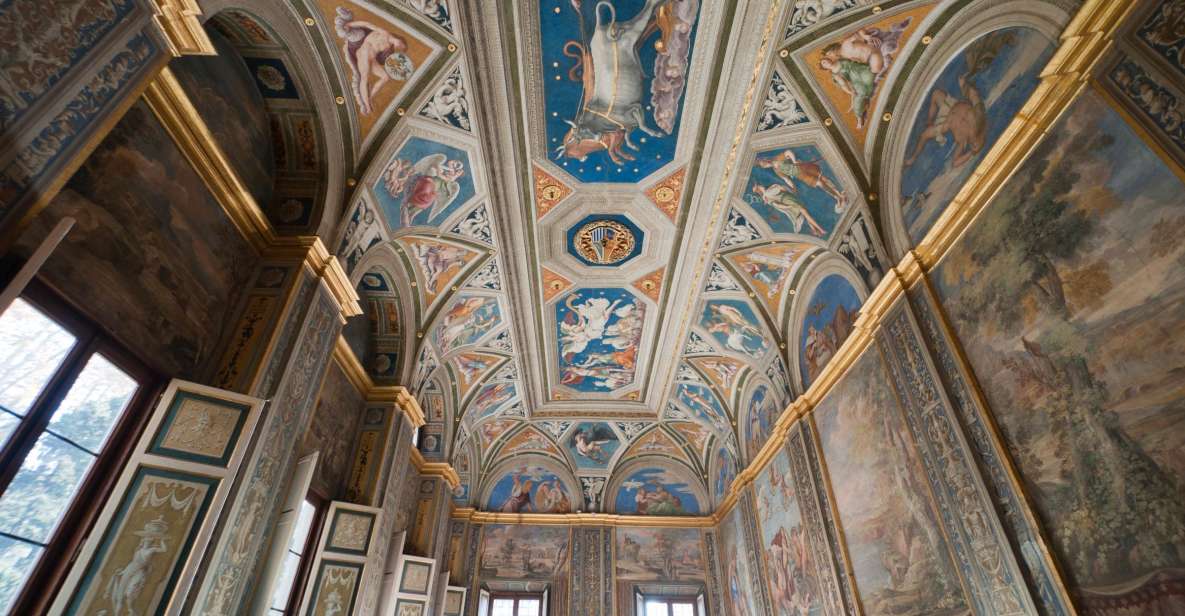
The Loggia di Galatea is where the visit turns from “Roman villa” into “Renaissance obsession.” This space features a cycle of frescoes on the vaulting linked to the horoscope of Agostino Chigi. That detail is useful because it gives the art context: these weren’t random decorations. They’re connected to the worldview of the patron and the message he wanted the space to carry.
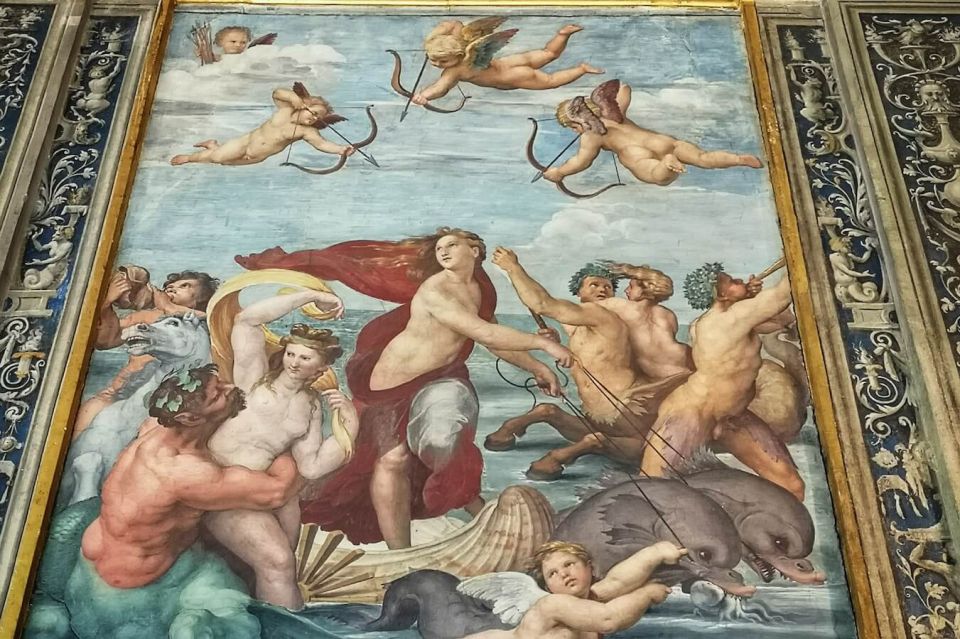
Then there’s Raphael’s Galatea, preserved in this loggia as a triumph of beauty and myth. The figure of Galatea is supported by a shell floating on water, surrounded by a festive procession of mythical characters. One reason this part is so satisfying is the way the design balances story and sensual lightness, so you’re not just reading art—you’re experiencing it like a scene.
What I like about having a guide here is simple: you learn what you’re looking at, not just what it is. Instead of staring at figures, you start picking up the program logic—what’s placed where and why that matters.
Hall of the Perspectives: When Paint Creates Architecture
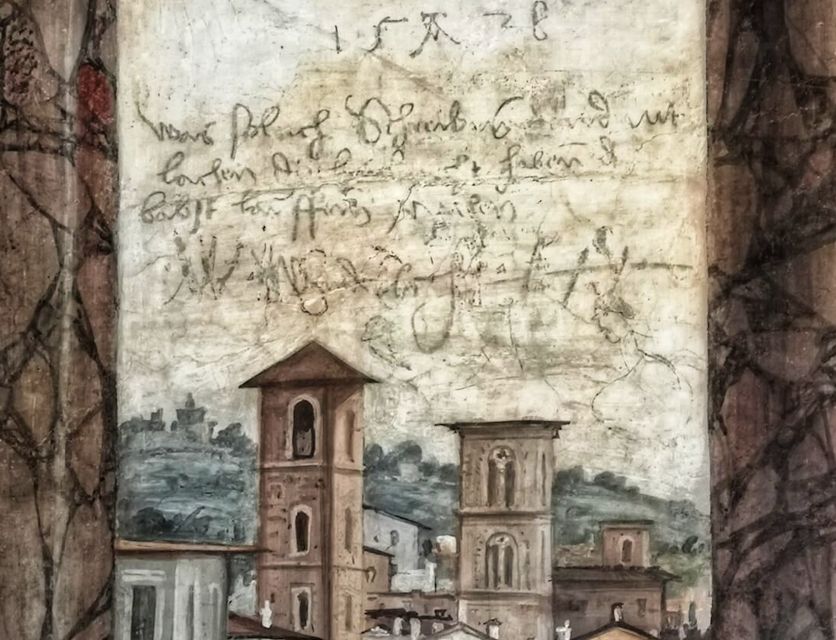
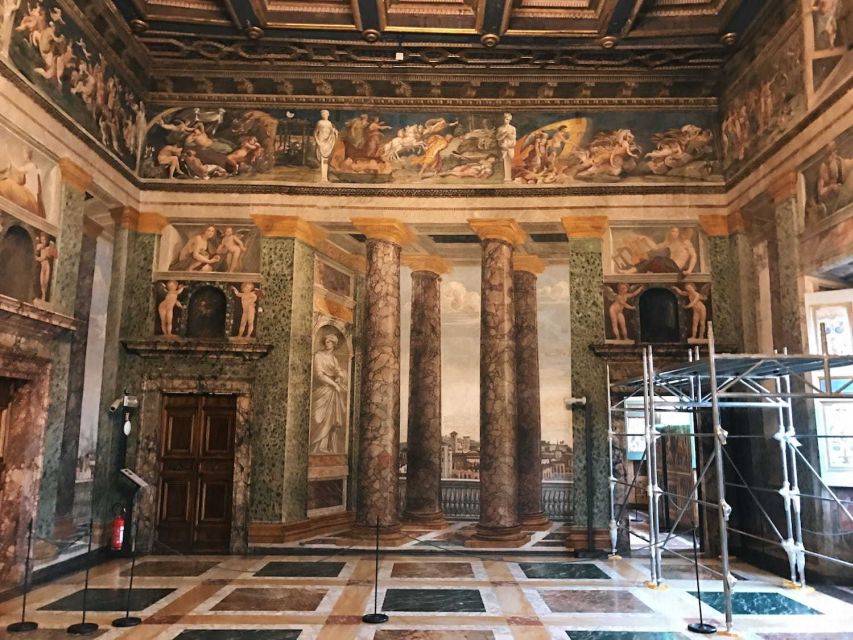
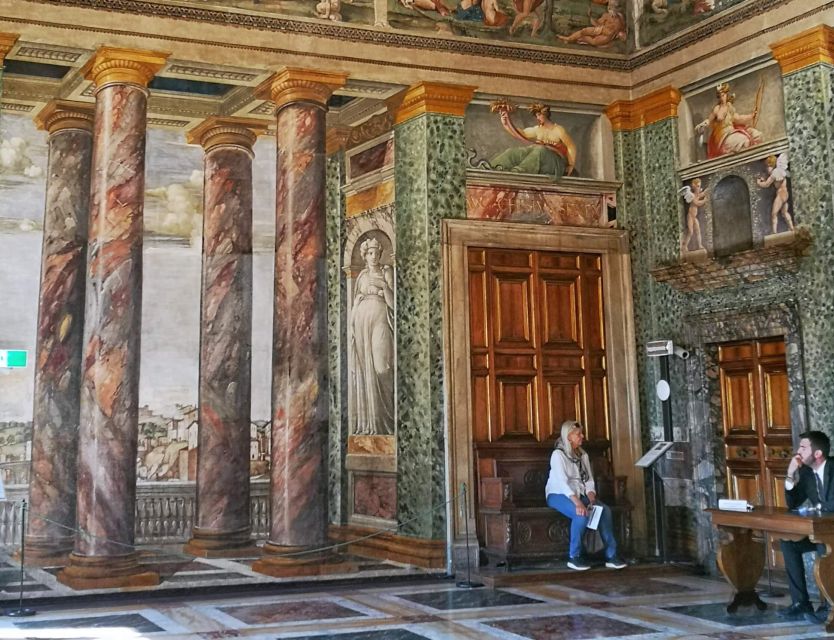
Next up, the Hall of the Perspectives changes the way you think about walls. The ceiling and fresco work present rural and urban scenes that create the illusion of an immense portico. In plain terms: the art tricks your brain into believing you’re looking at a much larger space than the room actually offers.
This is also the kind of room where timing and narration really help. Agostino Chigi held his never-ending, extravagant wedding banquet here in 1519, and the fresco program is part of that event-planning drama. Even if you don’t know the names beforehand, your guide connects the dots between the painted illusion and the real-world performance of power and wealth.
A possible drawback: this room can make you want to stare up the whole time, but you’ll want to manage your time. Spend a little longer here if you’re an art person. If you’re not, ask your guide to point out the main illusion cues so you still feel the impact without getting stuck too long.
Wedding Hall: Myth Meets Status Through Alexander and Roxana
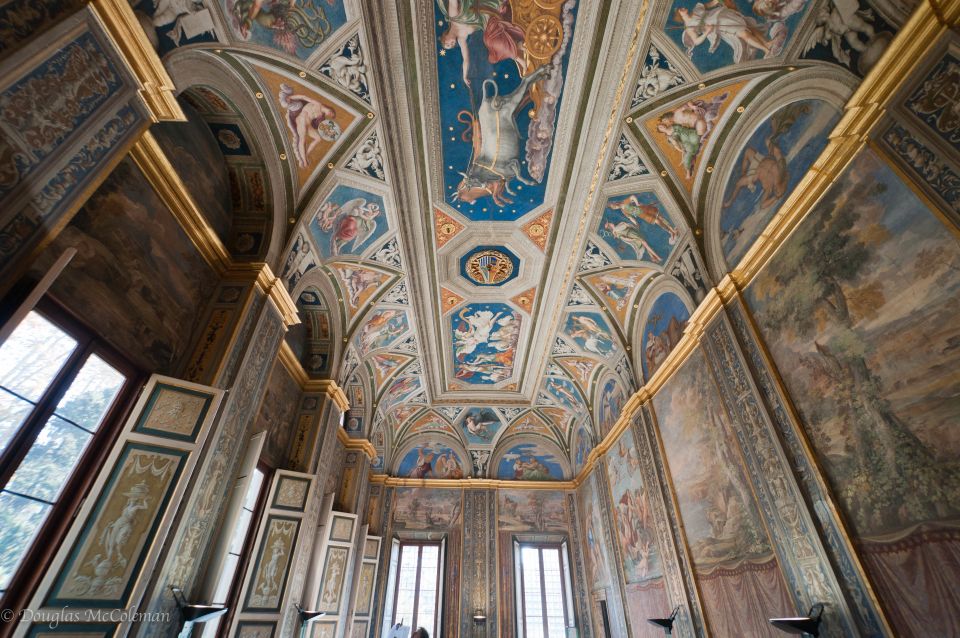
The Wedding Hall builds on the banquet theme, but it shifts the meaning from illusion into symbolism. You’ll see an outstanding fresco set tied to the wedding of Alexander the Great and Roxana, and the design creates a clear parallel with the banker and his bride.
That parallel is the point. The villa isn’t just showing myth for myth’s sake. It uses famous wedding stories to communicate legitimacy, alliance, and cultural reach. The effect is more than decoration—it’s propaganda with perfume, dressed up as art.
This room also includes a panelled ceiling from the sixteenth century, which adds a sense of refined structure to the visual drama. You leave this stop understanding why wealthy patrons cared so much about the look and message of indoor space.






Cupid and Psyche: A Ceiling Full of Story That Lands at the Wedding Banquet
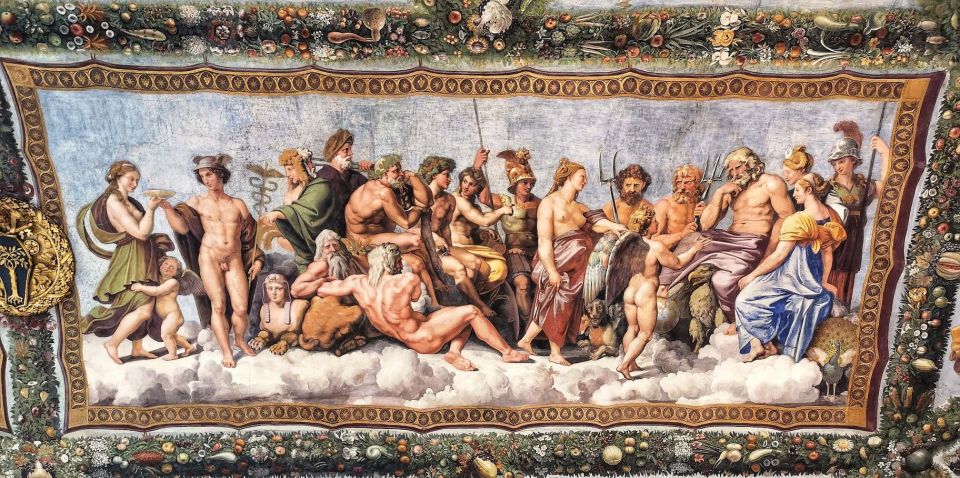
If you want one stop that feels like the tour’s “centerpiece,” it’s the Hall of Cupid and Psyche. The frescoes take over the ceiling with gigantic depictions of garlands of flowers and fruits, while the story of Psyche and Cupid plays out overhead.
The guide’s narration matters here because the myth is big and emotional: Psyche’s vicissitudes and her tormented affair with Cupid are suspended across the ceiling as a visual timeline. This isn’t a single image you glance at; it’s a sequence that keeps rewarding your attention as you move your eyes from one scene to the next.
The narration culminates in the central scene of the wedding banquet celebrated by Cupid and Psyche, with all the gods of Olympus present and a shower of flowers and perfume. Even if you’re not the type to collect Roman myths, this is an easy room to enjoy because it reads almost like theater.
Tip: bring your water and take one short pause if you need to. The visuals pull you upward and keep you standing longer than you expect.
Skip-the-Line Entry: The Real Value Is Time and Flow
Skip-the-line access through a separate entrance is one of those small features that changes the whole day. With a private guide and a tight two-hour window, getting stuck waiting would steal time you can’t replace.
This matters especially at Villa Farnesina, since it’s often overlooked compared to Rome’s biggest museum brands. When a place is less crowded, your visit should feel calm. Skip-the-line helps protect that calm so you walk in, settle fast, and start learning without friction.
There’s also a practical benefit: you’re not juggling “find the entrance, then find the ticket desk, then stand around.” Your guide handles the entry experience, so you can focus on the art.
Price and What You’re Actually Paying For
The price listed is $87.23 per person for a 2-hour private experience. I think that’s fair when you count three things: you’re paying for an expert English-speaking guide, you’re getting skip-the-line tickets, and the tour is organized around several major fresco rooms rather than a quick walk-by.
It’s also “all-in” for fees and taxes, which reduces the usual small-print stress. What’s not included is transportation to and from the meeting point and food and beverages, so plan to handle those like you would for any museum visit.
To judge value, ask yourself this: do you want to see Raphael-related work and understand the patron stories, or do you just want photos? If you want more than decoration, this price makes sense because it buys interpretation, not just entry.
Who This Tour Suits Best (and Who Should Think Twice)
This tour is a strong fit for art lovers who want Renaissance frescoes in a setting that feels more intimate than the headline museums. It also works well if you enjoy myth, because the Cupid and Psyche story is presented as a full-ceiling narrative rather than a single highlight.
I’d also recommend it to you if you like your Rome sightseeing with a quieter tempo. Since Villa Farnesina sits near major landmarks but is still overlooked, you get easy access to the Vatican area without the same level of chaos.
The main thing to think about is mobility and walking. Even with wheelchair accessibility mentioned, the tour is described as a walking visit through a museum with steps and staircases. If your mobility is limited, tell the provider ahead of time so the route can be handled thoughtfully.
Should You Book the Villa Farnesina Renaissance Tour?
Book it if you want a focused, private Renaissance experience that teaches you what you’re seeing in the villa’s most important rooms. You’ll get skip-the-line entry, a dedicated English-speaking guide, and the kind of fresco storytelling that makes Raphael and the Chigi connection feel real.
Skip it (or compare other options) if you want a light, outdoor-only experience or if you’re hoping for a mostly sit-down show. This visit is built around walking museum spaces and looking upward, often for long stretches.
If you’re traveling around the Jubilee period, keep an eye out for messages about possible restoration-related changes to some monuments. That’s not unique to this tour, but it’s smart to stay flexible.
If your goal is to see the Renaissance up close—less crowded, more personal—Villa Farnesina is an excellent choice.
FAQ
How long is the Rome Villa Farnesina Renaissance tour?
The guided tour lasts 2 hours.
Where do I meet the guide?
You meet your guide in front of the entrance to Villa Farnesina, and they will have a Through Eternity sign or flag.
Where does the tour end?
The tour ends back at the meeting point.
Is skip-the-line access included?
Yes. Skip-the-line tickets are included, and you enter through a separate entrance.
Is the tour private?
Yes. The tour is described as a private group experience.
What languages are available for the guide?
The tour includes a live guide in English and Italian.
What should I bring with me?
Comfortable shoes and water are strongly recommended.
Is the tour wheelchair accessible?
Yes, it is listed as wheelchair accessible. The tour is still described as involving walking through museum spaces with steps and staircases, so it’s best to advise the provider about mobility needs.
Are transportation and meals included?
No. Transportation to and from the meeting point and food and beverages are not included.
Can I cancel and get a refund?
Free cancellation is available up to 24 hours in advance for a full refund.
Will restoration work affect the experience?
Due to the Jubilee, some monuments may be under restoration. You should pay attention to messages that may be sent about potential changes.