REVIEW · ROME
Rome: Private Tour of Hadrian’s Villa with Archaeologist
Book on GetYourGuide →Operated by Rome in tours · Bookable on GetYourGuide
Hadrian’s Villa feels like a time machine with legs. You’ll walk through Hadrian’s private world at UNESCO Villa Adriana, guided by an archaeologist who helps you understand what you’re seeing, not just what it is. The best part is how the tour connects buildings to daily life, travel, and imperial power, so the ruins stop being random walls.
I especially love the archaeologist guide focus—Ferdinando (your guide, per multiple 5-star experiences) has an eye for complexity and beauty, and it shows in how clearly he leads you through the site. I also like the built-in “visuals” of the past: 3D reconstructions help you picture each pavilion in the 2nd century instead of guessing.
One practical consideration: this is not a slow, sit-everywhere kind of visit. The tour involves walking across the villa, and it’s listed as not suitable for wheelchair users, so comfortable shoes really matter.
In This Review
- Key things you’ll notice on this tour
- Why this private archaeologist tour makes Hadrian’s Villa click
- Getting there: pickup at Piazza della Repubblica and a dedicated drive
- The Pecile and Hadrian’s porch: start with the view and the mood
- Hadrian’s Bath: architecture and mechanics you can actually picture
- Canopus and Serapaeum: dining, water, and the drama of design
- The Hall of the Philosophers: social order in stone
- Maritime Theater: the ring-like domus surrounded by water
- Annular corridor and Tablinum: where the emperor met people
- Price and value: what $1,084.06 per private group buys you
- What to bring and how to pace yourself during the 4-hour plan
- Who this tour suits best (and who might want a different approach)
- Should you book Hadrian’s Villa with an archaeologist guide?
- FAQ
- Where does the tour start?
- How long is the tour?
- What’s included in the price?
- Is food provided during the tour?
- What language is the guide?
- Is this tour wheelchair accessible?
- Do you see reconstructions during the visit?
Key things you’ll notice on this tour
- Ferdinando’s archaeologist-led explanations help you see the site’s logic, not just its highlights
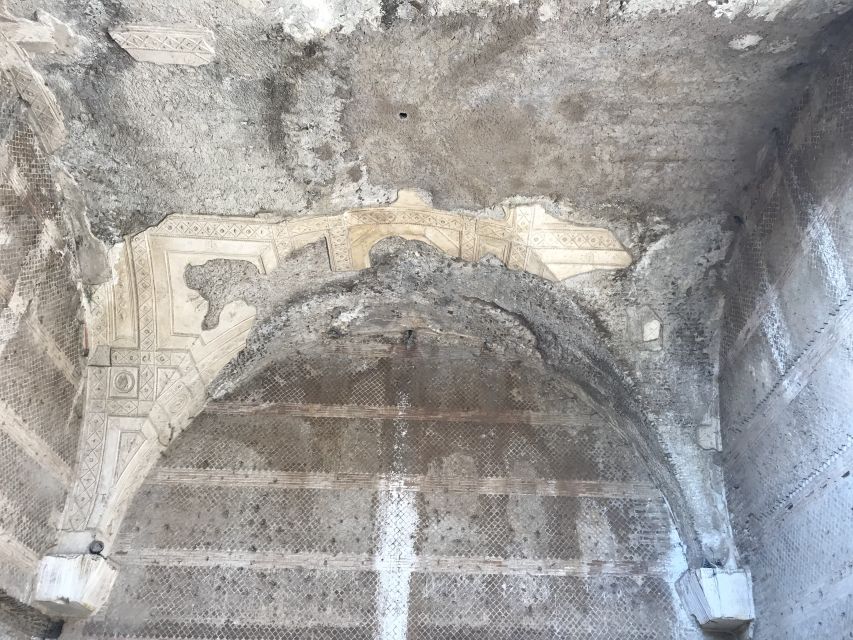
- 3D reconstructions make the pavilions feel inhabited again
- Engineering details come up in places like Hadrian’s Bath and the water channels
- Water is everywhere—from artificial lakes to the Maritime Theater’s water-surrounded design
- A private, step-by-step route connects the Pecile, Canopus, and Tablinum into one story
Why this private archaeologist tour makes Hadrian’s Villa click

Hadrian’s Villa can overwhelm you if you go in alone. It’s big, broken up, and full of repeating architectural ideas—so without a guide, you can end up doing the “look, read the sign, move on” loop. This tour is different because you’re not just touring rooms; you’re learning how the whole place was designed to work for an emperor.
The biggest win is the way your archaeologist guide frames each stop. You start with a setting (the Pecile and gardens), then you move into functions (baths, dining, philosophy rooms), and finally you end with the meeting space and imperial staging. When you connect those dots, the villa stops feeling like ruins and starts feeling like a carefully planned residence.
I also like that the tour uses practical interpretation tools—especially the 3D reconstructions. You’ll stand in front of what’s left, then get a clearer sense of how those pavilions likely looked in the 2nd century, which makes the architecture much easier to understand.
You can also read our reviews of more private tours in Rome



Getting there: pickup at Piazza della Repubblica and a dedicated drive
You’ll begin at Piazza della Repubblica, 12. From there, you ride in a van for about 45 minutes, which is helpful because it turns this into a smooth day rather than a transit puzzle. The tour is set up as a private group, so you’re not squeezed into a packed schedule with strangers.
Plan for a simple rhythm: travel out, spend about 2.5 hours at Hadrian’s Villa, then ride back after the visit. That pacing matters at this site because you need enough time to walk the route, but you also don’t want to burn your energy before the main architectural moments.
There’s also a practical note: the tour includes entrance tickets and a professional driver. That means you’re not spending your energy lining things up—you can focus on the tour and keep your eyes open.
The Pecile and Hadrian’s porch: start with the view and the mood
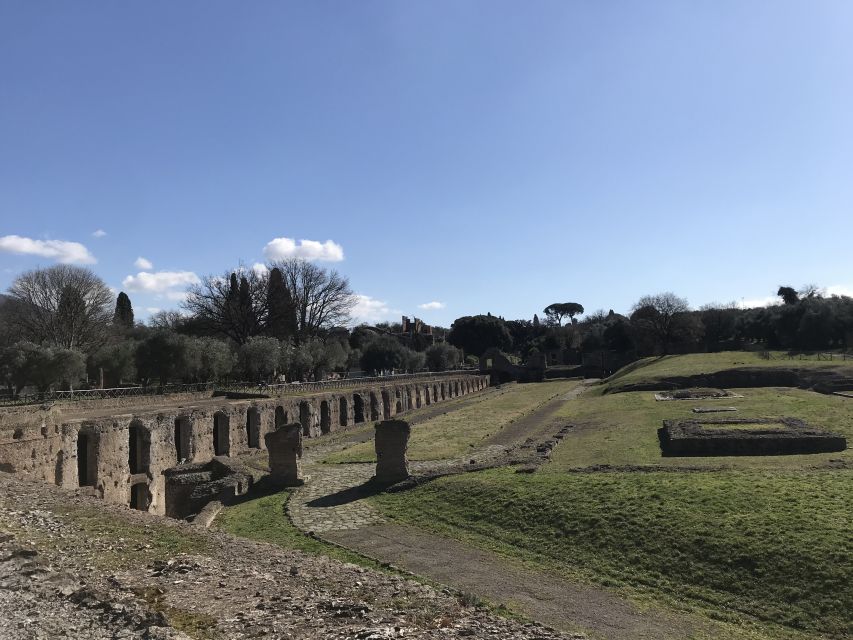
Your first major stop sets the tone fast: the Pecile, also described as Hadrian’s porch. This is where you get the sense that the villa wasn’t only about buildings—it was about controlling views, privacy, and atmosphere. You’ll look out toward Hadrian’s private garden and pool while also taking in panoramic views of the Roman countryside.
Why this matters: many people rush straight into the “big” buildings and miss the relationship between nature and design. The Pecile helps you understand that Hadrian’s taste was part landscape architect, part power broker. The emperor’s home isn’t hidden; it’s curated.
You’ll also get a first taste of what your archaeologist guide does best: explaining the place as a system. Even early on, the tour pushes you to notice how sightlines and movement shape experience. That means later, when you reach more specialized pavilions, you’ll know why they’re placed where they are.
Hadrian’s Bath: architecture and mechanics you can actually picture
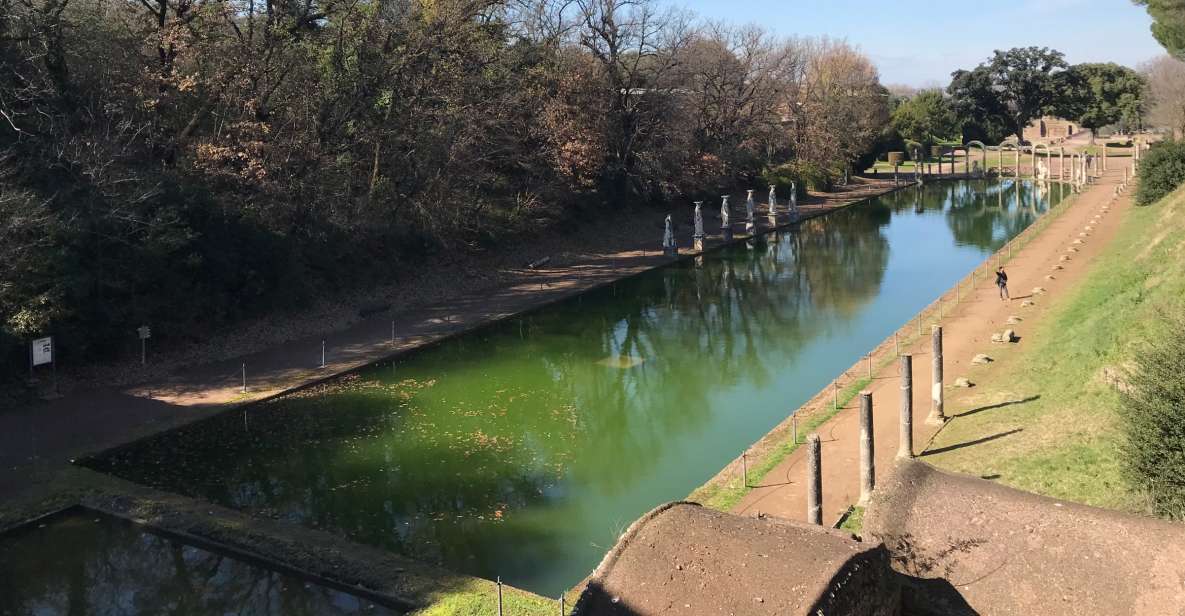
Next comes Hadrian’s bath, and this is a stop I’d call the tour’s “aha” moment for people who like how buildings work. You’ll admire the architecture, but you’ll also get explanations about the mechanics—how the ancient system functioned, not just what it looked like.
Baths at Roman villas were never just about cleanliness. They were social and status spaces, and they required serious engineering. With an archaeologist guiding you, the details feel less like technical trivia and more like a story about how daily life could be staged for comfort, routine, and display.
If you pay attention here, you’ll also be setting up your understanding for the water features later. The bath is a kind of preview of the villa’s bigger relationship with water, channels, and supply.
Canopus and Serapaeum: dining, water, and the drama of design
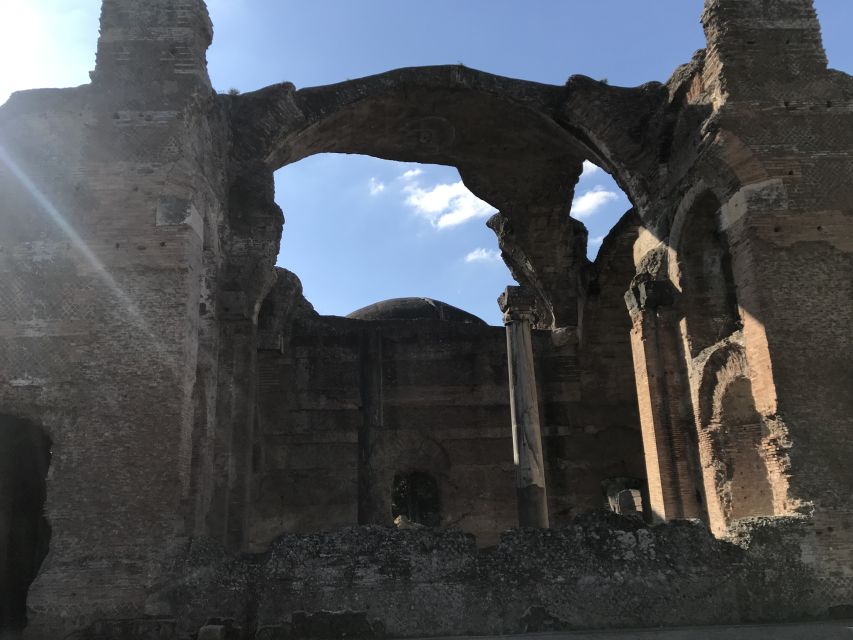
Then you step into the Canopus and Serapaeum area, described as a dining room with an artificial lake ending in a semi-dome. This is one of those moments where your brain starts asking better questions, like: How did they create a lake indoors or next to dining spaces? What made this feel like a theatrical environment?
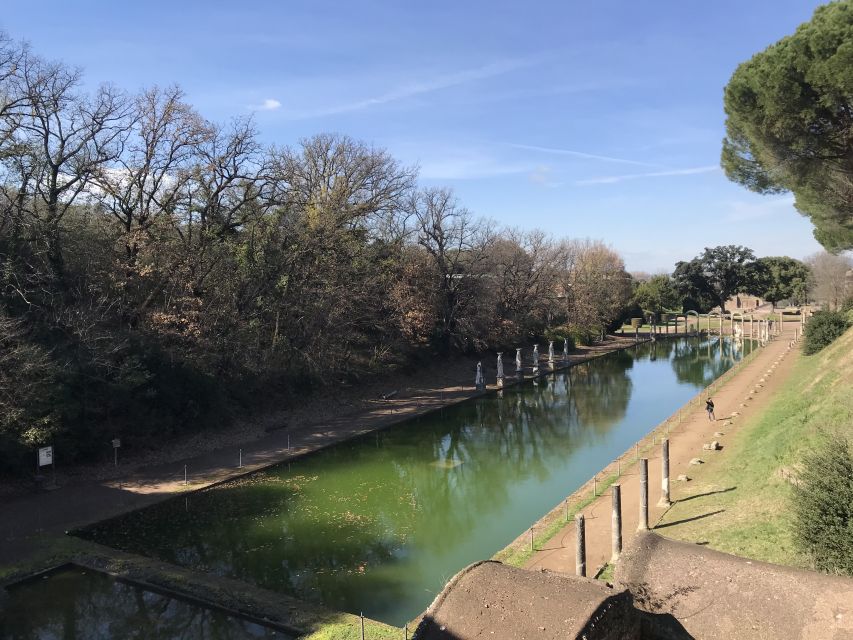
You’ll also see ancient channels that were supplied by water from a nearby aqueduct. That connection is key. It’s one thing to admire the beauty of water; it’s another to understand how water got there and how the villa was engineered to keep it flowing.
This stop tends to land well because it combines visual impact with function. In other words, it’s not “pretty ruins,” and it’s not “boring infrastructure” either. It’s the kind of Roman planning that treats architecture as a complete experience: sound, light, temperature, movement, and dining all braided together.






The Hall of the Philosophers: social order in stone
After water and dining, the tour turns to human behavior—specifically, how the emperor’s household managed social flow. You’ll visit the Hall of the Philosophers, a space where guests waited to be announced to Hadrian.
This is the kind of room that can be easy to overlook if you only care about monumental views. But with an archaeologist guiding the context, you’ll see it as an important part of the emperor’s “performance.” Timing, anticipation, and access were part of imperial authority.
What I like about this moment: it gives you a different angle on the villa. You’re not only learning about design; you’re learning about etiquette, staging, and power dynamics. It also helps you understand how the villa functioned as a living machine for receiving people, not just a private retreat.
Maritime Theater: the ring-like domus surrounded by water
Next is the Maritime Theater, described as an isolated ring-like domus surrounded by water. This is a standout for anyone who likes Roman creativity—and it feels different from the more straightforward pavilion spaces because it’s so visually specific.
Here, your archaeologist guide’s presence matters again. Instead of you simply noticing a circular form and moving on, you’ll connect it to purpose and atmosphere. The “surrounded by water” detail is not just a scenic bonus; it’s part of how the place likely shaped movement and sound, and it reinforces the villa’s obsession with controlled environments.
You’ll also be supported by the tour’s 3D reconstructions, which help you imagine how such a space could have felt when functioning with full surfaces, structures, and water effects.
Annular corridor and Tablinum: where the emperor met people
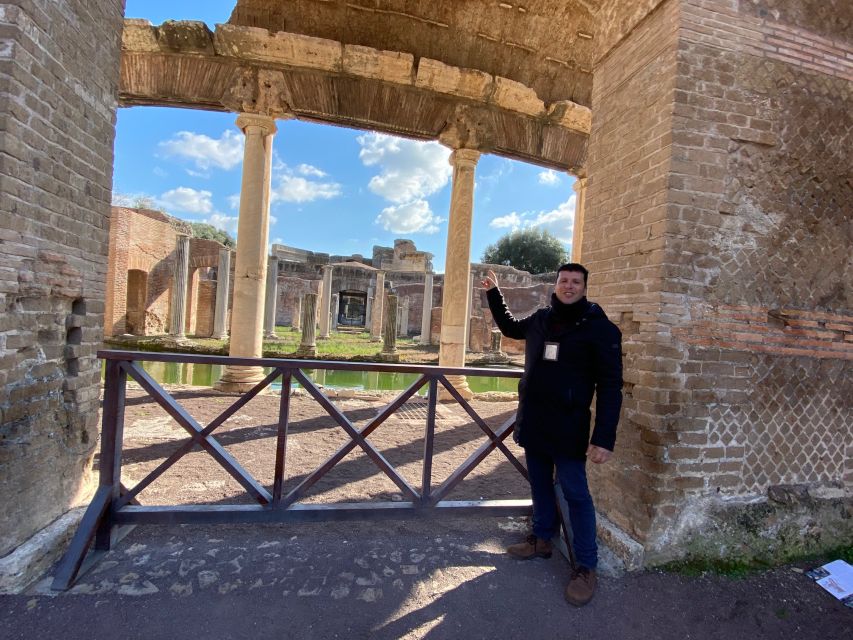
Your final stop is the annular corridor overlooking the Tablinum. This is where the tour comes full circle: you’ve seen landscapes, bathing, water dining, waiting rooms, and a theatrical harbor-like structure. Now you reach the meeting space used by the emperor.
The corridor layout is interesting because it changes how you look at what’s below. From there, you get a better sense of how movement, sightlines, and elevation could control what people noticed and when they noticed it. The Tablinum itself is described as a meeting room, so your guide can frame it in terms of access and conversation flow.
If you want one takeaway, it’s this: Hadrian’s Villa isn’t just a set of impressive buildings. It’s an engineered sequence that guides people from public-minded views into increasingly private, controlled spaces—ending with the emperor’s room.
Price and value: what $1,084.06 per private group buys you
The price is listed at $1,084.06 per group up to 1, and that’s the first number you should look at. For a solo traveler, it’s definitely not the cheapest way to see Villa Adriana. But it may be good value if you care about learning and you like a guided pace that makes the site understandable.
What you’re getting for your money includes hotel pickup and drop-off, entrance tickets, a professional driver, and an archaeologist guide. You’re also getting a private format, plus 3D reconstructions integrated into the visit. That mix matters because Hadrian’s Villa benefits a lot from interpretation; without it, you’ll spend time re-reading signs and trying to match scattered ruins to a coherent plan.
The best fit is usually someone who wants more than a “walk and photos” outing—someone who wants to understand why the villa is shaped the way it is. If you’re traveling with someone you can share the cost with, it tends to feel more reasonable. If you’re going solo and you really want expert context, you’re paying for clarity and time.
What to bring and how to pace yourself during the 4-hour plan
The tour duration is about 4 hours, with around 2.5 hours on site. That means you should plan to be on your feet for most of the villa portion. Bring comfortable shoes, wear comfortable clothes, and bring water.
Food and drink aren’t included, so do yourself a favor and pack something simple. The tour suggests bringing food and drink, and that’s smart because it helps you keep your energy steady if you’re walking the whole route.
Also consider that this is listed as not suitable for wheelchair users. Even if you’re not using a wheelchair, it’s a sign to be realistic about uneven surfaces and the need for stable footing.
Who this tour suits best (and who might want a different approach)
This experience is ideal if you like Roman history but you also want structure. The sequence—from Pecile to baths to Canopus dining spaces to waiting rooms and finally meeting areas—gives your visit shape. You’ll enjoy it most if you like architecture that has a purpose behind it.
It’s also a great choice if you appreciate expert interpretation. Multiple 5-star experiences mention Ferdinando’s expertise, cultural knowledge, and ability to guide you through the complex buildings. If you tend to get lost at large archaeological sites, a trained archaeologist guide is exactly what helps.
If you’re looking for an ultra-light walk with lots of free time and minimal explanations, this may feel more structured than you want. But for most people who care about understanding what they see, this is a strong match.
Should you book Hadrian’s Villa with an archaeologist guide?
Yes—if you want your visit to Villa Adriana to feel like a story, not a scavenger hunt. The private format, entrance tickets, and dedicated driver remove hassle, while the archaeologist’s explanations turn major stops like Hadrian’s Bath, Canopus and Serapaeum, and the Tablinum into more than just impressive ruins.
I’d especially recommend it if you enjoy engineering, water systems, or how architecture supports power and daily routines. The 3D reconstructions and Ferdinando-led delivery help you build a mental picture of the villa’s layout and design intent fast.
If you’re price-sensitive or you prefer casual wandering over guided learning, you might compare with less specialized options. But if you’re serious about understanding the emperor’s world, this one is worth the money.
FAQ
Where does the tour start?
The pickup location is Piazza della Repubblica, 12.
How long is the tour?
The total duration is 4 hours, including about 2.5 hours at Hadrian’s Villa.
What’s included in the price?
Hotel pickup and drop-off, entrance tickets, a professional driver, and an archaeologist guide are included.
Is food provided during the tour?
No. Food and drink are not included, so it’s recommended you bring them along with water.
What language is the guide?
The live tour guide is available in English and Italian.
Is this tour wheelchair accessible?
No, it is not suitable for wheelchair users.
Do you see reconstructions during the visit?
Yes. The experience includes 3D reconstructions showing how each pavilion looked in the 2nd century.