REVIEW · ROME
Rome: Private Food Tour in Trastevere and Campo de Fiori
Book on GetYourGuide →Operated by BOLOGNA TOUR & BEST ITALY TOUR · Bookable on GetYourGuide
Follow your nose from Campo de’ Fiori to Trastevere. This private 3-hour Rome food walk mixes Roman cuisine with real neighborhood context, from the Giordano Bruno statue to the trattorias tucked into side streets. You’ll sample four typical products along the way, with a local guide who can explain what you’re eating.
I love that the tastings are tied to Roman staples, including classic Roman pizza and supplì. I also like the route: you get a memorable break at Ponte Sisto for city views, then continue through Trastevere’s narrow lanes and back to Campo de’ Fiori for more food and atmosphere.
One drawback to think about: you’ll be walking for about three hours, so plan on comfortable shoes, and the private format costs more than a standard group tour.
In This Review
- Key things to look forward to
- Two Roman neighborhoods, one tasty plan
- Starting at Campo de’ Fiori: Giordano Bruno sets the tone
- Trastevere starts after Ponte Sisto’s Roman photo moment
- What you’ll do during the Trastevere hour
- Trastevere food: Roman favorites you can actually name
- Campo de’ Fiori again: tasting with the city center heartbeat
- Four tastings: what to expect (and how to plan your day)
- The walking pace in a 3-hour private format
- Guide impact: why Mitia and Dimitri’s style mattered
- Price and value: is $198.25 per person fair?
- Who should book this Rome food tour
- Should you book this Trastevere and Campo de’ Fiori private food tour?
- FAQ
- FAQ
- Where does the tour start?
- How long is the food tour?
- What’s included in the price?
- Are drinks included?
- What food items will we taste?
- What language is the live guide?
- Is there hotel pickup or drop-off?
- What should I bring?
- What type of group is it?
Key things to look forward to
- Giordano Bruno as your starting point at Campo de’ Fiori, with big ideas behind the stone
- Trastevere alley walking with local street energy, including artisan and small-trader feel
- Ponte Sisto views before the food and neighborhood time ramps up
- Four tastings of typical products, focused on Roman favorites (including pizza and supplì)
- Two districts in one tour window, so you don’t have to choose between market city-center and Trastevere charm
Two Roman neighborhoods, one tasty plan
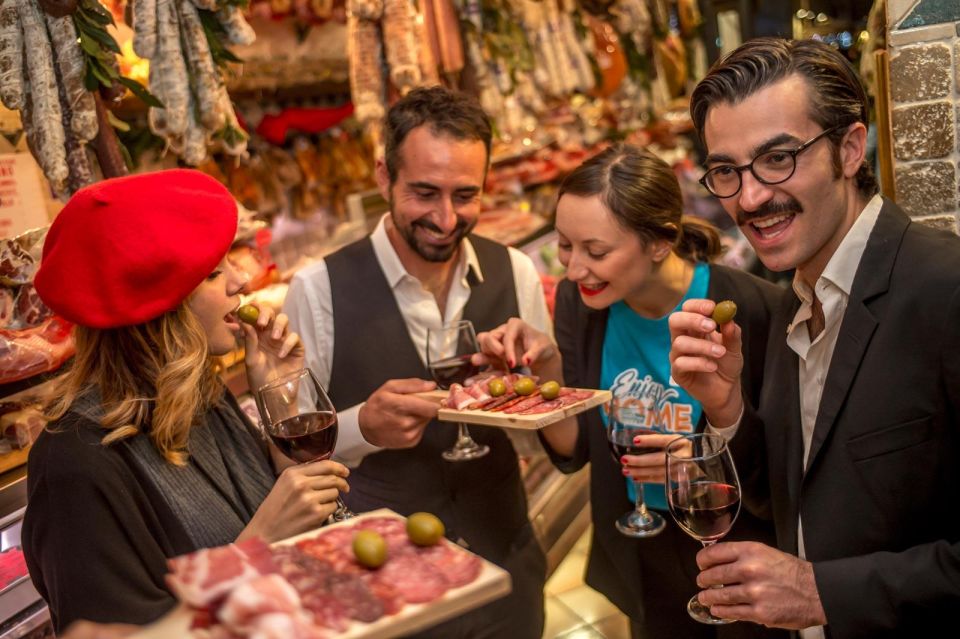
This is the kind of Rome food tour that makes sense if you want more than just a list of restaurants. You’re walking between Campo de’ Fiori and Trastevere, and both places help explain Roman eating as something rooted in place, not just a menu.
The value here is the pairing. Campo de’ Fiori gives you the pulse of the city center, while Trastevere feels like Rome you can almost touch—colorful alleys, small shops, and traditional trattorias in the background. Combine that with four tastings and a guide who keeps the story moving, and the 3-hour format feels efficient rather than rushed.
Also, since it’s a private group, you’re not stuck reading body language or timing your questions for the loudest person in the crowd. You can ask why a dish is done a certain way, or how it fits into Roman tradition, and the guide can pace the walk to your group.
You can also read our reviews of more food & drink experiences in Rome

Starting at Campo de’ Fiori: Giordano Bruno sets the tone
Your tour starts at Campo de’ Fiori in front of the Monumento a Giordano Bruno. It’s a strong way to begin because the square itself has an odd-but-important identity: it’s the only monumental square in the city center that does not house a church. That’s the kind of detail your guide can turn into a quick history lesson without killing the momentum.
At the center stands the nineteenth-century statue of philosopher Giordano Bruno, burned in 1600 because he was considered a heretic. You don’t need to be a history nerd for this to land. It gives Campo de’ Fiori a deeper layer than “a great place to meet for lunch,” so when you later step into food stalls and trattorias, the whole experience feels more grounded in real Rome.
Practically speaking, the start point is easy to find because it’s a specific monument in the square. And since your tour begins right where you’ll be thinking about food and neighborhood, you’ll start the walk in the right frame of mind.
Trastevere starts after Ponte Sisto’s Roman photo moment
After the initial Campo de’ Fiori time, you cross Ponte Sisto on your way toward Trastevere. This bridge matters because it was built to allow direct communication between the Trastevere district (and the Vatican) and the rest of the city. That means the route isn’t just a shortcut—it’s part of how these areas have connected for a long time.
Then there’s the view. You get one of those classic “Rome spreads out in every direction” angles. Even if you’ve seen photos, it’s different in person because you’re walking in real time through the city’s logic—bridge, river, streets, and the buildings closing in behind you.
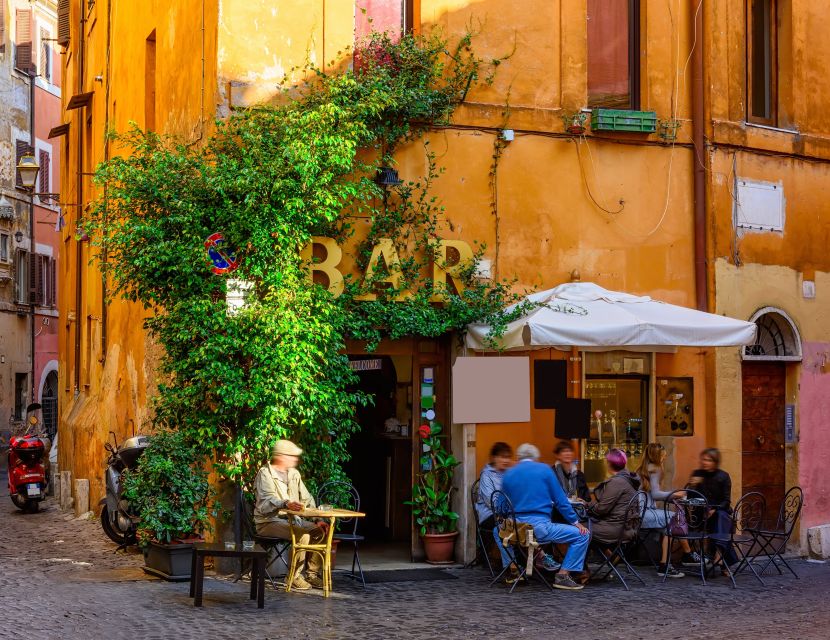
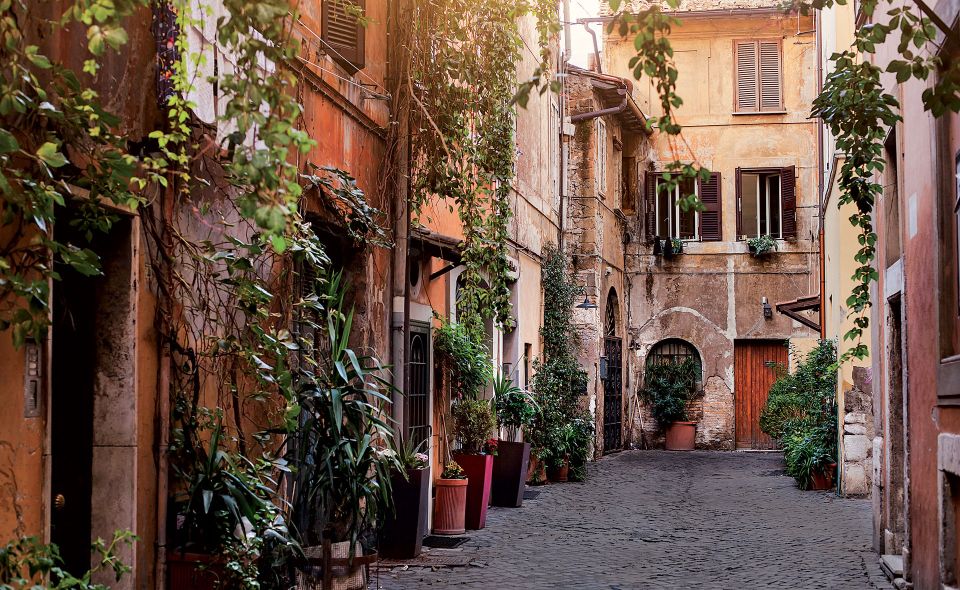
Once you reach Trastevere, the vibe changes fast. The tour moves into the neighborhood’s narrow streets where you can feel the warm, local rhythm. This area is known for colorful, typical alleys that make the walk itself part of the experience. If you like Rome best when it feels lived-in—artisans, small traders, and traditional trattorias still doing their thing—you’ll get why Trastevere stays popular.
What you’ll do during the Trastevere hour
In Trastevere, you get a guided walk plus food tasting and a market visit. The pacing matters here. You’re not just sampling and moving on. You’re also getting context about what you’re seeing, which is the difference between a food break and an actually meaningful food tour.
Your guide leads the route through the alleys, then brings you to stops where the tastings fit naturally into what the neighborhood is known for. Along the way, you’ll hear how Roman cuisine developed from local habits—simple ingredients, bold flavor, and plenty of comfort food energy.
Trastevere food: Roman favorites you can actually name
This tour is designed around typical Roman cuisine, not “international Italian.” That’s why two of the most memorable items are Roman pizza and supplì—the classic rice ball with tomato sauce.
Supplì is one of those dishes that can seem ordinary until you taste it. The crispy outside and soft center make it feel like street food, but with the polish of a traditional Rome kitchen. And because you’re eating it on a walking tour, it comes with the best possible bonus: it doesn’t feel like a performance. You’re eating something local right where locals have been eating for a long time.
Roman pizza on a food tour also works differently than pizza at a generic restaurant. On this walk, the guide can explain what makes it Roman, and you can compare it instantly against what you’ve had at home. That’s why I like tours where you can anchor dishes to places. You leave remembering flavor and context together.
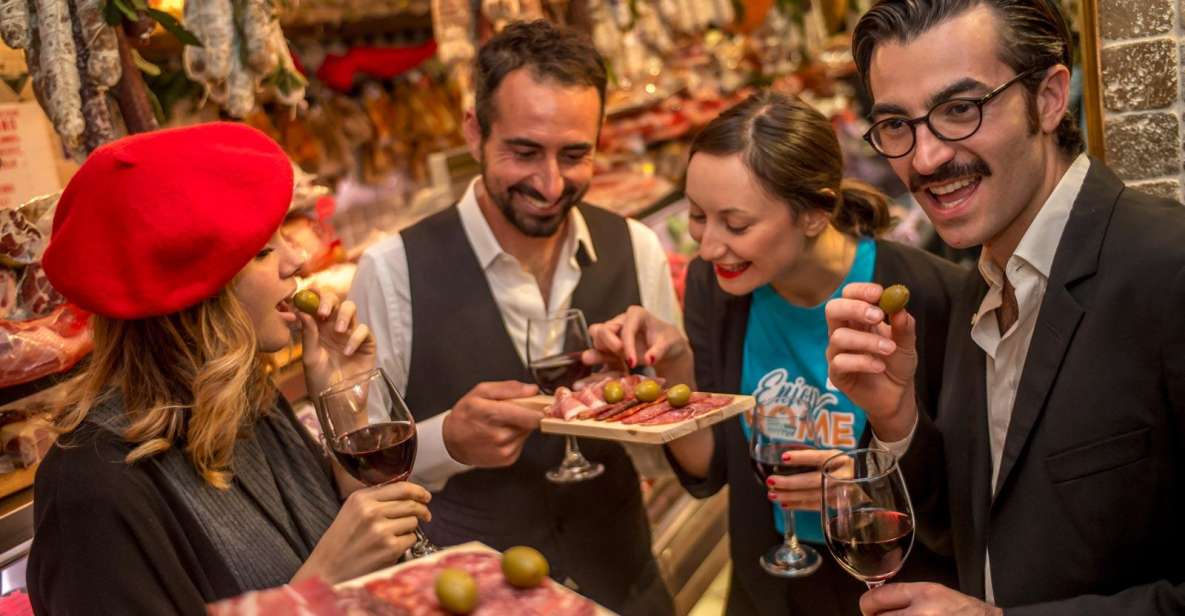
One detail worth planning for: the tour includes a glass of wine with the tastings mentioned in the itinerary. If you don’t drink alcohol, you’ll want to ask your guide in advance if substitutions are possible, since the tour info specifically mentions wine as part of the experience.
You can also read our reviews of more tours and experiences in Rome



Campo de’ Fiori again: tasting with the city center heartbeat
After the Trastevere market hour, the tour circles back toward Campo de’ Fiori, where you spend another guided block with food tasting and a market visit. This second stop is smart because Campo de’ Fiori doesn’t just feel like “the starting square again.” In practice, you’ll experience it with fresh eyes after being in Trastevere.
The city center energy is different. Trastevere has cozy alleys and slow turns. Campo de’ Fiori feels more open, more public, and more about the buzz of daily commerce. It’s also where the historical symbolism stays close at hand because you’re still near that Bruno monument and the square’s unique identity.
If you like watching Rome’s food culture in motion—how people shop, snack, and graze as they move through the day—this part is your payoff. You get the market rhythm plus another round of tastings so you can compare how the same city tradition shows up in different corners of Rome.
Four tastings: what to expect (and how to plan your day)
The tour includes four tastings of typical products, plus the wine glass mentioned with the Roman food items. The info you’re given points to favorites like classic Roman pizza and supplì, rice ball with tomato sauce. You can think of these tastings as small meal-scale samples that add up to a satisfying experience without turning into a long sit-down dinner.
Here’s how I’d plan your day around it:
- Have a light breakfast or snack before the tour so the four tastings don’t feel like a food coma.
- If you’re eating lunch the same day, keep it simple afterward. You’ll likely want something easy, like bread and fruit or a light pasta portion.
- Bring cash for extra purchases only if you truly want more. This tour’s tastings are meant to cover the core experience.
Because the guide can talk while you eat, the “four tastings” feel like more than four bites. You’re learning what to look for when you’re walking independently afterward: the kinds of stalls locals return to, and the Roman comfort-food shapes that show up again and again.
The walking pace in a 3-hour private format
At roughly 3 hours, this is a good length for first-timers and repeat visitors alike. You get enough time to feel the neighborhoods, and you don’t get stuck on a long, exhausting crawl.
The route includes bridges and narrow streets, so speed will depend on foot traffic and where your group stops for tastings. That’s why “private group” can be a big deal. Your guide can keep the walk smooth rather than adhering to a one-size schedule.
Also, the tour ends back at the meeting point near the Giordano Bruno monument. That means you’re not left stranded halfway across the city. It’s easy to continue the day from the square and pick up your next Rome plan.
Don’t ignore the simple advice: comfortable shoes. This is a walking food experience, and the best part is how the streets shape what you see between tastings.
Guide impact: why Mitia and Dimitri’s style mattered
A food tour lives or dies by the guide. The good news is that the people leading this experience have been highlighted for their approach—specifically the friendly, welcoming energy that turns a tasting into a feeling of belonging.
In the past, guides such as Mitia have been described as taking people to very good local places to eat and bringing an attitude that makes you feel at home. Another guide named Dimitri has been praised for fun companionship and for mixing humor with real historical context while you walk and eat.
What you should take from that: choose this tour if you want your guide to be part teacher, part friendly guide on the street. If you prefer silent food-and-picture hopping, you may find a guided story-heavy approach less your style.
Price and value: is $198.25 per person fair?
At $198.25 per person, this isn’t a budget impulse buy. You’re paying for two things: the private format and the guided tastings in two specific areas that take effort to connect on foot.
So the value question isn’t only how many bites you get. It’s whether the guide-led context and the targeted route improve the experience enough for you. If you want:
- a guided walk through Trastevere and Campo de’ Fiori
- a clear structure with four tastings of typical Roman products
- a local explanation behind dishes like pizza and supplì
then the price can feel reasonable for Rome, especially compared with paying separately for a guide plus eating at random spots.
If you’re price-sensitive, you might prefer a group tour. But if you want control, conversation, and a more personal feel, this one leans into that—and the price matches the format.
Who should book this Rome food tour
I’d book this if you:
- want a Roman cuisine focused experience (not just “Italian food” in general)
- enjoy walking and learning along the way
- like the idea of market time plus street-side tastings
- are traveling as a couple or small group that benefits from a private pace
I’d think twice if you:
- hate walking for hours or don’t want to move between neighborhoods
- prefer alcohol-light or alcohol-free experiences and don’t want wine as part of the itinerary
- want purely restaurant meals with minimal walking and minimal standing
Should you book this Trastevere and Campo de’ Fiori private food tour?
Yes, if your idea of a great Rome day includes both food and street-level context. This tour gives you a practical route—Campo de’ Fiori, Ponte Sisto views, then Trastevere alleys—while keeping the food anchored in recognizable Roman staples like pizza and supplì.
Book it if you want a guide to connect the dots between the city’s layout, its history cues like Giordano Bruno, and the dishes people actually eat. Skip it only if you know you won’t handle a three-hour walking format or if you need a strictly non-alcohol tasting experience.
FAQ
FAQ
Where does the tour start?
It starts at Campo de’ Fiori, in front of the Giordano Bruno statue.
How long is the food tour?
The duration is 3 hours.
What’s included in the price?
The tour includes a travel guide and four tastings of typical products.
Are drinks included?
A glass of wine is mentioned alongside the tastings.
What food items will we taste?
You’ll taste typical Roman cuisine such as classic Roman pizza and supplì (rice ball with tomato sauce).
What language is the live guide?
The guide is available in Italian, Spanish, and English.
Is there hotel pickup or drop-off?
No, hotel pickup and drop-off are not included.
What should I bring?
Wear comfortable shoes, since it’s a walking tour.
What type of group is it?
It’s a private group.
If you want, tell me your travel month and your group size, and I’ll suggest a smart way to pair this with nearby sights afterward (so you don’t waste time backtracking).