REVIEW · ROME
Rome: Jewish Ghetto Walking Tour
Book on GetYourGuide →Operated by Roman Vacations · Bookable on GetYourGuide
Two millennia in one walk. This Rome Jewish Ghetto tour strings together Trajan’s Column and some of the city’s oldest ruins into a clear, human story of what changed, what stayed, and what people survived. I like the way the route gives you big Roman context fast, starting right near the Teatro di Marcello stop.
The other thing I genuinely like is the included break for homemade kosher gelato (or coffee), which keeps the 2.5-hour pace feeling doable. One consideration: the details say you’ll visit the Great Synagogue of Rome, but they don’t promise an inside visit, so if you’re hoping to tour the interior, plan to ask ahead.
In This Review
- Quick hits before you go
- Starting at Foro Traiano: a smart “begin at the center” plan
- Teatro di Marcello: Rome’s theater bones, not just another ruin photo
- Turtle Fountain in Piazza Mattei: legend you can actually locate
- The Jewish Ghetto streets: the story behind the stones
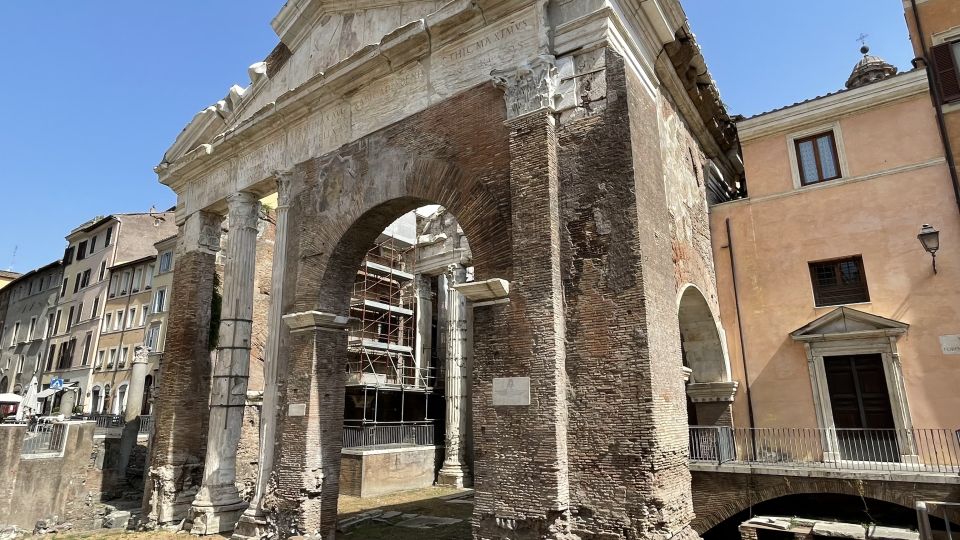
- Portico d’Ottavia: ancient structure, everyday city energy
- The gelato stop: a small included reward that changes the whole mood
- Tiber Island ending: crossing the oldest working bridge
- Guides and storytelling style: why this tour gets high marks
- Price and value: is $65 worth 2.5 hours?
- Timing and who should book this tour
- Should you book this Rome Jewish Ghetto walking tour?
- FAQ
- How long is the Rome Jewish Ghetto walking tour?
- How much does the tour cost?
- Where do I meet the tour guide?
- Where does the tour start and where does it end?
- What are the main stops during the walk?
- Is there food included?
- What language is the tour guide?
- Do tours run in bad weather?
- What should I bring?
- Are churches involved in the route, and do I need special clothing?
- Is free cancellation available?
Quick hits before you go
- Start at Foro Traiano (Trajan’s Column area) so you begin with Roman scale and context
- Teatro di Marcello gets special attention and is even framed as older than the Colosseum
- Fontana delle Tartarughe (Turtle Fountain) is tied to a famous love story in Piazza Mattei
- Ghetto street stops include the Great Synagogue area and a remaining ghetto wall segment
- Portico d’Ottavia is shown as a living ancient structure you can still read in the present
- Kosher gelato (or coffee) is included, plus you end on Tiber Island after crossing the oldest functioning bridge
Starting at Foro Traiano: a smart “begin at the center” plan
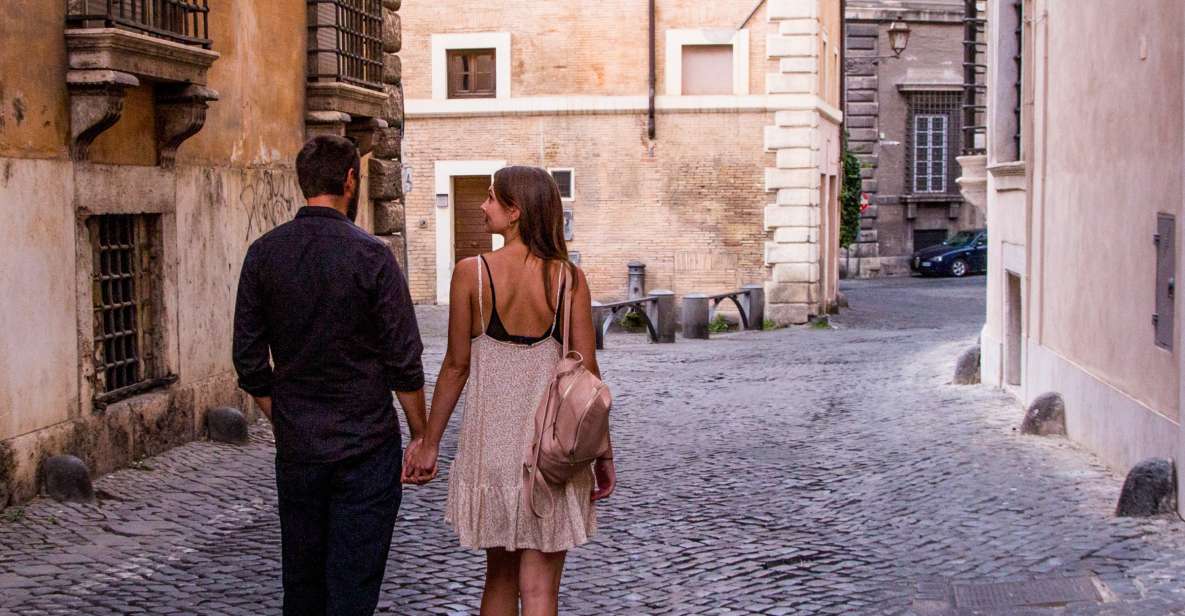
Most Rome history starts with a map trick: you learn the feel of the city by starting in the middle. This tour meets at Foro Traiano, 84, and you’re meant to look for an orange Roman Vacations sign. If you’ve ever struggled to find a meeting point in Rome, this is the kind of setup that saves your morning.
The format is a walking route with multiple exterior stops, which is ideal when you want stories tied to the actual streets. Reviews also suggest guides keep groups moving at a comfortable pace, including for people who need a slower walk, which matters on a 2.5-hour itinerary.
You can also read our reviews of more walking tours in Rome



Teatro di Marcello: Rome’s theater bones, not just another ruin photo
One of the first stops is Teatro di Marcello, and the tour specifically calls it out as even older than the Colosseum. That framing helps. When you’re standing near a Roman theater that predates the grandest amphitheaters you’ve seen in photos, you can feel how early Rome was already perfecting spectacle.
What you’ll get here is more than architecture talk. You’ll connect the dots between Rome as an empire with huge public spaces and Rome as a city that later shaped Jewish life in very specific neighborhoods. It sets up the rest of the walk so the ghetto story isn’t floating in isolation.
If you’re the kind of traveler who likes to know why a place matters before you move on, this is a strong opening.
Turtle Fountain in Piazza Mattei: legend you can actually locate

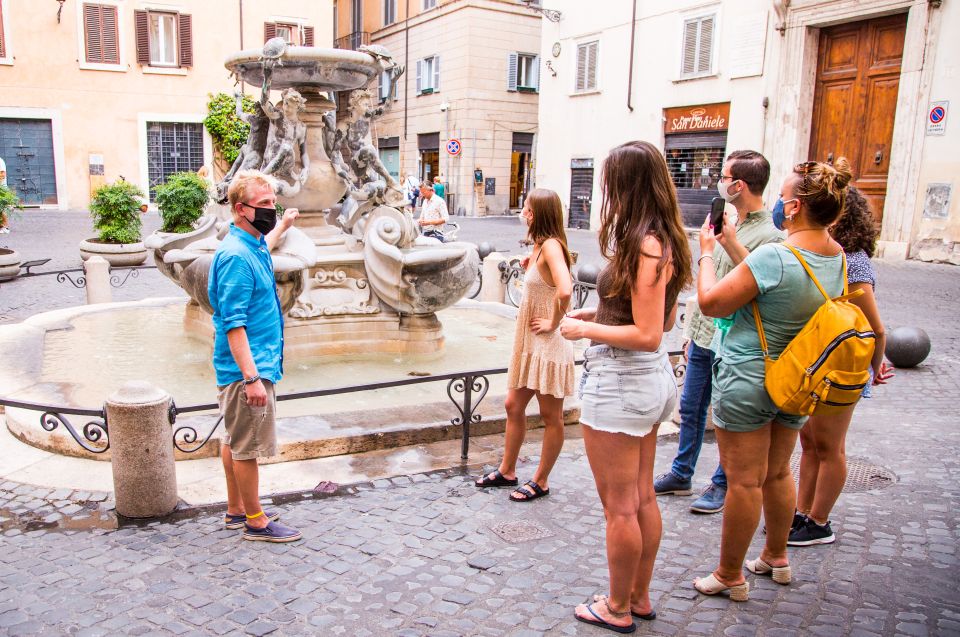
Next comes Piazza Mattei and the Fontana delle Tartarughe (Turtle Fountain). The tour shares the well-known tale tied to the fountain, including the theme of unrequited love, which gives you something human to hold onto while you look at stone and bronze.
This stop works for two reasons. First, Piazza Mattei is visually easy to navigate, so you’re not just walking through. Second, a love-story anecdote is a good way to break up the heavier themes that come with the ghetto history, without losing momentum.
Tip: wear good walking shoes here. You’ll spend time standing and listening, and Rome piazzas are often more “stop-and-go” than they look from a distance.
The Jewish Ghetto streets: the story behind the stones
When the tour reaches the Jewish Quarter, it leans into the long view. You’ll pass by key landmarks tied to the community and its changing circumstances over centuries. The walk includes the area around the Great Synagogue of Rome, plus the significance of the last remaining piece of the wall that once kept the community contained for generations.
This section can feel intense, and it should. The tour is designed to connect the present-day calm of the neighborhood with the fact that this same space carried repeated disruption. You’re not just seeing old buildings; you’re learning how a place can remember.
One practical note: the tour format is described as an outdoor walking experience with stops, not a museum circuit. If you want more access inside major sites, you may need to pair this tour with other activities that are specifically for interiors.
Portico d’Ottavia: ancient structure, everyday city energy

The route also includes Portico d’Ottavia, presented as a surviving ancient structure you can still experience in use. I love stops like this because they make ancient Rome feel less like a distant theme park and more like a city with layers you can still touch.
What makes this stop valuable is the way it bridges time. You’ll be moving from the ghetto’s enclosed history toward a broader picture of Rome’s architecture, city planning, and public spaces—so the neighborhood doesn’t feel like an isolated chapter. It feels like part of the same Rome you see everywhere else, just with a different lens.
If you enjoy noticing small details—arches, patterns, the way streets bend—this is the kind of stop where you’ll start seeing Rome differently.






The gelato stop: a small included reward that changes the whole mood
At some point during the walk, your guide takes you to a gelateria for homemade kosher gelato (or coffee). This isn’t a random add-on. It acts like a palate cleanser, both in your energy level and in the emotional pace of the tour.
The tour duration is 2.5 hours, so that included break matters. Without it, the route could feel like nonstop standing and listening. With it, you get a moment to reset, compare notes with your group, and keep the stories from feeling too heavy back-to-back.
Bonus: if you’re traveling with teens or anyone who needs hands-on breaks, an included stop often turns a “history tour” into an experience people actually look forward to.
Tiber Island ending: crossing the oldest working bridge
The finale is Tiber Island, reached after crossing the oldest functioning bridge in Rome. Crossing on foot gives you a clear sense of separation and connection at the same time—Rome, the river, and the island all feel distinct once you’re moving across.
On the island, the tour storytelling shifts in a powerful direction. You’ll hear about a hospital story during World War II and how it helped people, plus a different kind of ancient-to-modern transformation tied to Asclepius—a temple story that ends with the space now functioning as a church.
This is where the tour’s time-travel angle feels most complete. Earlier you learned about the ancient city’s scale. Then you saw a community’s long history in the streets. Here, you get a reminder that Rome’s history keeps working on people in real time—especially in places tied to care, healing, and survival.
Guides and storytelling style: why this tour gets high marks
This tour lives or dies by the guide. The names that show up again and again in the provided feedback include James, Angela, Tom, Daniel, Elena, Gabi, and Maria. The common thread is how they tell the story: more like a narrative than a script.
You’ll notice a few patterns that show up in the guides’ delivery:
- They use anecdotes and small details to keep the group listening.
- They answer questions and don’t rush you when someone asks something real.
- Guides seem comfortable shifting pacing. One review notes the group moving at a pace that worked for someone walking slowly.
- Even teenagers are mentioned as staying engaged, often because the history is told like story instead of just dates.
I also like that the tour is explicitly English-language with a live guide. When you’re dealing with layered history like this—Rome, Judaism, changing laws and neighborhoods—clear explanations make a huge difference.
Price and value: is $65 worth 2.5 hours?
At $65 per person for 2.5 hours, the price is in the middle of what you’d expect for a focused guided walk in central Rome. Here’s why it can feel like good value:
- You get a guide for the full time, which matters because the “why” behind the stops is doing most of the work.
- The route covers multiple major points: ancient structures near the start, ghetto landmarks, and a strong finish on Tiber Island.
- The tour includes homemade kosher gelato or coffee, so you’re not spending extra just to keep going.
This is the kind of tour that can save you money later too. If you try to self-tour the ghetto area without a guide, you’ll likely miss the connections between buildings and events—especially the significance of small remnants like that remaining wall segment.
Timing and who should book this tour
This is a strong fit if you want:
- A focused walking experience in the Jewish Ghetto area
- Clear context that connects ancient Rome to later centuries
- A route that ends in a scenic historical place on Tiber Island
A quick scheduling note: one review suggests avoiding Friday afternoon right before the sabbath starts. If you’re traveling around that window and you care about smooth timing for religious life and access, it’s worth planning your day carefully and asking the operator what the schedule looks like.
Also, bring your basics. The tour specifically recommends comfortable shoes, a sun hat, an umbrella, sunscreen, weather-appropriate clothes, and a reusable water bottle. Since the tour runs in all weather, you’ll feel better if you come prepared.
If you’re traveling in a heat wave, the gelato and the frequent pauses probably won’t feel like luxuries—they’ll feel like survival.
Should you book this Rome Jewish Ghetto walking tour?
If you want one guided walk that gives you both ancient Rome anchors and the human story of the Jewish community in the city, I’d book this. The route shape is smart: it starts near the center, moves through the ghetto with specific landmarks, then ends on Tiber Island where the stories turn to care and transformation.
Book it especially if you appreciate good storytelling and want a guide who can keep a group engaged—kids, teens, and adults all seem to do well here. Just go in knowing the tour is described as a visit-focused walking experience, so if interior access for the Great Synagogue of Rome is a must for you, ask ahead when you reserve.
FAQ
How long is the Rome Jewish Ghetto walking tour?
It runs about 2.5 hours.
How much does the tour cost?
The price is $65 per person.
Where do I meet the tour guide?
Meet at Foro Traiano, 84, and look for an orange Roman Vacations sign.
Where does the tour start and where does it end?
It starts near Trajan’s Column at Foro Traiano and concludes on Tiber Island.
What are the main stops during the walk?
You’ll see the Teatro di Marcello area, the Turtle Fountain in Piazza Mattei, the Jewish Ghetto area (including the Great Synagogue area and a remaining wall segment), Portico d’Ottavia, and then Tiber Island.
Is there food included?
Yes. Your tour includes kosher gelato or coffee.
What language is the tour guide?
The tour is offered in English.
Do tours run in bad weather?
Yes. The tour proceeds in all weather conditions.
What should I bring?
Bring comfortable shoes, a sun hat, an umbrella, sunscreen, weather-appropriate clothing, and a reusable water bottle.
Are churches involved in the route, and do I need special clothing?
You’ll visit a church on Tiber Island linked to the Asclepius story, and you should bring a cover for bare shoulders when inside any churches.
Is free cancellation available?
Yes. You can cancel up to 24 hours in advance for a full refund.