REVIEW · ROME
Rome: Historic Center Self-Guided Smartphone Tour
Book on GetYourGuide →Operated by Clio Muse Tours - Italy · Bookable on GetYourGuide
Rome sounds different through headphones. I like that this self-guided walk lets you go from Piazza Venezia to Piazza Navona at your own pace, with an audio script that points out what to notice as you move through the city. You’re not stuck waiting for a group, and you’re not guessing what connects one landmark to the next.
What I really like is the offline setup: you download the tour before you go, and you get an offline interactive map to avoid roaming charges. What you should consider is simple but important: this is phone-dependent, so if you don’t get the audio downloaded and working ahead of time (especially if your signal is weak), you can end up with a frustrating day.
In This Review
- Key highlights you’ll care about
- Price and value: is $11 worth an audio walk?
- Where you start: Altare della Patria in Piazza Venezia
- Downloading before you go: the make-or-break step
- How the walk is paced: freedom with structure
- Altare della Patria track: unification stories right at the start
- Trevi Fountain: the coin-toss moment with actual guidance
- Pantheon with audio inside: ancient engineering, plus legends
- Church of Saint Louis of the French: Caravaggio makes the route pay off
- Piazza Navona finish: Bernini fountains and a surprising past
- What’s not included (and why it matters)
- Small group size: why it’s still worth noting
- Who this self-guided Rome walk fits best
- Should you book this Rome audio walk?
- FAQ
- Do I need internet during the tour?
- Where does the tour start?
- Is there a live guide?
- Which languages are available?
- Do I need to pay to enter the Pantheon and the Church of Saint Louis of the French?
- What phone models are compatible?
Key highlights you’ll care about

- Offline audio + offline map so you can keep walking without worrying about roaming charges.
- No live guide means you control the pace and can stop for photos or rest whenever you want.
- Audio starting point at Altare della Patria right by the story of Italy’s unification and the Unknown Soldier.
- Trevi Fountain + Pantheon + St. Louis of the French in one connected route, so the sights feel linked instead of random.
- Piazza Navona’s Baroque art and Bernini fountains, plus the useful context about why this piazza used to work like a public pool in hot summer days.
Price and value: is $11 worth an audio walk?

At $11 per person for a full day of self-guided walking, this is priced like a smart add-on, not a premium guided tour. The value comes from what you’re getting: a structured audio route, offline access, and a playlist of major Rome moments—Trevi, the Pantheon, and the Church of Saint Louis of the French—without paying for a live guide.
Now the trade-off. You’re paying less because you’re also doing the work: timing yourself, navigating between stops, and reading the room with your own two feet. Entrance fees aren’t included, and you’ll need your own phone and headphones. If you’re the type who likes a map and a checklist, you’ll likely feel good about this purchase. If you prefer someone to answer questions on the spot, this won’t replace that.
You can also read our reviews of more guided tours in Rome



Where you start: Altare della Patria in Piazza Venezia

There’s no meeting point with a guide. The tour starts at Altare della Patria (Altar of the Fatherland) in Piazza Venezia, right opposite the monument area. It’s a busy, central spot, so it’s also an easy anchor point for the rest of your day.
If you’re using public transport, Piazza Venezia is reachable by bus lines 51, 70, 80, and 916. Once you’re there, your audio guide takes over. That matters because an audio-first tour works best when you begin at the exact location the track expects—otherwise you lose the flow.
One practical tip: before you even leave, charge your phone fully and put your headphones somewhere you can grab fast. Rome makes you walk. Rome also makes you stop. Don’t waste your first minutes fiddling.
Downloading before you go: the make-or-break step
This tour is downloadable. After booking, you receive an email with instructions to access the audio tour, and the big rule is that you’ll want everything set up before you start walking.
Here’s what to plan for:
- You should have enough storage space (100–150 MB).
- You need an Android or iOS smartphone.
- The tour is not compatible with Windows Phones, iPhone 5/5C or older, and several older iPad/iPod models listed by the provider.
In real life, the most common way audio tours fail is not the walking—it’s the setup. If your internet is shaky where you’re starting (or if you’re somewhere that limits downloading), test the audio and the map first. I’d much rather spend 5 minutes confirming it works than lose an hour trying to fix it while standing under Roman stone that doesn’t care about your Wi-Fi.
How the walk is paced: freedom with structure

Even though you’re self-guided, the tour isn’t random. The route is built like a sequence, moving from a national monument area into fountain country, then on to the Pantheon, then to a church tied to Caravaggio, and finally to Piazza Navona.
That sequencing is the point. Rome’s streets can feel like a puzzle, and major sights can blur together if you’re not given a story thread. This audio tour gives you that thread, so each stop feels like a continuation instead of four separate errands.
You’ll also appreciate the “stop when you want” style. In a city like Rome, your best day usually includes a few unplanned pauses: a cool drink, a photo from the right angle, or just a moment to catch your breath. This format lets you do that without feeling like you’re falling behind.
Altare della Patria track: unification stories right at the start
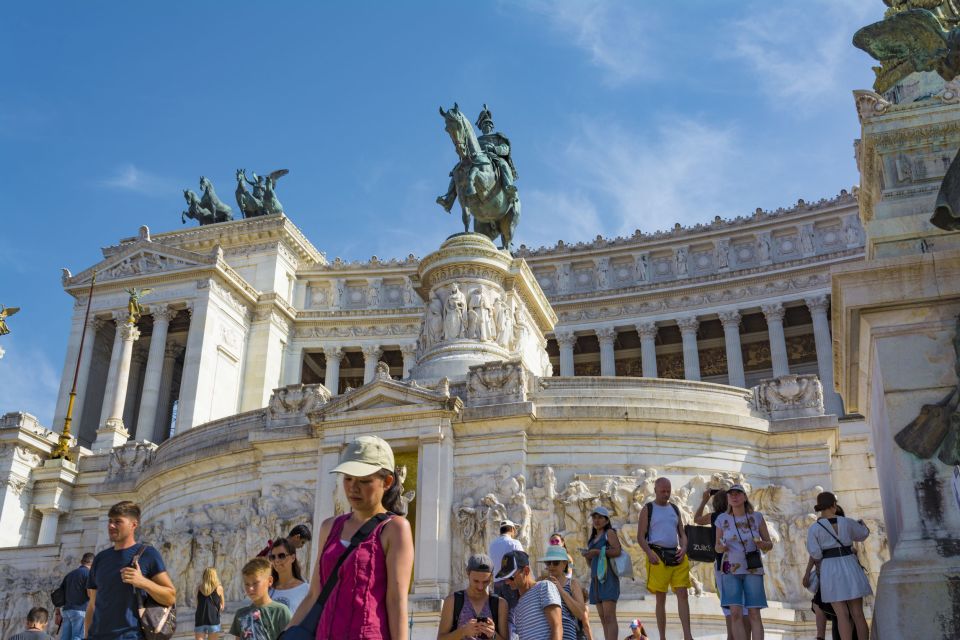
Your first big moment is Altare della Patria, a centerpiece of modern Italy. The audio begins opposite the monument and frames it as a symbol of Italy’s unification in the 19th century.
You’ll hear about:
- the first king of modern Italy
- the respects paid to the country’s Unknown Soldier
This is smart tour design. Many visitors walk past this area and only notice the size. The audio helps you understand what the monument represents—so you’re not just standing in front of marble. You’re standing in front of a political and cultural statement, right before you shift into Rome’s older layers.
If you’re the type who likes context, you’ll get more out of this stop than you would from pure sight-seeing. If you just want photos, the structure still helps because it tells you what to look for.
You can also read our reviews of more historical tours in Rome





Trevi Fountain: the coin-toss moment with actual guidance
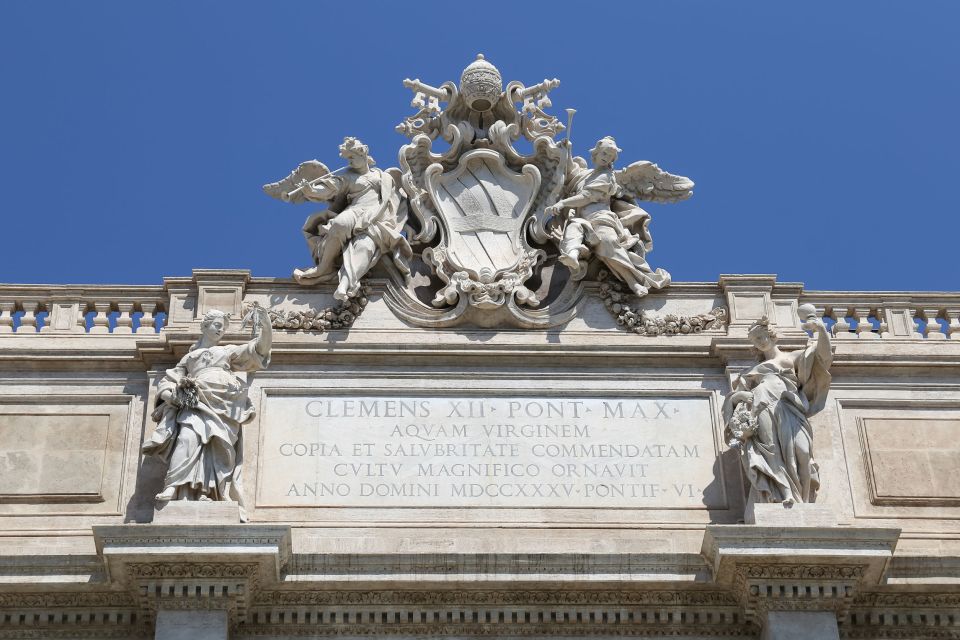
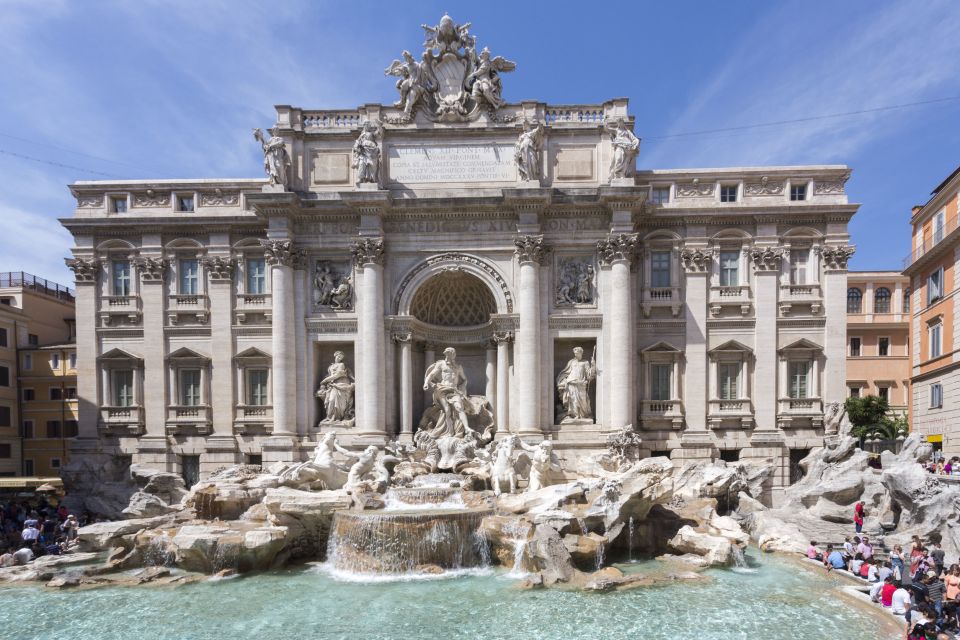
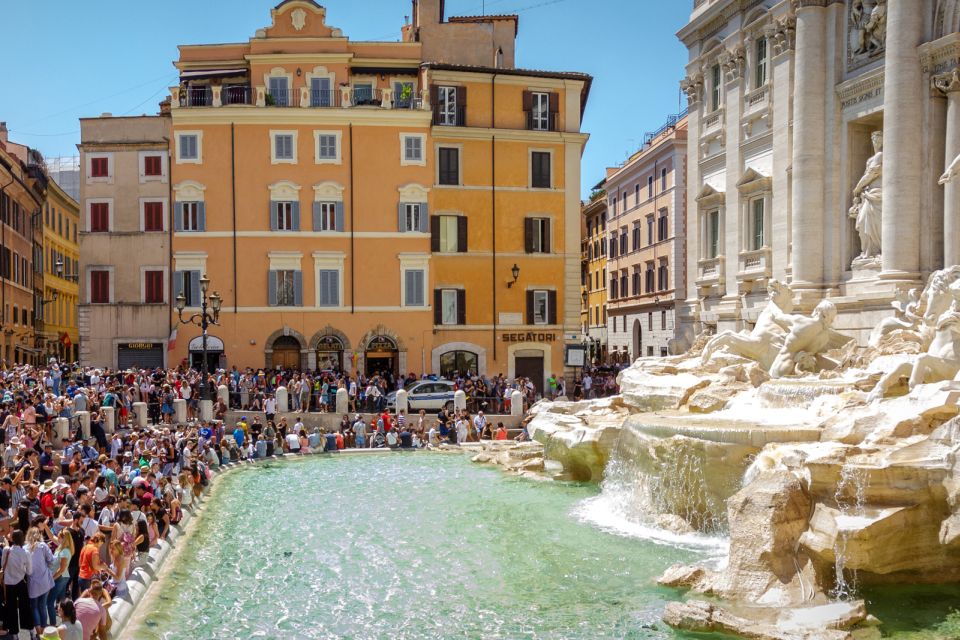
Next comes The Trevi Fountain, one of Rome’s most recognizable stops. The tour’s audio treatment focuses on the fountain’s playful water display and the stories that come alive through your guide.
You’ll also get the famous tradition: tossing a coin and leaning into the idea of Dolce Vita—that sweet, slow-romance vibe Rome markets so well.
Two reasons this works well as an audio stop:
- The fountain is a magnet for crowds, so it can be hard to read details with everyone shifting around you.
- The audio gives you a reason to slow down, even if you only have a short window.
Practical thought: bring patience. This is Trevi. You’re walking in among people who also planned their day around this same target. The audio tour helps you stay engaged instead of feeling stuck.
Pantheon with audio inside: ancient engineering, plus legends

The route then brings you to the Pantheon, and this is one of the main reasons I think this audio format fits Rome so well. The tour is designed to guide you through what makes the Pantheon special, including its colossal dome and its long, continuous history spanning almost two millennia.
A key plus: the guidance doesn’t stop at the doorway. You’re encouraged to follow along inside the enormous temple and learn about some of its bizarre legends.
Also, this is one of those rare attractions where understanding adds to the awe. Even if you already know the Pantheon from photos, the audio can help you notice the shapes, the scale, and the way the space “works” when you’re standing under it rather than looking up from a postcard.
One consideration: opening hours matter. The Pantheon is included, and while there’s no admission fee mentioned for entering, you still need to plan your visit during operating times.
Church of Saint Louis of the French: Caravaggio makes the route pay off
After the Pantheon, your audio tour continues to the Church of Saint Louis of the French. This stop is where the route feels less like a greatest-hits list and more like a curated story through Rome.
The audio highlights Caravaggio’s masterpieces, and it’s clear the tour expects you to look at the art with guided attention. Even if you’re not a die-hard fan of Baroque art, a structured audio cue can make you stop walking and actually study what’s in front of you.
As with the Pantheon, the church is described as having no admission fee for entry, but you’ll want to time it properly since opening hours are relevant. If you hit it outside visiting times, the audio won’t do much for you except provide background while you wait.
Piazza Navona finish: Bernini fountains and a surprising past

You end in Piazza Navona, a very photogenic Roman square, and it’s described as being just a stone’s throw from Ponte Sant’ Angelo. The tour wraps by shifting from “what happened here?” to “what does this place do for everyday life?”
You’ll get:
- Baroque art context in and around the piazza
- stunning fountains by Gian Lorenzo Bernini
- insights into an older function of the piazza as a public pool during hot summer days
That last detail is the kind of thing audio tours can do better than a signpost. You see the space, sure. But you also learn why it has the shape and role it does. It turns Piazza Navona from a photo stop into a place with a past you can feel.
What’s not included (and why it matters)
This experience keeps costs down by not including the stuff that can vary based on your choices.
Not included:
- entrance fees to the sites
- a live guide
- smartphone or headphones
- transportation
- hotel pickup and drop-off
- food and drinks
Two of these exclusions are the big ones:
- Entrance fees: the Pantheon and the church are described as having no admission fee to enter, but other site costs aren’t included. So budget for possible paid entrances depending on what you decide to do nearby.
- Your own gear: you need your smartphone and headphones. The tour is meant to be listened to, not read silently while you guess what the audio is saying.
This is also not meant to cover archaeological sites or museums. It’s a streets-and-piazzas walk. That’s good if you want a day outside, with major landmarks. It’s not the right product if you were hoping for timed museum access or deep excavation-level stops.
Small group size: why it’s still worth noting
The tour is limited to 10 participants. Since there’s no live guide, this doesn’t mean you’ll have a conversation with an expert. But it can still affect the “vibe” if there’s any organized check-in or shared coordination around the start.
More importantly, you should still assume Rome will be crowded around the landmarks themselves. Your advantage is that audio lets you focus on the story even when the streets are packed.
Who this self-guided Rome walk fits best
This tour is a great match if you:
- like the idea of a structured route without committing to a rigid group schedule
- want to hit major sights like Trevi and the Pantheon in one day
- prefer learning through narration while you walk, rather than reading guidebooks at every stop
It’s also a decent fit if you travel solo or in a pair and want a plan that doesn’t require coordinating everyone with a live guide.
You might want to pass if:
- you strongly prefer in-person interpretation and Q&A
- you don’t have reliable phone access or you’re worried about storage and downloads
- you’re hoping for museum-style content and archaeological coverage
Should you book this Rome audio walk?
I think you should book it if $11 feels like a fair price for getting a well-guided-feeling day without paying for a live guide. The offline audio and offline map are the real selling points, and the route choice hits several of Rome’s biggest “I came here for that” landmarks in a connected flow.
I would not book it if your biggest priority is guaranteed phone connectivity on the day. This is a setup-first experience. If you’re willing to do the small prep step—download, test, charge—then this audio tour can turn a basic walk into a more meaningful Rome day with less stress and less guessing.
FAQ
Do I need internet during the tour?
No. The tour is designed as an offline experience, including an offline interactive map to avoid roaming charges. The audio can be used repeatedly online and offline.
Where does the tour start?
It starts at Altare della Patria (Altar of the Fatherland) in Piazza Venezia. There is no meeting point with a guide.
Is there a live guide?
No. It’s a self-guided smartphone audio tour, so you won’t be accompanied by a live guide.
Which languages are available?
The audio guide is available in English, Italian, and German.
Do I need to pay to enter the Pantheon and the Church of Saint Louis of the French?
The information provided says there’s no admission fee to enter those sites, but you should plan your visit during opening hours.
What phone models are compatible?
The tour requires an Android or iOS smartphone. It is not compatible with Windows Phones, iPhone 5/5C or older, iPod Touch 5th generation or older, iPad 4th generation or older, or iPad Mini 1st generation.