REVIEW · ROME
Rome: Ghostly Nighttime Walking Tour
Book on GetYourGuide →Operated by Carpe Diem Tours · Bookable on GetYourGuide
Night in Rome gets darker fast. This Rome after-dark ghost walking tour threads you through famous streets and landmarks while a live, English-speaking guide turns grisly legends into street-level stories of executions, murder, and famous figures. I love two things most: the chance to see Rome without the heat and daytime crowds, and the way the guide connects each stop to the darker side of the city so it feels real, not just spooky for show.
One possible drawback: if you’re chasing pure paranormal thrills, this tour is often more historical and chilling than full-on supernatural action. You’ll still get bone-chilling moments, but the backbone is history, punishment, and what Rome decided to remember.
It also helps that this is a tight 2-hour walk that starts in a very obvious spot—the statue of Giordano Bruno in Campo de’ Fiori—and ends right at Castel Sant’Angelo. With a 4.8 rating from 485 reviews and guides praised for clear English and strong story delivery, it’s an easy value play for an evening you don’t want to waste staring at your phone.
In This Review
- Key highlights you’ll actually care about
- Why Rome at night makes ghost stories feel believable
- Meeting at the Giordano Bruno statue in Campo de’ Fiori
- Piazza Farnese and the small religious corners that do the real work
- Ponte Sisto and the Fountain of the Mask: two stops that stick
- Chiesa di Santa Maria dell’Orazione e morte: the chapel that makes your step slower
- Santa Maria in Monserrato degli Spagnoli: where the tour slows just enough
- Ending at Castel Sant’Angelo: a dramatic night finish
- Price and value for a $28, 2-hour English ghost walk
- What to bring and how to make the walk easy on your body
- Who should book this Rome ghostly night walking tour
- Should you book this Rome ghostly walking tour?
- FAQ
- How long is the Rome Ghostly Nighttime Walking Tour?
- Where do I meet the guide?
- What sights will we see during the tour?
- Is the tour guide available in English?
- Can I get a refund if plans change?
- Is a private group option available?
Key highlights you’ll actually care about
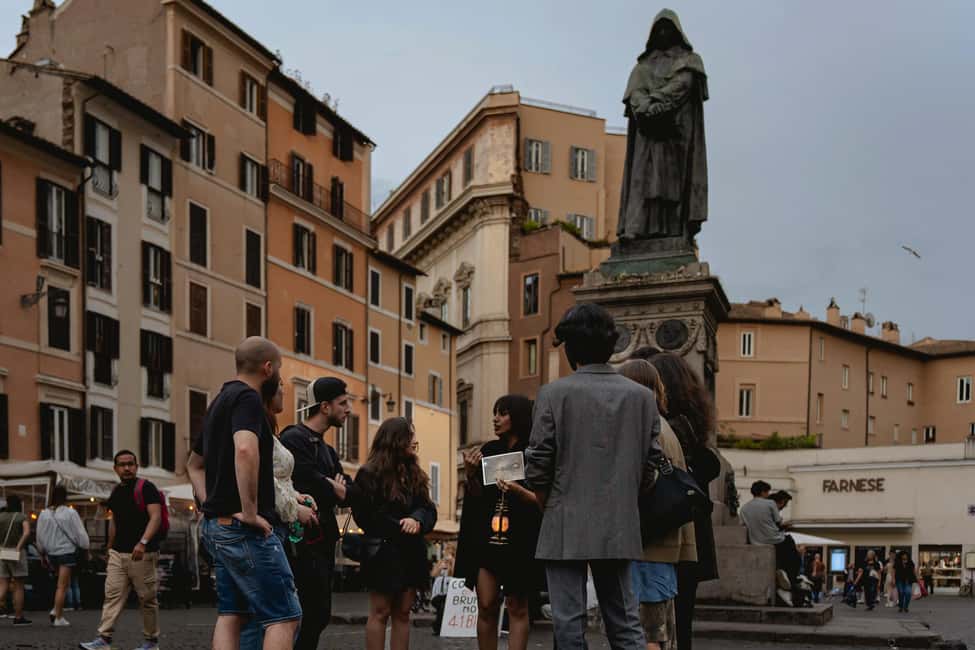
- Start at Giordano Bruno, right in Campo de’ Fiori: easy to find, and it sets the tone from minute one
- A guide who tells it clearly in English: many guides (like Maham and Dinara) are repeatedly praised for strong pacing
- Ponte Sisto and the corpse-lined bridge story: a standout stop for anyone who likes dark history
- A chapel tied to death themes (including human bones): the tour leans into the macabre in a memorable way
- Castel Sant’Angelo as the finish point: dramatic end, good for photos, and a satisfying walking “arc”
- Works well as a first or last Rome activity: the night format is a nice way to reset your brain before or after sightseeing
Why Rome at night makes ghost stories feel believable
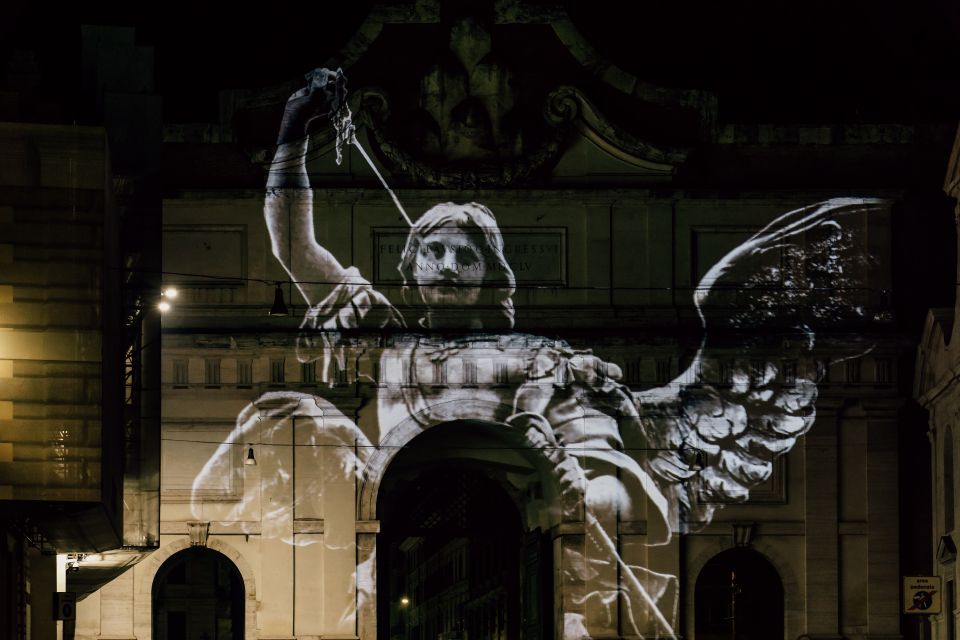
Rome by day can be loud. Rome at night, especially on foot, is different. The air cools down, the crowds thin out, and you get a steadier sense of the streets—just you, your group, and a guide guiding your eyes to details you’d otherwise miss.
This tour is designed for that mood. You’re not just staring at famous squares. You’re hearing why people feared certain places, why punishments happened where they did, and how stories of powerful names—emperors, popes, even artists—became part of the city’s street memory. The result is that the “ghost” part feels like a lens, not a theme park.
Also, the route is compact and paced for a night walk. That matters because at 2 hours, you’re not signing up for an all-night endurance event—you’re getting a focused, spooky night with a clear finish.
You can also read our reviews of more walking tours in Rome

Meeting at the Giordano Bruno statue in Campo de’ Fiori
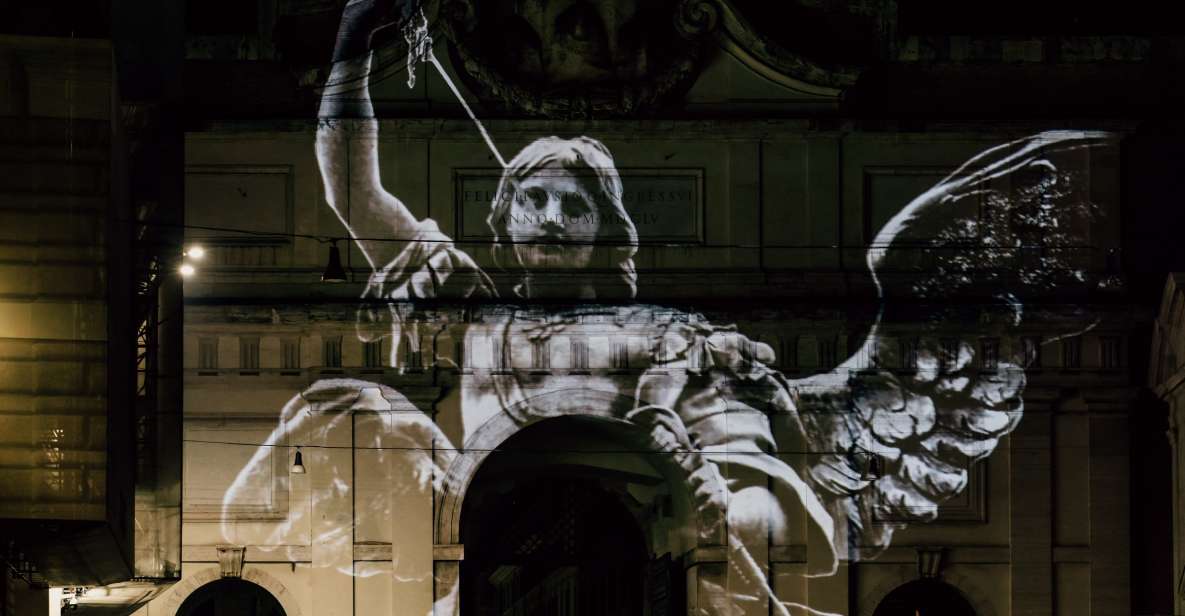
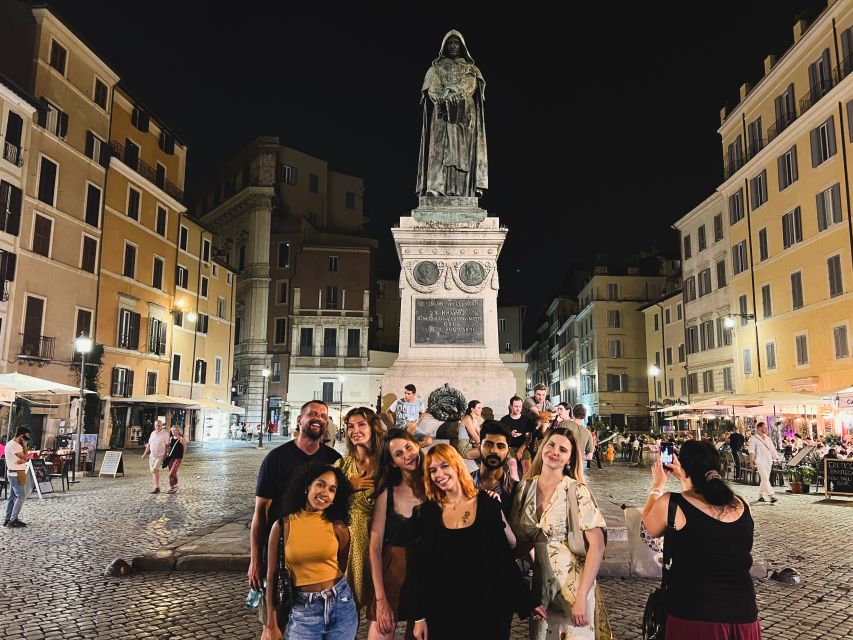
Your evening begins at the Monumento a Giordano Bruno, right by the statue in the center of Campo de’ Fiori. The guide should be holding an iPad or a red sign. If you’ve ever struggled to find a meeting point in Rome, you’ll appreciate how direct this one is.
This first stop works because it immediately frames the whole tour. Bruno’s presence sets a tone of people Rome labeled, condemned, and talked about for generations. Even if you only know his name in passing, the guide’s stories give you a starting thread. You’re not walking blind into the dark—you’re walking with context.
I also like the practical side here: you’re meeting in a central, well-known area, which makes it easier to connect the tour with dinner plans before or after.
Piazza Farnese and the small religious corners that do the real work
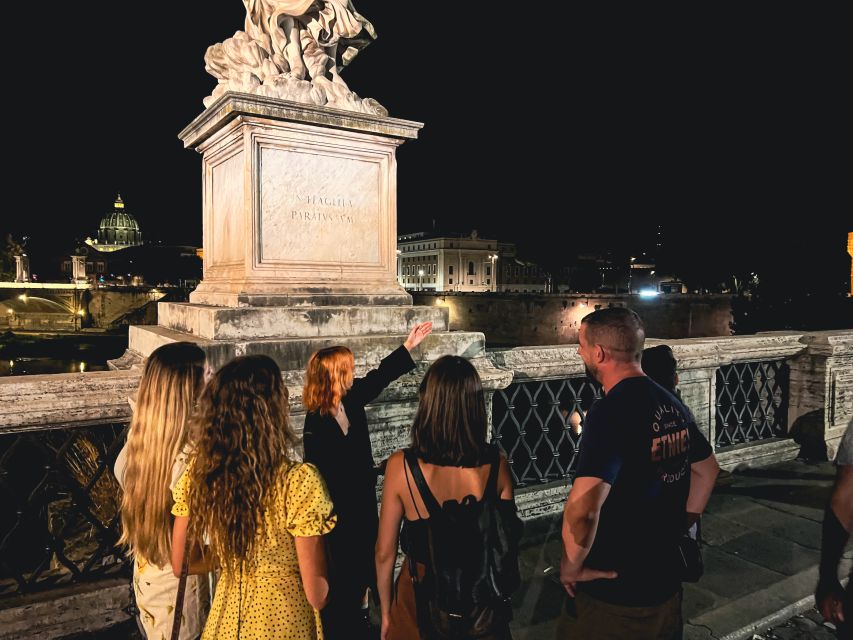
After Giordano Bruno, the route moves into stops that help you see Rome as a lived-in city, not a postcard machine. Piazza Farnese is a good example. You get a “big” Roman space early, but you’re not meant to linger as a tourist. You’re meant to listen—then look again, as the guide points out what the setting suggests about power, fear, and public life.
Next comes a stop at Madonna della Pietà (Madonnelle). This kind of location—small, local, religious—often gets ignored when you’re rushing to major sights. But on a ghost tour, those details matter. They connect the city’s everyday faith to its darker side, which is exactly the shift this tour is going for: you’ll start spotting how Romans marked places over time, including places tied to death.
If you like your sightseeing with a side of “wait, why is that here?”, these stops deliver.
Ponte Sisto and the Fountain of the Mask: two stops that stick
Then you head toward Ponte Sisto and the Fountain of the Mask. This is where the tour leans hardest into the “okay, that’s unsettling” feeling.
Ponte Sisto is mentioned as a bridge long lined with corpses. Even if you don’t love graphic stories, the point is the same: the guide uses the bridge to explain how punishment and spectacle played out in public. It’s one thing to read about it. It’s another to stand on a real crossing and hear how that crossing once carried a different meaning.
The Fountain of the Mask is a great contrast. It keeps the tour from turning into one long grim lecture. It also gives the guide a chance to talk about symbolism—why certain imagery shows up in Rome’s streets and what locals might have associated with it. It’s the kind of stop that helps you connect the dots between fear, superstition, and art.
Chiesa di Santa Maria dell’Orazione e morte: the chapel that makes your step slower
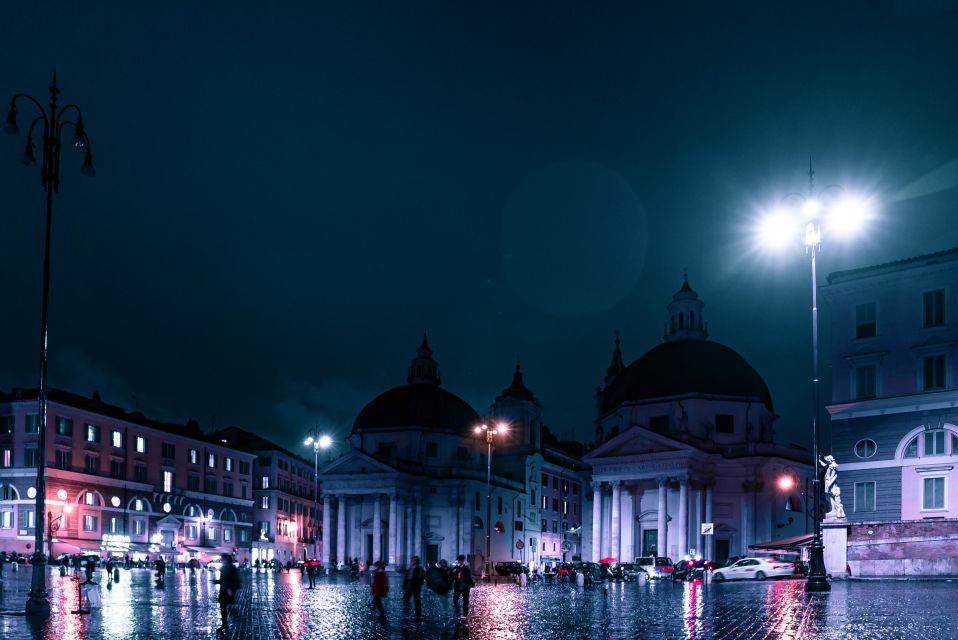
One of the strongest stops on the route is Chiesa di Santa Maria dell’Orazione e morte. This is the kind of church stop that changes how you see the word “mausoleum,” because the tour is explicit about what you’re looking for: a chapel decorated with human bones.
That’s not a casual detail. It’s the tour’s signature chill. The guide frames it so it’s not just shock value—you understand why this kind of place exists, and why Rome kept these reminders close. And because you’re walking at night, the setting lands even harder. Your brain does the rest.
If you’re squeamish, take a moment before you enter any darker interior space and decide how much you want to listen. You can always step back and take it in more quietly. The stories are part of the experience, but you get to control your own comfort level.






Santa Maria in Monserrato degli Spagnoli: where the tour slows just enough
Next up is Santa Maria in Monserrato degli Spagnoli. This stop adds variety to the evening. Instead of only focusing on death-related themes, the guide uses the setting to tie in how Rome’s identity gets layered—by different communities, different influences, and different kinds of power.
It’s also one of the stops that helps the pacing feel human. By now you’ve heard a lot. The walk is still happening, but the guide’s storytelling gives your mind a chance to catch up. If you’re the type who likes to ask questions, this is often when your group energy shifts from “listen mode” to “wait, tell me more.”
Ending at Castel Sant’Angelo: a dramatic night finish
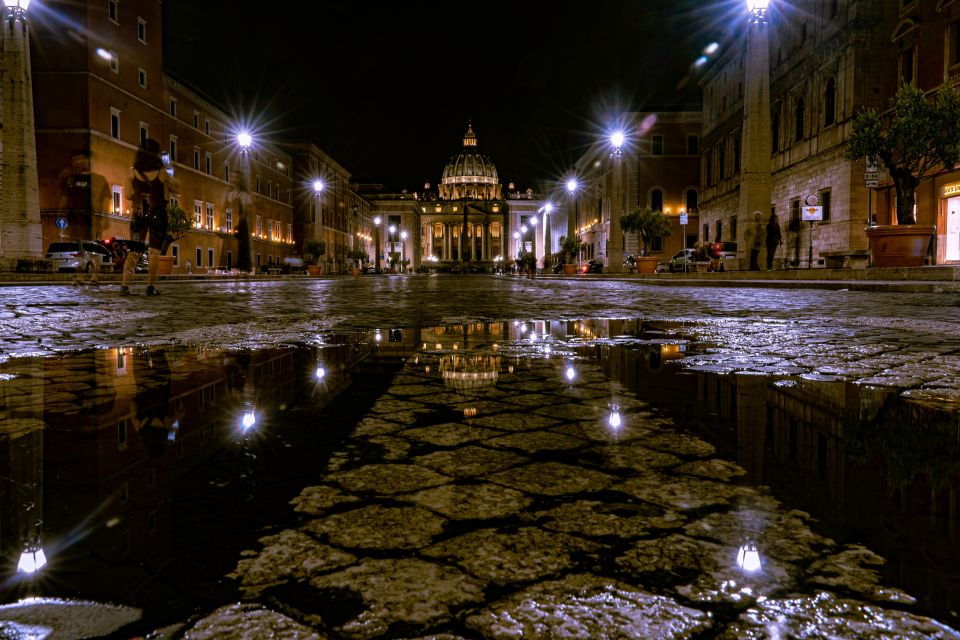
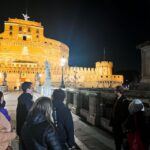
The tour ends at Castel Sant’Angelo after a guided walk through the final stretch. Finishing here is smart for two reasons.
First, it gives the evening a “bookend” effect. You don’t end in some random street corner. You end at a landmark that feels designed for endings. Second, Castel Sant’Angelo is a natural photo stop, and the timing matters: at night, it looks less like a museum and more like a fortress watching over the city.
By the time you reach the finish, you’ll probably realize something useful: the city is the same—but the meaning changes. Streets you’ve walked in daylight will start looking like they used to hide secrets.
Price and value for a $28, 2-hour English ghost walk
At $28 per person for a 2-hour guided walking tour, this is priced like a good evening activity, not a premium “once-in-a-lifetime” extravagance.
What you’re buying is simple:
- a live local guide
- an English-speaking storyteller
- a route that hits multiple sites in one compact night
- a clear theme that keeps the walk moving
And the reviews back up the value point. Multiple guides are praised for strong story delivery and clear English—names like Maham, Dinara, Domenica, and Sara come up again and again. When a tour at this price has that kind of consistency, it usually means the guide quality is doing the heavy lifting, not just the location.
If you’re planning a week in Rome, this fits well as either an early “set the mood” activity or a later “I finally get the city” activity. Two hours is long enough to feel like an experience, but short enough that you won’t lose your whole night.
What to bring and how to make the walk easy on your body
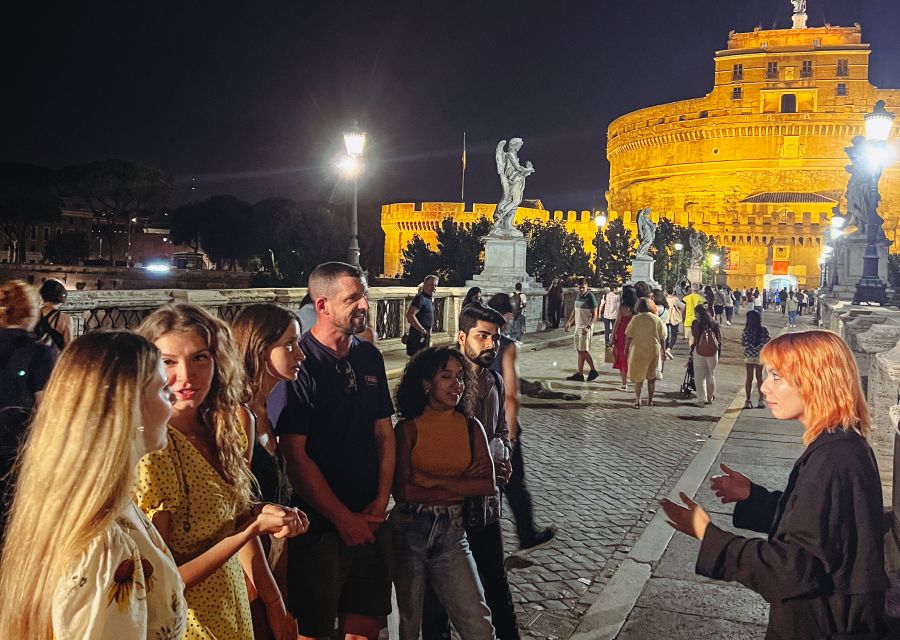
This isn’t a sit-and-stare tour. You’re on your feet. Bring comfortable shoes, and if you like photos, bring a camera (or a phone with enough battery for night shots).
I’d also add a quick reality check: Rome nights can be cool, and cobblestones don’t care about your sightseeing plans. Wear shoes you’ve already tested. If you’re carrying a big bag, keep it light. You’ll enjoy the storytelling more if you’re not constantly adjusting straps.
Finally, arrive with a little buffer time so you’re not rushing when the guide is ready to start. That one small move makes the first stop feel smooth instead of stressful.
Who should book this Rome ghostly night walking tour
You’ll like this tour if you:
- enjoy history that’s a little dark (and you’re okay with execution and murder stories)
- want Rome after dark without the daytime crowd pressure
- like guides who tell stories clearly and keep the group engaged
- want a guided route that takes you from Campo de’ Fiori to Castel Sant’Angelo in one go
You might skip it if you:
- only want classic jump-scare paranormal theatrics
- get overwhelmed by bone-related or death-themed details
Should you book this Rome ghostly walking tour?
Yes, if you want a structured night walk that changes how you see Rome. For $28 and 2 hours, it’s an efficient way to get a “different lens” on major sights—especially if you’re interested in the city’s punishment-and-power stories, not just its architecture.
If you’re excited by eerie atmosphere, strong guides (people like Maham and Dinara have real fans), and the specific “bones and corpse-lined bridge” type of chill, this is a great match. If you prefer your Rome supernatural with no history attached, consider that this tour uses history as the engine.
FAQ
How long is the Rome Ghostly Nighttime Walking Tour?
The tour lasts about 2 hours.
Where do I meet the guide?
Meet directly in front of the statue of Giordano Bruno in the center of Campo di Fiori. The guide will be holding an iPad or a red sign.
What sights will we see during the tour?
The route includes stops such as Piazza Farnese, Ponte Sisto, the Fountain of the Mask, Chiesa di Santa Maria dell’Orazione e morte, Santa Maria in Monserrato degli Spagnoli, and it finishes at Castel Sant’Angelo. The tour is also described as covering sights like Campo de’ Fiori and Via Giulia.
Is the tour guide available in English?
Yes, the live tour guide speaks English.
Can I get a refund if plans change?
You can cancel up to 24 hours in advance for a full refund.
Is a private group option available?
Yes, private group options are available.