REVIEW · ROME
Rome: Galleria Borghese Museum Entry Ticket and Guided Tour
Book on GetYourGuide →Operated by TLight · Bookable on GetYourGuide
Baroque drama, sorted in 2 hours. This Galleria Borghese visit combines a timed entry ticket with a live guide and headsets, so you can focus on the Caravaggio and Bernini works instead of wandering room to room. You’ll also get a guided route through the showpieces, including standout ceiling frescoes that you can actually appreciate rather than just notice.
I especially like how the tour pairs big-name masterpieces with practical context, which makes the art feel less like a checklist and more like a story. The Bernini sculptures (and the room sequence around them) help you understand why this collection still draws nonstop attention. One thing to consider: the experience is scheduled for 2 hours, but timing can be shorter in some cases, so it’s worth watching the tour start time and being ready for a firm pace.
In This Review
- Key highlights to know before you go
- Meeting at Piazzale Scipione Borghese and finding your guide fast
- Inside Galleria Borghese: ticket, guide, and headsets that make the art easier
- Caravaggio at eye level: St John the Baptist and the paintings you shouldn’t miss
- Bernini in three dimensions: Rape of Proserpine and Apollo and Daphne
- Ceiling frescoes and room-by-room storytelling: Mariano Rossi, Caccianiga, and Ceres
- The Borghese collection’s origin story: Cardinal Scipione and Pope Paul V
- Ground-floor sculpture time: pacing, angles, and what the guide focuses on
- Price and value: is $94 per person worth it?
- Should you book this Galleria Borghese tour?
- FAQ
- What’s included in the ticket and guided tour?
- How long is the tour?
- Where do I meet the guide?
- Which languages are offered?
- Do I need to bring ID?
- Is luggage allowed?
- Is the tour affected by weather?
Key highlights to know before you go
- Timed entry + guided interpretation for the fastest route to the must-sees
- Headsets included, so you can hear the guide clearly in busy galleries
- Caravaggio spotlight, including St John the Baptist (and other major works)
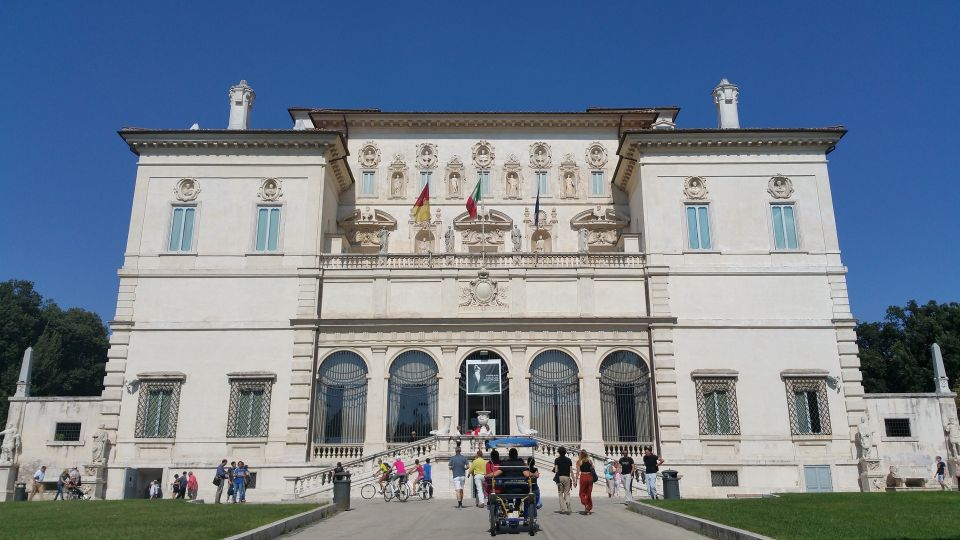
- Bernini showpieces, especially Rape of Proserpine and Apollo and Daphne
- Ceiling frescoes you’ll actually understand, with details about major artists and scenes
Meeting at Piazzale Scipione Borghese and finding your guide fast
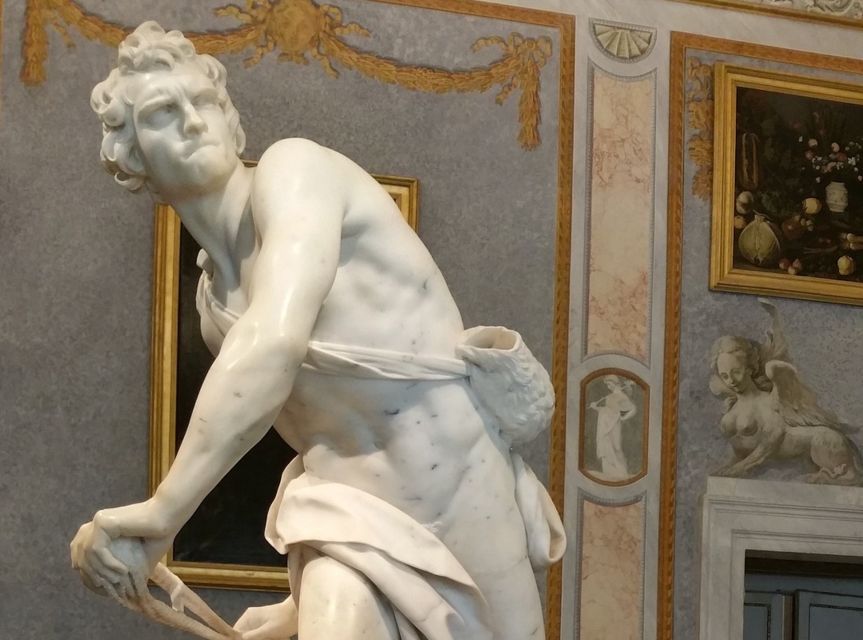
Galleria Borghese is easy to reach, but the key is meeting on time so your timed entry doesn’t get stressful. Your starting point is Piazzale Scipione Borghese, 5, and your guide carries a red flag with the Saints Tour logo. That flag matters because the area fills up, and you don’t want to spend your precious museum minutes hunting for the group.
Before you go inside, do the small stuff right: bring your passport or ID card, and keep your bag situation simple. Luggage or large bags aren’t allowed, so if you’re traveling light, you’re already ahead. The tour also runs rain or shine, so pack for weather and plan to move efficiently once you’re at the museum.
If you’re visiting with teens or a mixed-age group, it helps that some guides are specifically praised for keeping everyone together without turning it into a lecture you can’t follow. That kind of pacing can make the difference between simply seeing famous art and understanding what you’re looking at.
You can also read our reviews of more tours and experiences in Rome

Inside Galleria Borghese: ticket, guide, and headsets that make the art easier
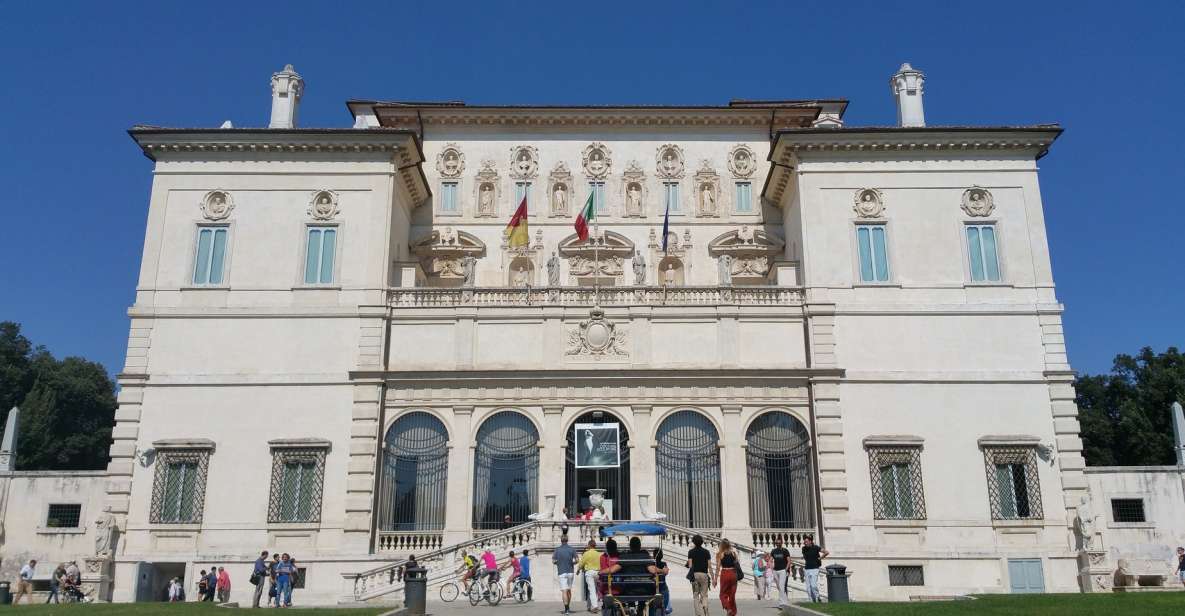
This isn’t just a museum entry. You’re paying for a guided experience that includes entry ticket, a live guide, and headsets to hear clearly. That combination is valuable here because Galleria Borghese rewards attention to details. With headsets, you’re less likely to drift away when other visitors pass, and you can keep your focus on what the guide is pointing out.
You’ll also have an audio guide in French, Italian, and English. That’s great if you want to re-check a piece while staying at your own pace after the live narration. Think of the live guide as the road map, and the audio as your “pause and rewind” tool.
Duration is set for about 2 hours, which means the guide has to make choices. In a museum this famous, that’s a plus. You don’t have to solve the puzzle of what to prioritize. Instead, you can spend your time on the works that matter most in this collection: Caravaggio’s intense paintings and Bernini’s theatrical sculptures.
And yes, it’s worth remembering this museum is known for both masterpieces and atmosphere. The collection is housed in a complex that reflects how it was assembled and displayed, so the guide’s context helps you see why the rooms look the way they do, not just what’s behind glass.
Caravaggio at eye level: St John the Baptist and the paintings you shouldn’t miss
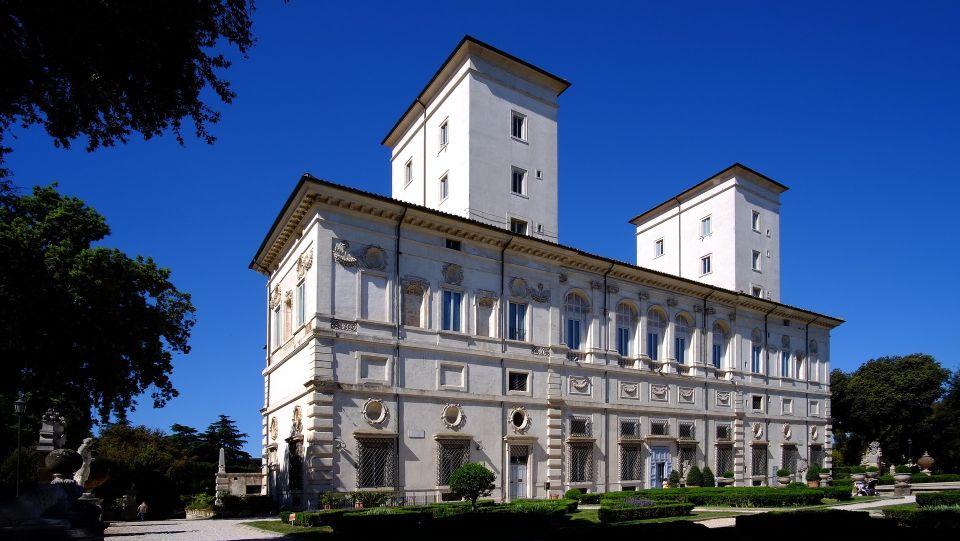
Caravaggio is one of the reasons people put Galleria Borghese near the top of their Rome list. In this collection, you’ll get time for major works, including two Caravaggio paintings—one of the headline pieces is St John the Baptist. The tour also includes other notable Caravaggio works in the Borghese collection, such as Boy with Basket of Fruit, Saint Jerome Writing, and Sick Bacchus.
Here’s why this matters for you: Caravaggio isn’t just famous for being dramatic. His approach to light and expression is part of why these paintings feel immediate. When you see St John the Baptist with guidance, you’re more likely to notice how Caravaggio pushes emotion through posture, gesture, and contrast. Without that nudge, you might admire the style but miss the “why it hits” factor.
I also like that the tour isn’t purely about paintings. You’re moving through rooms where sculpture and painting talk to each other in the same space. That contrast helps you understand the collection’s obsession with realism, attention to flesh-and-blood emotion, and how Baroque artists used performance-like intensity.
One practical note: if your museum stamina is limited, Caravaggio is where you’ll want to be most present. These are visually intense works, and they deserve a few minutes where you’re not rushing to the next room.
Bernini in three dimensions: Rape of Proserpine and Apollo and Daphne
Bernini is the other big pull. The collection is packed with his work, including Rape of Proserpine, Apollo and Daphne, and also David. Even if you know Bernini mostly from photos, this is where you get the full effect: his sculpture feels built to be viewed from real angles, not just from one front-facing viewpoint.
On this tour, Apollo and Daphne is a key stopping point, and it sits in a larger narrative of Bernini’s secular sculpture. The guide’s job is to connect the dots—early works, then the bold Baroque theatricality that makes figures look like they’re caught mid-motion. Rape of Proserpine is often the emotional centerpiece, because it’s built on tension: strained bodies, charged faces, and action that feels like it could tip over into the next second.
What you’ll appreciate here is how the guide frames Bernini’s style. Bernini isn’t “perfect statue” art. It’s more like visual theater in marble—drama you can walk around. With headsets, you can keep listening while you reposition yourself to catch the details the guide describes.
And if you’re traveling as a family or group, Bernini is also a good choice because it’s legible even when you’re not an art expert. The movement and emotion are the universal language. You’ll still get educational value, but it won’t feel like homework.
Ceiling frescoes and room-by-room storytelling: Mariano Rossi, Caccianiga, and Ceres
Not every art tour tells you what you’re looking at on the ceilings. Here, that’s part of the show. The museum sequence includes a famous large fresco in the Salone—a ceiling work by Mariano Rossi. It’s known for foreshortening, where the scene is painted so it looks almost three-dimensional. The fresco depicts Marcus Furius Camillus relieving the siege of the Capitol by the Gauls.
After that, you move through other themed rooms. In the first room, you’ll reach the Chamber of Ceres, which features a marble vase depicting Oedipus and the Sphinx. The second room has a ceiling frescoed by Francesco Caccianiga, showing the Fall of Phaeton. Then you land in the third room with Bernini’s Apollo and Daphne.
This room sequence matters for you because ceilings can become ignored background unless someone teaches you how to look up. Once you know what the fresco is depicting and what technique the painter used, the ceiling stops being decorative and becomes part of the story you’re seeing on the walls and floors.
If you like learning through visual clues, these rooms give you that. You get mythological and historical scenes linked to the collection’s identity. The guide turns it from “pretty art above me” into “I understand the subject and why it’s placed here.”
Also, the museum’s display design is part of the experience. The guide’s interpretation helps you understand how the collection was meant to be experienced—through movement and comparison—not as isolated masterpieces in a row.
You can also read our reviews of more guided tours in Rome






The Borghese collection’s origin story: Cardinal Scipione and Pope Paul V
Galleria Borghese isn’t random. It’s built around a collector’s obsession, and the tour gives you enough background to make sense of what you see. The collection was initiated by Cardinal Scipione Borghese, nephew of Pope Paul V. He was an avid collector, and Caravaggio is strongly represented, which is a big reason this museum feels so focused on intense human emotion.
The collection also includes sculptures and antiquities, not just paintings. You’ll encounter important sculpture and antique elements, plus portrait busts, including one of Pope Paul V and two portraits of Cardinal Scipione Borghese himself.
Why does this context matter for your trip planning? Because it changes how you interpret the room. When you know the collection was assembled by someone with taste and specific preferences—especially for Caravaggio and for Bernini—you stop asking whether each object is “randomly famous.” Instead, you see a curated vision built around how Baroque power, myth, and realism could be staged in one place.
In other words: the guide isn’t just telling you names. They’re helping you understand the collector’s logic, so the museum feels coherent rather than chaotic.
Ground-floor sculpture time: pacing, angles, and what the guide focuses on
The tour centers on the museum’s most important spaces and works, including ground-floor sculpture areas. That positioning is smart, because most visitors hit a wall when they split their attention between too many rooms. With a guided format and headsets, you get a controlled pace—enough time to look carefully at key works without burning your energy wandering.
In this space, you’ll see how Bernini’s sculpture creates a sense of motion, and you’ll connect that motion to the themes happening in the surrounding rooms—myth and drama above and below. When the guide points out details, it’s usually the stuff that photos hide: the angle of a face, the tension in a hand, the shift in expression when you change your viewpoint slightly.
You’ll also get to enjoy the museum’s atmosphere without feeling like you’re missing the point. The tour route is designed so you experience the major masterpieces in a sequence that makes sense rather than forcing you to sprint through the building.
One tip for getting the most out of this part: stand where you can see the whole figure first, then take one step to the side to catch the guide’s detail. With headsets on, you can listen for exactly what to notice while you adjust your position.
Price and value: is $94 per person worth it?
At $94 per person for a 2-hour guided visit with entry ticket and headsets included, the value depends on what you want from your day.
If your goal is to see the biggest masterpieces with confidence, the price can feel fair. You’re not only buying entry—you’re buying someone to help you prioritize (Caravaggio’s key paintings like St John the Baptist), interpret the meaning (how and why Bernini’s works relate), and keep you on schedule in a museum where access and timing matter.
Headsets are a real value add. In Rome, guided tours are often noisy and crowded. When you can actually hear the guide, you get more from each minute in front of the work.
If your goal is “I’ll figure it out on my own,” then the cost might feel high. The museum is famous, but without guidance you can end up spending time searching for the right room or missing the specific details that make these works click.
There’s also one caution from how the tour has run: on at least one occasion, the visit was shorter than the 2-hour schedule. That doesn’t mean it’s always like that, but it does mean you should show up early, be ready to start on time, and treat the tour duration as an estimate of the intended pace.
If you’re flexible, you’re better positioned to make this work. If you’re on a strict timetable with lots of other reservations, consider how much risk you can tolerate in exchange for the guided speed.
Should you book this Galleria Borghese tour?
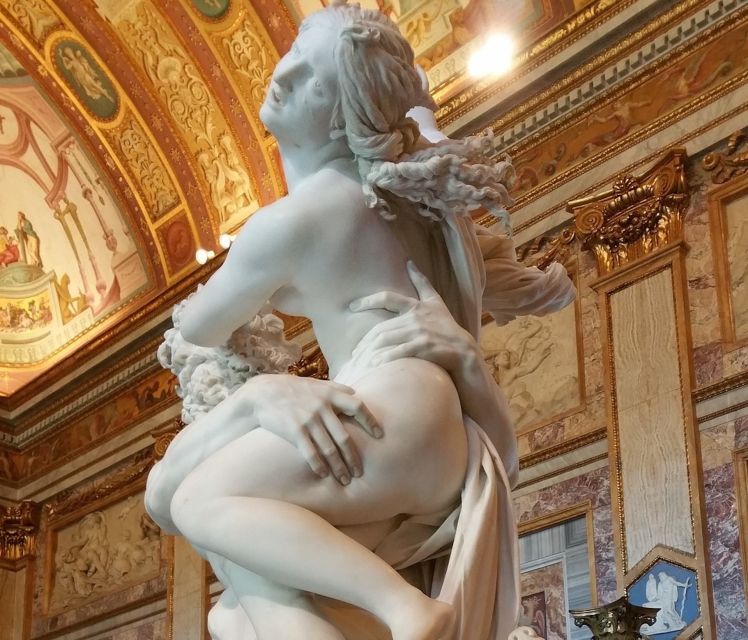
Book it if you want the smartest route through one of Rome’s most demanding art stops. The combo of entry ticket + live guide + headsets is exactly what helps you get real understanding in a short window. You’ll cover the key Caravaggio works, the major Bernini sculptures like Rape of Proserpine and Apollo and Daphne, and the famous fresco work overhead, including Mariano Rossi’s foreshortening masterpiece in the Salone.
Consider skipping or comparing options if you’re extremely price-sensitive, you prefer self-guided museum wandering, or you rely on strict timing. The tour’s value comes from its structure, and if you don’t need that structure, you may feel like you’re paying for something you could do alone.
Who it’s best for:
- Art lovers who want Caravaggio and Bernini explained in plain terms
- First-timers who don’t want to waste time choosing what to see
- Families who benefit from pacing and clear guidance
- Anyone who wants to hear the guide clearly without leaning in and shouting over the crowd
If you’re going to prioritize one “must-do” museum, this is a strong candidate.
FAQ
What’s included in the ticket and guided tour?
It includes the entry ticket, a guide, and headsets so you can hear the tour clearly. An audio guide is also included in French, Italian, and English.
How long is the tour?
The duration is 2 hours.
Where do I meet the guide?
The meeting point is Piazzale Scipione Borghese, 5. Your guide will have a red flag with the Saints Tour logo.
Which languages are offered?
The live guide is available in French, Italian, and English. The audio guide is also available in French, Italian, and English.
Do I need to bring ID?
Yes. Bring your passport or ID card.
Is luggage allowed?
Luggage or large bags aren’t allowed.
Is the tour affected by weather?
The tour takes place rain or shine.