REVIEW · ROME
NIGHT TOUR THINK BIG, GO MINI! Rome in Mini Cooper Classic Cabrio
Book on Viator →Operated by MINI TOUR ROMA · Bookable on Viator
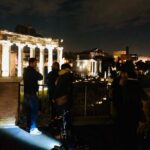
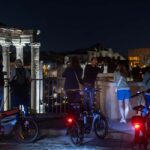
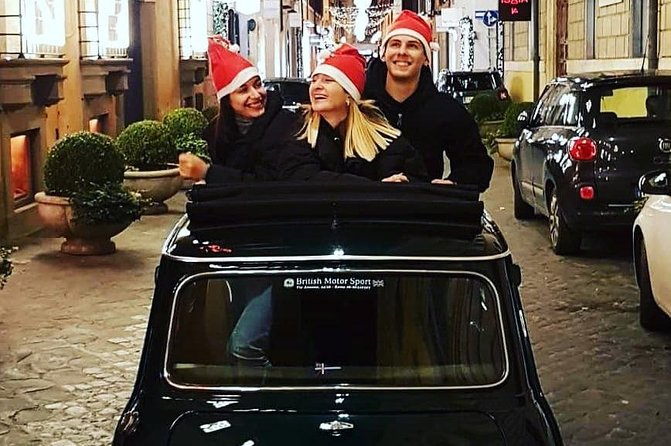
Rome at night feels like a movie.
This classic Mini Cooper cabrio tour is built for moving fast, seeing a lot, and soaking in the city’s glow without the midday crowds. I like that you get hotel pickup plus live commentary, so the stops add up instead of feeling random. One catch: the schedule is tight, so you’ll get lots of photo moments and short walks, not long museum time.
What I like most is the mix of big-name monuments and real Rome neighborhoods, all done from a car that can handle narrow streets. I also like the included extras—bottled water, snacks, coffee or tea, and even alcoholic beverages (if you’re 18+), which makes a late-night plan feel easy.
The main drawback to consider is the pace: most sights are around 10 minutes, so if you want slow studying, sketches, or deep time inside churches, this won’t be your only Rome plan.
In This Review
- Key points to know before you go
- A classic Mini cabrio at 9 pm: why the timing works
- What you really get for the $223 price
- Piazza Navona and Trevi: Baroque sights with breathing room
- Castel Sant’Angelo to St. Peter’s Square: history and scale in one drive
- Spanish Steps, La Barcaccia, and the quick route to Pantheon views
- Gianicolo viewpoints and the keyhole moment on Aventine
- Trastevere at night: old neighborhood energy, guided and practical
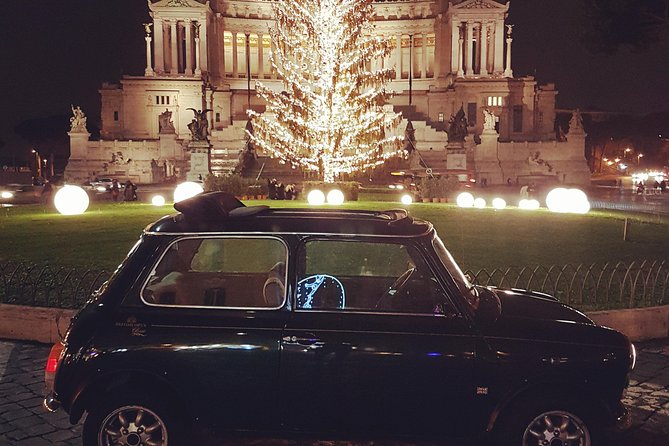
- Largo Argentina, Altare della Patria, and the ancient political spine
- Aventine to Pyramid of Cestius: Roman engineering without the crowds
- Old Roman Term, Monte Testaccio, and the Colosseum photo moment
- Who should do this Mini Cooper night tour
- Should you book this Rome by Mini Cooper at night?
- FAQ
- How long is the Rome Mini Cooper Classic Cabrio night tour?
- What time does the tour run?
- Is the tour private, and do you get pickup?
- What’s included in the price?
- Is the Colosseum admission included?
- Does it require good weather?
- Are there age rules or dress code?
Key points to know before you go
- Classic Mini, night-only feel: A convertible ride turns major sites into a street-level show.
- Private and paced for photos: Short stops keep you moving through a big route in about 3 hours.
- Snacks and drinks included: Bottled water, snacks, coffee or tea, and alcoholic beverages are part of the package.
- Colosseum photo time included: You get a real moment at Rome’s most famous arena.
- Views from multiple hills: Expect lookouts like Gianicolo and Aventine, plus signature spots like the keyhole.
- Free-entry sights most of the way: Many stops are presented as admission-free, with Colosseum marked as included.
A classic Mini cabrio at 9 pm: why the timing works
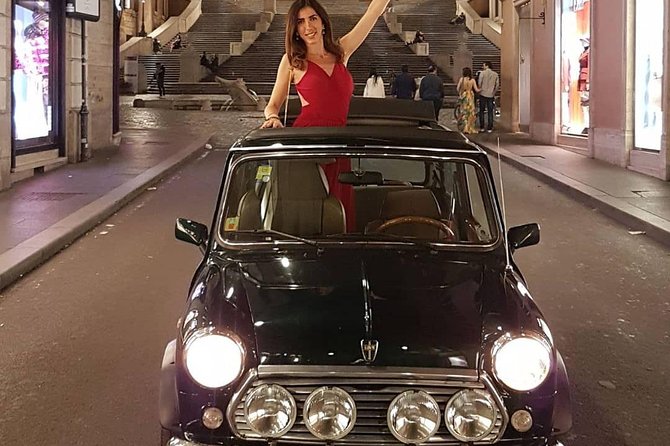
This tour runs late, with departures scheduled between 9:00 PM and 11:30 PM and an overall length of about 3 hours. That matters in Rome. Night usually means cooler air, calmer streets in many areas, and monuments that look better under lights.
You’re also going with a private tour, meaning only your group is in the Mini. That’s a smart setup for families, couples, and groups who don’t want to feel packed into a big bus experience.
One more practical point: this is popular enough that it’s often booked about 47 days in advance. If your trip dates are fixed, locking it in early helps you avoid the sold-out problem.
You can also read our reviews of more evening experiences in Rome
What you really get for the $223 price
At $223.26 per person, you’re paying for more than a car ride. This is a guided, door-to-door night experience with the costs that usually add up already handled.
Here’s what’s included:
- Hotel pickup and drop-off (and pickup/drop-off “everywhere customers want,” as offered by the provider)
- Round-trip private transfer with a driver/guide and live commentary
- Bottled water plus snacks
- Coffee and/or tea
- Alcoholic beverages included (but you have to be 18+)
- Admission included at the Colosseum; most other stops are listed as free entry
That bundle changes the math. Many city tours at this hour charge extra for transport, guides, or entry. Here, the package is built so you can go straight from dinner (or wherever you are) and end the night without extra budgeting stress.
The one thing not included is lunch or extra food unless it’s part of the provided snacks/drink setup. If you’re hungry at 9 pm, eat a real meal before you start.
Piazza Navona and Trevi: Baroque sights with breathing room
The night route often kicks off at Piazza Navona, where the focal points are the fountains tied to Bernini and the church associated with Borromini. Even if you only have a few minutes, the square is one of those places where your eyes “get” it fast. You’ll see the geometry, the energy, and the famous statues that make this square feel theatrical.
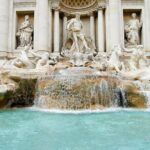
From there, you roll toward Trevi Fountain, described as Rome’s biggest fountain, linked to Nicola Salvi (with the work spanning the 1732/1762 period in the route notes). Trevi looks different at night. In daylight, it’s a crowd magnet; at night, you can actually enjoy the shape and detail instead of just battling to take a photo.
A realistic expectation: you’ll have about 10 minutes at each of these big stops. So your win condition is quick positioning, a couple of photos, and letting the guide tell you what you’re actually looking at before you move on.
Castel Sant’Angelo to St. Peter’s Square: history and scale in one drive
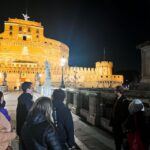
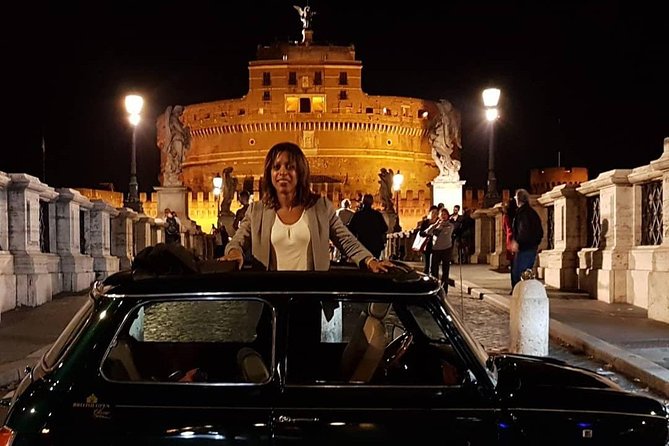
Next up is Castel Sant’Angelo, the emperor Adrian’s tomb area. It’s hard to describe how much this place dominates the riverfront until you see it from the street at night. The Mini gets you close enough that you feel the monument’s weight without a long hike.
Then comes St. Peter’s Square, with the Basilica as your backdrop. Even when you don’t go inside, St. Peter’s is all about scale and sightlines. This is the kind of stop where the guide’s framing helps you read the space quickly—why certain angles matter, and what you should look for while you’re standing there.
Because the stop is short, plan to be “ready” the moment you arrive. If you arrive juggling bags, it’s easy to waste your minutes looking for the best spot.
Spanish Steps, La Barcaccia, and the quick route to Pantheon views
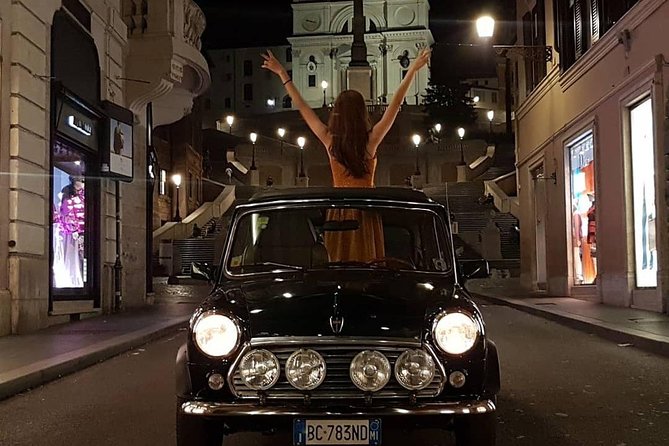
You’ll swing past Piazza di Spagna and the Bernini fountain La Barcaccia. This is one of those Rome settings that looks great in photos and also feels like a lived-in stage. At night, the stone tones and reflections do a lot of the work for you.
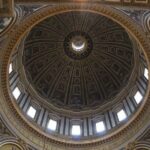
Then you reach the Pantheon, presented here as a pagan temple. The Pantheon is one of the best “stop in passing” monuments in Rome because it’s instantly recognizable. You don’t need a long entry ticket experience to grasp why it mattered—and the guide can connect what you see outside to the bigger story.
Quick note: the tour format is photo-and-picture-friendly. If you want to spend extra time at any one site—say you’re obsessed with the Pantheon dome—you’ll still want a separate day plan.
Gianicolo viewpoints and the keyhole moment on Aventine
The route builds in Rome’s best trick: views. You’ll get a moment at Colle del Gianicolo, described as a beautiful viewpoint over Rome. This is where night drives start to feel like a real sightseeing strategy, not just monument hopping.
Then you’ll hit Fontana dell’Acqua Paola, another scenic stopping point where the goal is more about panorama than details.
Later, the tour includes Turo Aventi (Aventine Hill), with references to an orange park viewpoint, a secret key hole, and Sant’Anselmo Church in the route notes. The keyhole spot is the kind of Rome mini-mystery that feels fun in the moment and satisfying when you realize what you’re seeing and why it’s there.
One small consideration: viewpoints can be slightly uneven underfoot. Wear shoes that won’t punish you after a few short walks and a lot of getting in and out of the Mini.
Trastevere at night: old neighborhood energy, guided and practical
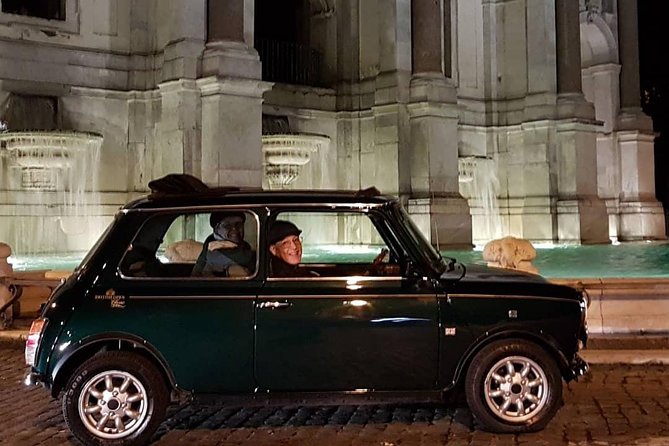
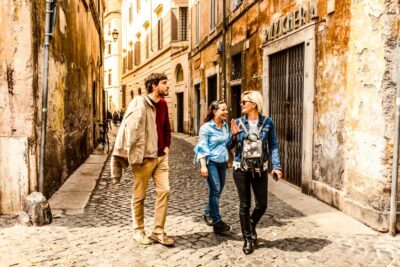
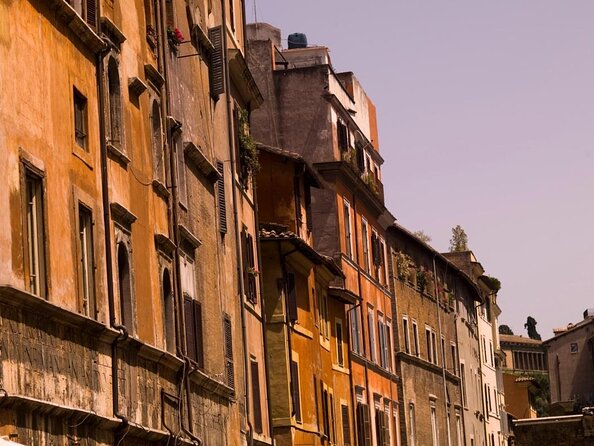
You’ll spend time in Trastevere, one of the city’s oldest neighborhoods (the route notes call out the roughly 1,000-year mark). This is a major reason to do a night tour: Trastevere doesn’t just look historic. It feels like it.
This part of the route works because the guide is steering you away from the dead-simple path. Instead of only circling famous squares, you get the street vibe that helps Rome feel real—especially after the “wow” of the big monuments.
Trastevere is also a good moment for a mindset shift. You’re not only collecting sights anymore. You’re collecting atmosphere.
Largo Argentina, Altare della Patria, and the ancient political spine
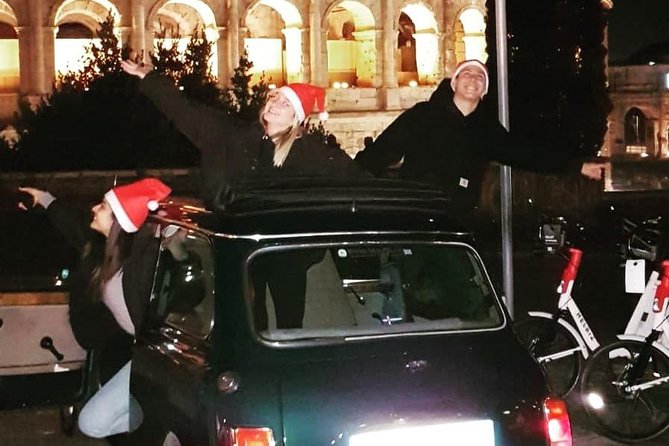
Next, you’ll visit Area Sacra di Largo Argentina, described as the spot connected to the killing of Julius Caesar. This is one of those places where the air feels quieter than the nearby tourist magnet spots. The guide can explain the layers quickly, helping you understand why this location is a big deal in Rome’s political timeline.
Then there’s the Altare della Patria area (called out in the route notes alongside the Victorian Ala Brasini complex). Even from the outside, you’ll see why this part of Rome is tied to national symbolism, not just ancient remains.
From there, the route turns straight toward ancient Rome’s political and cultural engine:
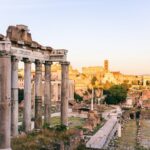
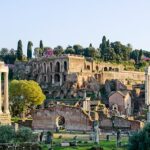
- Foro Romano (Roman Forum): described here as Rome’s cultural and political center
- Palatine Hill: tied to Romolo and the start of Rome in the route notes
Because your stop times are short, don’t expect to “read” every carved detail. Instead, use your minutes to get the layout and connect the dots the guide points out.
Aventine to Pyramid of Cestius: Roman engineering without the crowds
After the Forum area, you keep moving through ancient highlights that feel different than the central monuments.
The route includes Piramide Cestia, tied to the tomb of Caio Cestio Imperator (the route notes mention 12 a.c.). The pyramid shape in Rome is weird in the best way. It’s instantly memorable, and it’s the sort of stop you’ll remember even if you don’t take a lot of photos.
Then comes Circo Massimo, described as an old arena. Even if you can’t stroll the way you’d like, the guide can point out what you should imagine based on the space you’re standing in.
The vibe here is “Roman scale.” You’re seeing how vast these spaces were, and why Rome still feels oversized even when you’re walking small streets.
Old Roman Term, Monte Testaccio, and the Colosseum photo moment
The route also lists an Old Roman Term (spa/baths) stop, with a note calling it one of the oldest in the world. Baths in Rome aren’t just architecture; they’re a window into daily life. Even a brief pause helps you sense how public Rome used to be.
Then there’s Monte Testaccio, described as an old market. Testaccio is a neighborhood stop that adds a more everyday angle to the night. Instead of only big monuments, you also get a sense of where people traded, cooked, and lived.
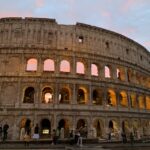
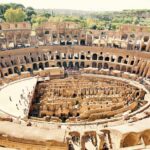
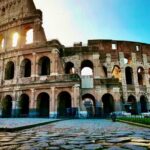
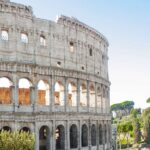
Finally, you reach the Colosseum for about 10 minutes, with admission included. This is your best “greatest hit” payoff: you get a moment at the arena itself, not just a view from a distance. Use that time to take your photos first, then let the guide point out what you’re actually looking at.
Your photos won’t replace a full Colosseum day ticket if you want more, but this included stop is exactly the kind of shortcut that makes a night tour worth doing.
Who should do this Mini Cooper night tour
This is a strong fit if you want:
- A first-night orientation to Rome, especially if you’re short on time
- A guided night plan with pickup, transport, and narration handled
- A fun, memorable way to see major sites without doing a long walking marathon
You might want a different option if:
- You hate short stops and want long time inside museums and churches
- You’re the type who needs 45 minutes per viewpoint to really enjoy it
- You’re traveling with mobility constraints and know you’ll struggle with getting in and out of a car repeatedly (the tour says most travelers can participate, but the format still includes movement)
If the city is new to you, this tour helps you build a mental map. And once you have that map, the next day’s wandering gets way easier.
Should you book this Rome by Mini Cooper at night?
Yes, if you want a high-output Rome night with a guide, included drinks/snacks, and a classic ride that makes the streets feel like part of the show. I’d put it near the top of your list if you’re doing Rome for the first time or you want your first evening to feel like a success.
Before you book, be honest about pacing. With around 10 minutes per stop, you’re going to come away with a lot of impressions, not deep dives into any one place. If that sounds like your style, this is an excellent value use of a late evening.
FAQ
How long is the Rome Mini Cooper Classic Cabrio night tour?
It lasts about 3 hours.
What time does the tour run?
The scheduled opening hours are 9:00 PM to 11:30 PM, Monday through Sunday.
Is the tour private, and do you get pickup?
Yes, it’s a private tour, and hotel pickup and drop-off are offered. Pickup can be arranged where customers want to start.
What’s included in the price?
The tour includes bottled water, snacks, coffee and/or tea, alcoholic beverages, local taxes, and a driver/guide with live commentary, plus round-trip private transfer.
Is the Colosseum admission included?
Yes. The Colosseum stop includes admission.
Does it require good weather?
Yes. The experience requires good weather. If it’s canceled due to poor weather, you’ll be offered a different date or a full refund.
Are there age rules or dress code?
There’s a minimum drinking age of 18 for alcoholic beverages, and the dress code is smart casual. Children must be accompanied by an adult.