REVIEW · ROME
Rome: Colosseum & Roman Forum Guided Tour
Book on GetYourGuide →Operated by Emotion club · Bookable on GetYourGuide
One monument, three eras, zero wasted time. This guided loop takes you through the Colosseum, the Roman Forum, and Palatine Hill, with express access so you can spend more minutes actually looking and less time waiting. The tour also gets serious about the details, from gladiator life to the political machinery of Rome, and guides like Anna and Francesco are praised for making complex sites feel clear and human.
I especially like that you see the Colosseum in layers, including time up high, so you get the full shape of the arena instead of just snapping photos from the floor. I also like the headsets: in a noisy, crowd-thick place, they help you catch every story turn and every practical explanation. The one drawback to plan for is physical pace—this is a long walk with stairs and uneven ancient surfaces, and it is not suitable for wheelchair users or people with mobility impairments.
In This Review
- Quick hits before you go
- Why this Colosseum–Forum–Palatine route makes sense
- Getting there and finding your guide fast
- Express-lane entry: what it buys you in real time
- The Colosseum at every level: arena, backstage, and top tiers
- A practical note on the Colosseum
- The Roman Forum: where power and daily life overlap
- Forum pacing: what you should expect
- Palatine Hill and the Farnese Gardens: origin myths and elite views
- Heat, pace, and how the guide keeps it workable
- Price and value: is $89.50 fair for what you get?
- Who this tour fits best
- Should you book this Colosseum–Forum–Palatine tour?
- FAQ
- How long is the tour?
- What does the tour include?
- Do I need to buy tickets separately for the sites?
- Where do I meet the guide?
- Which metro stop should I use?
- What language options are available?
- What should I bring?
- Is this tour suitable for wheelchair users?
- Can I bring pets or large bags?
Quick hits before you go
- Express-lane entry gets you through faster and helps protect your visit time
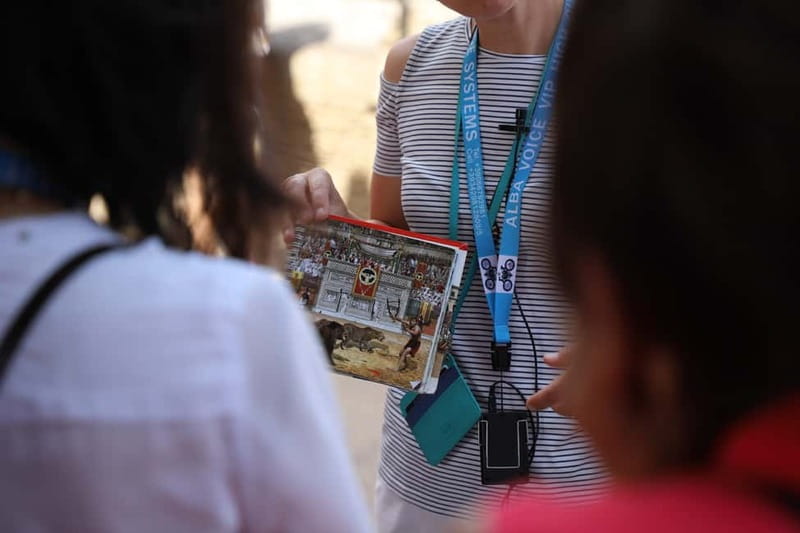
- Headsets included so you hear your guide clearly in the busiest areas
- Colosseum access includes multiple levels, plus time in the top tiers
- Roman Forum route covers everyday Rome, not just famous ruins
- Palatine Hill includes myth + imperial villas, plus views over Circus Maximus area
- Imperial Forums area is part of the story, connecting politics with stone and street life
Why this Colosseum–Forum–Palatine route makes sense
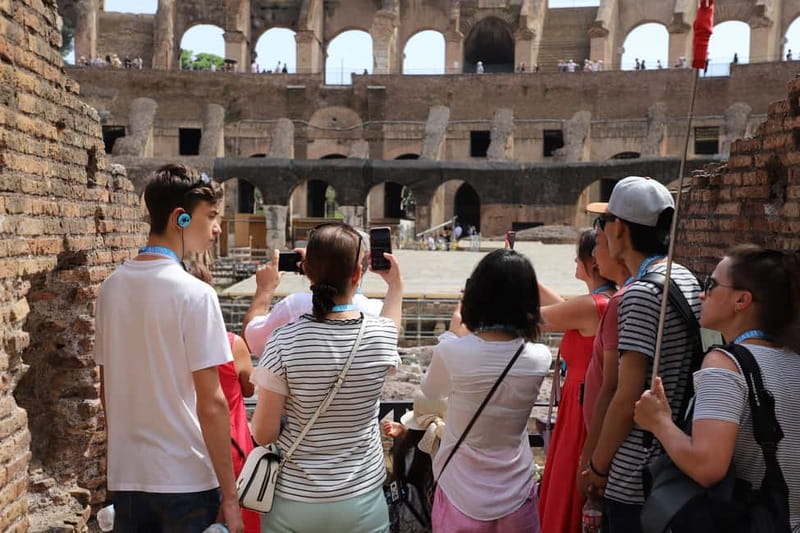
Rome can feel like a choose-your-own-adventure novel, but the Colosseum area is the one place where a guided flow really helps. In three hours, you hit the stadium that symbolized Rome’s power, the Forum that served as the day-to-day brain, and Palatine Hill—the spot where Rome’s origin stories and elite living overlap.
What makes this combo work is the way the tour links cause and effect. You don’t just see ruins; you learn how power, entertainment, and politics were tied together in the same city. And because the visit is guided, you get explanations for what you’re looking at, not just timestamps and ticket counts.
You can also read our reviews of more guided tours in Rome



Getting there and finding your guide fast
The meeting point is on Largo Gaetana Agnesi area: look for the corner of Caffè Roma at Largo Agnesi 1. Your guide holds a rounded Emotion.club logo sign, which is helpful because this neighborhood has a lot of “small corners that look the same” energy.
Use the Colosseo metro (Line B). There are two exits at the Colosseo stop; you need the upper one. From that upper exit, the meeting point should be on the right. If you’re arriving a few minutes early, you’ll have time to double-check the right side of the street before the group forms.
Plan on starting on time. A tight schedule is the whole point here: you’re walking from one major site to the next without losing time to guesswork.
Express-lane entry: what it buys you in real time
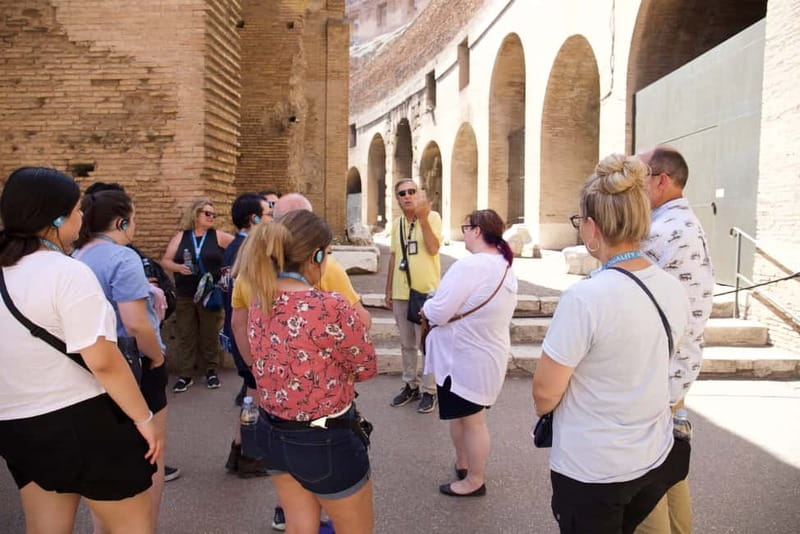
The big practical win is skip-the-line access through a separate entrance and a dedicated express lane. In this part of Rome, lines can eat your energy and your daylight. With express access, you’re more likely to get your full 3 hours rather than constantly rushing to catch up with the crowd.
This also changes how you experience the site. Instead of spending your first moments trying to understand where to look, you’re already inside with the guide setting the context—why the Colosseum was built, how the system worked behind the scenes, and what to notice at each level.
The Colosseum at every level: arena, backstage, and top tiers
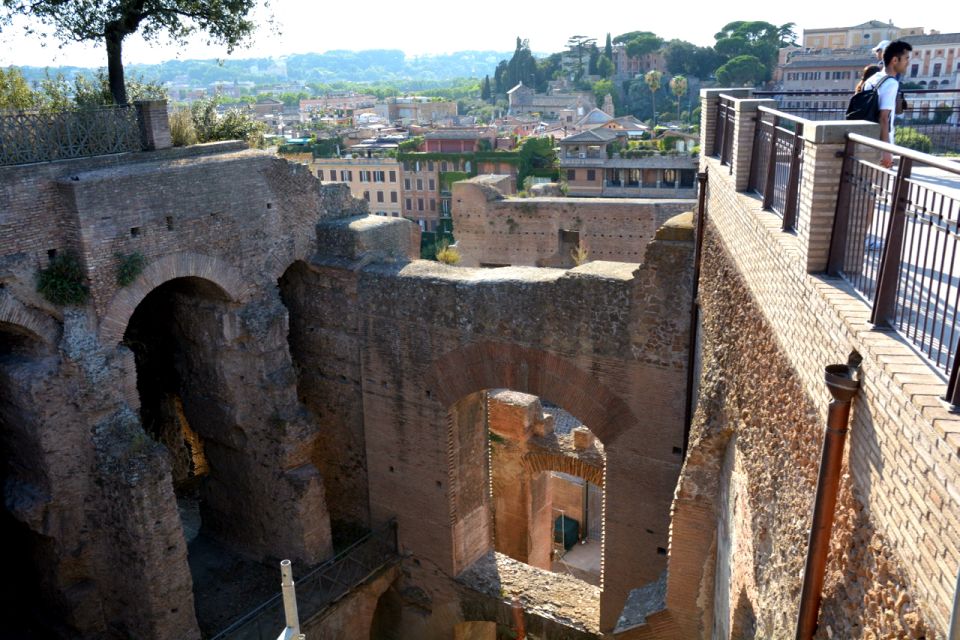
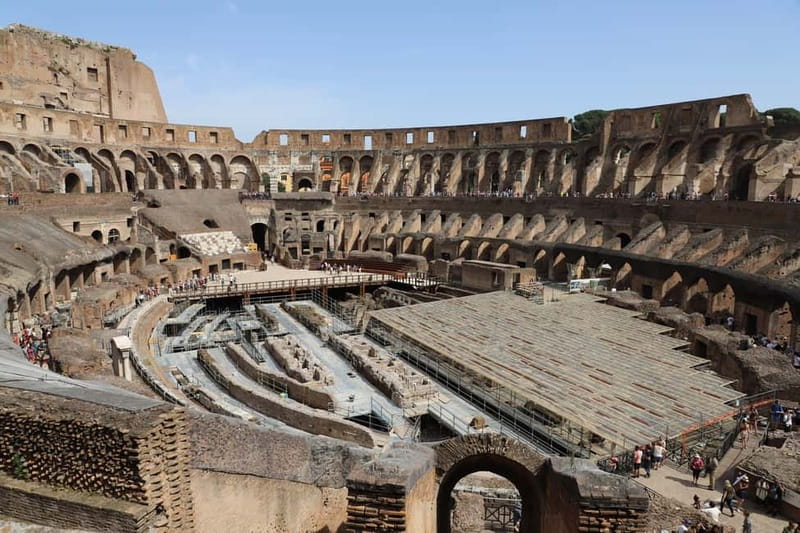
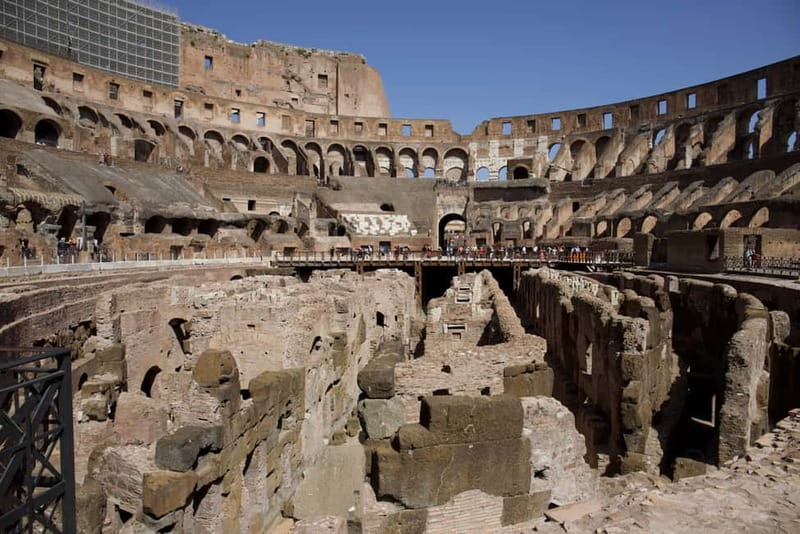
If you’ve only seen one photo angle of the Colosseum, you’re going to be surprised by how much it changes as you move up and around. This tour takes you beyond a quick walk-through. You start with the 1st and 2nd levels, which helps you grasp the Colosseum’s scale and how the seating zones relate to the arena floor.
Your guide tells the story in a way that makes the brutality easier to understand without being graphic. Expect talk about why the fights were staged, how the crowd had influence, and how gladiators trained and lived. You’ll also hear about what the show depended on—sliding mechanisms, underground spaces, and backstage systems that made it possible to transform the arena.
One of the most helpful parts is the focus on the building itself. You don’t just hear that it was huge; you get an explanation of how the immense structure was built and how the complex “behind the scenes” underground tunnels and mechanisms worked. That turns the Colosseum from a famous ruin into a working machine, which is exactly what it was.
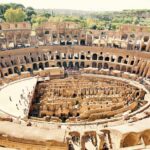
Then you climb to the top tiers. This is where the atmosphere hits hardest. From above, you can absorb the shape of the monument in one look. You’ll also see the way the Colosseum frames the city around it, which is useful because the surrounding area can feel confusing if you’re just wandering on your own.
A practical note on the Colosseum
Comfortable shoes are non-negotiable. You’ll be walking on stone surfaces and you’ll climb. If it’s hot, the tour can still feel intense, but your guide is there to manage the pace and route.



The Roman Forum: where power and daily life overlap
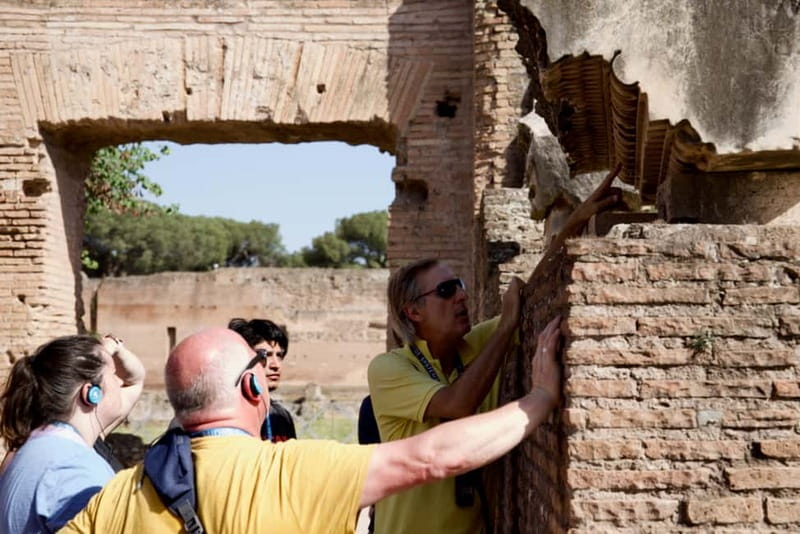
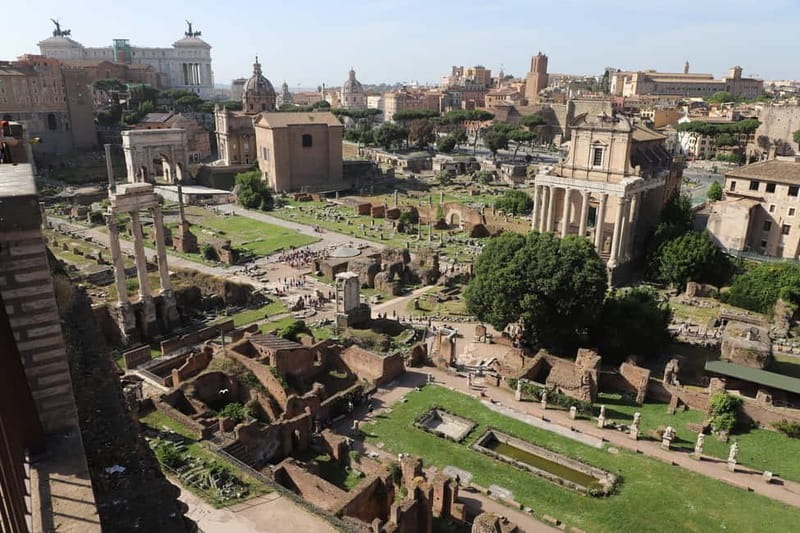
After the Colosseum, the tour shifts from spectacle to routine. The Roman Forum is where you get the “how Rome worked” feeling—where religion, politics, business, and public debate all tangled together in the same space.
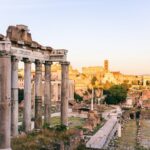
Your route includes the celebrated meeting-place elements and a walk along the Sacred Road, in the footsteps of ancient Romans past temples, market places, villas, and triumphal arches. This isn’t only about big names. You hear about daily life across social classes: the rich and the poor, plus doctors, sailors, priests, and prostitutes of many backgrounds.
One detail I love about this part of the tour is the focus on what the city looked like when it was alive: brightly colored clothing, richly decorated homes, and the constant flow of people. Even if you can’t picture everything perfectly, the guide helps you build a mental map. That makes the ruins feel organized, not random.
The tour also covers the Imperial Forums, the political and economic heart area of ancient Rome. Those forums explain why the city expanded outward and how emperors used architecture as political messaging. You’ll start to notice how stone becomes branding: power stays visible even after the systems that created it disappear.
Forum pacing: what you should expect
This is a walking-heavy section, and the Forum can be crowded. Having headsets helps a lot because you’ll hear the guide without constantly turning your head and straining to catch words over other groups.
Palatine Hill and the Farnese Gardens: origin myths and elite views
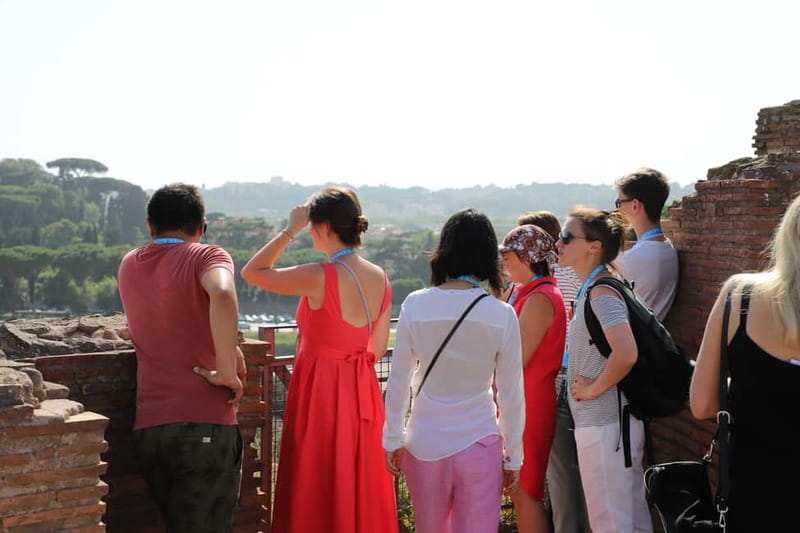
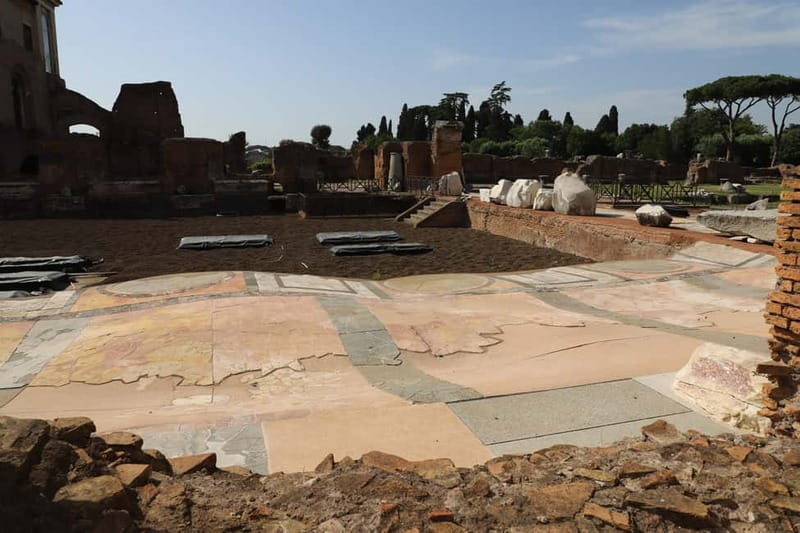
Next comes Palatine Hill, often the best payoff for people who like Rome’s “story layer” as much as its stones. This is described as the place where the history of Rome began. Legend has it that Romulus and Remus were raised by a she-wolf here. Even if you treat the myth as myth, it’s a powerful way to approach what you’re seeing.
You also get a more political angle: the domination of the Roman Empire came to an end here. That lets the tour connect origin to collapse, which is one of the reasons Palatine feels emotionally heavier than some other ruins.
You’ll learn why Palatine was mostly home to the rich and influential, then see remains tied to emperors’ villas. Another highlight is the view over the Circus Maximus area. The perspective matters: it’s easier to understand how the elite enjoyed chariot races when you can look out from the same kind of vantage point.
The tour also includes the Farnese Gardens, adding a greener pause that helps reset your eyes and your legs. It doesn’t turn this into a stroll in the park, but it does break the hard-edged density of the ruins.
Heat, pace, and how the guide keeps it workable
This tour is not a slow museum crawl. It’s a structured route through several major archaeological zones, and you’ll cover distance. That’s why the guide matters so much.
The names that keep popping up for strong guide delivery include Francesco, Anna, Tania, Elena, Maddalena, Sara, Frederica, Helena, and more. A common theme is clear, entertaining explanation. People also mention humor and the way guides answer questions instead of steamrolling forward.
If it’s very hot when you go, pay attention to how your guide handles pacing. One guide (Francesco) is specifically praised for making an effort to be in the shade and for taking regular water breaks when temperatures were around the high 30s. Even if your guide doesn’t do it exactly the same way, that advice is still worth following: bring water if allowed in your comfort plan, wear breathable clothes, and assume you’ll want shade when it’s available.
Price and value: is $89.50 fair for what you get?
At $89.50 per person for about 3 hours, this is best thought of as a “guided access + interpretation” package, not just a ticket bundle. For that price, you get:
- A live guide in English or Russian
- Headsets
- Colosseum access (including multiple levels)
- Roman Forum access
- Palatine access
- Skip-the-line / express lane entry
What makes it feel like value is the combination of time-saving and guided clarity. You’re paying for someone to point out what matters in a site that can otherwise swallow you in scale. Without a guide, you’d spend time figuring out routes, guessing what you’re looking at, and trying to piece together stories from signs (if you can read them while you’re standing in a crowd).
The main “gotcha” is that the tour includes admission/access, but it does not include hotel pickup or drop-off. So you’ll still need to get yourself to the meeting point on your own.
Who this tour fits best
This experience is a strong match if you:
- Want a big Roman highlights hit without spending half a day coordinating entrances
- Like explanations that connect architecture to how the system worked
- Prefer a guide who keeps the pace moving but still answers questions
- Are comfortable walking several parts of a large archaeological area
It may feel like too much if you:
- Have limited mobility or need a wheelchair-friendly route (this one is not suitable)
- Want lots of free time to wander at your own speed without structure
- Get frustrated in heat and stairs without breaks
For families and mixed groups, a guide-led tour can be great because you can keep the day from getting chaotic. If you do better with a plan than with wandering, this setup is your friend.
Should you book this Colosseum–Forum–Palatine tour?
I’d book it if you want the most meaningful version of these three sites in one go: express entry, guided context, and time across Colosseum levels plus the Forum and Palatine’s viewpoint. The $89.50 price starts to make sense when you remember what you’re buying—time saved at the busiest entry and a guide to translate stone into stories.
I’d think twice if you dislike guided tours, dislike walking and climbing, or you need a more accessible route. This is a classic “come prepared, wear comfortable shoes, and let the guide handle the structure” day.
If your goal is to leave Rome’s ancient core with a clear mental map and a sense of how the empire functioned—power, entertainment, and everyday life in the same neighborhood—this is a solid way to do it.
FAQ
How long is the tour?
The tour is about 3 hours, but starting times vary. Check availability for the time you want.
What does the tour include?
You get a guided tour, headsets, Colosseum access, Roman Forum access, and Palatine access.
Do I need to buy tickets separately for the sites?
No separate tickets are listed as required for access, since the tour includes access to the Colosseum, Roman Forum, and Palatine.
Where do I meet the guide?
Meet your guide at the corner of Caffè Roma at Largo Agnesi 1. The guide holds a rounded Emotion.club logo sign.
Which metro stop should I use?
Use the Colosseo metro stop on Line B. Use the upper exit so the meeting point is on the right from the exit.
What language options are available?
The live guide is available in English and Russian.
What should I bring?
Bring a passport or ID card and wear comfortable shoes.
Is this tour suitable for wheelchair users?
No. It is not suitable for people with mobility impairments or for wheelchair users.
Can I bring pets or large bags?
Pets are not allowed, and luggage or large bags are not allowed.