REVIEW · ROME
Rome: Colosseum, Forum, & Palatine Hill with Audio Guide
Book on Viator →Operated by Doooing Experience · Bookable on Viator
Three stops, one giant dose of Rome. This self-paced Colosseum–Forum–Palatine Hill circuit lets you wander at your own tempo while the English audio guide app does the heavy lifting for you. I also like that you’re not forced into a rigid group script, since the downloadable audio guide app helps you make sense of what you’re seeing without extra research.
One caution: this is primarily audio-only. If you’re expecting a full in-person guide and maximum restricted-area access, you may feel like you paid for self-direction rather than a live tour.
In This Review
- Key things to know before you go
- The real appeal: a Rome landmark route you can control
- Entering the Colosseum: more than a photo stop
- The Roman Forum: turning ruins into a readable map
- Palatine Hill: Rome from the elevated viewpoint
- The audio guide app: how to make it actually work
- Upper levels vs the Arena Floor upgrade: what you’re really paying for
- Timing, ID, and name matching: the stuff that can derail your day
- Getting the most from each stop (without rushing)
- Price and value: what $42.30 buys you in real terms
- Who this works for best
- Small itinerary reality check: how the stops flow
- Should you book the audio guide Colosseum–Forum–Palatine Hill route?
- FAQ
- How long does the Colosseum, Forum, and Palatine Hill audio experience take?
- Is admission to the Colosseum, Roman Forum, and Palatine Hill included?
- Is this experience fully guided by a person?
- What language is the audio guide available in?
- What documents do I need for entry?
- What happens if the visit is affected by weather?
Key things to know before you go

- Self-guided pacing means you can linger when something grabs your attention, and skip what doesn’t.
- Admission is included for the Colosseum, Roman Forum, and Palatine Hill stops.
- Upper levels are included by default, with the option to upgrade for the Arena Floor.
- Palatine Hill delivers the emperor’s-eye view over parts of ancient Rome.
- You must show ID and match names for entry into the Colosseum.
- Jubilee restoration may change routes, so check your messages before you arrive.
The real appeal: a Rome landmark route you can control
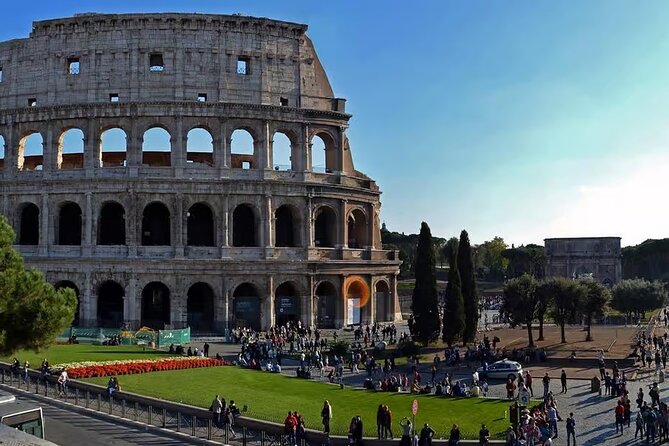
Rome’s ancient sites can feel like information overload. This route is built to reduce that stress by letting you move through the Colosseum, Roman Forum, and Palatine Hill in a way that matches your attention span.
What makes it work is the pacing. Instead of being rushed from one fact to the next, you can pause at the viewpoints, look down the corridors, and take in the scale. It’s the kind of visit where a few smart moments often beat a full checklist.
And the audio guide approach helps you stay oriented. When you’re staring at stone that’s been eroded for centuries, context matters, and the app is there to provide it in real time.
You can also read our reviews of more guided tours in Rome



Entering the Colosseum: more than a photo stop
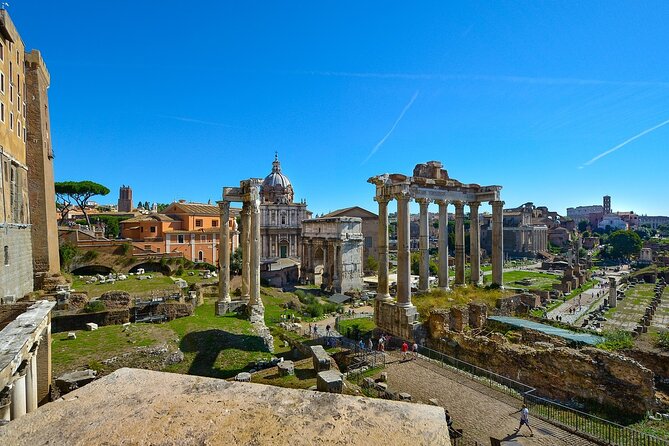
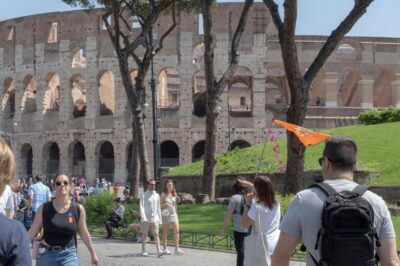
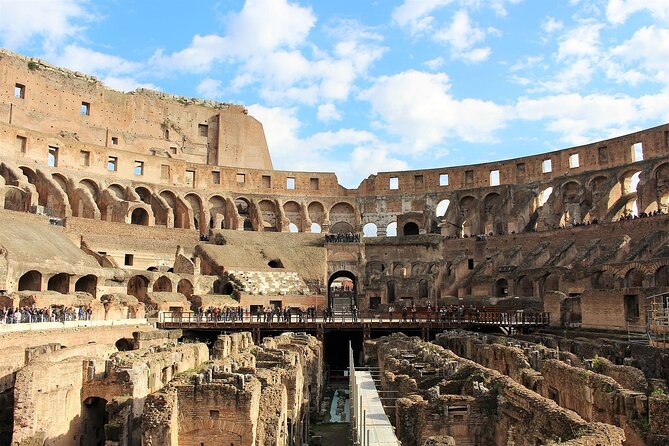
The Colosseum is the headline, but the experience is what happens after you step inside. You get to see the arena complex from within, and the visit is structured so you spend about an hour there, taking in the layout without being yanked along.
The big value point is access level. This setup is designed around visiting the upper levels if you’re trying to keep costs down. That can still be an excellent way to understand the venue’s scale, crowd flow, and sightlines, especially if you’re not specifically chasing the most restricted spots.
If you want a closer, more floor-level perspective, there’s an option to upgrade for the Arena Floor. That change is meaningful because it shifts you from “overlooking the space” to being physically within the ring’s perspective.
Practical tip: bring a small flashlight app-ready habit, meaning get your eyes adjusted before you move. The light inside shifts, and the audio prompts work best if you keep a steady rhythm between listening and looking.
The Roman Forum: turning ruins into a readable map
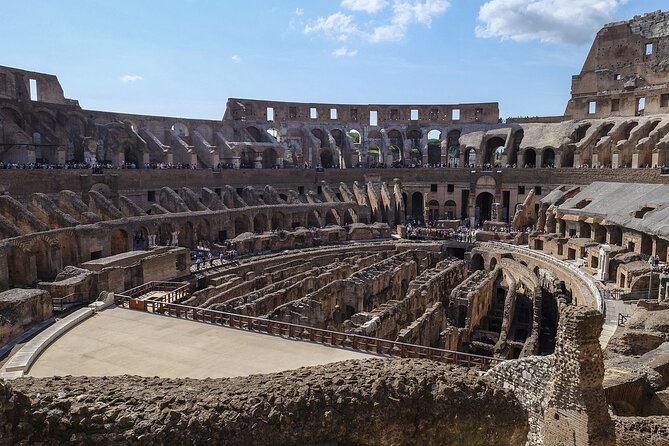
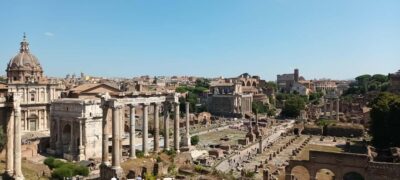
The Roman Forum can look like a pile of history if you only glance. With the audio guide running, it becomes more like a guided walk through how public life used to function—who used these spaces, what ceremonies and politics took place, and how the layout connects.
You’ll spend roughly an hour on this stop, which is a sweet spot for the Forum. It’s enough time to move between key areas and still stop when something catches your eye, like building remains that hint at power and spectacle.
Here’s the trick to getting value: don’t treat every stone as equally important. Instead, listen for the audio cues that explain why a specific area matters. Then you look back at the layout and you start noticing patterns—ways streets would have channeled movement, and how the spaces would have felt crowded and loud.
If you’re the type who likes to understand what you’re seeing, this is one of the best payoff points on the whole route.
Palatine Hill: Rome from the elevated viewpoint
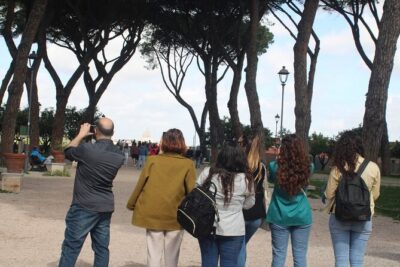
Palatine Hill is often where the visit shifts from “history” to “place.” You’re looking at the city with ancient eyes, which helps your brain connect the dots between the Forum’s civic core and the broader idea of where elites wanted to live and rule.
You’ll spend about an hour here as well. That matters because Palatine Hill works best with slow walking and frequent pauses. The audio guide helps keep you from wandering aimlessly, but it also allows you to stop when you find a viewpoint that makes the whole area click.
This stop is especially strong for the way it reframes the story of ancient Rome. Instead of only thinking about monuments, you understand geography: how slopes, sightlines, and proximity would have shaped daily life and power.
If you like panoramic views, bring that energy here. Even when weather is just average, the vantage can feel like a cheat code.
The audio guide app: how to make it actually work
Audio guides are hit-or-miss in major attractions. The difference here is that the experience is intentionally designed around audio, so you’re meant to follow the narration at each stop.
A key factor is your setup. If you don’t use earphones, you can end up fighting background noise. One entry-level complaint in the experience feedback was basically this: without earbuds, it’s hard to hear clearly in a loud, crowded environment. So I’d plan to use earphones or earbuds from the start.
Also, give yourself permission to use the audio like a compass, not like a lecture. When you hear a prompt, look for the feature being referenced, then keep moving. If you just listen while walking, you’ll miss the moment where the audio makes the ruins legible.
If your visit includes an on-site helper at the start, that can help you get going smoothly. Some participants have specifically praised a host named Alex for history and Q&A-like engagement, which can add a human layer to an otherwise app-driven visit. Even so, the core experience remains self-paced.
You can also read our reviews of more tours and experiences in Rome



Upper levels vs the Arena Floor upgrade: what you’re really paying for
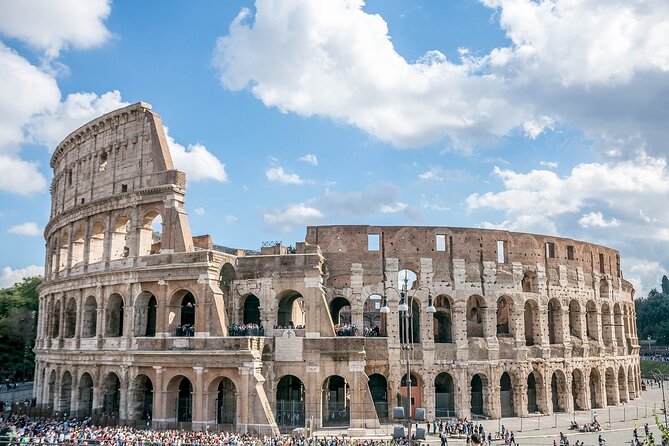
This experience offers a built-in cost-control choice: stay with the upper levels included, or upgrade to reach the Arena Floor.
Upper levels tend to give you:
- A strong sense of the building’s size
- Elevated views that help you understand how the arena sits in the larger structure
- A generally smoother route when you’re trying to keep timing simple
The Arena Floor option tends to deliver:
- A more immersive sense of being at the center of the spectacle
- A different perspective on how spectators would have looked and moved
If you’ve never been inside the Colosseum, upper levels can be an excellent first visit. If you’re a repeat Rome visitor or you want the most dramatic perspective, consider paying extra for the Arena Floor.
My practical advice: pick the option that matches how you like to travel. If you like photos and broad understanding, upper levels will likely satisfy you. If you want to feel inside the action, the upgrade changes the whole vibe.
Timing, ID, and name matching: the stuff that can derail your day
This experience isn’t the kind where you can “wing it” on entry requirements. You’ll need to show a document such as a passport or ID to access the Colosseum.
There’s also a name-matching rule. If the participant names don’t match exactly what’s on your booking, you may be refused access to the Colosseum. That’s not just paperwork trivia—it’s the kind of rule that can turn a great morning into a stressful scramble.
So before you go, double-check:
- Spelling of names
- The number of participants
- That the information on your booking matches your documents
One more modern wrinkle: during the Jubilee period, some monuments may be under restoration and access routes could change. Because routes may shift, check the updates sent to you before you arrive.
Getting the most from each stop (without rushing)
This route works best when you keep a simple rhythm: listen, look, then reposition. The audio guide helps you understand what you’re seeing, but your eyes still do the final work.
Here are a few ways to keep it from turning into a “stand here, move on” experience:
- Start with the Colosseum and let the scale sink in before you jump into details.
- Treat the Forum like a story you’re piecing together, not a museum you’re conquering.
- Use Palatine Hill for viewpoints. Walk a little, stop a lot, then walk again.
You’ll also get more value if you arrive with basic curiosity rather than strict expectations. Rome rewards people who ask: What did this space mean, and how did it feel to be there?
Price and value: what $42.30 buys you in real terms
At $42.30 per person, you’re paying for a “high impact” combo: Colosseum + Roman Forum + Palatine Hill, with admission included across the stops. For Rome’s top-tier attractions, that’s the kind of pricing that makes sense when you want to see multiple highlights without paying for a private guide.
The value math shifts depending on what you expect:
- If you’re comfortable self-directing with an audio guide, you’re likely getting strong value because you’re not paying for a live guide’s time.
- If you want a truly guided, talk-to-a-human experience, you may feel shortchanged—especially if you assumed restricted-area access beyond what’s included.
The Arena Floor upgrade is also a value choice. If you’ll truly use that extra access, it can be worth it. If you just want the main sites and you’re happy with an elevated view, the included upper-level option should feel reasonable.
Who this works for best
This experience is a strong fit if you:
- Like visiting at your own pace
- Want a structured route that still lets you linger
- Prefer audio context over hunting down information on your phone
- Are doing a tight Rome itinerary and want three major ancient sites in one stretch
It can be less satisfying if you:
- Want a live guide to answer questions continuously
- Expect the broadest possible restricted-area access
- Plan to listen without earphones in a noisy venue
If you fall in the first group, you’ll probably feel like you got your money’s worth fast.
Small itinerary reality check: how the stops flow
Each stop is designed as its own one-hour block. That keeps you from trying to cram too much into too little time, and it gives your brain a chance to process what you just learned.
Also, the order matters. The Colosseum first gives you scale and spectacle. The Roman Forum then grounds the experience in civic power and daily life. Palatine Hill finishes by connecting the view back to where elite Rome wanted to be.
That flow makes the route feel less like separate attractions and more like one big story you can follow.
Should you book the audio guide Colosseum–Forum–Palatine Hill route?
I think this is a good booking if you want maximum Rome impact with minimum stress. The included admission, the three-stop structure, and the English audio guide are a practical way to experience the city’s ancient center without turning your day into a frantic info hunt.
Skip this or consider an alternative if you’re specifically searching for a live, hands-on guide experience or the most expansive restricted access. This tour is built around audio and your own pace, and that can feel like either a perk or a mismatch, depending on how you travel.
If you do book, go prepared: bring earphones, double-check names and ID, and scan the updates in your messages in case restoration changes routes. Do that, and you’ll spend your time where it counts: looking at Rome and understanding what you’re seeing.
FAQ
How long does the Colosseum, Forum, and Palatine Hill audio experience take?
It’s listed as about 1 to 3 hours total, and each major stop is roughly 1 hour.
Is admission to the Colosseum, Roman Forum, and Palatine Hill included?
Yes. Admission tickets are included for all three stops.
Is this experience fully guided by a person?
No. It’s an audio guide experience with an English downloadable audio guide app, designed for self-directed visiting.
What language is the audio guide available in?
The audio guide is offered in English.
What documents do I need for entry?
You need to show a document such as a passport or ID, and your booking names must match the participants for Colosseum entry.
What happens if the visit is affected by weather?
The experience requires good weather. If it’s canceled due to poor weather, you’ll be offered a different date or a full refund.