REVIEW · ROME
Rome: Appian Way and Roman Countryside Electric Bike Tour
Book on GetYourGuide →Operated by Rome for You - RM - 1436156 · Bookable on GetYourGuide
The first road in Rome still hits hard. This 4-hour Appian Way e-bike tour trades museum crowds for cobblestones, tombs, and catacombs outside the center. I love how the ride follows Regina Viarum’s route as it was used for military logistics and elite funerary power, and how E-bikes make the countryside feel doable even with hills. The main thing to consider: it’s not a walk-in-the-park day, and if your bike support fails you’ll still have to pedal.
You’ll get a private guide style of storytelling (in English, French, Italian, or Spanish), and that matters here because the stops can otherwise blur together. One booking highlighted Emiliano’s warmth and humor, while another praised Libero’s knowledge and clear explanations. Expect a serious history day with real sights: ancient paving, statues and ruins, an imperial palace, pagan mausoleums, and catacombs.
In This Review
- Key Things That Make This Tour Work
- Why the Appian Way Still Feels Like Rome’s Real “Main Street”
- Your E-Bike Day: Hills, Cobblestones, and the Comfort Factor
- Starting at Via di S. Calisto: How to Get Set for a Smooth 4 Hours
- Appian Way Ride: Ancient Paving, Tombs, and the Road’s Purpose
- Imperial and Funerary Rome: When the Past Is Both Political and Personal
- Catacombs at Saint Callixtus and Saint Sebastian
- Aqueducts Park: The Two-Aqueduct View You Can Still Trust
- Caffarella Park in the Second Half: Working Farm + Archaeology
- Pace, Photos, and Group Size: What Actually Helps You Enjoy It
- Price and Value: Is $88 for 4 Hours Worth It?
- Who This Tour Suits Best (And Who Might Want Another Option)
- Should You Book This Appian Way E-Bike Tour?
- FAQ
- How long is the Rome Appian Way and Roman Countryside electric bike tour?
- Where is the meeting point?
- What time should I arrive?
- Are e-bikes and helmets included?
- What is not included in the tour price?
- What languages is the guide available in?
- Is the tour suitable for people who can’t ride a bike?
- Do I need to bring ID?
- Which catacombs does the tour include?
- About how far do you ride?
Key Things That Make This Tour Work
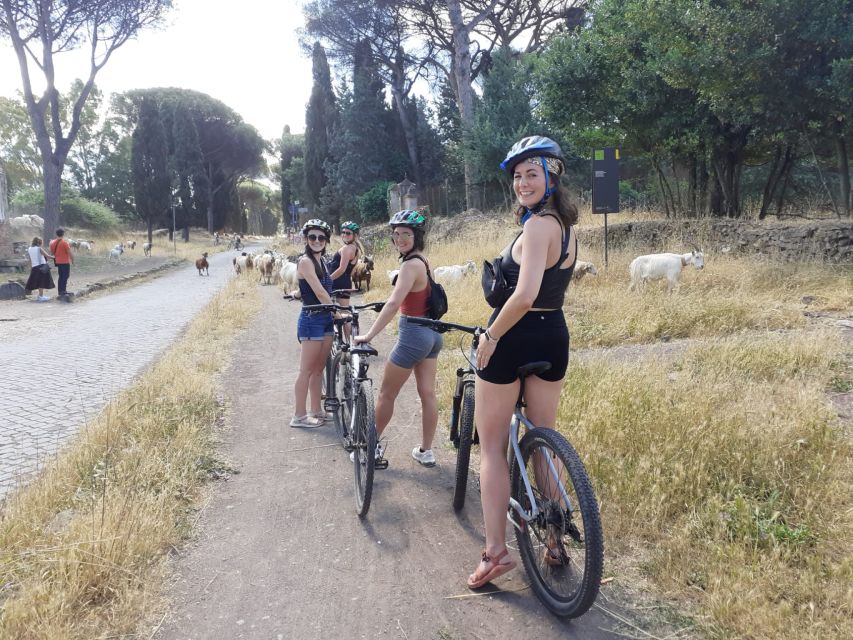
- Ride the Regina Viarum along major original paving from the 4th century BC
- See Christian catacombs at Saint Callixtus and Saint Sebastian (with time focused on the story)
- Spot imperial and pagan Rome on the same route, showing how power was staged in space
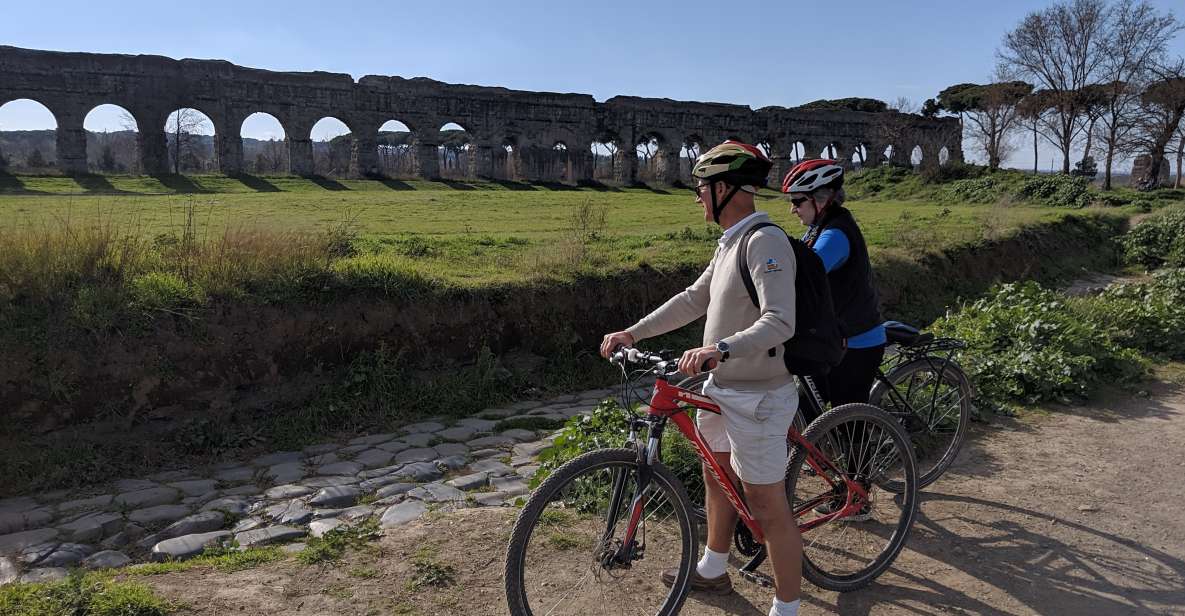
- Two Roman aqueducts in one park at the Aqueducts Park, still in excellent condition
- Caffarella Park back half with archaeological sites and a working farm feel
- E-bike practicality for hills and uneven surfaces, with helmets provided
Why the Appian Way Still Feels Like Rome’s Real “Main Street”
The Appian Way is famous for a reason: it’s old enough that you can understand why Romans cared about moving people and power fast. It began as Rome’s big infrastructure move—built in the 4th century BC—and it stayed important for centuries. You’re not just seeing ruins; you’re riding a route that was meant to function.
Here’s what I like about approaching it by bike instead of bus. The Appian Way is long, uneven, and atmospheric. On an e-bike, you can keep your eyes up and your camera ready without losing your legs halfway. The result is a day that feels like a guided timeline you can physically travel through.
The tour’s framing also matters: it connects political, military, and religious power as part of how the road was conceived. You’ll see that in what you pass—tomb culture and monuments aren’t random decoration. They’re part of how elite families and institutions put their mark on Rome’s geography.
You can also read our reviews of more cycling tours in Rome
Your E-Bike Day: Hills, Cobblestones, and the Comfort Factor
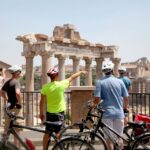
You’ll ride on comfortables e-bikes with helmets included, and that’s a big part of the value of this tour. One rider specifically noted the e-bike support made hills and cobblestone streets much easier than expected. Another mentioned roughly 20 miles of riding, which sounds like a lot until the motor does its job and you keep a steady pace.
Two practical notes from the real-world side of e-bikes:
- Make sure you can ride confidently on uneven pavement. The tour isn’t suitable for people who can’t ride a bike.
- Treat the e-bike battery as a possible weak link. In one booking, the bike assistance failed mid-ride, and the situation wasn’t handled smoothly at the end. That’s not the norm you should plan for, but it’s worth knowing.
If you show up comfortable on a bicycle, the e-bike turns this into a history tour you can enjoy rather than a workout you resent.
Starting at Via di S. Calisto: How to Get Set for a Smooth 4 Hours
The meeting point is Via di S. Calisto, 9, and you’ll want to arrive 15 minutes early. That cushion is important because you’ll need time for helmet/e-bike setup and for the guide to brief you before you roll out.
Also, don’t treat this as a “bring nothing” outing. Food and drinks aren’t included, and you’ll want to plan for your own water and snacks. The tour description calls the day a deep history experience, and once you’re on the road it’s hard to stop for everything you forgot.
Bring your passport or ID card (a copy is accepted). If you’re traveling light, this is one item you don’t want to discover missing right when you need it.
Appian Way Ride: Ancient Paving, Tombs, and the Road’s Purpose
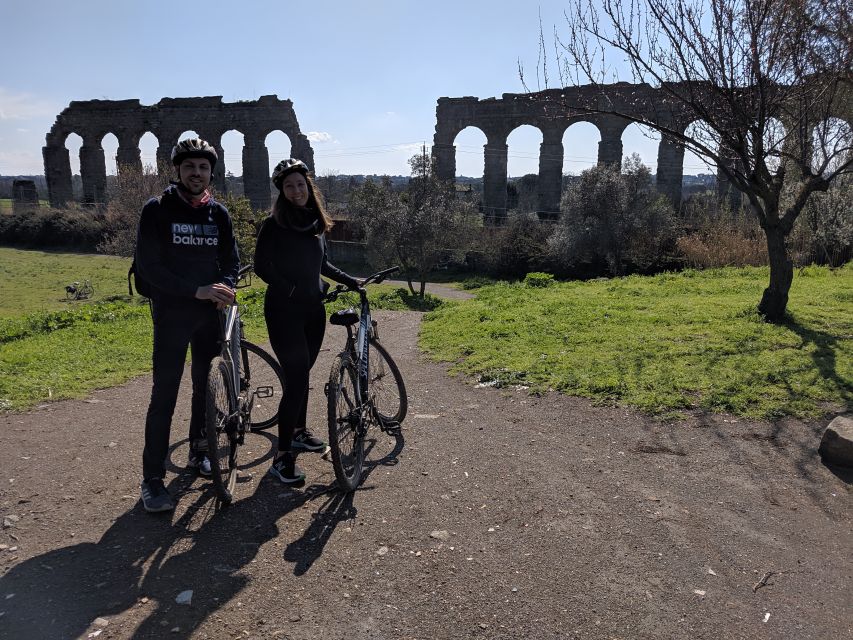
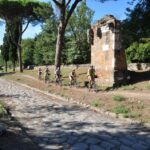
Once you’re out, the heart of the day is the Appian Way itself—also called Regina Viarum. The route is known for retaining much of its original paving, which is exactly what makes it feel different from ordinary city streets. The surface can be bumpy, and that’s part of the authenticity. You’re experiencing the road the way it was built to endure heavy use.
On this stretch, your guide focuses on how the road functioned:
- military supplies moved along it
- important families built tombs and mausoleums near it
- monumental space helped connect state power and elite identity
This is where the private-guide style really earns its keep. Without a good explanation, “ruins and tombs” can look like a pile of old stone. With the right context, you start to see why the monuments are placed where they are and why the road mattered beyond travel.
You’ll also pass or see statues and ancient ruins—small pieces that help you read the larger picture.
Imperial and Funerary Rome: When the Past Is Both Political and Personal
One of the tour’s strengths is the mix of what you see along the way: an imperial palace, pagan mausoleums, and Christian catacombs. That combination can feel like two worlds, but the whole point is that this road overlaps them. You’ll get a sense of how power changed form rather than disappeared.
An imperial palace along the Appian Way isn’t just a “cool ruin.” It signals who had the influence to shape the landscape. And pagan mausoleums help you understand the older funerary culture—how Romans thought about legacy, visibility, and honor.
This is a practical kind of history. Instead of memorizing dates, you’ll recognize patterns: politics shows up in architecture and planning, religion shows up in burial practices, and both show up alongside the infrastructure that made the whole system work.
You can also read our reviews of more tours and experiences in Rome





Catacombs at Saint Callixtus and Saint Sebastian
The tour description includes visits to Saint Callixtus and Saint Sebastian catacombs. This is the part of the day that most travelers end up remembering because the setting is so unlike the open air stretches of the Appian Way.
Two things to expect:
- You’ll be moving from bright outdoor ruins to more enclosed, quieter spaces where the guide’s explanations help you understand what you’re seeing.
- The catacomb focus is tied to the tour’s core theme of how religious power took shape in the same landscape where older, pagan traditions also left their mark.
One caution from the experience side: a booking noted that the group passed the catacombs without being able to enter, even though catacombs were included in the description. That doesn’t mean it will happen to you, but it does mean you should keep flexibility in your expectations. If catacombs are your top priority, bring that mindset and be ready for possible timing or access constraints.
Aqueducts Park: The Two-Aqueduct View You Can Still Trust
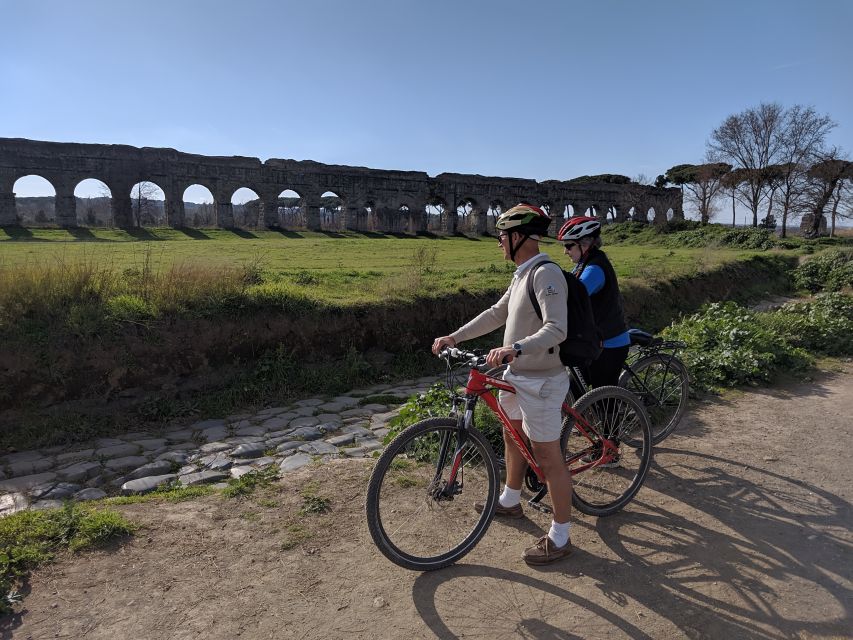
After the main Appian Way experience, you’ll head toward the Aqueducts Park, described as the only park in the world that preserves two Roman aqueducts still in excellent condition. That’s a bold claim, but it’s exactly the kind of detail that makes a guided route worth it—you’re not guessing what matters.
Aqueducts do more than look impressive. They’re Rome’s engineering story turned into a scenic one. When you see them in good condition, it becomes easier to grasp the scale of the water system that fed cities, baths, and daily life.
This is also a nice break in mood. After tombs and catacombs, standing back to take in aqueduct lines gives your brain a moment to reset. You can appreciate the “infrastructure Rome” that doesn’t always get attention.
Caffarella Park in the Second Half: Working Farm + Archaeology
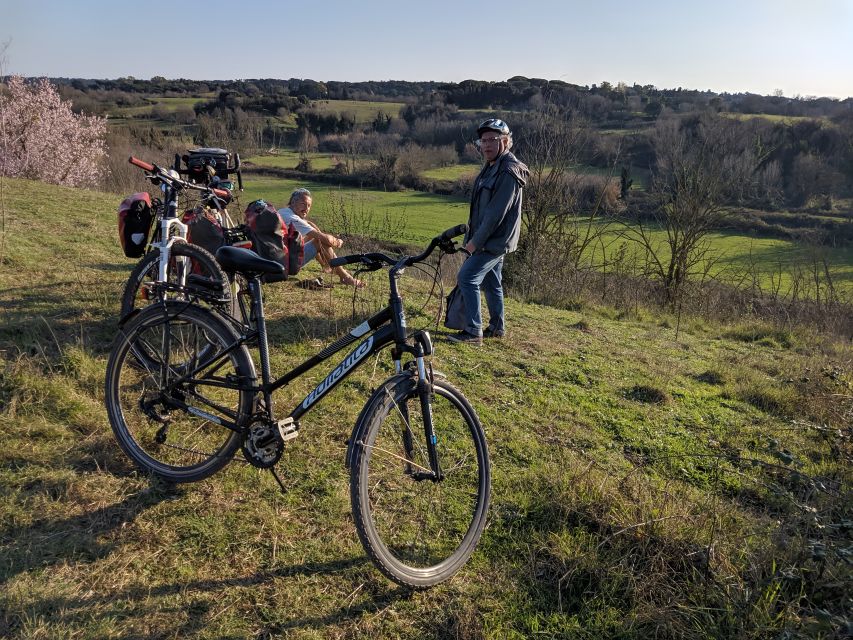
In the second half, you’ll ride back through Caffarella Park, which the tour describes as having several archaeological sites and a working farm, with considerable ecological value. This matters because it changes the emotional tone of the day.
Instead of only marching through a cemetery-like world of monuments, you get a live countryside setting where animals and farmland coexist with ancient remnants. It’s a reminder that the Roman landscape didn’t freeze in time. It kept being used.
Practically, this section can also help you manage the last stretch of your energy. If you’ve been paying attention to every story for hours, the park’s open space and slower moments make the ride feel more like a journey than a checklist.
Pace, Photos, and Group Size: What Actually Helps You Enjoy It
This is a 4-hour tour, and it’s the kind of outing where pace decides whether you have a great day or a mildly stressful one. The good news: the e-bike setup and guide attention to comfort and safety (highlighted in top reviews) can make the experience feel smooth.
I’d plan for:
- photo stops that happen on the road and at viewpoints (this isn’t a “run in, run out” situation)
- enough time for questions, especially since multiple guides were praised for explanations and warmth
Group size may vary. One booking mentioned being just two people, which can make the pacing feel extra relaxed and personalized. If you’re traveling with a flexible group, that’s the ideal setup.
For your own comfort:
- Wear comfortable riding shorts and practical shoes. One rider specifically recommended shorts and tank tops because the stops don’t require long pants or covered shoulders.
- Bring layers you can adjust if the weather changes between Rome’s city edges and the countryside.
Price and Value: Is $88 for 4 Hours Worth It?
At $88 per person for 4 hours, the best way to judge value is what’s included. You get e-bikes and helmets, plus a live guide who connects the route’s history to what you’re seeing. Food and drinks aren’t included, so you’re paying for the transport + interpretation, not for a full-day meal plan.
For many visitors, this tour’s value comes down to one idea: you’re getting access to places and context that are hard to assemble on your own. The Appian Way can be confusing to navigate, and the catacombs and monument types are exactly where a guide’s explanation turns “sightseeing” into understanding.
It’s also good value if you want a break from the most crowded Rome icons. This is not the Coliseum. It’s older, quieter in places, and more about moving through Rome’s systems—roads, water, burial culture—than about one single landmark photo.
Who This Tour Suits Best (And Who Might Want Another Option)
This tour fits you if you want:
- a guided history day with a real physical route
- an e-bike format that makes the Roman countryside practical
- time spent on the Appian Way, catacombs, aqueducts, and Caffarella Park in one outing
It may not fit you if:
- you can’t ride a bike comfortably
- you expect a totally effortless ride from start to finish no matter what
- catacombs are non-negotiable and you hate any possibility of not entering
If you’re a history fan who likes to understand the “why” behind a place, this is the kind of day you’ll appreciate long after you’re back in the center of Rome.
Should You Book This Appian Way E-Bike Tour?
Yes, if you want an authentic Rome experience that’s more about systems and stories than crowds and ticket lines. The combination of original paving, guided context, and standout stops like Aqueducts Park makes it feel like real travel, not just a rideshare to a few monuments.
Book it especially if you want to see Rome as a connected world: roads moving armies, families building tombs, religious communities using space, and engineers shaping water supply. Just go in with the right expectations: it’s a 4-hour ride day, not a casual stroll, and it’s worth arriving early, dressing for comfort, and bringing your own drinks since nothing is included.
FAQ
How long is the Rome Appian Way and Roman Countryside electric bike tour?
The tour lasts 4 hours.
Where is the meeting point?
The meeting point is Via di S. Calisto, 9.
What time should I arrive?
Arrive 15 minutes before the activity starts.
Are e-bikes and helmets included?
Yes. The tour includes e-bikes and helmets.
What is not included in the tour price?
Hotel pickup and drop-off are not included, and food and drinks are not included.
What languages is the guide available in?
The live tour guide is available in English, French, Italian, and Spanish.
Is the tour suitable for people who can’t ride a bike?
No. It is not suitable for people who cannot ride a bike.
Do I need to bring ID?
Yes. You’ll need a passport or ID card (a copy is accepted).
Which catacombs does the tour include?
The tour description includes the Saint Callixtus and Saint Sebastian catacombs.
About how far do you ride?
One review notes you should be prepared to ride for about 20 miles, depending on the conditions and pace.